11 Essential Beekeeping Tools Every Beginner Needs Today
Bees don’t come with a user manual, but these tools get you close. Set yourself up with the right gear and your hives run smoother, your inspections feel calmer, and your honey harvest tastes like victory. Ready to skip the newbie mistakes and look like you know exactly what you’re doing? Let’s kit you out—no fluff, just the good stuff.
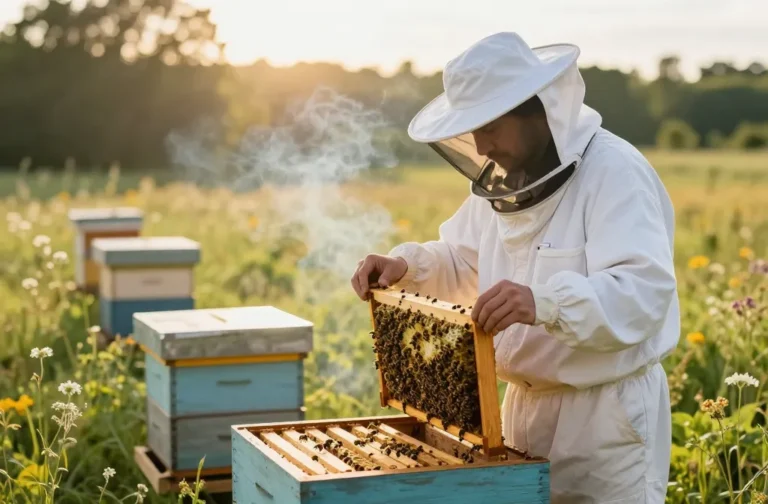
1. The Bee Suit That Saves Your Sanity
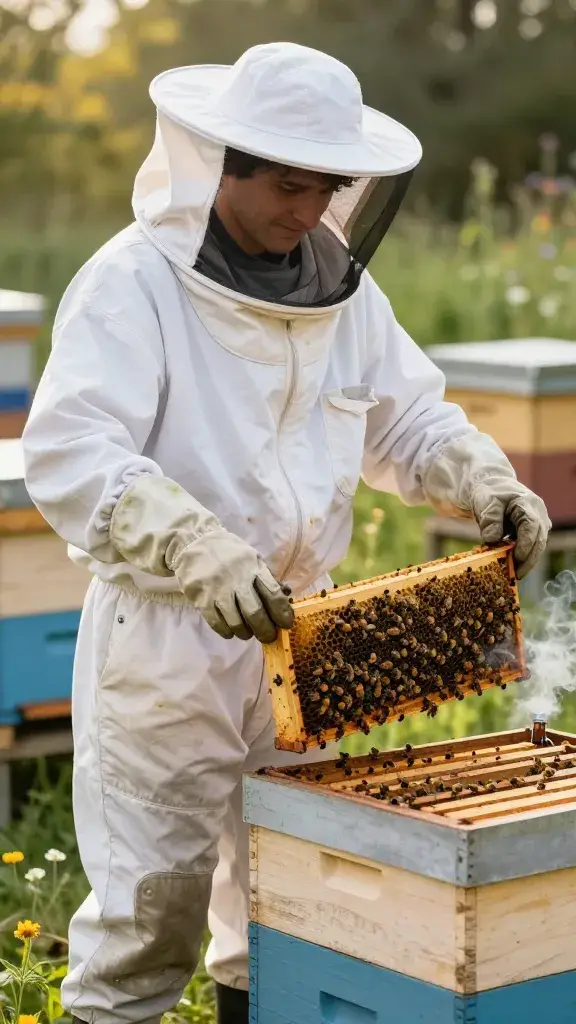
You can absolutely work bees in jeans and good vibes—until you can’t. A full bee suit gives you confidence, keeps stings to a minimum, and lets you focus on the hive instead of your exposed ankles.
What To Look For
- Ventilated fabric for summer inspections that don’t feel like a sauna.
- Elastic wrists and ankles so bees don’t sneak in like tiny ninjas.
- Machine-washable, because propolis and honey happen.
Choose between a full suit or a jacket with a veil. Beginners usually love the full suit—one and done. Confidence boost included.
2. Veil And Gloves: Your Personal Force Field
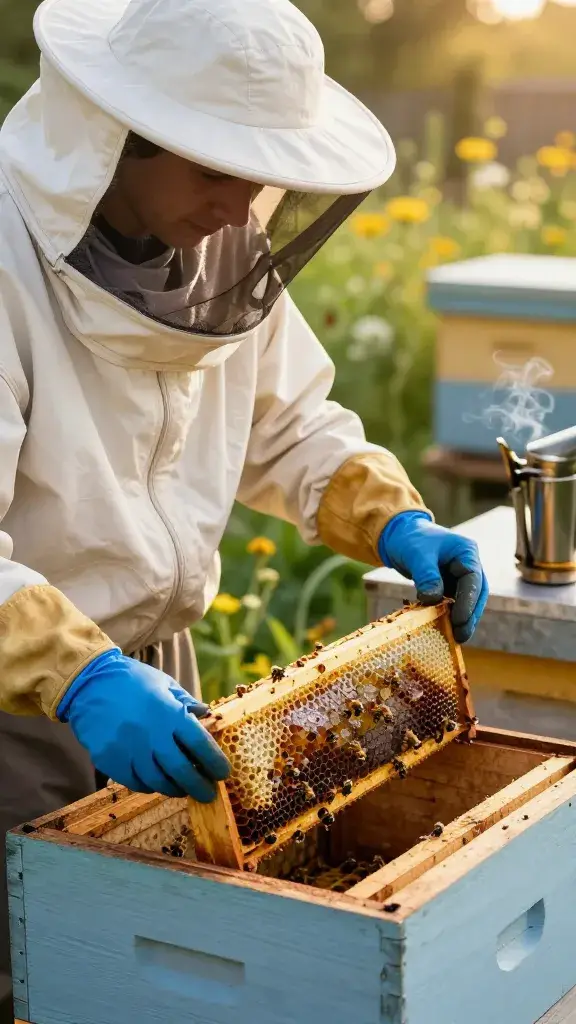
The veil keeps bees away from your face. That’s non-negotiable. Gloves help when your hands shake the first few times (it’s normal, BTW), and they protect you during sticky extractions and brood checks.
Glove Options
- Goatskin leather: Great dexterity, durable, comfy once broken in.
- Nitrile: Cheap, disposable, excellent feel—but less sting protection.
- Elbow-length cuffs: Fewer bee detours inside your sleeves.
FYI: Many beekeepers switch to lighter gloves as they gain confidence. Start safe, then adjust.
3. Smoker: The Mood Setter For Happy Bees
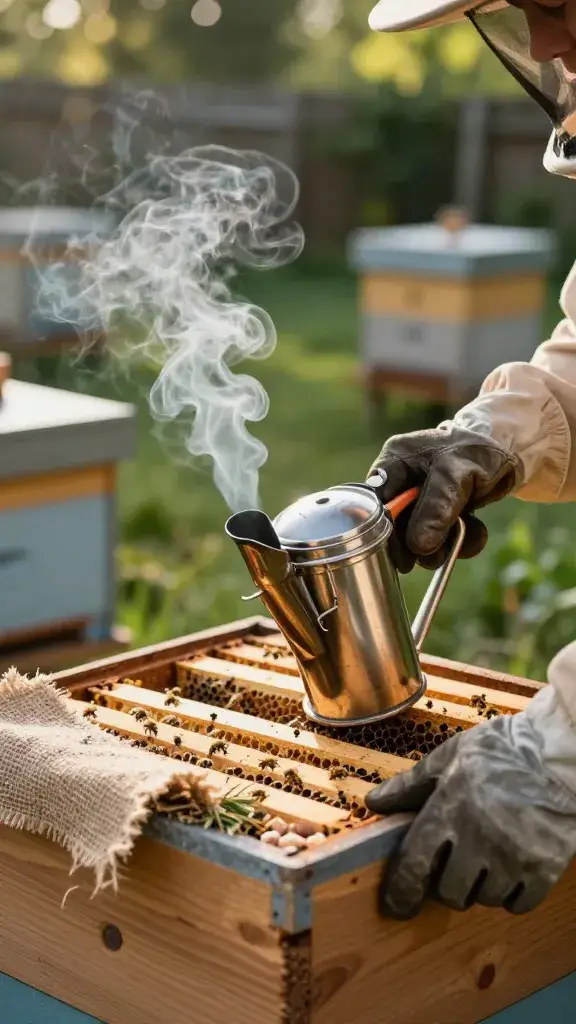
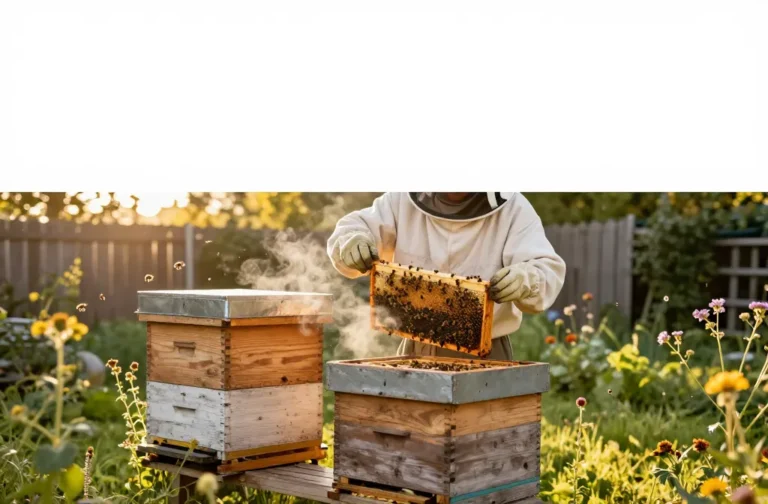
The smoker is your calm-in-a-can. A few gentle puffs at the entrance and under the lid turns a testy inspection into a chill one. Smoke masks alarm pheromones so the hive stays relaxed.
Pro Fuel Picks
- Untreated burlap for easy lighting and cool smoke.
- Pine needles if you’ve got them—free and fragrant.
- Wood pellets for long burns when you’re working multiple hives.
Get one with a heat guard and a sturdy hook. Keep it cool, keep it safe, and keep inspections quick and clean.
4. Hive Tool: The One You’ll Misplace Twice A Week
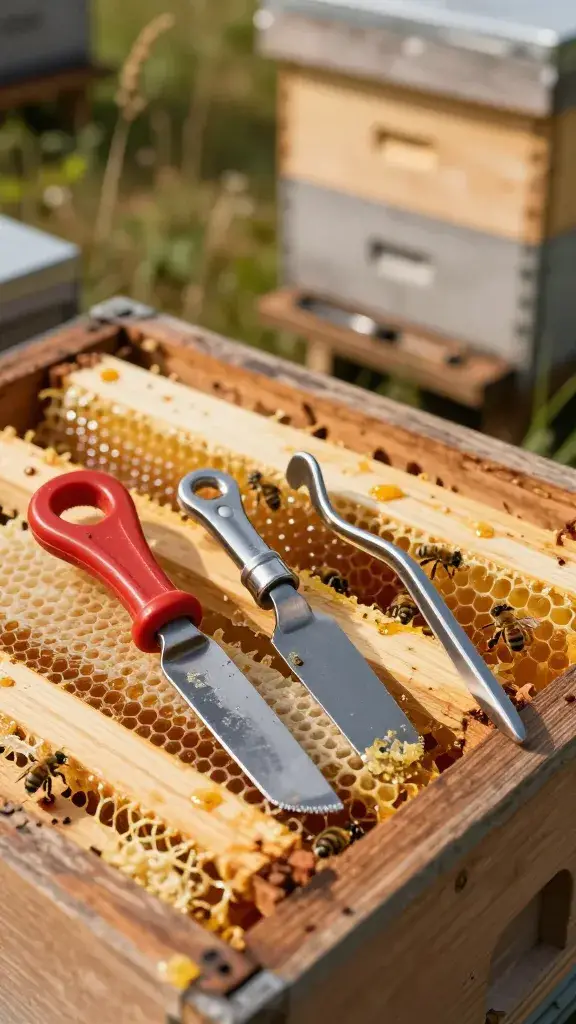
If beekeeping had a magic wand, this would be it. A hive tool lets you pry apart sticky frames, scrape propolis, and convince stubborn boxes to move.
Styles That Work
- J-hook: Excellent for lifting frames without smashing bees.
- Standard flat: Simple, tough, and great for scraping gunk.
- Italian style: Fancy curves for finesse—choose it if it fits your grip.
Buy two. You’ll thank me the first time one falls into the grass mid-inspection.
5. Bee Brush: Gentle Persuasion, Not A Bee Eviction
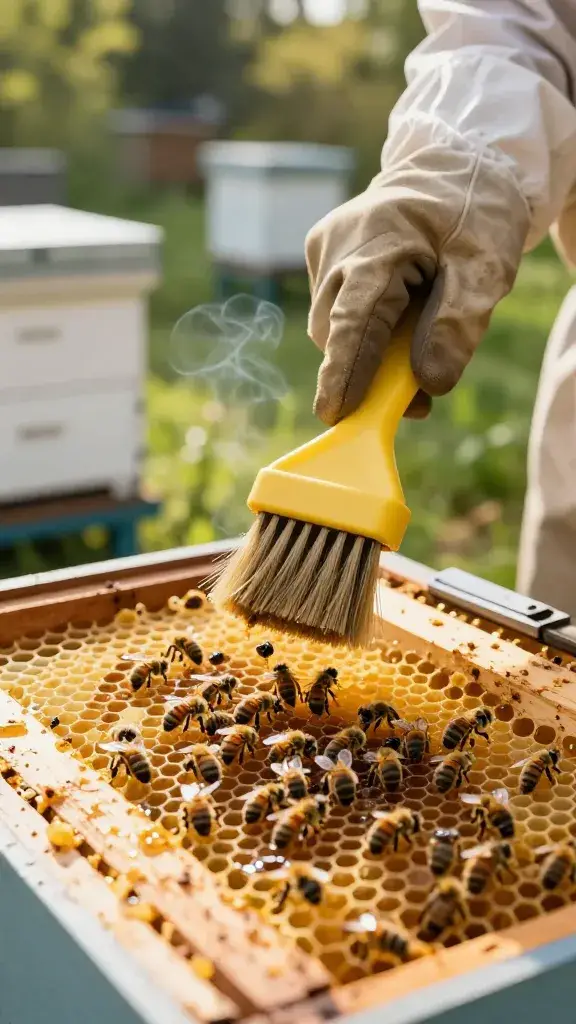
Sometimes you need bees off a frame without turning it into a boxing match. A soft bee brush moves bees with minimal drama when you need a clear surface.
Tips
- Brush upward or to the side in short strokes—don’t mash.
- Use as little as possible. Smoke and a gentle shake work better first.
- Rinse lightly after use so it doesn’t turn into a propolis brick.
Great for honey extractions, queen spotting, and avoiding squished bees when you set frames down.
6. Frame Grip And Frame Holder: Save Your Fingers, Save Your Comb
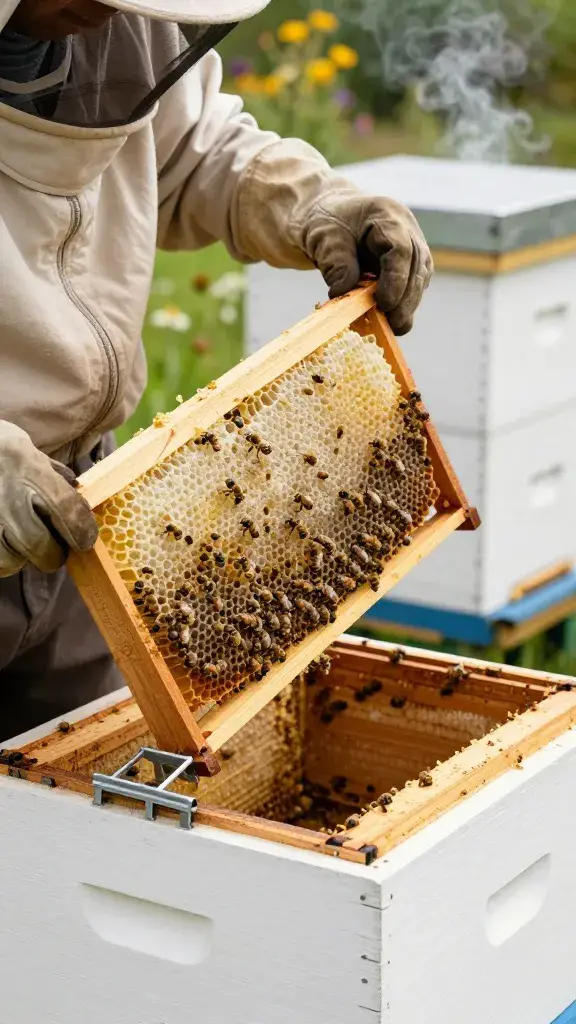
Fresh comb is delicate. Your grip isn’t always. A frame grip gives you steady control when lifting frames, and a frame holder attaches to your hive box so you can safely park frames while you work.
Why They Help
- Less rolling bees between frames—which reduces stings and guilt.
- Cleaner inspections with fewer dropped frames (the horror!).
- Better ergonomics for heavy brood frames and sticky honey frames.
Use them when learning or on hot days when everything feels extra melty. Confidence upgrade, unlocked.
7. Feeders: Because New Colonies Don’t Live On Vibes
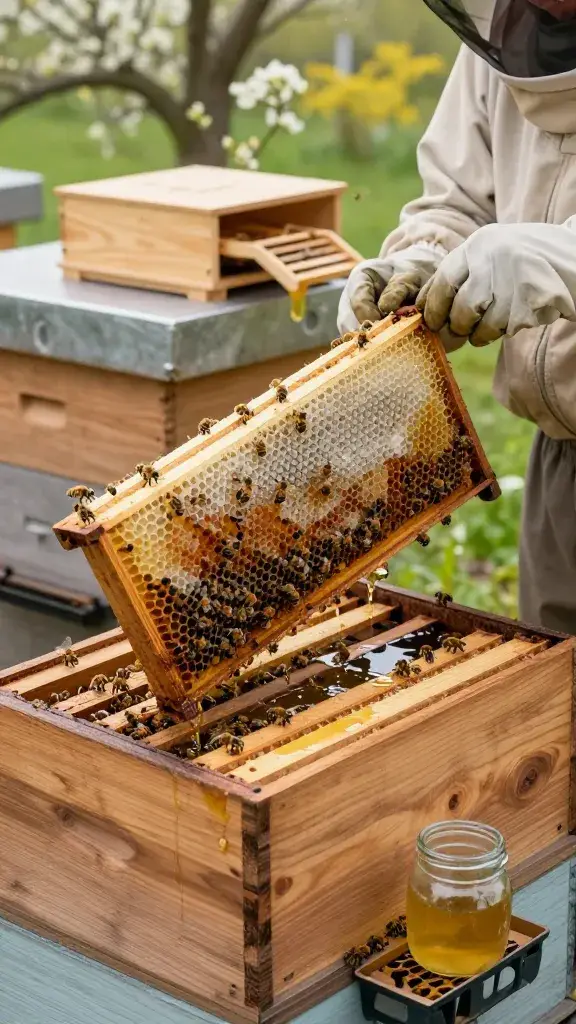
Early on, your bees need fuel to build comb and raise brood. Feeders deliver syrup efficiently so your colony grows instead of struggles.
Feeder Styles
- Entrance feeders: Easy, cheap, but can attract robbers—use with caution.
- Top feeders: Larger capacity, great for big boosts in spring.
- Frame feeders: Inside the brood box—less robbing, solid choice.
Pro tip: Use a 1:1 sugar syrup in spring for comb building, 2:1 in fall for storing winter feed. Keep it clean to avoid fermenting nastiness.
8. Queen Excluder: Traffic Control For Your Honey Supers
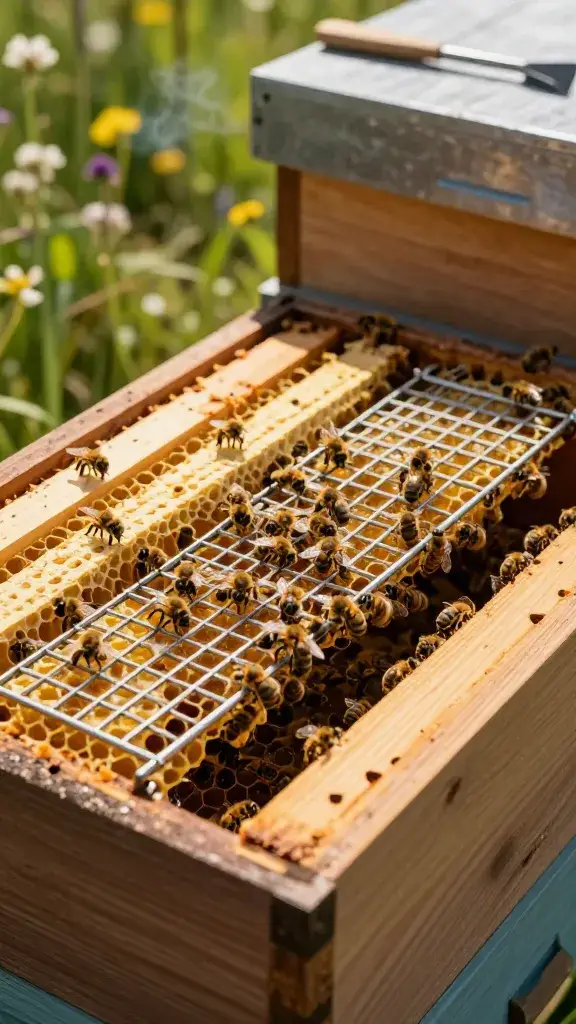
Want honey without brood mixed in? A queen excluder keeps the queen from laying in your honey supers by blocking her larger body while allowing workers to pass.
When To Use It
- After the colony grows and you add a honey super.
- When you want crystal-clear honey frames for extraction.
- If you need easier queen localization in the brood nest.
Some folks say excluders slow bees, IMO it depends on hive strength. Add it once bees actively work the super and they’ll cruise right through.
9. Uncapping Tools: Unlock The Honey Like A Pro
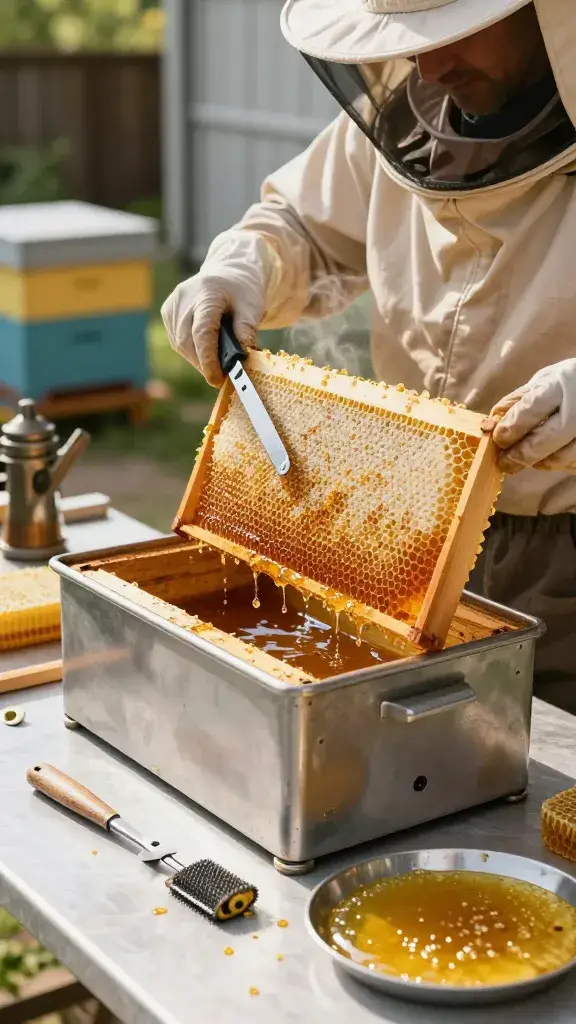
When honey season hits, you’ll need to open those wax cappings cleanly. Uncapping tools help you slice, scratch, or melt cappings without wrecking the comb.
Top Tools
- Uncapping knife (heated or not): Smooth, fast slicing across frames.
- Uncapping fork: Great for low spots your knife misses.
- Scratcher roller: Quick for uneven comb or starter strips.
Set up over a food-grade tub or pan to catch cappings and honey. Bonus: Those wax cappings make incredible candles or lip balm later.
10. Honey Extraction Setup: Spin, Strain, And Smile
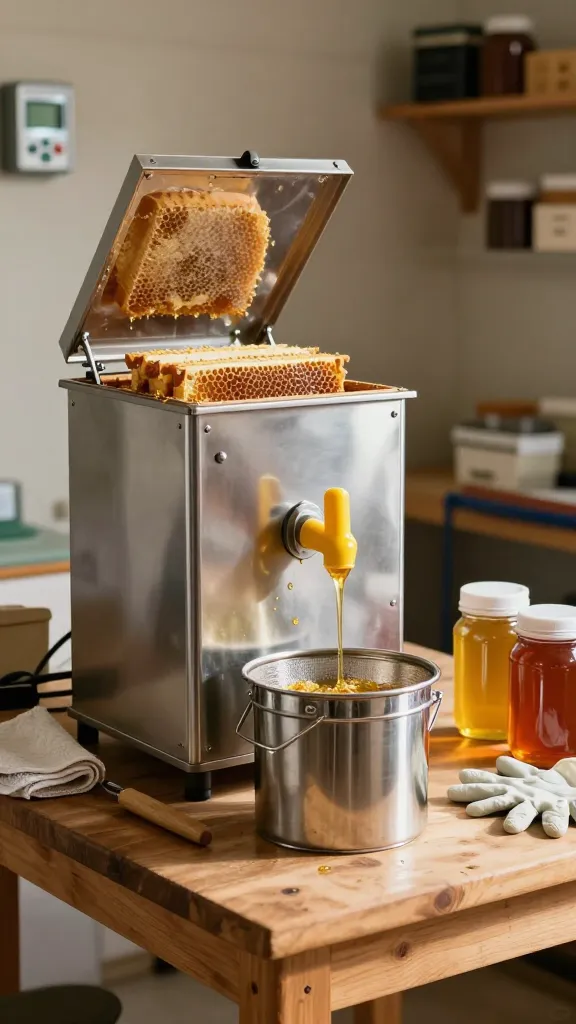
You’ve got capped honey—now what? A basic extraction setup turns heavy frames into bottles of liquid gold without turning your kitchen into a sticky crime scene.
Core Pieces
- Manual extractor (2–4 frame): Perfect for beginners with a few hives.
- Double sieve/strainer: Catches wax bits while keeping flavor intact.
- Bottling bucket with a honey gate: Clean pours, less waste.
Run the extractor on a sturdy surface and warm the room slightly so honey flows better. You’ll get more yield and fewer arm workouts you didn’t ask for.
11. Varroa Monitoring And Treatment Kit: Keep Your Colony Alive, Period
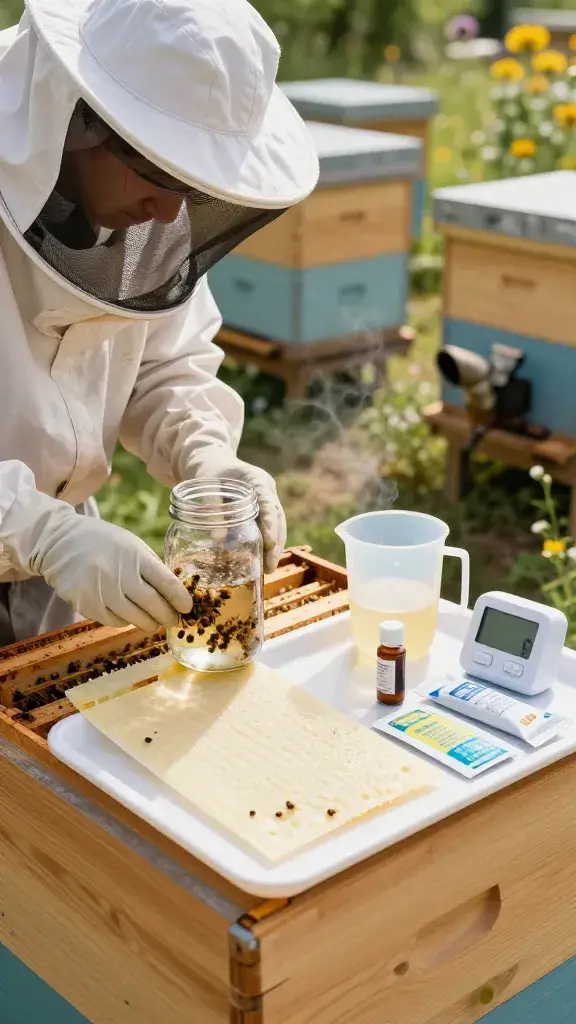
Varroa mites are the boss fight of beekeeping. Monitor regularly and treat on time or your hive won’t make it—seriously. A simple kit keeps you on top of it.
What To Include
- Alcohol or sugar roll kit for accurate mite counts.
- Disposable cup and mesh jar lid for shaker tests.
- Treatment options like oxalic acid, formic, or thymol—match to season and temps.
- Sticky boards if you prefer drop counts (less precise but useful).
Test monthly in season and always before/after treatments. Low mites mean strong winter bees and a thriving spring. Protect the girls, protect the honey.
Gear up right and you’ll spend more time enjoying your bees and less time fighting sticky chaos. Start with the essentials, learn your rhythm, and upgrade as you go. You’ve got this—your first honey harvest is closer than you think, and it tastes even better when you earned it.
Share this content: