12 Smart Ways to Protect Your Beehive From Predators Fast
Your bees work overtime; predators know it. From bears and skunks to wasps and nosy neighbors’ dogs, a hive can look like an all-you-can-eat buffet. The good news? You can lock it down without turning your apiary into Fort Knox. Let’s run through simple, clever defenses that actually work and keep your colony thriving.
1. Elevate The Hive Like It’s VIP
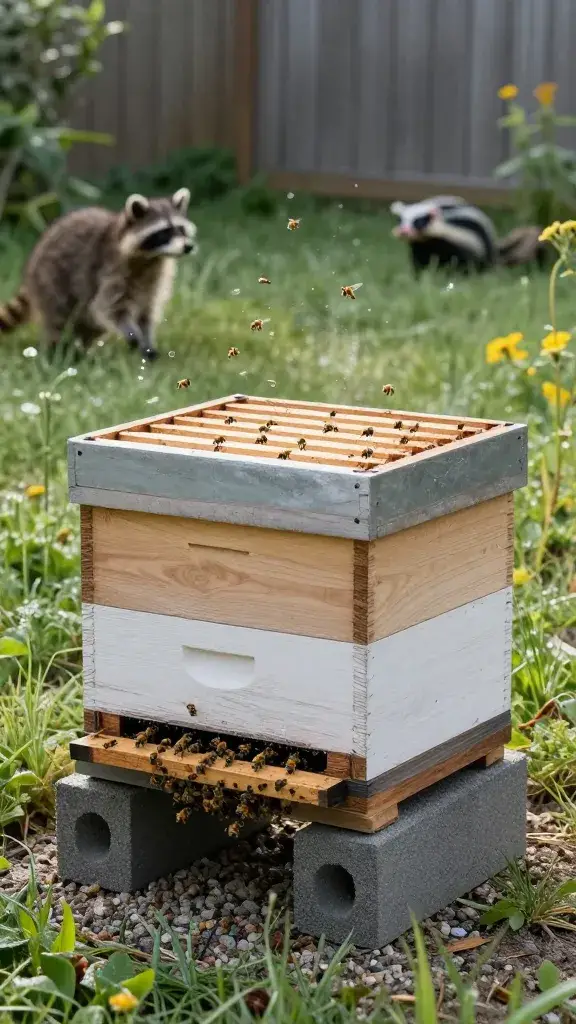
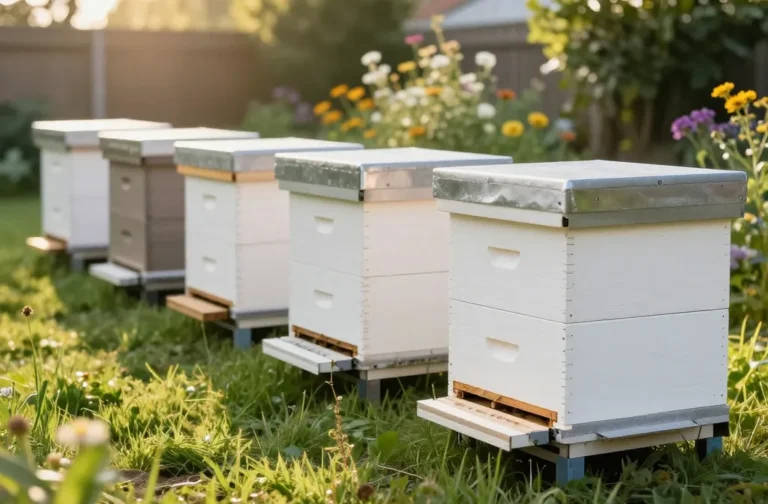
Predators love easy access. When you raise your hive 12–18 inches off the ground, you make skunks, raccoons, and mice work way harder for a snack. That extra height also keeps moisture down and airflow up—your bees will thank you.
Quick Tips
- Use sturdy hive stands or cinder blocks with a timber crossbar.
- Level the stand so frames hang straight and bees draw comb evenly.
- Add ant moats on the legs if you deal with sugar ants.
Great for yards with roaming critters and damp soil. Bonus: your back won’t hate you at inspection time.
2. Go Electric: A Bear Fence That Means Business
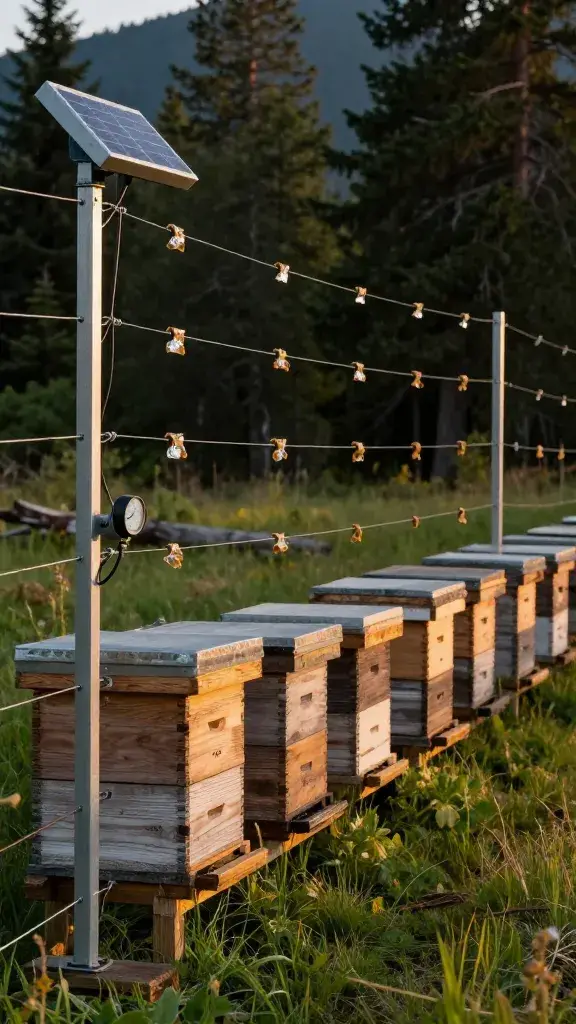
Bears don’t play—one visit can flatten your apiary and your mood. An electric fence with a hot bite teaches them to look elsewhere fast. It’s the gold standard in bear country, IMO.
Key Points
- Use a low-impedance charger (solar or plug-in) with 7,000+ volts output.
- Install 5–6 strands from 6 inches off the ground to 4 feet.
- Bait the fence with peanut-butter foil tabs to ensure nose contact.
- Keep grass trimmed so the fence stays hot.
Best for rural or wooded areas. It protects bees, equipment, and your sanity—seriously.
3. Tighten Entrances During Robbing Season
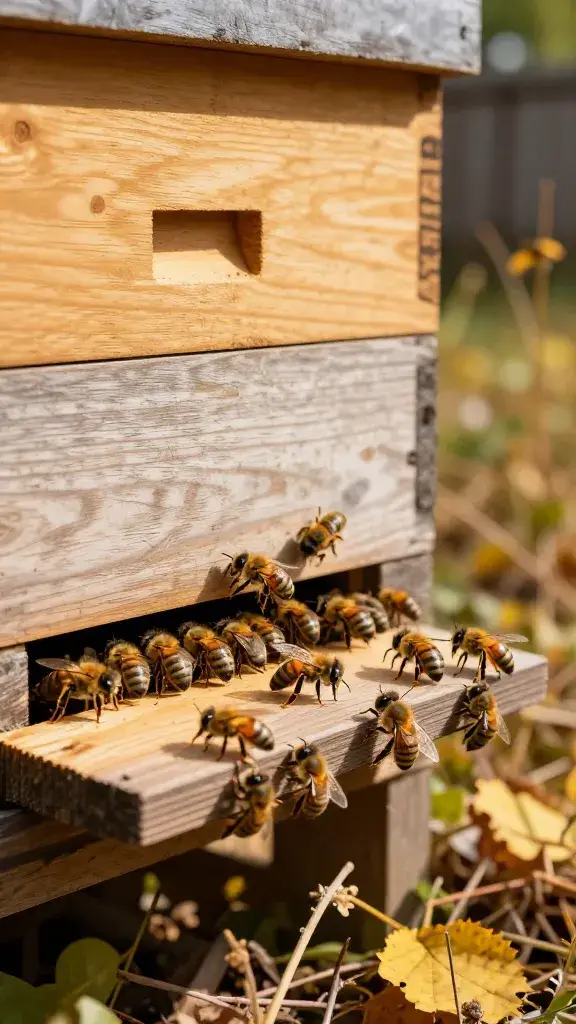
Wasps, hornets, and opportunistic bees target weak hives with wide-open doors. A small entrance gives your guard bees home-court advantage. Think of it like crowd control at a concert.
When To Do It
- Late summer to fall when nectar dries up.
- Any time you spot wasps hovering or fighting at the landing board.
Use reducers or a simple wooden wedge with notches. Perfect for defending small colonies and nucs without drama.
4. Install Mouse Guards Before The First Frost
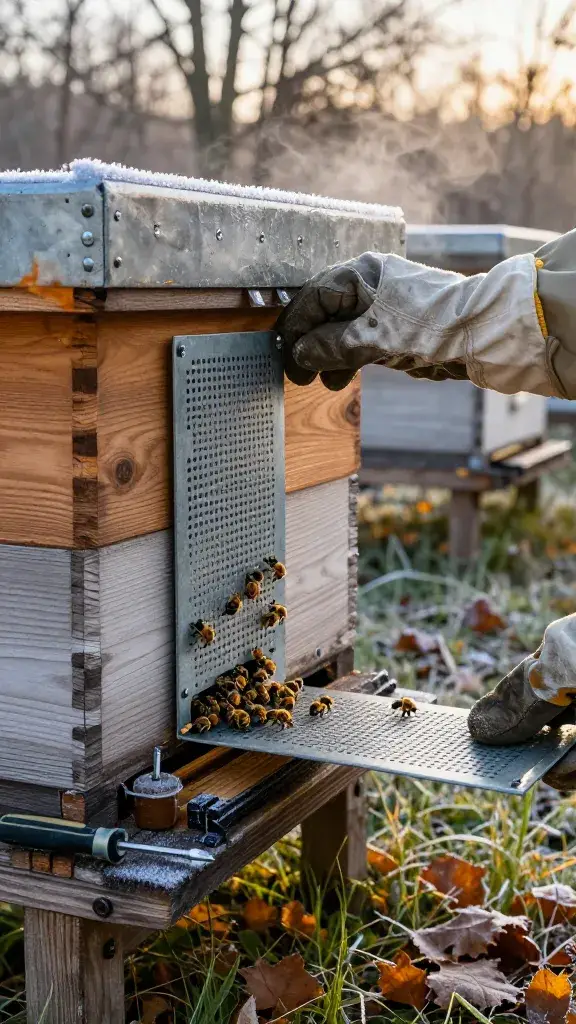
Mice adore warm hives stuffed with cozy comb. They wreck frames and foul everything. A mouse guard lets bees pass while keeping tiny freeloaders out.
Materials
- Perforated metal strip or 1/4-inch hardware cloth.
- Snips and a staple gun or small screws.
Put it on in fall and keep it until spring flow picks up. Cheap, easy, and totally worth it.
5. Use Robbing Screens To Outsmart Wasps
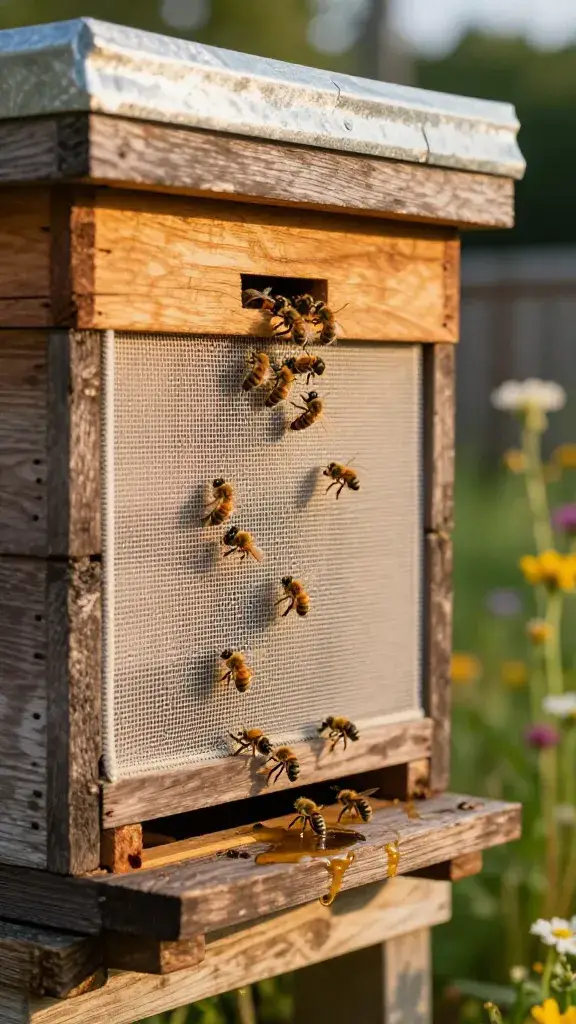
Robbing screens confuse aerial attackers and guide residents to a hidden exit. Wasps smell the party but can’t find the door—bees slip past while outsiders rage-quit.
Setup Tips
- Attach the screen flush to the front with an upper exit offset to one side.
- Keep ventilation in mind on hot days.
- Combine with entrance reduction for spicy robbing pressure.
Clutch move for weak colonies, new splits, or anytime you spill syrup and regret it.
6. Keep The Yard Clean And Stingy With Sweets
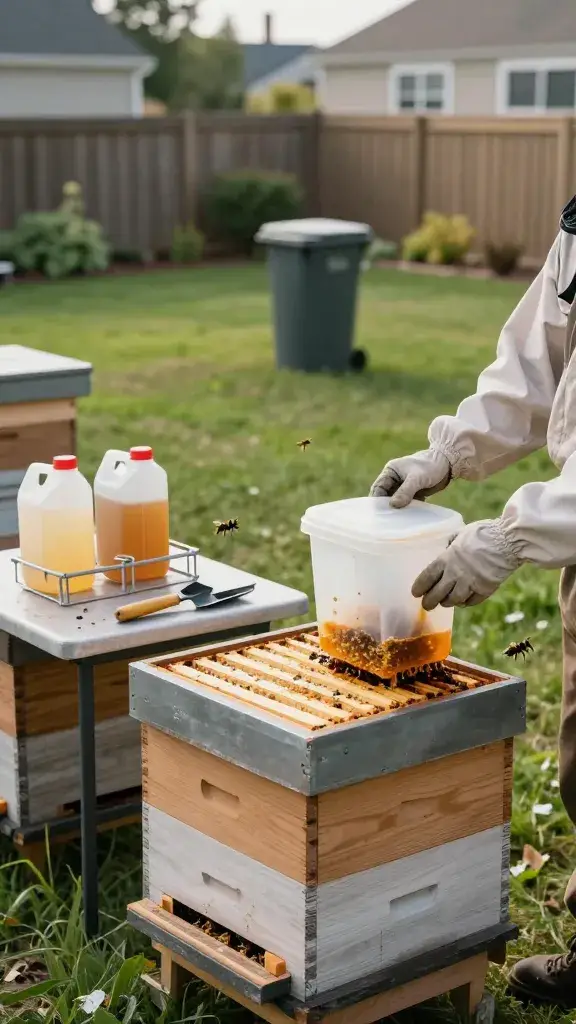
Predators follow smells. Syrup drips, burr comb, and sticky tools act like a neon sign that says “Snacks Here.” If you keep things tidy, you cut down random visitors big time.
Do This
- Feed inside the hive or use leak-proof feeders.
- Seal syrup jugs and rinse measuring tools.
- Remove burr comb and cappings promptly—store in sealed containers.
- Manage trash and compost away from the apiary.
Ideal for suburban beekeepers where wasps and ants crowd every summer barbecue.
7. Reduce Grass And Brush Around Hives
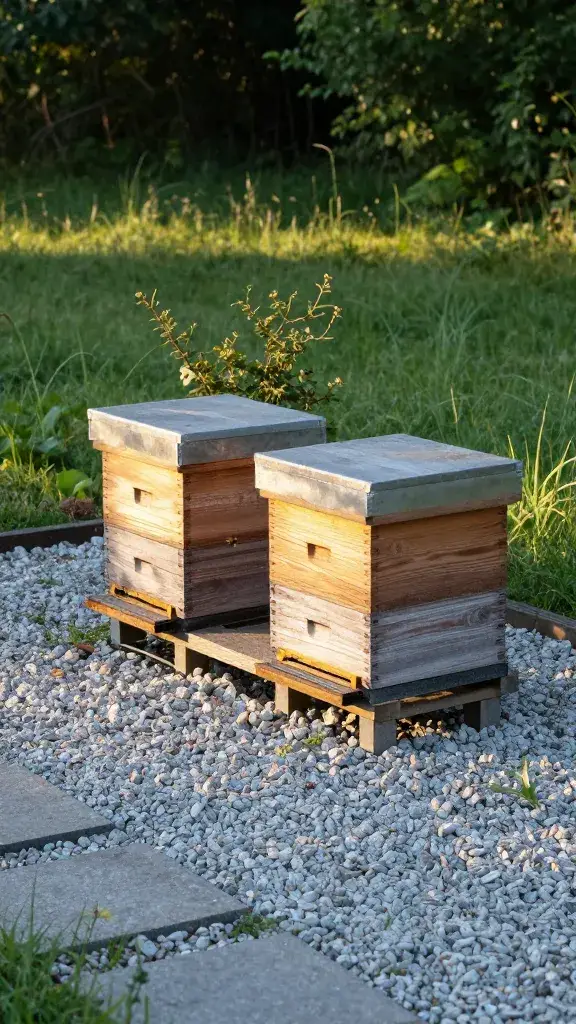
Overgrowth invites skunks, raccoons, and ants to stage stealth raids. A clear perimeter gives you line-of-sight and removes hiding spots. Your bees also get better sun exposure in the morning.
Practical Moves
- Maintain a 3–4 foot vegetation-free zone around each stand.
- Lay gravel or pavers to discourage digging and burrowing.
- Trim low branches that shade and drip sap near entrances.
Great for any apiary that borders woods or tall grass. Visibility alone deters casual prowlers.
8. Add A Top Entrance Or Upper Notch
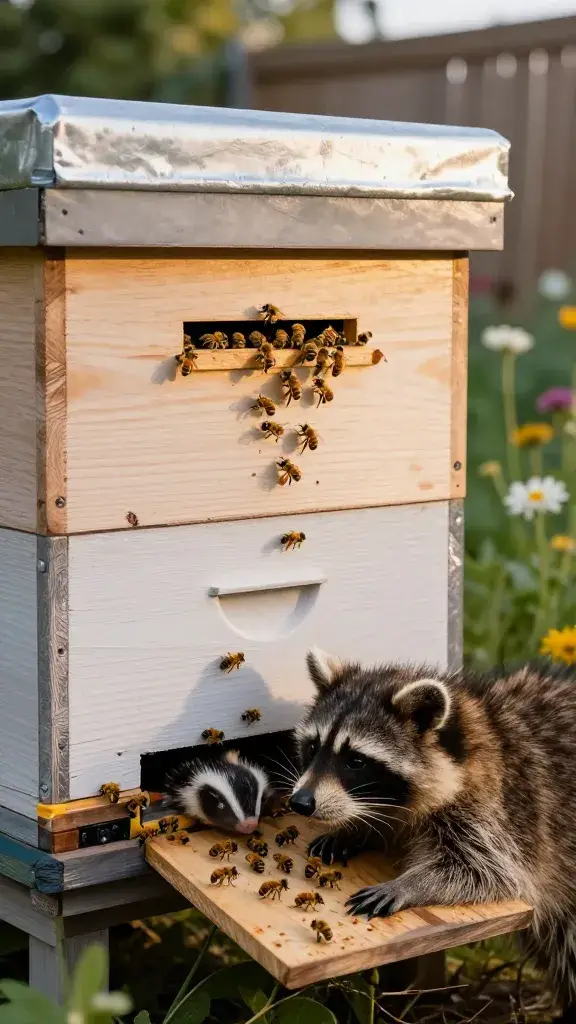
When skunks or raccoons harass the landing board, an upper exit keeps traffic moving and ventilation steady. Bees can bypass the melee while guards focus where it matters.
Why It Works
- Improves airflow and reduces bearding on hot nights.
- Gives a secondary escape route during robbing attempts.
- Helps wintering colonies vent moisture without cracking the main door wide.
Handy for hot climates and colonies under pressure. Use a small notch to prevent drafts.
9. Strap, Weight, Or Screw Down Your Equipment
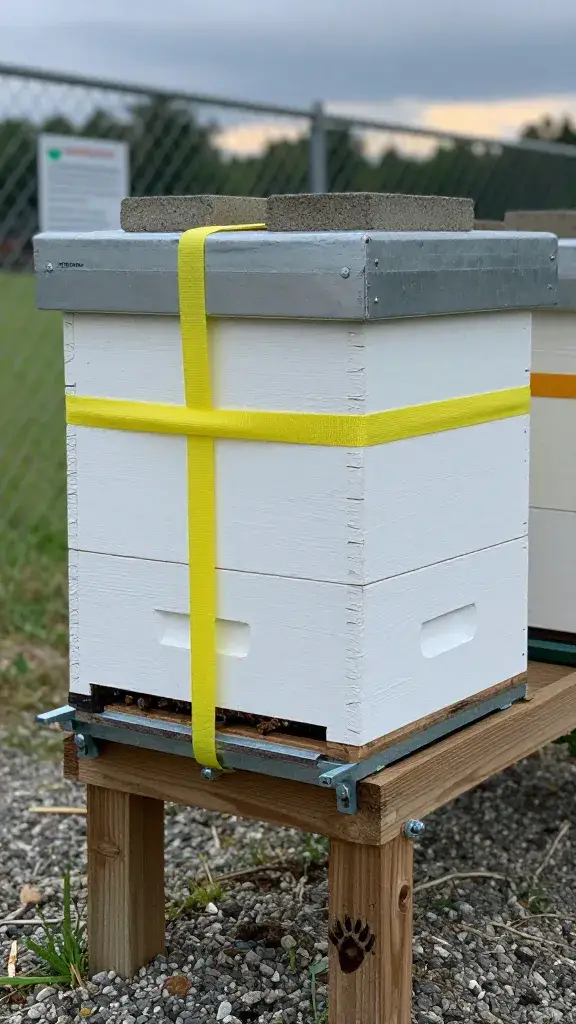
Wind, bears, and bored teenagers all love a stack of loose boxes. Ratchet straps or screws make your hive one unit that resists tipping and prying. It’s simple insurance.
Options
- One vertical ratchet strap around the entire stack.
- Concrete pavers or bricks on the outer cover.
- L-brackets to anchor the stand to posts.
Best in storm-prone areas and public sites. You don’t want your supers flying or a raccoon lifting lids like it’s opening night.
10. Time Inspections And Feeding To Avoid Peak Predator Hours
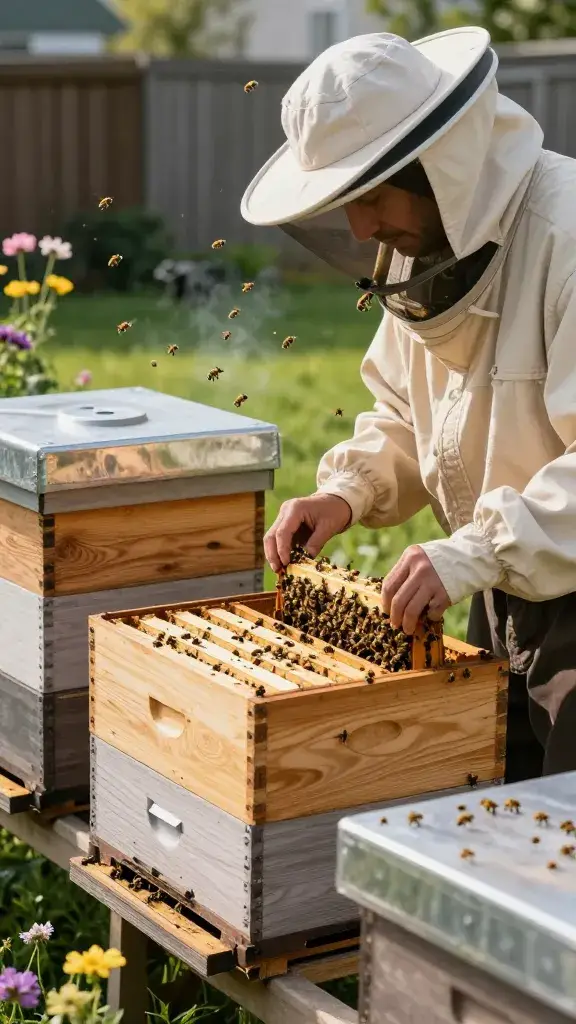
Skunks and raccoons run night shift. Wasps peak on warm afternoons. If you work your bees during calm, sunny mornings, you keep scent and chaos to a minimum.
Smart Timing
- Inspect mid-morning when foragers fly and temp is comfortable.
- Feed at dusk inside the hive to reduce aerial traffic.
- Avoid crushing bees at the entrance—squished bees attract more trouble.
Great for high-traffic yards. You direct the show, not the critters.
11. Deploy Natural Deterrents (Without Going Full Mad Scientist)
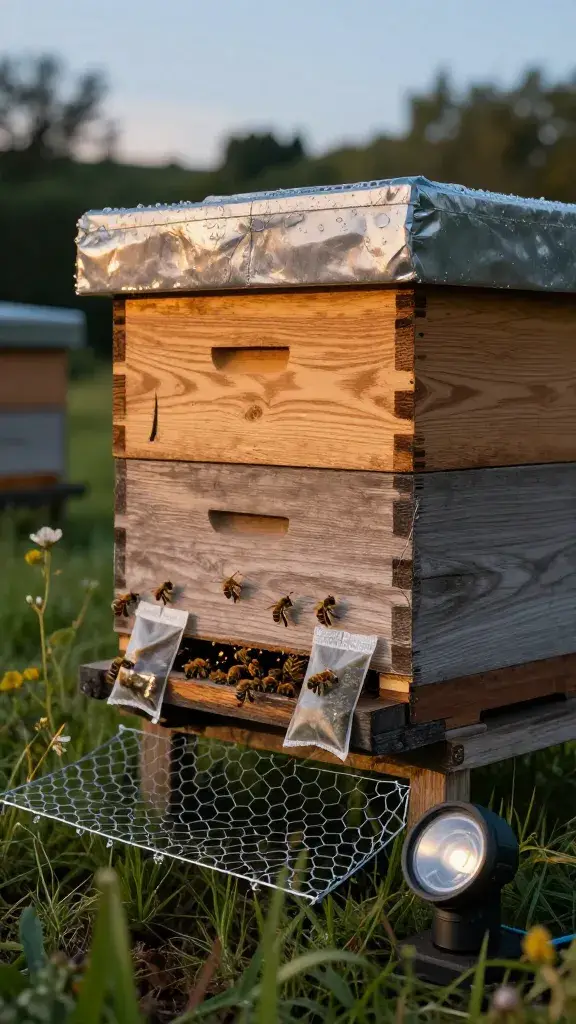
Simple sensory blockers can push casual predators away. Lights, motion, and smells help, as long as you don’t stress your bees. Keep it gentle and smart.
What Actually Helps
- Motion-activated lights or sprinklers facing outward from the apiary.
- Essential oil sachets (peppermint) under the stand legs to deter ants—avoid the entrance.
- Chicken wire skirt on the ground to annoy diggers (lay flat and pin down).
Use alongside sturdier defenses. Think of these as the polite “keep moving” signs.
12. Build Colony Strength: The Ultimate Defense
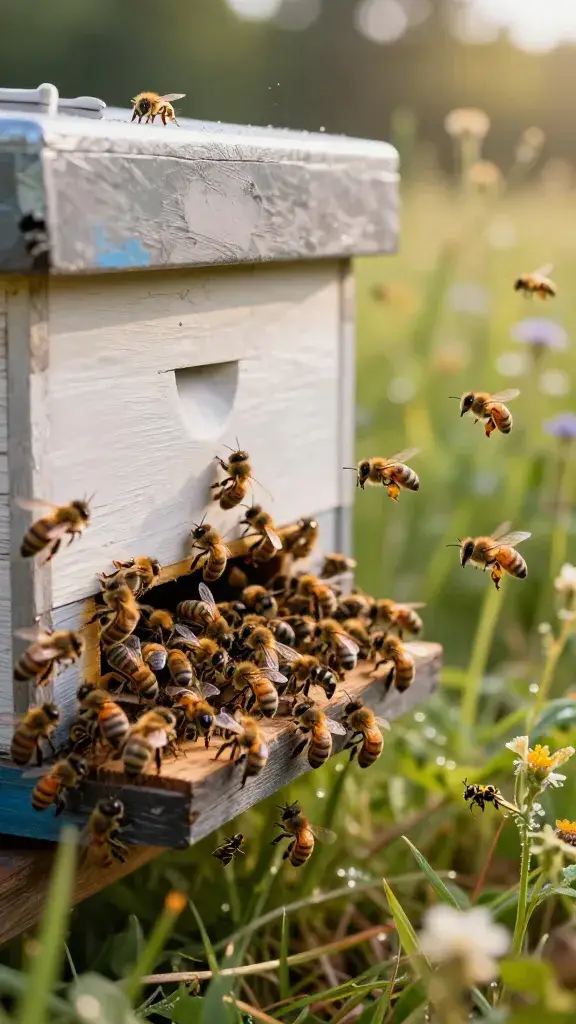
A strong colony polices its own door, shrugs off wasps, and bounces back from stress. Good nutrition, space management, and healthy queens do more than any gadget. You can’t out-hardware a weak hive—build it up.
Core Habits
- Place hives in morning sun for early foraging and quicker flight muscle warm-up.
- Provide steady nutrition: timely syrup for new colonies and protein patties when appropriate.
- Stay on top of Varroa management—parasites drag guard response and pheromone signals.
- Avoid over-supering; right-size space to what bees can defend.
Perfect for every beekeeper, every season. Strong bees make predators rethink their life choices.
Ready to give your bees the fortress they deserve? Pick a few of these moves and stack them up—small changes add serious protection. Your hives will run smoother, your bees will stay safer, and you’ll spend more time grinning in a bee suit than chasing off hungry visitors. FYI: the bees notice when you level up.
Share this content: