Buzz-Saving Guide: 16 Easy Ways to Help Your Bees Survive Summer Heat
When the mercury spikes, your bees work overtime just to stay cool. A few simple tweaks can keep your colonies thriving instead of fanning themselves into exhaustion. These easy strategies protect brood, reduce stress, and keep honey production on track. Ready to give your girls a breezy summer?
1. Give Hives Some Shade (But Not A Cave)
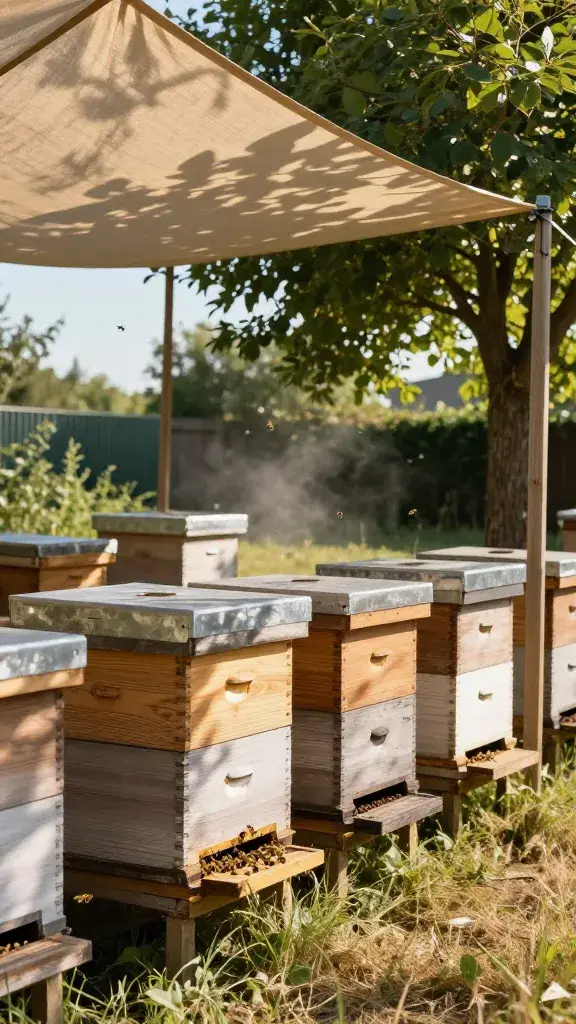
Direct sun cooks colonies fast, especially in late afternoon. Add partial shade that still lets morning light hit the entrances so bees start strong and dry out moisture.
Tips
- Use shade cloth (30–50% rating) over a simple frame.
- Position near a tree for dappled shade after 1–2 p.m.
- Avoid full, dark shade all day—moisture and beetles love that.
Strategic shade cuts interior temps and keeps brood from overheating without slowing the colony’s daily rhythm.
2. Orient Entrances To Catch Breezes
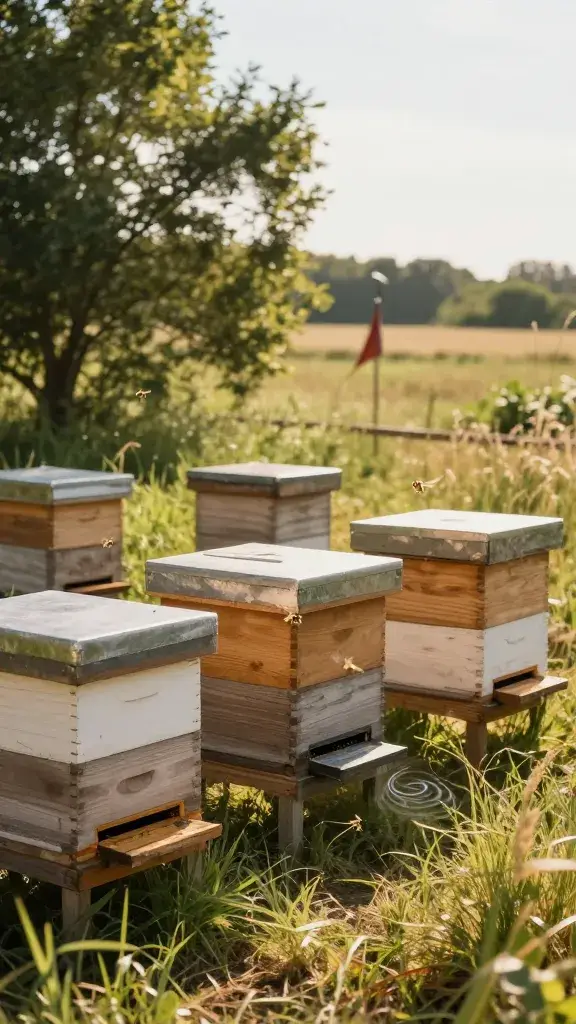
Airflow is free air-conditioning. Point hive entrances toward prevailing breezes and away from scorching afternoon sun.
Key Moves
- Rotate stands 10–20 degrees if needed—small shifts help a lot.
- Keep 3–4 feet between hives so they don’t block each other’s wind.
- Clear tall grass or boards in front of entrances.
Better airflow means less fanning, happier foragers, and a cooler brood nest. Win-win.
3. Add A Ventilated Inner Cover
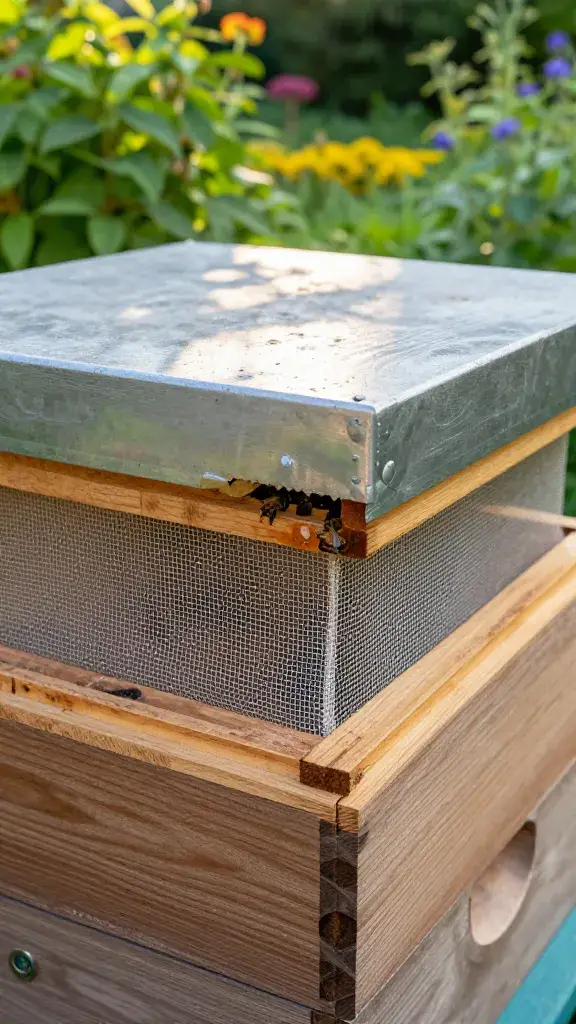
Heat rises, so let it out—without inviting robbers. A screened inner cover or vented notch boosts convection while keeping the hive secure.
What To Use
- Screened inner cover with escape hole.
- Top entrance shim or notched inner cover.
- Hardware cloth (#8) if you DIY a vent.
Improved venting prevents heat buildup and reduces condensation, especially during muggy heat waves.
4. Prop The Lid For A Heat Chimney
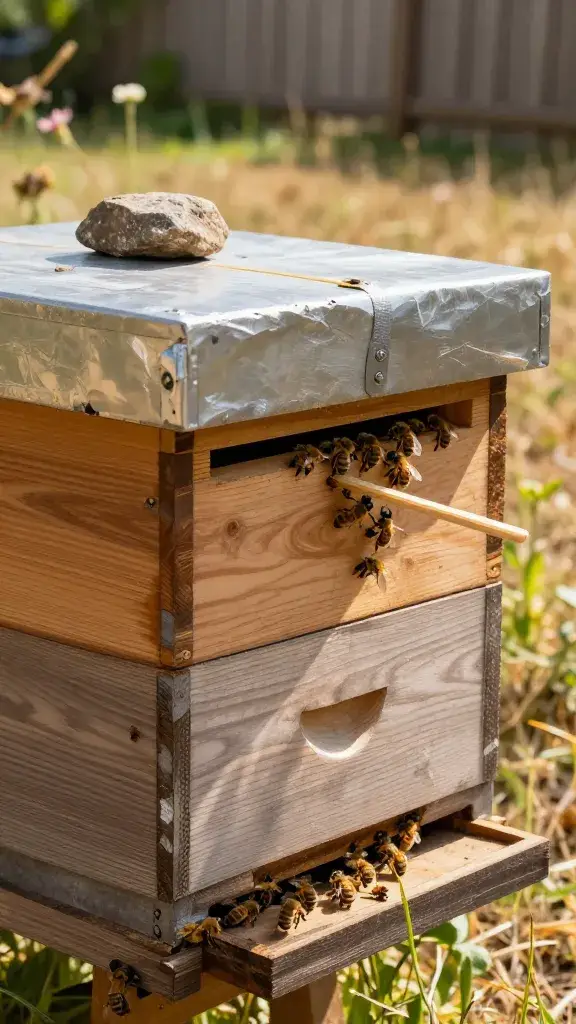
No fancy gear? Crack the top. A small spacer or popsicle stick under the back of the outer cover creates a chimney effect.
How To Do It Safely
- Lift the back edge 1/4–1/2 inch—just enough for airflow.
- Keep the front tight to deter robbers.
- Add a rock or strap so wind doesn’t launch the lid.
This tiny gap dumps hot air fast and costs virtually nothing. Seriously, try it.
5. Provide A Reliable Water Source (Close!)
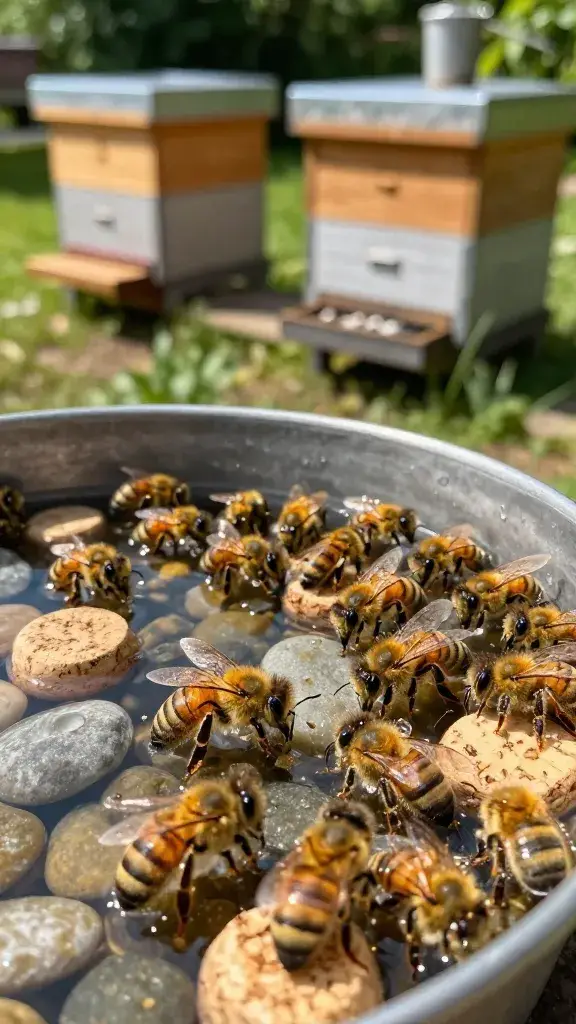
Bees haul water to cool brood and regulate humidity. If you don’t give them water, your neighbors’ pools and dog bowls will.
Best Setups
- Shallow pan with pebbles or wine corks for landing pads.
- A slow-drip bucket over a tray with stones.
- Birdbath with floating sticks, refreshed daily.
Place it within 10–20 feet of the apiary. Less commuting means more cooling—and better honey yields.
6. Use Light-Colored Or Reflective Covers
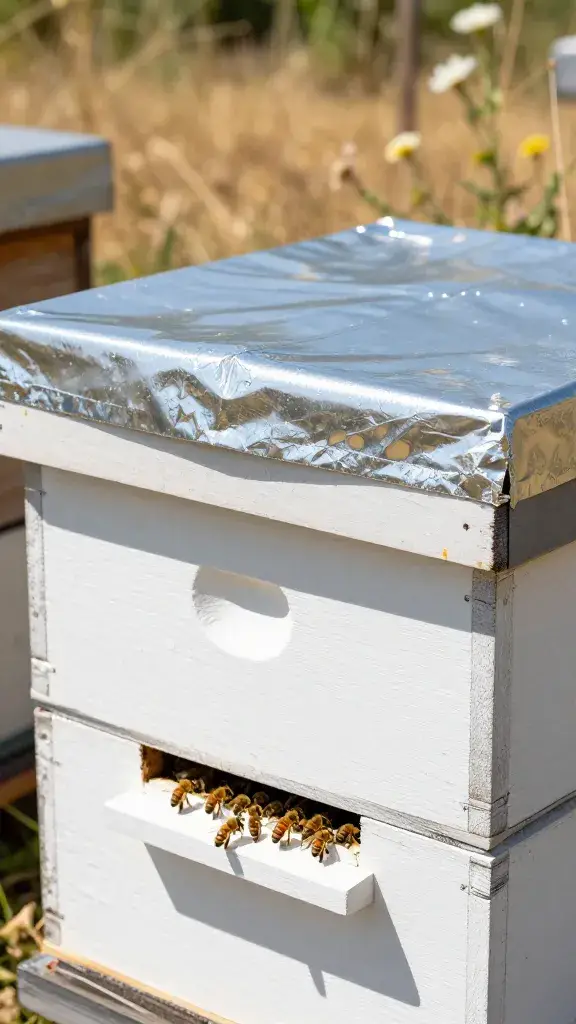
Dark lids absorb heat like a griddle. Light or reflective tops bounce radiation and keep the attic cooler.
Quick Upgrades
- Paint outer covers white with exterior-grade paint.
- Add a reflective foil-faced board under the lid.
- Try a telescoping cover with a reflective metal cap.
Reflective surfaces can drop interior temps several degrees—a huge deal on a 100°F afternoon.
7. Install A Slatted Rack For Breathing Room
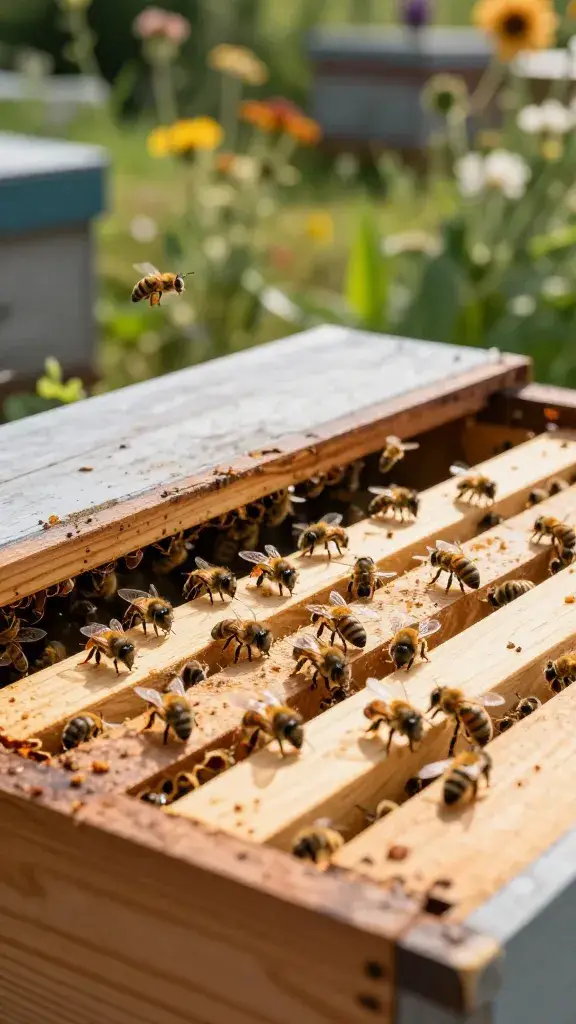
Slatted racks add a buffer zone between the entrance and brood nest. That space reduces drafts on brood and gives fanners a staging area.
Why It Helps
- Bees cluster below frames instead of on the landing board.
- Air moves smoothly without chilling brood.
- Queens lay more consistently when temps stay stable.
Use it year-round, but it shines in summer for smoother ventilation and less bearding.
8. Add A Shade-Throwing Awning Or Umbrella
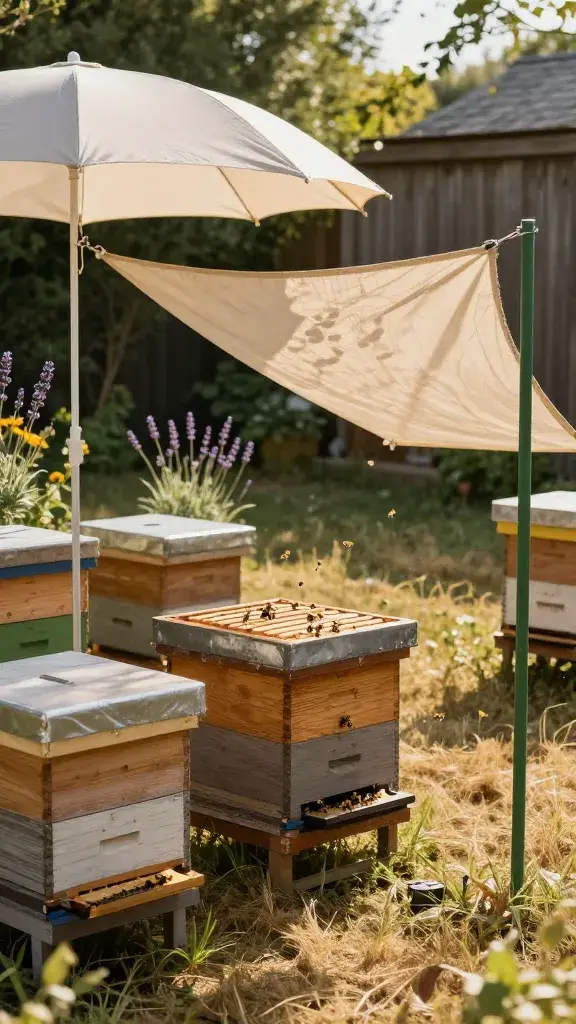
Need instant relief? Pop an outdoor umbrella or simple awning to block peak sun hours. It’s the beekeeper’s version of sunglasses.
Fast Options
- Clamp a beach umbrella to the stand.
- Stretch a tarp on T-posts 6–8 feet high.
- Use a garden pergola panel for dappled light.
Temporary shade buys your bees time during heat waves and lets you fine-tune later.
9. Give Them A Roomier Entrance (When Safe)
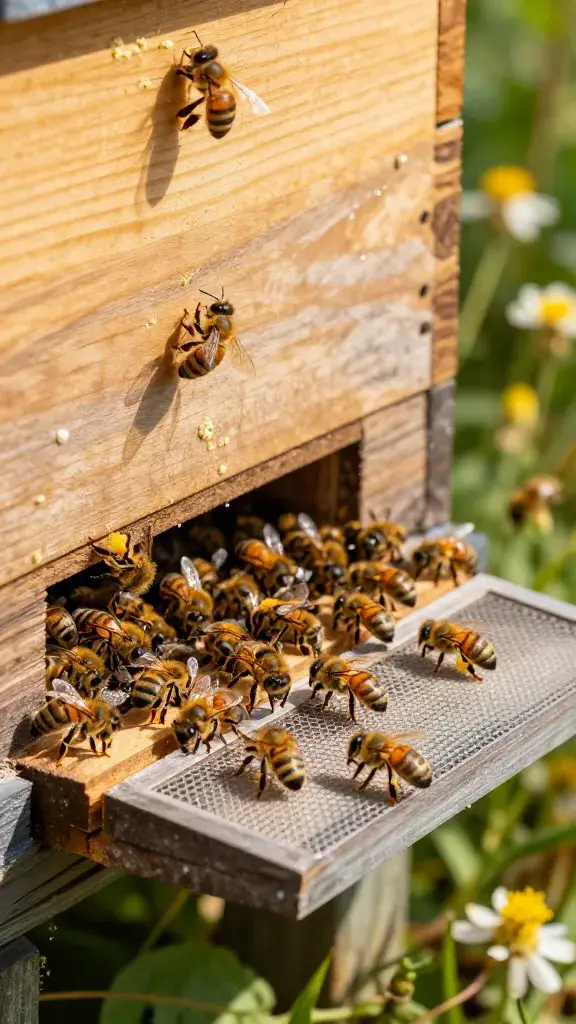
More exit area equals more airflow. Widen the reducer or open the full entrance during hot, nectar-rich days.
Smart Practices
- Open during strong nectar flow to limit robbing pressure.
- Reduce again if dearth hits or wasps show up.
- Use a screened entrance guard if robbing starts.
Balanced entrances keep the breeze going while protecting stores. IMO, flexibility is key here.
10. Go Foundationless Or Use Thinner Foundation
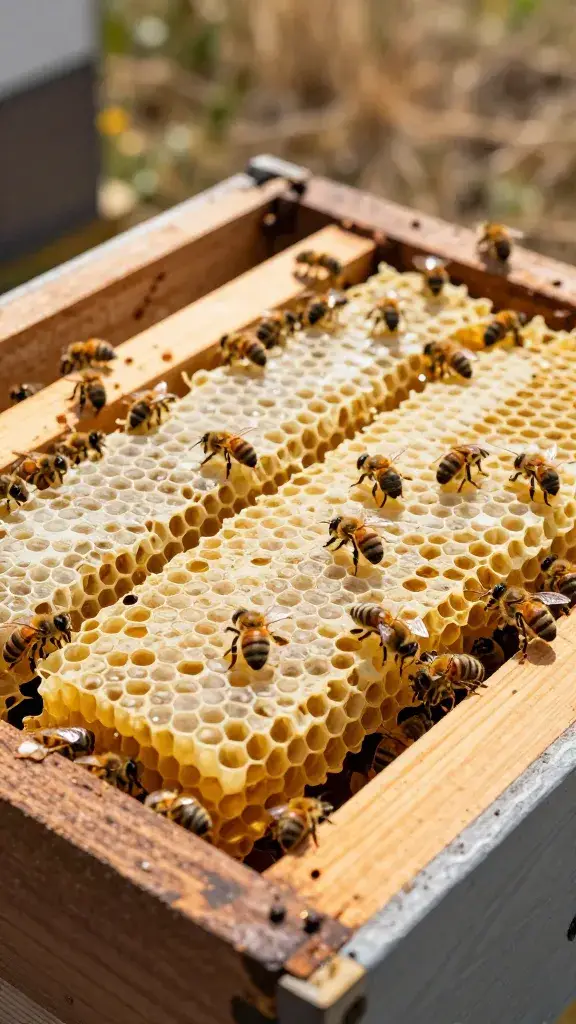
Thinner comb breathes better and dissipates heat faster. It also lets bees build cell sizes they want for their microclimate.
Consider
- Use starter strips or thin surplus foundation.
- Ensure frames stay straight with good spacing.
- Avoid heavy inspections in peak heat to prevent sagging.
Better thermodynamics plus naturally managed brood sizes can improve brood viability in scorching weather.
11. Insulate The Top—Yes, In Summer
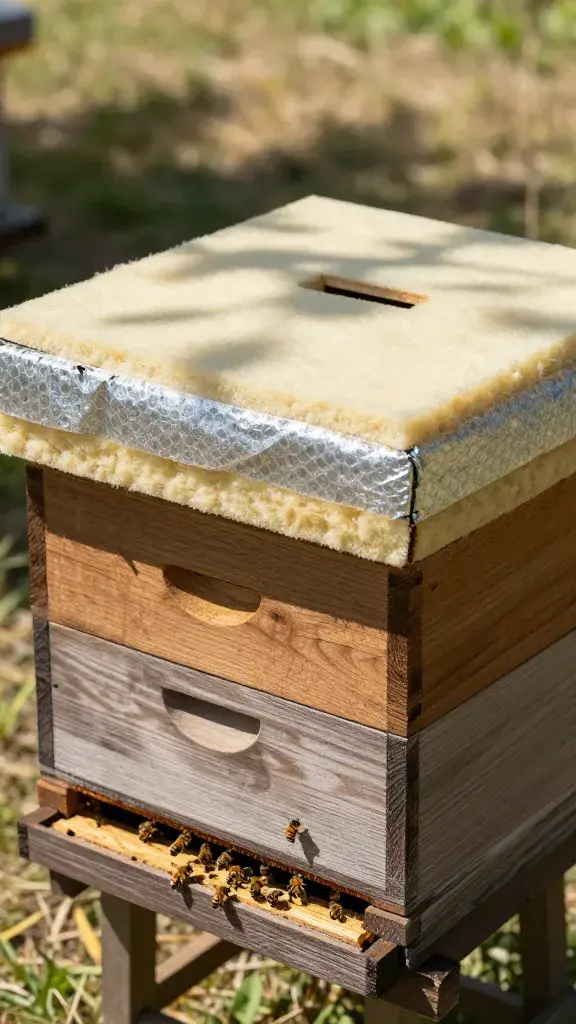
Counterintuitive? Maybe. But a thin insulation board under the lid blocks radiant heat and evens out temperature swings.
Materials
- 1/2-inch foam board or sheep wool pad.
- Reflective bubble wrap under the outer cover.
- Keep vents open so moisture still escapes.
Top insulation stops the “solar oven” effect while ventilation handles humidity. Balance is everything.
12. Reduce Disturbance During Peak Heat
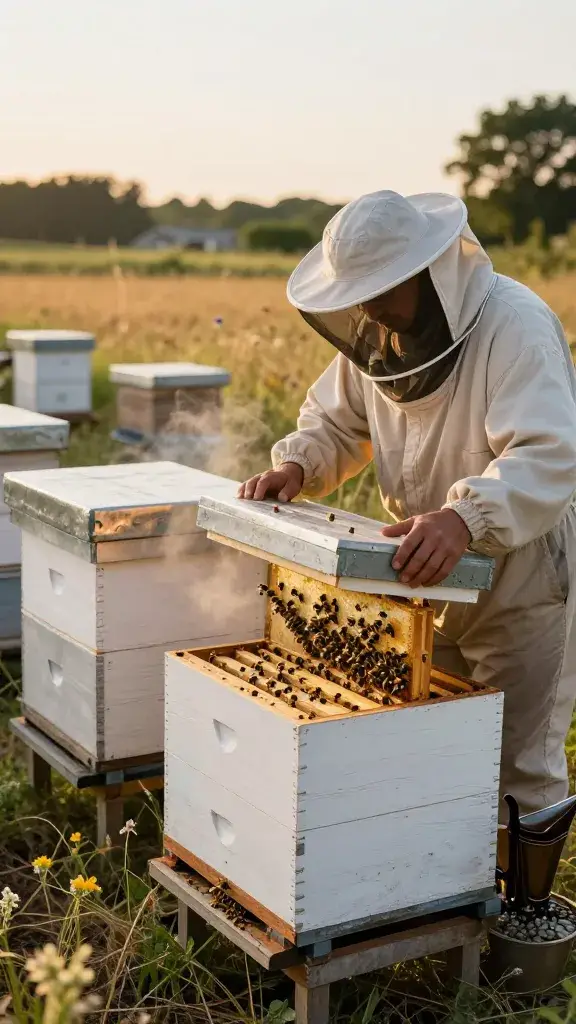
Opening hives in blazing heat dumps hot air onto brood and stresses foragers. Time your work when bees can recover quickly.
Good Timing
- Inspect early morning or near dusk.
- Keep smoke light and targeted.
- Plan, move fast, and close up promptly.
Less disruption means the colony maintains its careful temperature control without burning energy on recovery.
13. Keep The Apiary Hydrated (Plants And Ground)
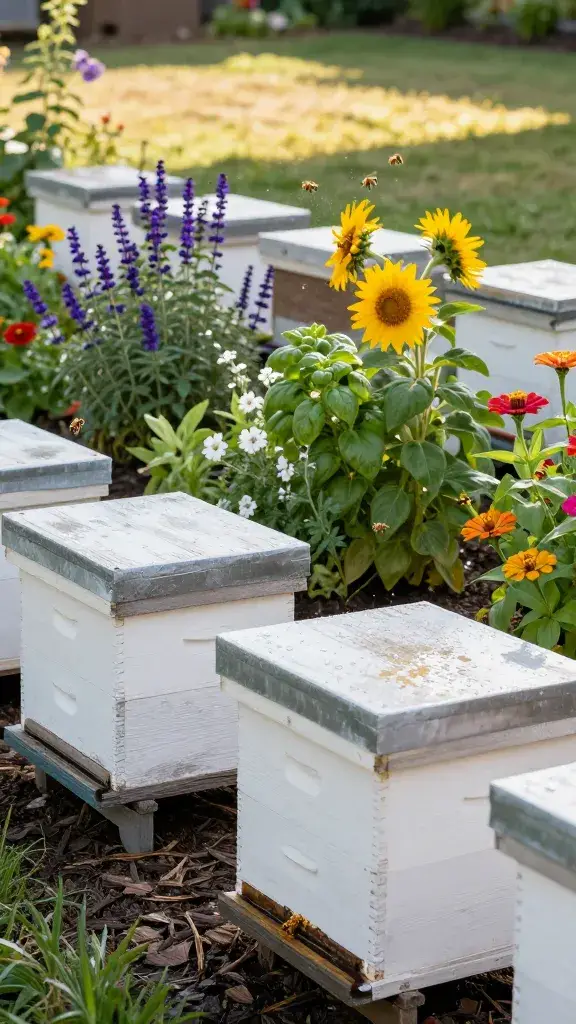
Hot, dry yards radiate heat like parking lots. Green, mulched spaces stay cooler and support nectar sources when everything else crisps up.
Do This
- Mulch around stands to reduce heat bounce-back.
- Water nearby pollinator patches in the morning.
- Plant heat-tolerant bloomers: salvias, sunflowers, basil, zinnias.
Cooler microclimates mean less hive stress and more forage when it matters most.
14. Use Screened Bottom Boards (With A Catch)
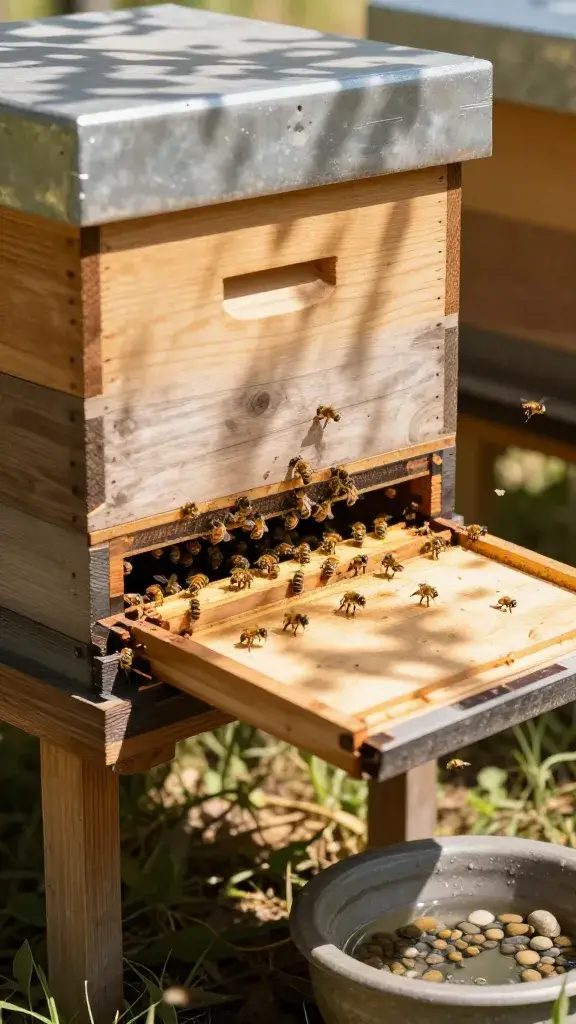
Screened bottoms improve airflow and can drop temps slightly. They also help with mite fall, which indirectly boosts colony vigor in summer.
Best Practices
- Open screens during heat waves; insert boards during storms.
- Elevate hives to reduce skunk or ant access.
- Combine with upper ventilation for a full-stack effect.
Screened bottoms aren’t magic, but paired with shade and water they make a noticeable difference.
15. Feed Lightly If Nectar Dries Up
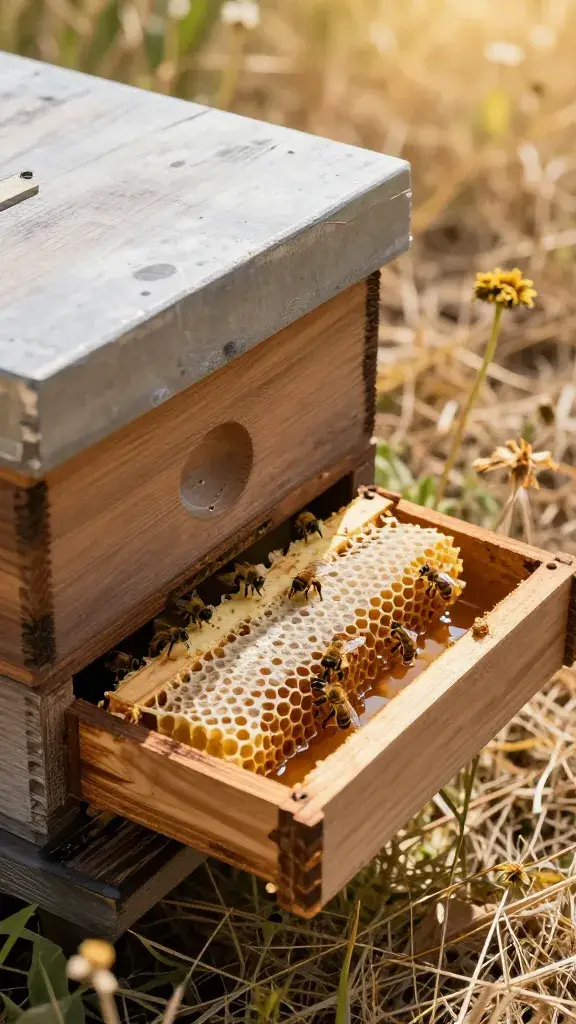
Heat often brings dearth. Bees then rob or waste energy searching, which spikes stress and temps inside the hive.
How To Help
- Offer a small top feeder with 1:1 syrup only during true dearth.
- Add a protein patty sliver if brood rearing dips.
- Remove feed once natural flow returns to reduce robbing.
Targeted support keeps colonies stable so they don’t spiral when resources get tight.
16. Create A Heatwave Action Plan
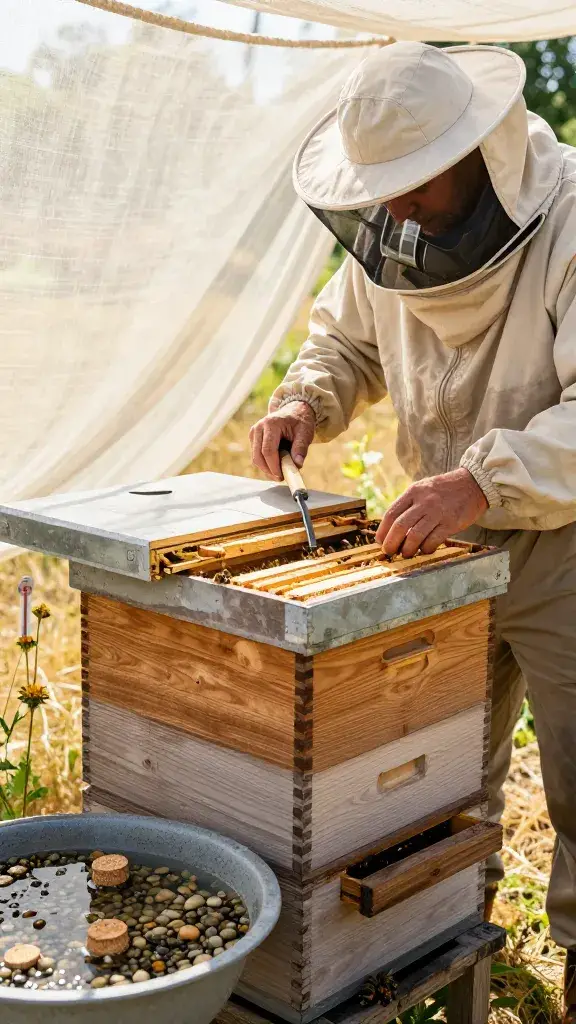
When forecasts scream triple digits, act before the meltdown. Prep a checklist so you don’t scramble while sweat blinds you.
Checklist
- Set up water the day before and top off morning-of.
- Install shade cloth and crack lids by noon.
- Open entrances and verify airflow paths.
- Skip deep inspections; spot-check only.
Prepared beekeepers lose fewer bees and less sleep. Trust me, planning beats panic every time.
Summer doesn’t have to feel like survival mode for your bees. With these simple tweaks, you’ll keep colonies cooler, calmer, and cranking out honey. Go set up that shade and water today—future you (and your bees) will thank you.
Share this content: