Sour Crop Vs. Impacted Crop: How to Tell the Difference and Treat Each Fast
Your chicken looks miserable, the crop feels like a weird beanbag, and you’re Googling at 2 a.m. Sound familiar? Let’s fix that. Sour crop and impacted crop get mixed up all the time, but they’re not the same—and you’ll treat them very differently. I’ll walk you through how to tell which problem you’re dealing with and exactly what to do next. No fluff, just practical steps (and a little sass).
First, what the heck is a crop?
The crop is a little pouch at the base of a chicken’s throat that stores food before it hits the stomach. It should feel full and soft after dinner, then mostly empty by morning. That “mostly empty by morning” bit? Huge clue when something goes wrong.
When the crop doesn’t empty overnight, you’ve got a problem. Now the trick is figuring out whether it’s a traffic jam (impaction) or a fermentation party gone wrong (sour crop).
Sour crop vs. impacted crop: the quick tell-all
Here’s the cheat sheet you wanted:
- Sour crop = mushy, squishy, often balloon-like crop + nasty, sour/yeasty breath. Think bread dough fermenting in the wrong place.
- Impacted crop = firm, lumpy, or ropey crop that won’t squish easily. Often caused by long grass, straw, or too much dry feed without water.
- Both cause a crop that doesn’t empty overnight, a sad, lethargic hen, and poor appetite. But the texture + smell tell you the type.
Check it in the morning
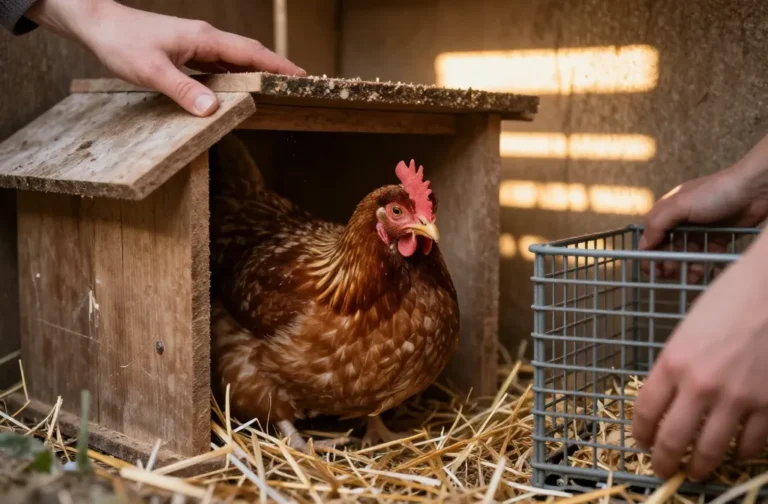
Always assess the crop first thing in the morning before they eat. If it’s still full, you’re officially on diagnostic duty.
How to check the crop safely
Go slow and be gentle. Chickens like dignity too.
- Feel it: Use your fingers to gently palpate the crop. Is it doughy/mushy (sour) or firm/ropey (impacted)?
- Smell the breath: Sour crop usually smells like yeast or vinegar. It’s… unforgettable. Impacted crop doesn’t usually smell off.
- Watch behavior: Lethargy, standing puffed up, decreased appetite, and sometimes watery diarrhea show up in both. Sour crop hens often drink more water.
Immediate steps for sour crop
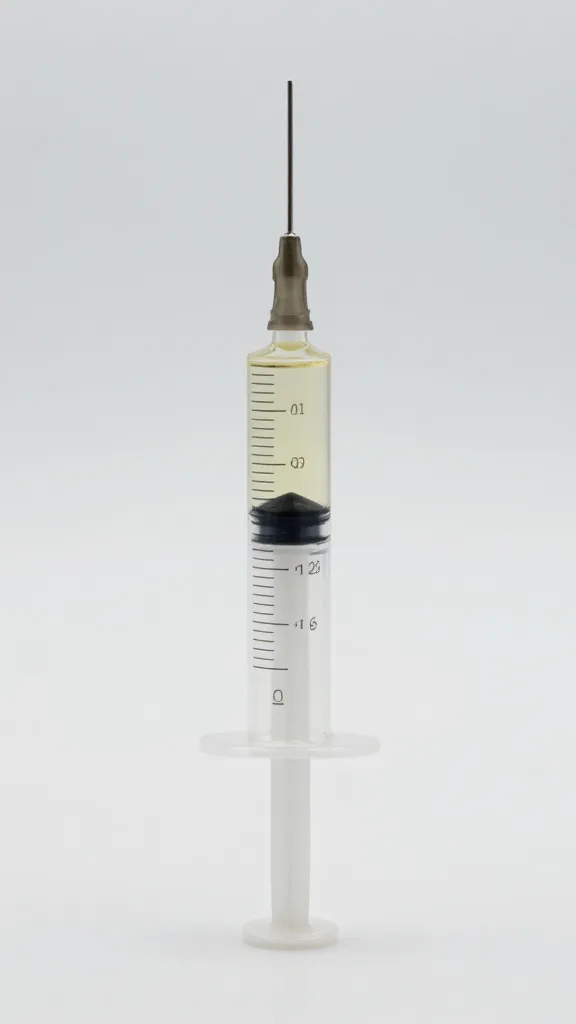
Sour crop = fungal overgrowth (usually Candida) from food sitting too long. You’re battling yeast and gas, not a blockage. So don’t jam more food into that mess.
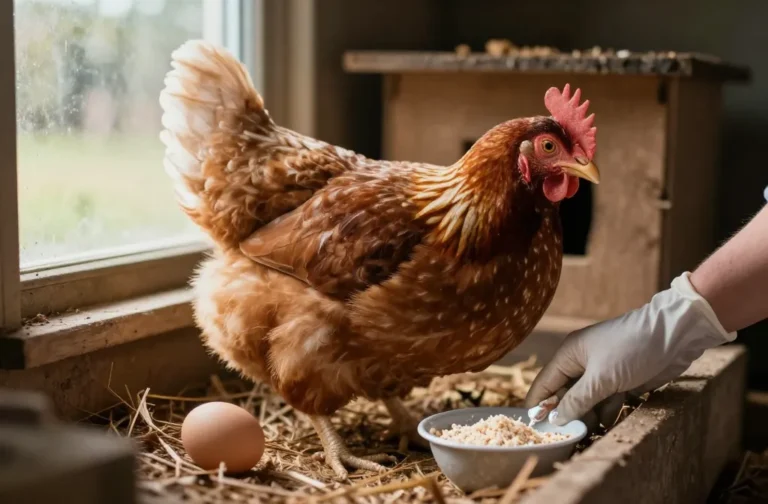
- Withhold feed for 12–24 hours, but offer clean water. Dehydration makes everything worse.
- Gentle massage: Tip the hen slightly forward (not upside down) and very gently massage the crop downward a few minutes at a time, a few times per day. You want to help it move, not make her vomit. FYI: force-vomiting is risky and can cause aspiration—IMO, skip it unless a vet shows you how.
- Add an antifungal: Best option = nystatin from a vet. If that’s not available, miconazole oral gel (yes, the human stuff) can help—small doses twice daily for 5–7 days. Ask your vet for exact dosing by weight if you can.
- Probiotics: After 24 hours, start a poultry probiotic in water to help reset gut balance.
- Diet restart: Soft, easy-to-digest foods for a few days: soaked pellets, a bit of scrambled egg, fermented feed (lightly), and plenty of fresh water.
- Clean the waterers like you’ve never cleaned before. Yeast loves filth and slime.
What NOT to do for sour crop
- Don’t keep offering treats or grains during the fast. You’re trying to clear, not clog.
- Don’t rely on apple cider vinegar to “cure” it. It helps water hygiene but won’t defeat a full-blown yeast party.
- Don’t skip rechecks. The crop should feel smaller and less squishy each morning.
Immediate steps for impacted crop
Impacted crop = mechanical blockage. Usually it’s long grass, straw, feathers, or tough fibrous stuff. Your goal: soften and move it along.
- Withhold solid feed for 12–24 hours, offer water + electrolytes.
- Olive or coconut oil (small amount) can help lube things up: a few milliliters orally, once or twice the first day. Use a syringe carefully at the side of the beak—go slow to avoid aspiration.
- Massage the crop several times per day, gently but firmly, breaking up the mass and moving it downward. You’ll feel “strings” if long grass caused it.
- After 24 hours, offer moist mash (warm, soaked pellets) and continue water. Keep massaging.
- If nothing changes in 24–48 hours, call a vet. Some impactions need professional flushing or minor surgery (cropotomy). Don’t wait a week—you’ll just have a sicker bird.
What NOT to do for impacted crop
- Don’t feed dry scratch, whole grains, or long grass. That’s how you got here.
- Don’t hang the bird upside down to make her vomit. That’s dangerous and not helpful for a firm blockage.
How to prevent both (and save yourself future panic)
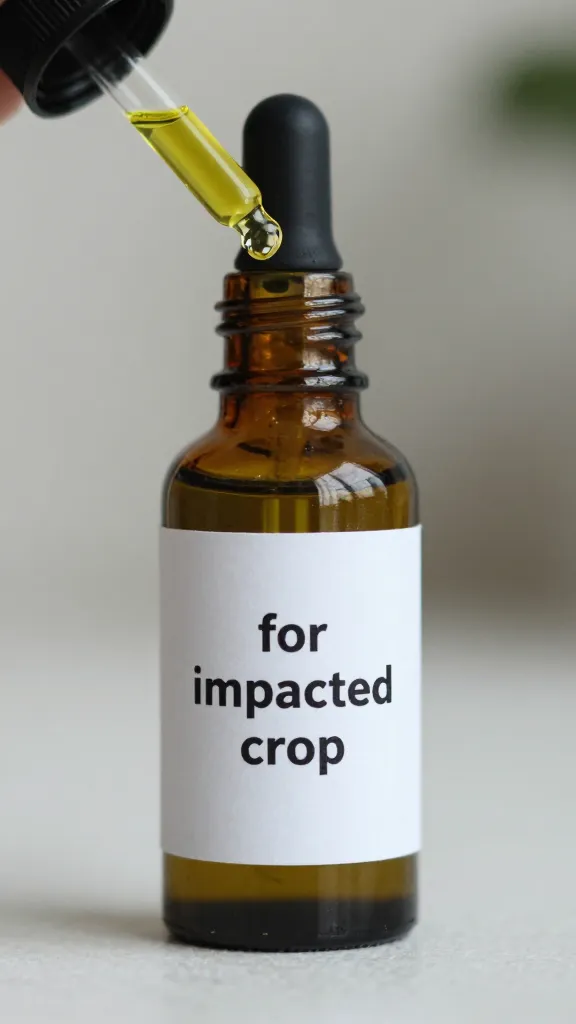
A few simple habits make these problems way less common.
- Check crops in the morning when you can—fast, easy, super useful.
- Limit access to long, tough grass, straw, and hay. Offer short-cut greens instead.
- Provide grit (insoluble) for birds on anything besides crumbles/pellets. No grit = poor grinding = crop drama.
- Keep water fresh and scrubbed. Biofilm = yeast paradise.
- Balance treats: Keep them under 10% of diet. Soft, nutritious > dry, bulky.
- Fermented feed in moderation can support good gut flora and digestion—just don’t switch cold turkey.
When to see a vet ASAP
Some cases need help, period.
- No improvement after 24–48 hours of targeted care
- Severe lethargy, weight loss, or dehydration (sunken eyes, tented skin)
- Crop feels like a water balloon that refills constantly (possible pendulous crop or deeper GI issue)
- Foul-smelling fluid coming from the mouth or nose
- Recurring problems every few weeks
Pro tip: weigh your chicken
A kitchen scale tells the truth. Track daily weights during recovery. If the number drops fast, escalate care.
Common mistakes I see (so you can skip them)
- Feeding right away because the bird “looks hungry.” The crop needs a break first.
- Skipping grit for backyard birds who free-range.
- Using only apple cider vinegar for sour crop. It helps water quality, but yeast laughs at it alone.
- Rough massage that bruises the crop. Gentle and frequent beats hard and heroic.
FAQ
How fast should a healthy crop empty?
Overnight, mostly. If a bird eats dinner around dusk, the crop should feel nearly flat by sunrise. A little softness might remain after a big meal, but it shouldn’t feel full or sloshy.
Can a chicken have both sour and impacted crop at once?
Yes, annoyingly. An impaction can slow things down, and then yeast overgrows on the stagnant food. If the crop feels firm but you also smell sour breath, treat the blockage first while you start antifungal support. Vets can help you sequence care.
Is yogurt good for sour crop?
A tiny amount won’t kill anyone, but yogurt isn’t ideal for chickens and doesn’t target Candida well. Use a poultry-specific probiotic after the initial fast, and get a proper antifungal when possible. IMO, skip the dairy detour.
What’s pendulous crop, and is it the same thing?
Different issue. Pendulous crop means the crop stretched out and lost tone, so it hangs and doesn’t empty well. Birds with this often get recurring sour crop. You’ll manage it long-term with small, frequent meals of moist feed, crop support (a light “bra” sometimes), and close monitoring.
Can I prevent crop problems with grit alone?
Grit helps a ton, but it won’t fix bad forage choices or dirty water. Think of grit as the seatbelt, not the entire car. You still need balanced feed, clean water, and no long stringy greens.
How do I give oil safely for an impaction?
Use a small syringe at the corner of the beak, angle slightly to the side, and deliver a few drops at a time. Let her swallow between drops. Never squirt straight back—aspiration pneumonia is not on our to-do list.
Wrapping it up
Sour crop feels squishy and smells like a bakery gone rogue; impacted crop feels firm and stubborn. Sour = antifungal + gentle reset. Impacted = soften, oil sparingly, massage, and watch for progress. Check crops in the morning, offer grit, ditch the long grass, and keep water pristine. Do that, and your flock will thank you—with eggs, side-eye, and fewer 2 a.m. panic searches. FYI, you’ve got this. IMO, a little consistency beats heroics every time.
Share this content: