How to Keep a Duck Yard From Turning Into a Mud Pit After Rain Fast
Rain + ducks = instant mud smoothie. Cute? For 30 seconds. Then your yard smells like a bog and your birds track sludge into everything. The good news: you can outsmart the muck with a few strategic fixes. Let’s build a duck yard that drains fast, stays cleaner, and keeps your feathered gremlins happy without turning your lawn into a swamp.
Drainage around the yard and pool go together, so these backyard duck pool ideas are worth checking too.
Start With Slope and Drainage
If your duck yard sits in a low spot, you’ve basically built a mud factory. You need water to leave, not loiter. Give the area a slight slope—1–2% grade—so rain runs off instead of settling.
How to improve slope
- Regrade the surface: Add compacted soil or gravel to create a gentle fall away from the coop and high-traffic zones.
- French drain time: Trench a line across the wettest path, lay perforated pipe wrapped in landscape fabric, and backfill with gravel. It’s not rocket science; it’s just gravity with accessories.
- Dry well or swale: If you get biblical rain, dig a shallow swale to redirect flow or a dry well (a deep gravel pit) to collect runoff.
Build a Solid Base (Ducks Will Test It)
Ducks stomp, dig, and splash. A tough base handles abuse and dries fast. Layering materials beats throwing straw on quicksand.
The layered approach
- Bottom layer: drainage – 3–4 inches of compacted crushed rock or 3/4-inch gravel. This creates air pockets and a sturdy foundation.
- Middle layer: stability – 2–3 inches of decomposed granite or road base. It locks in the gravel and sheds water.
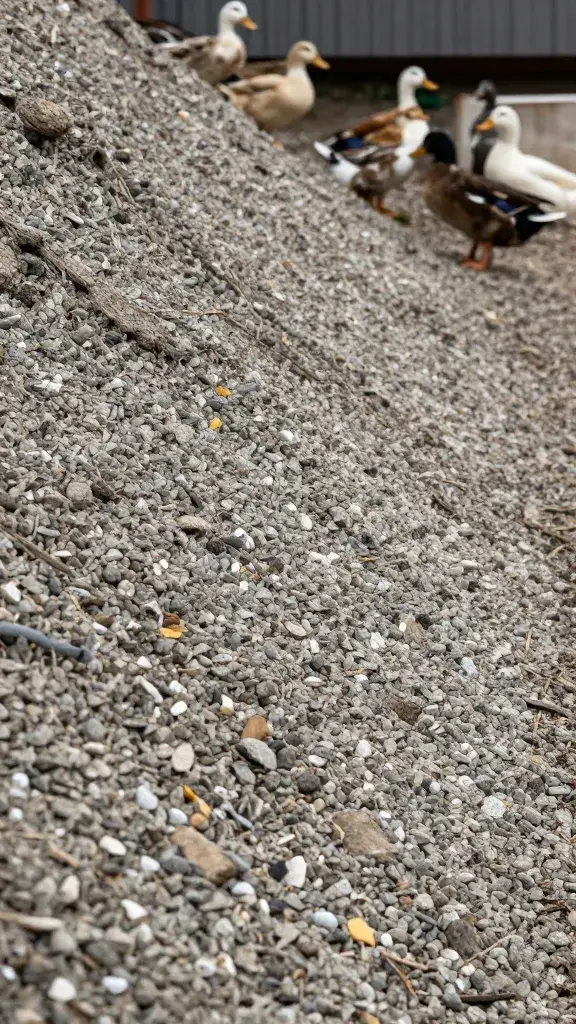
- Top layer: comfort – 1–2 inches of coarse sand or pea gravel. Sand drains fast; pea gravel resists tracking. IMO, a 50/50 blend feels great under webby feet.
FYI: Avoid smooth river rock as the only base; it shifts and ducks will ice-skate on it when wet.
Choose Smarter Surfaces (Not All “Ground” Is Equal)
Some surfaces stay dry-ish. Some turn gross. Pick the good stuff.
- Coarse sand: Drains fast, easy to rake, affordable. Keep it at least 1–2 inches deep and refresh a couple times a year.
- Pea gravel: Great around waterers. It won’t hold stink and it drains like a champ.
- Woody mulch: Use chunky hardwood chips or shredded bark in shady spots. They don’t mat like straw. Avoid dyed or treated mulch.
- Rubber mats with drainage holes: Place them at choke points (coop door, under feeders). They stop instant mud pancakes and hose off easily.
Surfaces to skip
- Clay-rich soil: It compacts and traps water. Hello, boot-sucking goo.
- Straw as the only surface: It mats, molds, and stinks. Keep straw for bedding, not yard cover.
- Weed barrier fabric on top: Ducks shred it, water pools on it, you cry later.
Manage Splash Zones Like a Pro
Ducks weaponize water. Anywhere they eat, drink, or bathe becomes a puddle party. Reinforce those areas like you expect chaos—because you should.
Waterers and feeders
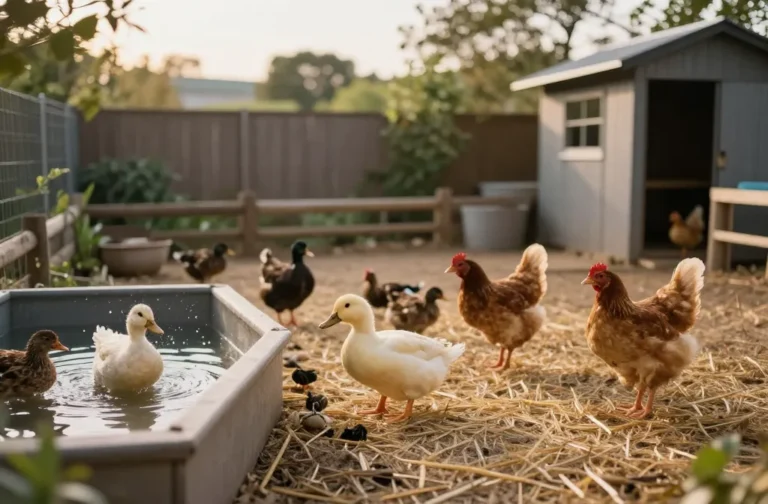
- Elevate everything: Set waterers on cinder blocks or rubber stall mats layered with pea gravel. Keep the area raised at least 2 inches.
- Catch basins: Place a mortar mixing tub or shallow trough under waterers to collect drips. Dump it, don’t let it overflow.
- No open pans for daily water: Ducks will climb in and hold raves. Use nipple waterers or small head-access drinkers.
Pools and baths
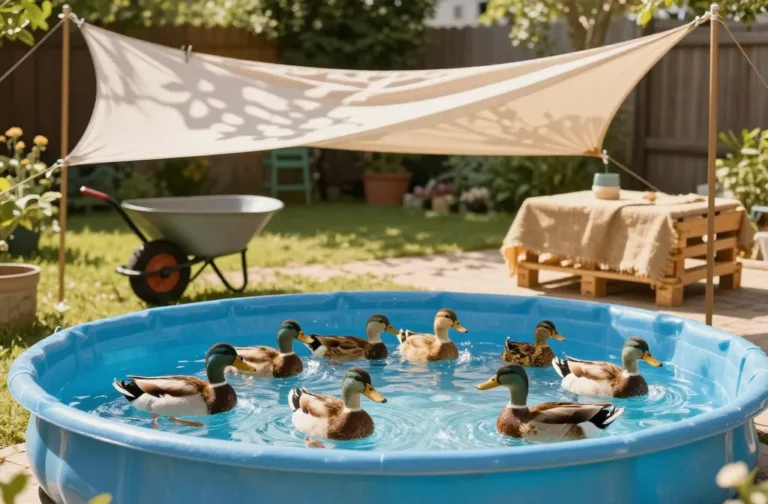
- Temporary tubs only: Kiddie pools are fine, but set them on gravel or pavers with a drain path, not on soil.
- Drain direction: Fit a bulkhead fitting and hose to send dirty water to a swale or garden bed (non-edible leaves only). Don’t dump next to the coop.
- Limit splash days: Rotate bath days during long rainy spells. They won’t love it. They’ll live.
Create Dry “Runways” and Rest Areas
Give ducks places to stand and preen without sinking. They’ll choose dry over swamp when you offer it.
- Pathways: Lay 2–3-foot-wide strips of pavers, bricks, or compacted gravel from the coop to the yard’s main zones.
- Perches for ducks? Not high, but low platforms (4–6 inches) made from pallets topped with rubber mats work great for dry feet breaks.
- Covered hangout: Add a simple lean-to with a clear roof panel. Rain stays out, light stays in, and you get a mud-free zone instantly.
Use Plants and Edges to Fight Erosion
You can’t ask ducks to respect borders. You can build borders that ignore them.
- Living edges: Plant hardy, non-toxic grasses or clumping sedges outside the fence line to slow runoff.
- Brush barriers: Stack branches or logs along low edges to trap silt and redirect water. Bonus habitat points.
- Raised beds outside the yard: They sip runoff and stop it from re-entering the duck zone.
Safe plants around ducks
- Sedges (Carex spp.) and rushes (Juncus spp.)
- Switchgrass, reed canary grass (controlled), and fescues
- Willow cuttings for quick hedges (outside the fence unless you enjoy pruning)
Keep It Clean and Rotate Traffic
Maintenance beats crisis mode. A few weekly habits prevent the mud spiral.
- Rake and top up: Skim soggy organic matter and add fresh sand/pea gravel in thin layers instead of big dumps.
- Move the party: Shift feeders, splash tubs, and rest platforms every couple weeks to spread the wear.
- Detour paths: Use temporary fencing to rest compacted sections. Even 10–14 days can dry and recover a surface.
- Grit and oyster shell stations: Keep them raised and dry to avoid paste and sludge.
Quick Fixes for After a Storm
Storm just ended and your yard looks like pudding? You can still salvage it.
- Pump or siphon standing water: Get rid of ponds first so the ground can breathe.
- Add carbon: Sprinkle pine shavings or dry wood chips on top of wet zones. They absorb stink and buy you time. Don’t bury problems 6 inches deep—thin layers only.
- Open it up: Rake to break surface crust so sun and wind can work. Shade equals slow drying.
- Deploy mats on chokepoints: Instant traction until the ground firms up.
Common Mistakes (Aka: Learn From Pain)
- Building the coop in a low spot: You can’t out-bale mud. Move water away from your structures, always.
- Using only organic bedding outside: It compacts, molds, and turns to soup. Mix in mineral layers (sand/gravel).
- Ignoring gutters: Roof runoff can nuke your yard. Add downspouts and direct them far away.
- Letting pools overflow: Drains exist for a reason. Don’t make the yard a permanent splash pad.
FAQ
Is sand safe for ducks?
Yes. Coarse construction sand works best. It drains well, doesn’t compact like play sand, and won’t hurt their feet. Keep it clean by raking and topping up, and pair it with a gravel base so it doesn’t vanish into the soil.
What’s the cheapest way to cut mud fast?
Elevate your waterers and lay down a few bags of pea gravel in the splash zones. Add a rubber mat at the coop door. It’s not fancy, but it breaks the mud cycle immediately while you plan bigger drainage work.
Can I use wood chips in the yard?
Absolutely—just pick chunky hardwood chips. They resist matting and improve footing. Avoid sawdust or super-fine mulch since it compacts and turns gross. Replace or rake out saturated layers as needed.
Do ducks need a pool every day?
They need water deep enough to dunk their heads daily for eye and nostril health. Full-body swimming helps, but you can schedule it. During soggy weeks, limit pool time and focus on clean drinking water with head-dunk access.
How do I stop smell after rain?
Improve drainage first. Then add thin layers of dry carbon (pine shavings, wood chips), pick up wet poop and mats, and keep high-traffic areas topped with sand/gravel. Stagnant water = stink. Moving water = less drama.
Will grass ever grow back?
Not where ducks patrol 24/7. In rest zones or fenced-off sections, yes. Use tough mixes (fescue, rye) and give it breaks. Or embrace low plants outside the yard and a durable surface inside. Your sanity will thank you.
Conclusion
You can’t stop ducks from splashing, but you can stop the yard from melting. Shape the ground, build a layered base, armor the splash zones, and rotate traffic like a field marshal. Do a little after every storm, and you’ll trade mud pits for manageable mess. And IMO, a tidy duck yard beats wrestling boots out of suction any day.
Share this content: