Urgent Guide Bird Flu in Backyard Chickens 2026: Signs, Prevention, and What to Do
Bird flu keeps crashing the backyard chicken party. You hear about outbreaks, then you wonder if your hens are safe, and suddenly you’re side-eyeing every sneeze in the coop. Let’s cut through the noise. Here’s exactly how to spot trouble fast, lock down your flock, and handle the what-ifs like a pro—without losing your sanity or your sense of humor.
So… what exactly is bird flu?
Avian influenza (aka bird flu) is a viral disease that hits birds hard—sometimes very hard. Different strains exist, but the ones you’ll hear about most are H5 and H7. Some strains cause mild symptoms. Others? They knock out flocks fast.
Humans don’t catch it easily, but it can happen with close contact, especially with sick birds or contaminated surfaces. That’s why we treat this like a big deal. Not panic-level, but serious enough for strong coffee and good prep.
2026 snapshot: What backyard keepers should know
You’ll see waves of cases, especially during migration seasons. Wild waterfowl carry the virus without looking sick, then they drop it off via poop—on ponds, pastures, and yes, maybe your run. That’s the un-fun part.
The good news? You can cut your risk a ton with simple, consistent steps. Think basic biosecurity, fast response when birds look “off,” and a plan for lockdowns when needed. Backyard folks who stay alert keep more birds safe. IMO, small flocks can outmaneuver big farms with speed and vigilance.
How to spot bird flu early (before it blows up)
Your best tool: daily observation. You notice your birds’ normal. That’s your superpower.
Watch for these red flags:
- Sudden deaths with no warning, especially multiple birds within 24–48 hours.
- Severe lethargy: birds sit fluffed up, don’t respond, won’t eat.
- Respiratory signs: coughing, sneezing, open-mouth breathing, nasal discharge.
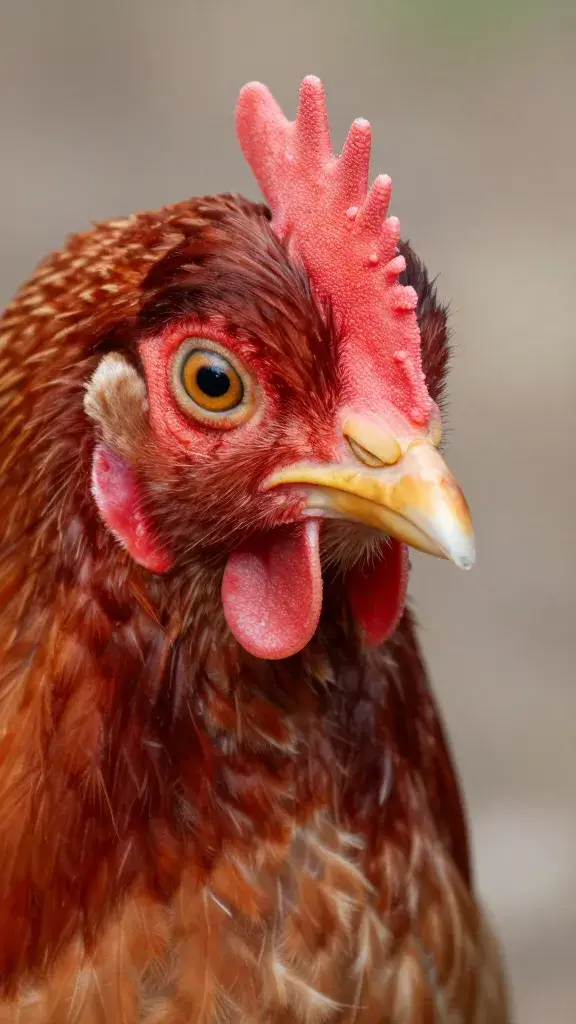
- Swollen heads, combs, or wattles, sometimes with a purplish tint (poor oxygen).
- Drop in egg production, thin or shell-less eggs, weird shapes.
- Neurological issues: tremors, head tilt, trouble walking.
- Watery green diarrhea and dehydration.
If two or more of those hit at once, treat it as urgent. Don’t wait to “see how it goes.” Bird flu moves fast. You should move faster.
What’s probably not bird flu?
A single sneeze on a dusty day? Not it. A one-off soft egg from a new layer? Normal. One hen acting a little dramatic because it’s molting? Classic chicken. You’re watching for patterns and clusters, not random quirks.
Prevention: your everyday “don’t let it in” plan

You control what crosses your fence. Start there.
Make these habits non-negotiable:
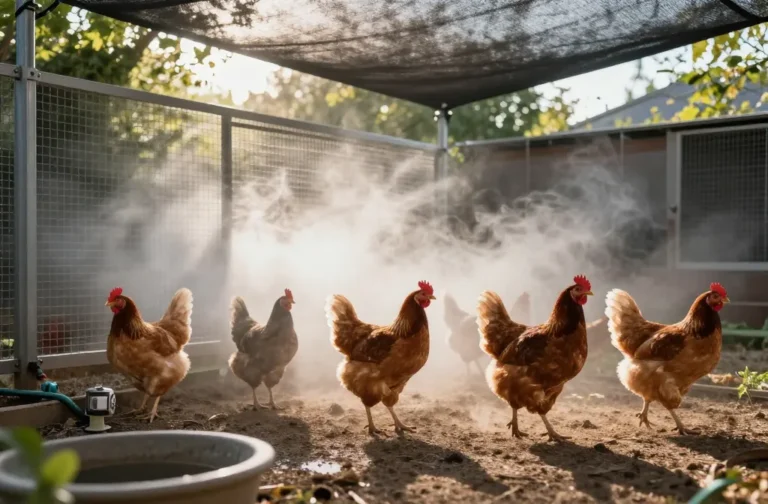
- Keep wild birds out: cover runs with netting/roofing, block access to feeders, and keep feed in sealed bins.
- No shared ponds or puddles: fence off any standing water; don’t let chickens mingle with ducks or geese.
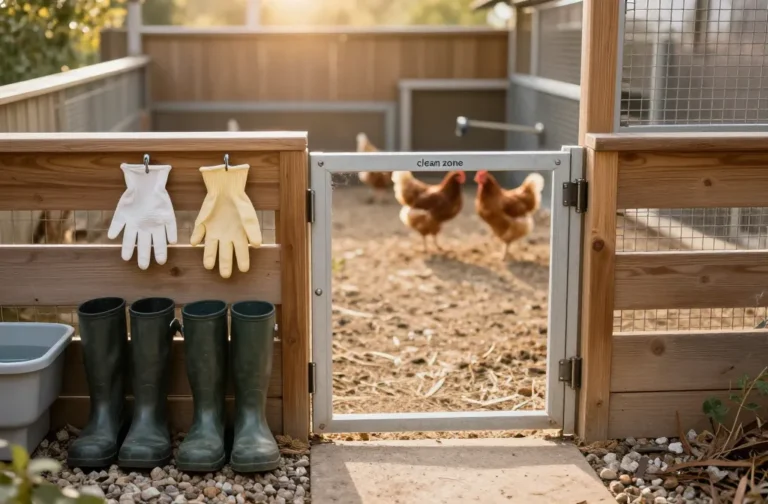
- Footwear rule: coop-only boots or shoe covers. Disinfect on entry with a fresh footbath (bleach solution or poultry-safe disinfectant).
- Clean gear: scrub and disinfect waterers, feeders, and tools weekly; more often during outbreaks nearby.
- Limit visitors: no casual coop tours; if visitors must enter, provide boot covers and clean gloves.
- Quarantine newbies: 30 days separate housing for new or returning birds, with separate tools and no shared air if possible. This new chicken quarantine guide gives the step-by-step setup.
- Control rodents: they spread contaminated droppings. Seal gaps, store feed properly, and trap consistently.
Feed and water hygiene (the boring stuff that works)
Keep feed off the ground and away from sparrows. Refresh water daily and scrub slimy biofilm. Toss feed that gets wet. You’ll save money and headaches. FYI, clean waterers = fewer respiratory issues across the board.
What to do if you suspect bird flu
Take a breath. Then act with a checklist. Speed matters more than perfection.
- Isolate symptomatic birds immediately in a separate, enclosed area. Handle them last, with dedicated gloves and clothes.
- Lock down the flock: no free-range, no visitors, no bird swaps, no farm runs for a bit.
- Call your state vet or agricultural extension. Report sudden deaths or multiple sick birds. They’ll advise on testing and next steps.
- Stop moving birds, eggs, manure, and equipment off your property. Movement spreads virus—don’t be that person.
- Disinfect like you mean it: clean first (remove debris), then disinfect surfaces, tools, and footwear. Follow contact times on labels.
- Document symptoms and dates. Note how many birds, when signs started, and any recent exposures (shows, new birds, wild bird contact).
Safety for you and your family
Wear gloves and a mask when handling sick or dead birds. Wash hands like a surgeon after. Don’t eat or drink in the coop. And keep kids and pets out of the isolation area. It’s basic, but it matters.
Testing, culling, and the tough conversations
Testing confirms what you’re dealing with. Your local authorities might collect swabs or direct you to a lab. If you get a positive result for a high-path strain, officials may require flock depopulation to stop spread. It’s brutal. It also protects neighbors, wildlife, and the wider poultry community.
Ask these questions if officials get involved:
- What compensation programs apply for backyard flocks?
- Who handles carcass disposal and site disinfection?
- How long before I can restock, and what proof of cleaning do you need?
- Can I keep eggs/meat from unaffected birds before confirmation? (Usually no—await guidance.)
IMO, having a written “break glass” plan now helps you think clearly later.
After an outbreak: when can you restock?
You’ll need a waiting period after thorough cleaning and disinfection. Timelines vary by state and strain, but 30–120 days is common. When you do restock, start small and enforce ironclad biosecurity from day one.
Vaccines and treatments: what’s real in 2026?
Antibiotics don’t touch viruses, so forget that route. Supportive care helps mildly ill birds, but it won’t stop high-path strains. Some regions pilot avian influenza vaccines, mainly in commercial settings with strict monitoring. Backyard access varies by jurisdiction and supply.
Bottom line:
- No over-the-counter cure exists for bird flu.
- Vaccines may reduce illness and shedding in select programs, but they’re not a magic shield and may require registration and testing.
- Prevention and rapid response still beat every other strategy.
Daily and seasonal checklists
Want to feel organized instead of stressed? Use quick routines.
Daily
- Count birds. Note appetite, energy, breathing.
- Swap water, tidy feed, check for wild-bird intrusion.
- Boot dip fresh and used. Gloves on for chores.
Weekly
- Scrub and disinfect waterers/feeders.
- Rake droppings, remove wet bedding, fix gaps in netting.
- Review your log: any trends in eggs or behavior?
Migration seasons
- Lock down free-ranging, especially near ponds or streams.
- Increase disinfection frequency and limit visitors.
- Quarantine any new birds for 30 days—non-negotiable.
FAQ
Can I get bird flu from my chickens?
The risk stays low, but close contact with infected birds or their droppings can transmit certain strains to humans. Wear gloves and a mask when handling sick birds, wash hands thoroughly, and avoid touching your face. If you develop flu-like symptoms after exposure, contact a healthcare provider and mention poultry contact.
Is it safe to eat eggs during an outbreak?
If your flock shows illness or you suspect exposure, do not sell or share eggs. Cook eggs thoroughly if authorities confirm low risk and your birds test negative. If officials investigate your flock, follow their guidance—sometimes that means discarding eggs until clearance. When in doubt, toss them.
How do I disinfect properly?
Clean first—remove organic matter with soap and water. Then apply a poultry-safe disinfectant (bleach solution at 1:32, or a labeled virucidal product) and let it sit for the full contact time—usually 10 minutes. Rinse food-contact surfaces and let everything dry before birds return.
Should I stop free-ranging completely?
During local outbreaks or migration peaks, yes—keep birds in covered runs to avoid wild-bird exposure. The rest of the year, you can free-range with caution: supervise, keep feed indoors, and avoid ponds or wild-bird hotspots. Flex your plan based on risk in your area.
What’s the fastest way to spot a problem?
Do a two-minute morning scan: count birds, check posture and breathing, glance at droppings, and look for sudden egg slumps. You’ll catch 90% of issues early with that routine. Quick notes in your phone make patterns obvious.
Can I mix ducks or geese with my chickens?
You can, but during bird flu seasons, it’s risky. Waterfowl mingle with wild carriers more and can track virus into the flock. If you keep them, separate housing, separate water systems, and separate tools reduce cross-risk.
Conclusion
You don’t need to fear bird flu—you just need a plan. Keep wild birds out, watch your flock like a hawk, lock down fast when something feels off, and loop in your state vet early. Consistency beats chaos every time. Stay sharp, stay kind to your future self, and your hens will thank you with eggs and side-eye for years to come. FYI, that side-eye means they respect your biosecurity game. IMO, that’s the highest chicken compliment.
Share this content: