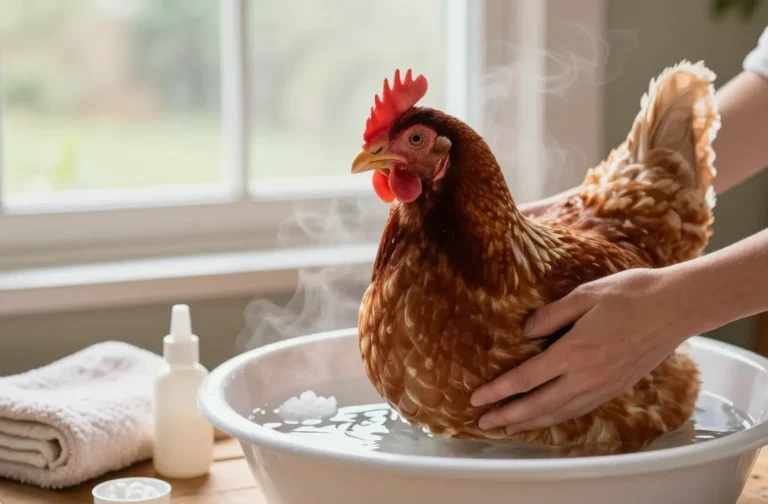
12 Best Summer Herbs to Grow Near the Coop for Shade, Smell, and Usefulness Unleashed
Chickens love a cool, fragrant hangout just as much as we do. Plant the right herbs near your coop and you’ll score shade, fresh scents, bug control, and a steady supply for your kitchen and DIY flock care. These aren’t fussy divas either—most thrive in heat, shrug off pests, and bounce back after a trim. Ready to turn that dusty run into a summer oasis?
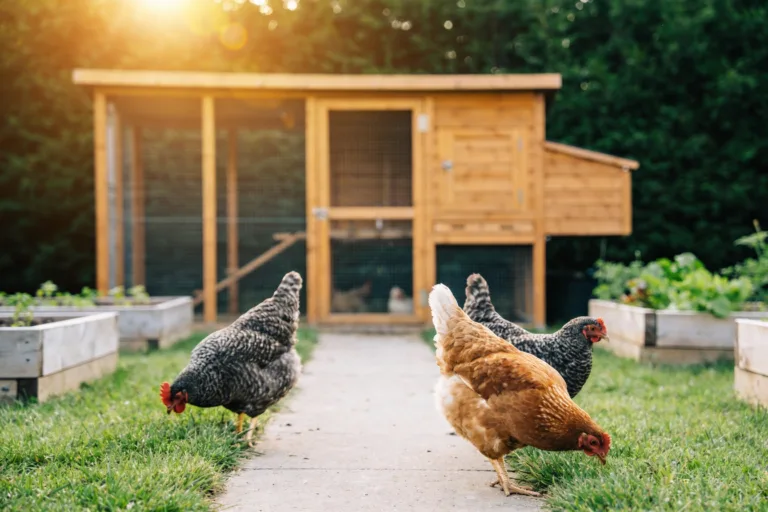
Herbs fit naturally into a larger backyard plan, especially with these garden and chicken coop combo ideas.
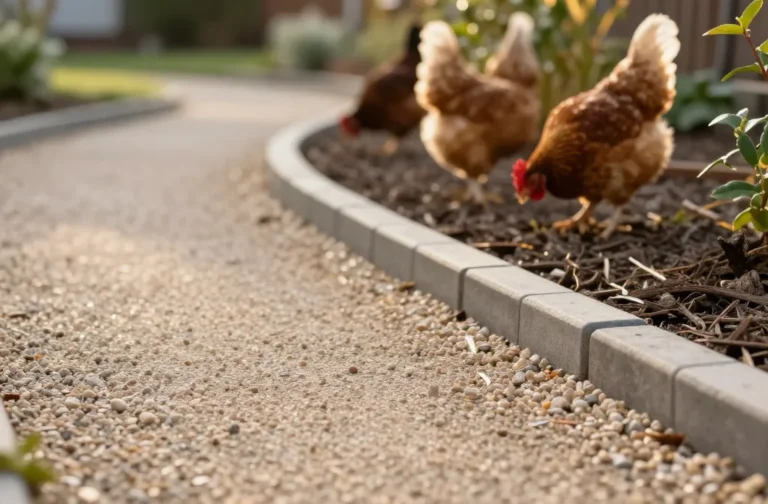
For bare patches closer to the run floor, pair herbs with chicken-safe ground covers around the coop so the whole area works harder in summer.
1. Basil Boulevard: The Warm-Weather Workhorse
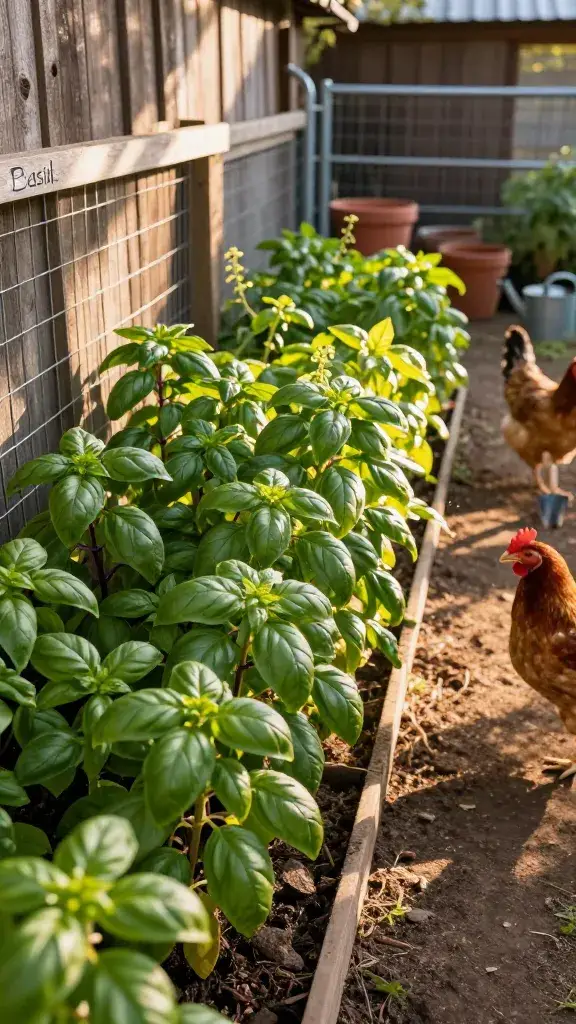
Basil thrives in heat and pumps out foliage when most plants yawn and quit. It brings a sweet-clove scent that freshens the coop path and makes your caprese dreams very real. Plus, dense basil rows cast light shade and create cool pockets along the run fence.
Tips
- Plant in rich, well-drained soil and pinch blooms to keep leaves coming.
- Space 10–12 inches apart for a leafy hedge effect.
- Try varieties: Genovese for classic flavor, Thai for spice, Lemon for zing.
Use fresh in scrambles or make a simple basil-vinegar spray to mist dusty paths. Your nose (and pasta) will thank you.
2. Mint Moat: The Smell-So-Good Bug Buffer
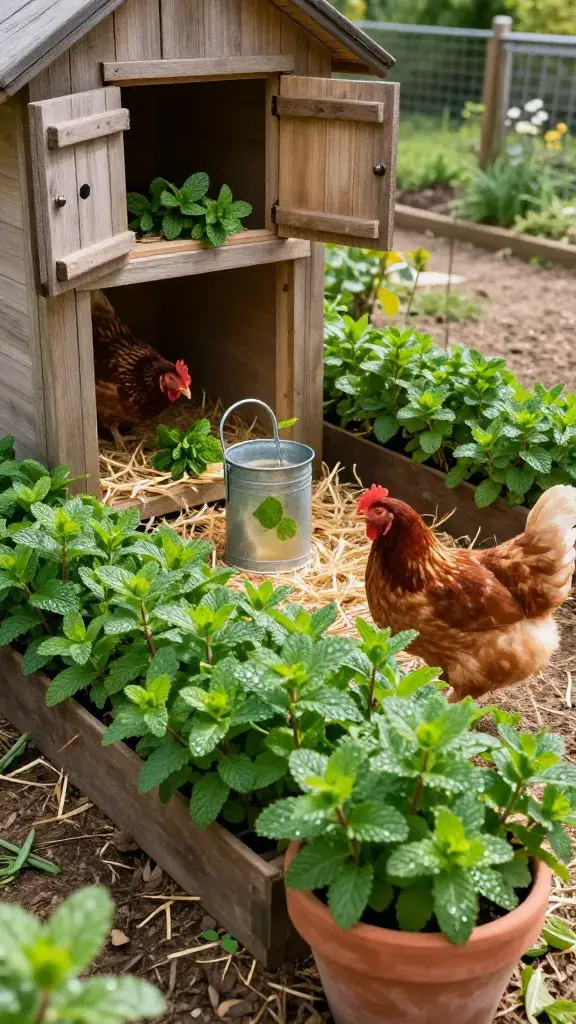
Mint spreads like gossip, which is great if you use it strategically. That menthol pop smells clean around nest boxes and helps deter flies when you scatter cuttings in bedding. Chickens nibble a little, but the scent is the real star.
Key Points
- Contain it: grow in bottomless buried pots or a bordered bed.
- Water regularly—mint likes moisture more than most summer herbs.
- Harvest often to keep it lush and compact.
Steep a quick mint tea to cool down birds on extreme heat days (add to their water in moderation). It’s a multipurpose summer saver.
3. Lavender Lane: Spa Vibes For You And The Flock
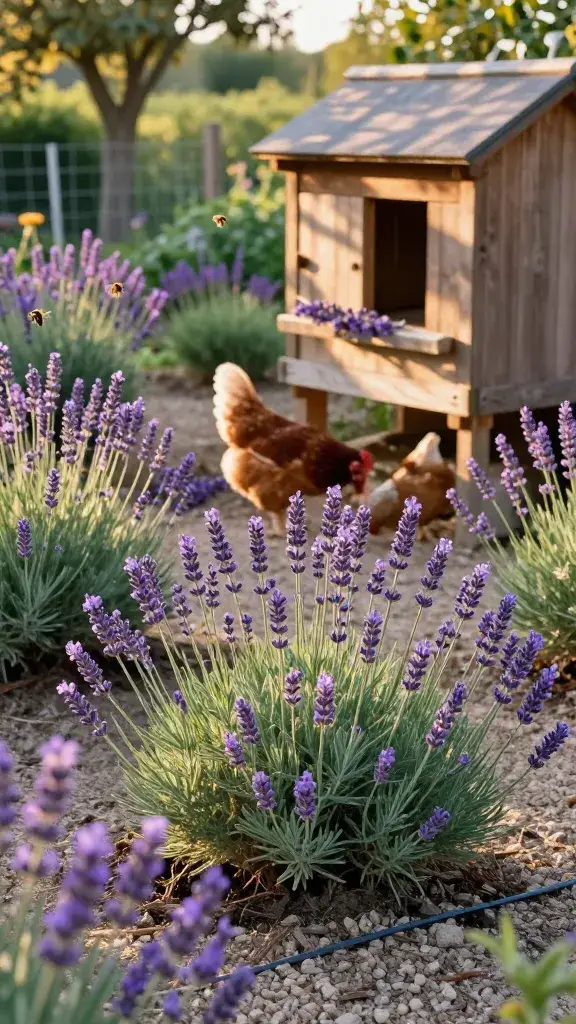
Lavender handles brutal sun like a pro and looks gorgeous doing it. The soothing scent helps calm your space, and dried sprigs mix beautifully into nesting herbs. Bees adore the blooms, which boosts pollination for nearby plants.
Tips
- Plant in sandy, well-drained soil; avoid overwatering.
- Prune lightly after bloom to keep plants compact.
- Choose English or hybrid varieties for heat resilience.
Use fresh cuttings to line nest boxes for a subtle scent upgrade. It’s basically aromatherapy for your coop—seriously.
4. Lemon Balm Curtain: Cool Shade, Zesty Aroma
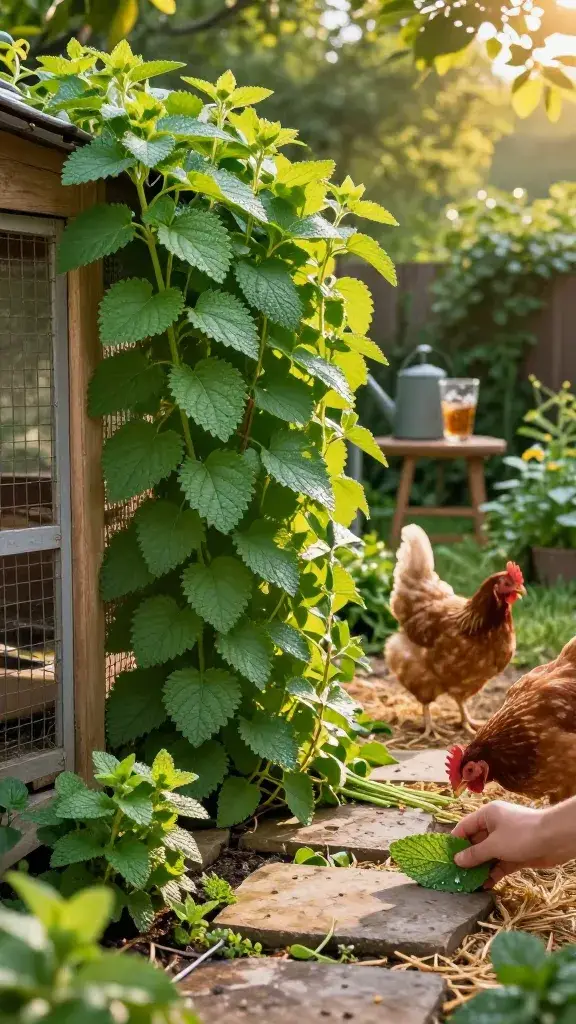
Lemon balm grows fast and fountains into a soft, leafy mound—perfect for light shade edges. Crush a leaf and you’ll get that lemon-citrus burst that freshens the run and perks you up mid-chores. It also makes a lovely iced tea for you post-cleanout.
Key Points
- Partial shade tolerant but happy in sun with regular water.
- Contain by trimming often; it can self-seed.
- Combine with mint along paths for a fragrant walkway.
Scatter fresh trimmings in bedding for a clean scent. It’s like summer sunshine in leaf form.
5. Rosemary Rampart: Evergreen Structure And Coop Deodorizer
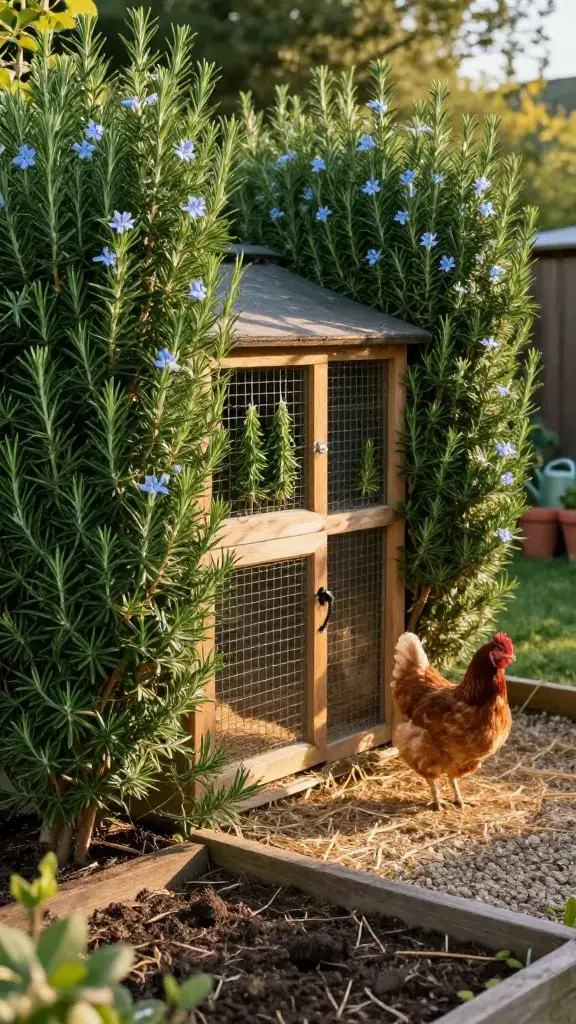
Rosemary shrugs off heat and drought and gives you sturdy, aromatic greenery year-round. The resinous oils smell incredible and can help mask coop funk near vents and doors. It also forms a small hedge that throws dappled shade.
Tips
- Plant in raised beds or well-drained soil; avoid soggy roots.
- Prune to shape—upright varieties make great screens.
- Use trimmings in roast chicken (irony noted) or herb salts.
Bundle sprigs and hang near windows for a natural scent filter. It’s your low-maintenance, high-style guardrail.
6. Oregano Oasis: The Flavorful Health Booster
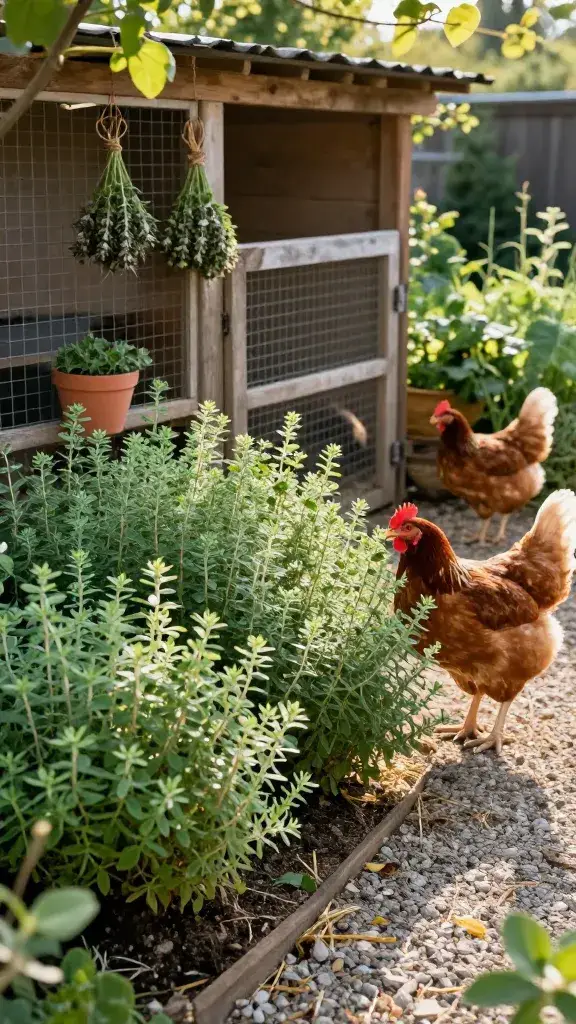
Oregano loves heat, spreads into a mat, and takes foot traffic near coop gates. Its robust scent is awesome, and many keepers add small amounts to feed as a general wellness herb. Dense growth covers soil, which reduces dust and splash.
Key Points
- Give it sun and decent drainage; it’s tough and forgiving.
- Harvest often for a fuller plant; dry bunches easily.
- Look for Greek oregano for punchy flavor.
Use fresh in eggs, pizza, and marinades. Around the coop, it doubles as a fragrant living mulch—IMO a top-five pick.
7. Thyme Tapestry: Tiny Leaves, Big Payoff
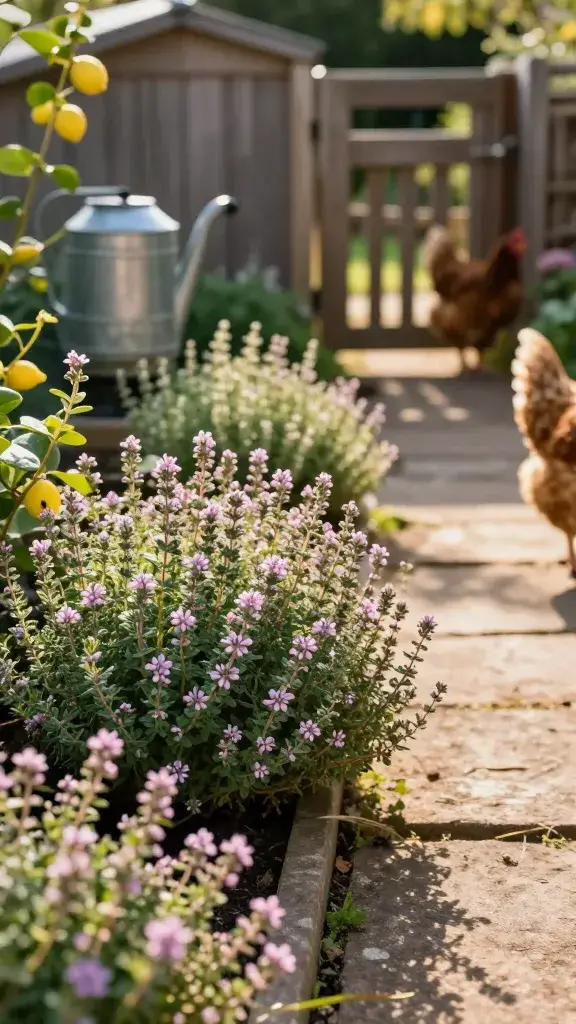
Thyme creates a low, aromatic carpet that handles heat and skims along stone edges like it owns the place. Stomp-proof varieties make great edging near gates or waterers. The scent intensifies in sun—breeze plus thyme equals chef’s kiss.
Variety Ideas
- Common thyme for cooking.
- Lemon thyme for bright citrus notes.
- Creeping thyme for groundcover and pollinators.
Use fresh sprigs with roasted veggies or tucked into nest sachets. It’s subtle but mighty where space runs tight.
8. Sage Shade-Fans: Soft Leaves, Serious Summer Style
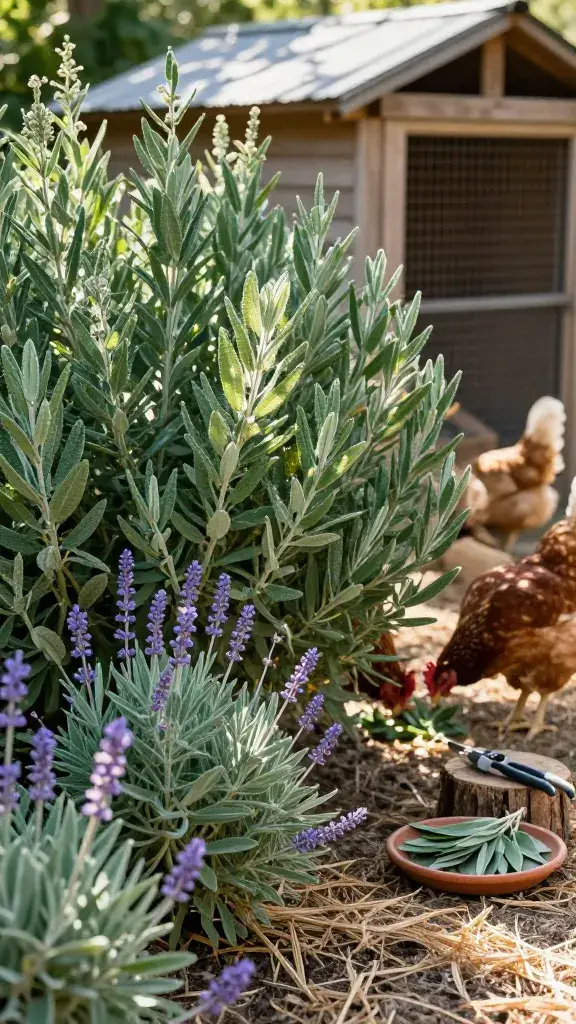
Sage grows into a substantial bush with velvety leaves that catch light and create small shady pockets. It’s aromatic, ornamental, and sturdy in heat. Chickens won’t demolish it quickly, which earns extra points.
Tips
- Full sun, lean soil, and light watering keep it happy.
- Prune after flowering to maintain shape.
- Try purple or tricolor sage to glam up the run border.
Dry leaves for stuffing or blend into homemade coop herb mixes. It’s the rugged beauty queen of the bunch.
9. Parsley Patch: Cool Greens For You And The Girls
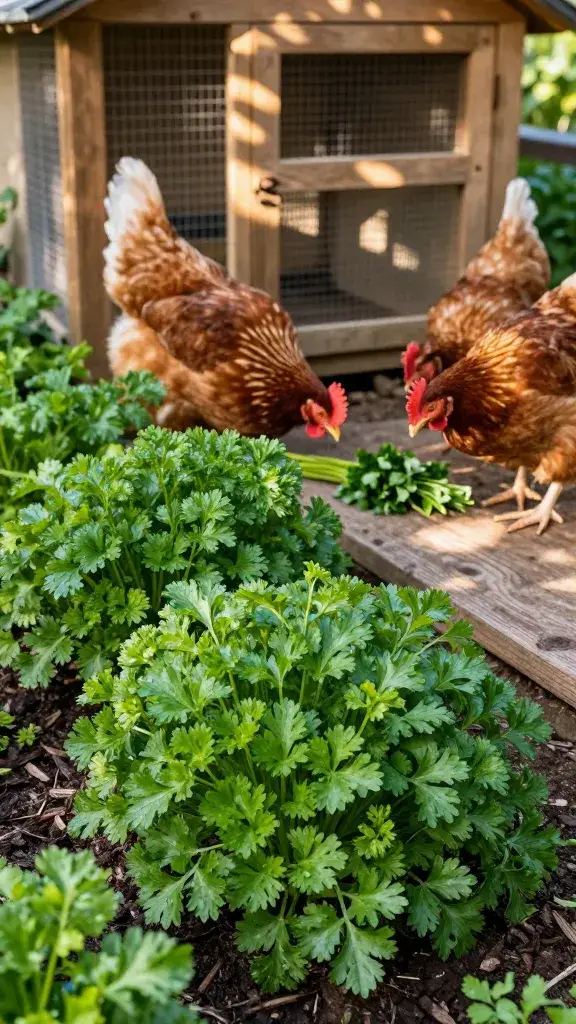
Parsley loves consistent moisture and partial shade, which makes it clutch near the coop where you water often. It grows into a fluffy mass that softens hard edges and provides snackable greens. Flat-leaf tastes best, but curly looks adorable, so choose your vibe.
Key Points
- Keep soil evenly moist; mulch helps in peak summer.
- Harvest outer stems to encourage fresh growth.
- Regrows after trims all season long.
Chop into omelets or toss a handful to the flock as an occasional treat. It’s productive and pretty—double win.
10. Dill Drift: Airy Shade And Pollinator Parade
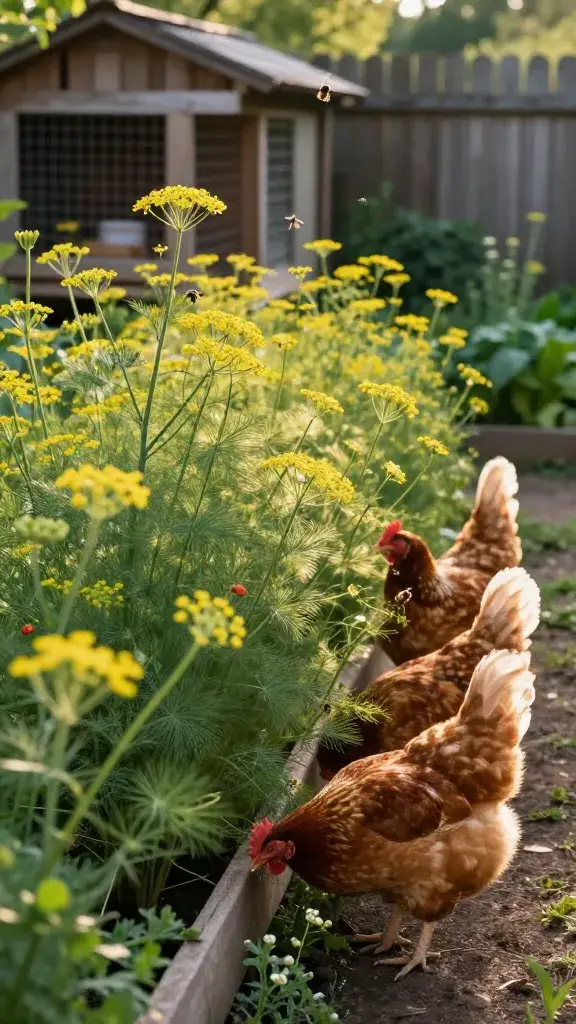
Dill sends up feathery fronds that create light shade and movement—like a tiny prairie by your run. Its flowers draw beneficial insects, which helps with balances around the garden. Bonus: it’s perfect with eggs, salmon, and quick pickles.
Tips
- Sow succession plantings every few weeks for continuous fronds.
- Stake taller varieties if winds whip around the coop.
- Let a few heads seed to naturalize next season.
Use fronds in potato salad and seed heads for pickling. It’s the breezy, boho herb you didn’t know you needed.
11. Calendula Glow-Up: Sunshine Petals And First-Aid Friend
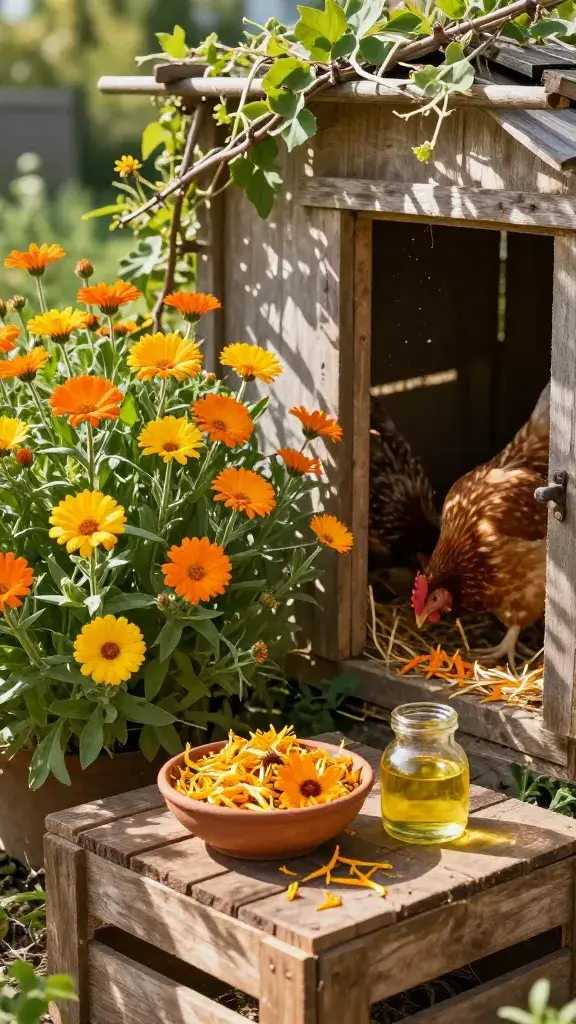
Okay, not technically an herb leaf-wise, but calendula is an herbal rockstar worth your space. It pumps out bright, edible petals all summer and handles heat without drama. The resinous blooms make a soothing infused oil for minor scrapes (you, not the chickens—FYI).
Key Points
- Deadhead constantly to keep flowers coming.
- Thrives in sun with average soil and regular water.
- Petals add color to treats and salad mixes.
Scatter dried petals in nest boxes for a sunny vibe and light scent. It’s the cheerful healer in your coop-side apothecary.
12. Catnip Perimeter: Chill Zone For Bugs, Party Zone For Cats
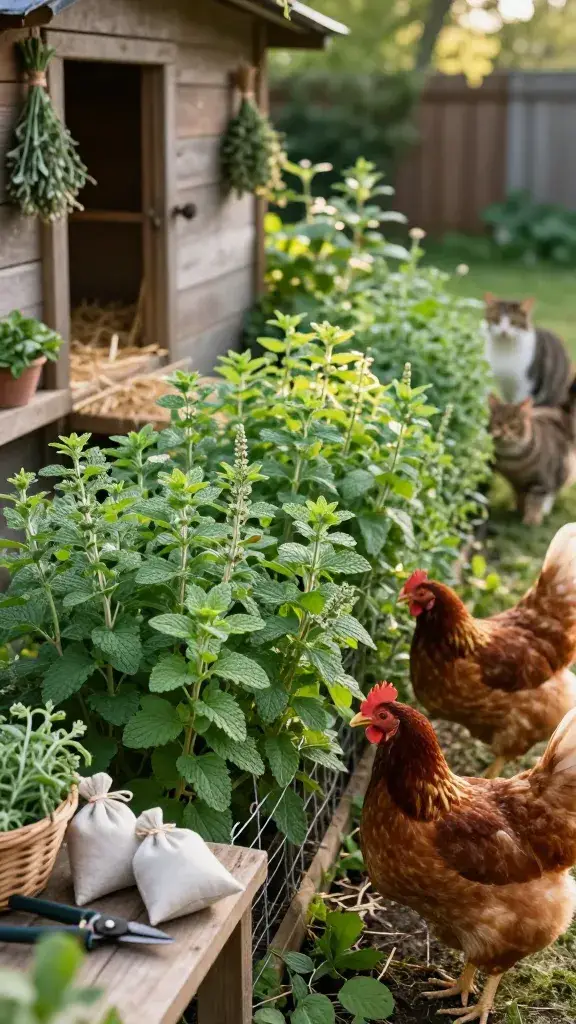
Catnip smells minty-musk and grows fast, which helps build a light privacy hedge along the run. Many folks swear it discourages certain pests when used as cuttings in bedding. Just be ready for neighborhood cats to RSVP themselves to your garden party.
Tips
- Contain like mint or it will conquer weak-willed borders.
- Shear after bloom for a fresh flush of leaves.
- Dry and stuff into simple sachets for coop corners.
Use sparingly in the coop and generously in your tea cabinet. It’s scrappy, useful, and kind of hilarious to grow.
How To Place These Herbs For Maximum Win
Think layers: tall woody herbs (rosemary, sage, lavender) form windbreaks and afternoon shade. Medium fillers (basil, lemon balm, oregano, dill) create fragrance corridors you brush past on chores. Groundcovers (thyme, parsley, mint, catnip) stitch soil, cut dust, and make everything look intentional, not wild.
Quick Layout Ideas
- South/West side: rosemary and sage screens to blunt harsh sun.
- Along paths: basil, oregano, thyme for that aroma hit with every step.
- Near nest boxes: lavender, lemon balm, calendula for calm scents and easy cuttings.
- Containment corners: mint and catnip in sunken pots so they behave, kind of.
Mulch with wood chips to lock in moisture and reduce summer stress. Water deep, not often, to encourage resilient roots—trust me, it matters.
Care Hacks To Keep Everything Thriving
Herbs love a haircut. Frequent trims keep plants bushy, fragrant, and non-leggy. Harvest in the morning after dew dries for peak oils and better drying.
Easy Maintenance
- Pinch basil blooms and cut oregano/thyme just as they bud.
- Shear catnip and mint hard midsummer for a clean reset.
- Prune lavender after flowering, but never into old wood.
- Fertilize lightly—too much nitrogen makes floppy, weak growth.
Rotate cuttings into coop bedding weekly for a constant fresh scent. Small habit, big payoff.
Safety Notes And Chicken-Proofing
Most culinary herbs are fine near chickens, but moderation never hurts. Plant tougher, woody herbs at peck-level and keep tender stuff just outside the run if your flock goes full excavator mode. Use simple wire cloches until plants establish.
Good-To-Know
- Provide grit and balanced feed; herbs are treats, not nutrition plans.
- Avoid essential oils directly on birds without solid guidance.
- Check for individual sensitivities if you try new herbs in treats.
Healthy plants plus happy hens equals a sweet-smelling summer coop. That’s the vibe.
Harvest And Use: Zero-Waste Herb Routine
Don’t let trimmings wilt on the path. Make fast infusions, vinegars, and simple sachets while you cool down post-chores. Label jars—future you will forget which green thing is which, guaranteed.
Quick Ideas
- Nest sachets: thyme, lavender, lemon balm, calendula petals.
- Kitchen wins: basil pesto, dill yogurt sauce, oregano butter.
- Garden spritz: mint-basil vinegar diluted 1:3 with water for path freshening.
By August, your coop edge becomes a mini apothecary. Practical, pretty, and useful—chef’s kiss again.
Water-Wise Summer Strategy
Beat heat with mulch and deep watering every few days rather than daily sips. Group thirsty buddies (mint, parsley, lemon balm) near hoses and keep drought champs (rosemary, sage, lavender, thyme) on the dry side.
Pro Moves
- Soak root zones at dawn to minimize evaporation.
- Use drip lines or soaker hoses for consistency.
- Top-dress with compost early summer for slow-release oomph.
This keeps foliage lush and aromatic even during heat waves. Plant smart now, chill later.
Season Extension And Saving The Goods
As summer winds down, you can still ride the herb wave. Dry bunches in a dark, airy spot or freeze chopped herbs in olive oil cubes. Label, store, flex your future self-sufficiency all winter.
What To Save
- Basil and dill: freeze for best flavor.
- Oregano, thyme, sage, rosemary, lavender: air-dry easily.
- Calendula petals: dry flat for salves and teas.
Come January, a pinch of summer oregano can rescue any soup from sadness. You’ll feel smug, in the best way.
Final Thoughts: Build Your Coop-Side Herb Haven
Plant a few of these herbs this weekend and your coop will smell fresher, feel cooler, and look like a tiny botanical lounge. Mix textures, play with scents, and harvest often. Your flock gets shade and enrichment; you get flavor and low-key bragging rights—everybody wins.
Share this content: