Pros & Cons Keeping Barred plymouth rock
Barred Plymouth Rocks earn near-universal praise in beginner chicken guides, and most of that praise is warranted. Almost none of it mentions the quirks that catch first-time keepers off guard, which is what this post covers. Below is what the breed actually delivers for someone keeping chickens for the first time, where it falls short, and the decisions those tradeoffs should push you toward before you buy your first chicks.
Everything here traces back to the American Poultry Association’s breed standard, the Livestock Conservancy, major hatcheries, and keepers writing from direct experience. On a breed this old, sources sometimes disagree. Where they do, both numbers appear.
What a Barred Plymouth Rock actually is
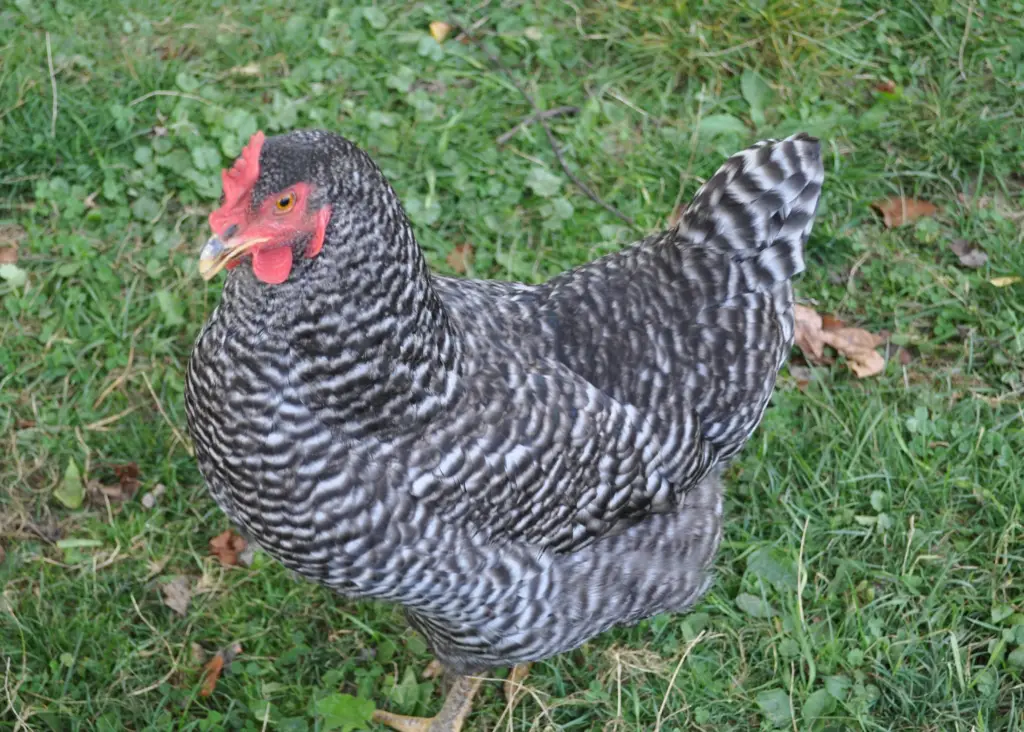
The Plymouth Rock is an American breed, first shown in Boston in 1849, then disappearing for roughly twenty years before resurfacing in Worcester, Massachusetts in 1869, when a breeder named D.A. Upham crossed Black Java hens with a barred-plumage cock and selected for the distinctive black-and-white striping. Five years later, the barred variety became the first Plymouth Rock admitted into the American Poultry Association’s original Standard of Perfection in 1874.
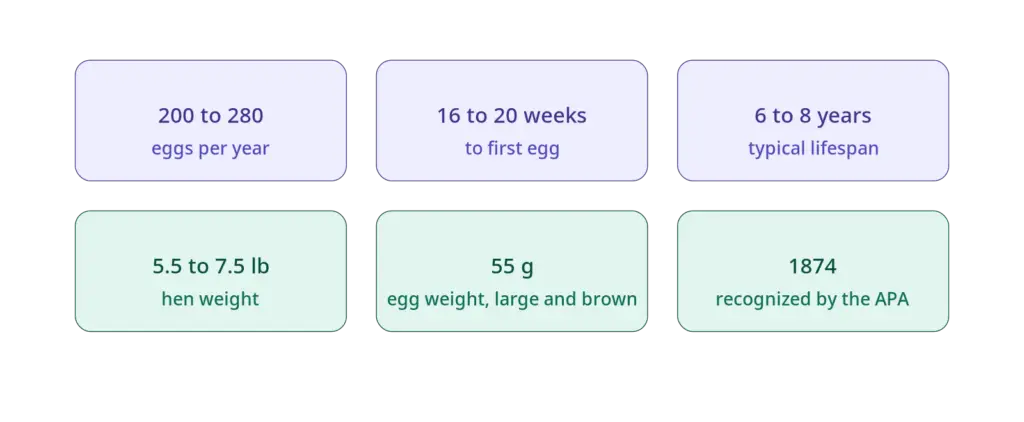
Six additional Plymouth Rock varieties have been recognized since, but the barred version is the one most people picture when they hear the name. It’s also the one beginner guides mean when they say “Plymouth Rock.” Modern Barred Rocks come in two quiet substrains worth knowing about: a lighter production line bred mainly for egg output, and a heavier heritage line closer to the original bird. Hatchery birds generally sit on the production side.
Mature hens run roughly 5.5 to 7.5 pounds, and roosters between 7 and 9.5 pounds, with the range depending on which strain the source is describing. Eggs are large, brown, smooth-shelled, and weigh around 55 grams each.
The pros, and what they actually mean
A temperament that forgives first-time mistakes
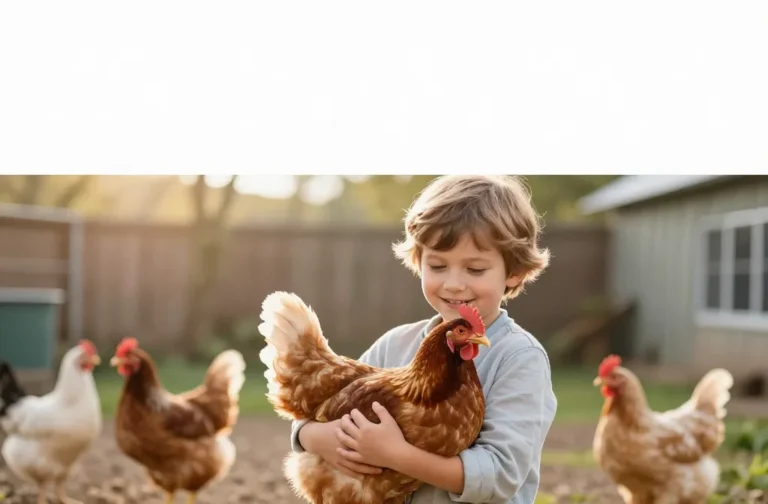
The single strongest case for this breed as a beginner bird is behavioral. Barred Rocks are docile, curious without being nervous, and readily tolerate handling, to the point where several long-time keepers describe their hens as effectively lap chickens. That matters more than it sounds. A calm bird makes every adjacent task easier, whether that’s coop cleaning, health checks, catching a hen to inspect her feet, or introducing kids to the flock.
The Livestock Conservancy and nearly every hatchery that stocks them flag the same temperament profile. Keepers who have kept other breeds alongside Barred Rocks almost uniformly report lower flock drama.
Reliable, year-round egg production without hybrid burnout
Egg counts vary across sources. Wikipedia puts annual production at about 200, while most major hatcheries and breed guides cite 200 to 280 large brown eggs per year. Four to five eggs per week is the realistic weekly rhythm for a healthy hen. Production typically starts between 16 and 20 weeks of age, which is standard for dual-purpose heritage birds but slower than commercial layer hybrids.
The underappreciated part is winter. Barred Rocks continue laying through colder months when many other breeds slow down or stop, provided they have adequate daylight and nutrition. That’s a real quality-of-life feature for anyone keeping hens to offset grocery bills rather than as a summer hobby.
Steady production over years beats extreme production over a single cycle. Hybrid layers like ISA Browns push more eggs in year one and then burn out early. Barred Rocks lay well for three or four productive seasons before output begins tapering with age.
Cold hardy, heat tolerant, and genuinely adaptable
Dense feathering, a sturdy build, and yellow unfeathered legs make this a bird that handles New England winters without drama. Keepers in northern climates report healthy flocks through sub-zero temperatures with no special heating, provided the coop is properly ventilated and dry.
Heat tolerance is decent rather than exceptional. In humid or persistently hot climates, shade and airflow become non-negotiable, but the breed does not fail in warm regions the way some heavy-feathered heritage birds do.
Auto-sexing at hatch, a real practical advantage
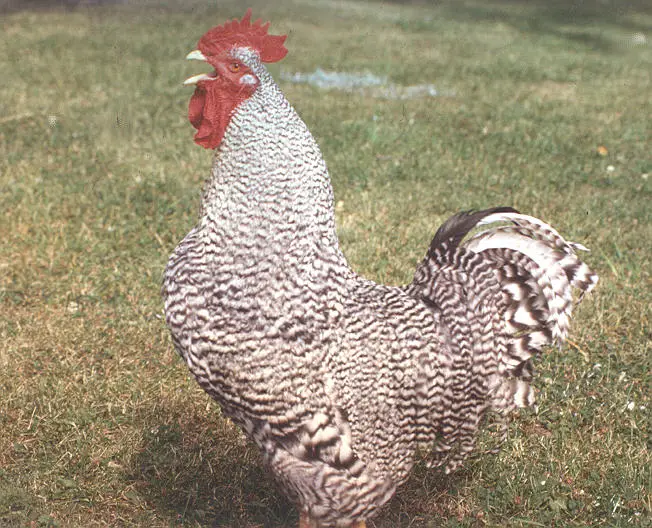
This one rarely shows up in beginner posts and probably should. The gene that produces barred plumage is sex-linked. Male chicks inherit two copies and hatch visibly lighter, with wider white barring and a clearer white dot on the head. Females inherit one copy and hatch darker.
For a beginner who ordered “straight run” chicks or is hatching from a mixed flock, that’s the difference between knowing what you have at day one versus waiting six to eight weeks for male-pattern features to appear. Fewer unwanted roosters, less wasted feed, and earlier decisions about flock composition.
Availability and low routine maintenance
Almost every major US hatchery carries Barred Rocks in spring and summer chick seasons. The Livestock Conservancy moved the Plymouth Rock to its “Recovering” list in 2023, reflecting at least 2,500 annual registrations. It’s not rare, it’s not expensive, and finding replacement birds or chicks from regional breeders is rarely a problem.
Standard coop setup works here: roughly 4 square feet per bird inside the coop, 10 to 15 square feet per bird in the run. Chick starter through eight weeks, grower feed until laying, then layer feed. No specialty nutrition requirements. No breed-specific health issues flagged in the literature beyond the frostbite risk covered below.
The cons, and what they actually cost you
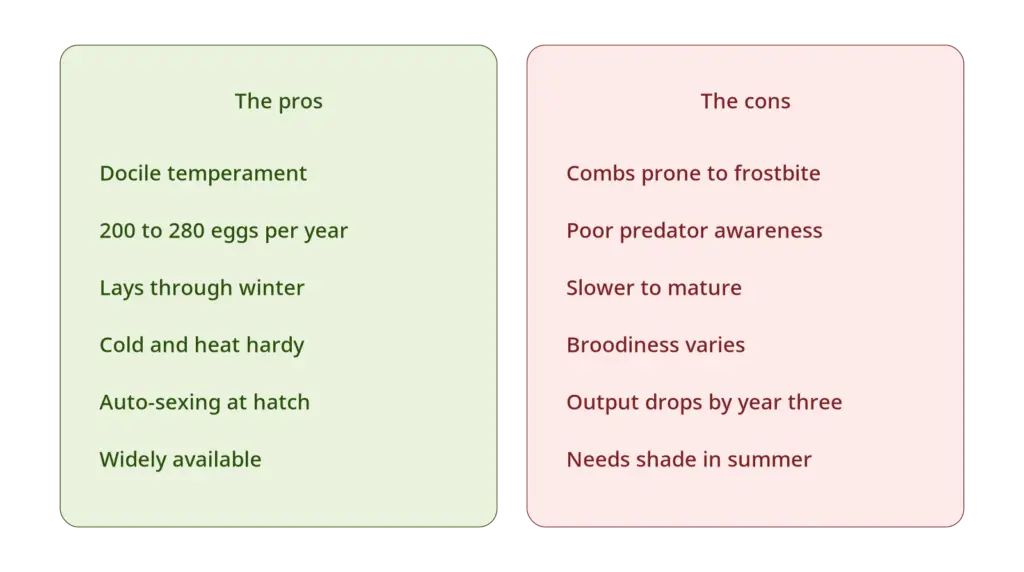
Large single combs are a frostbite liability
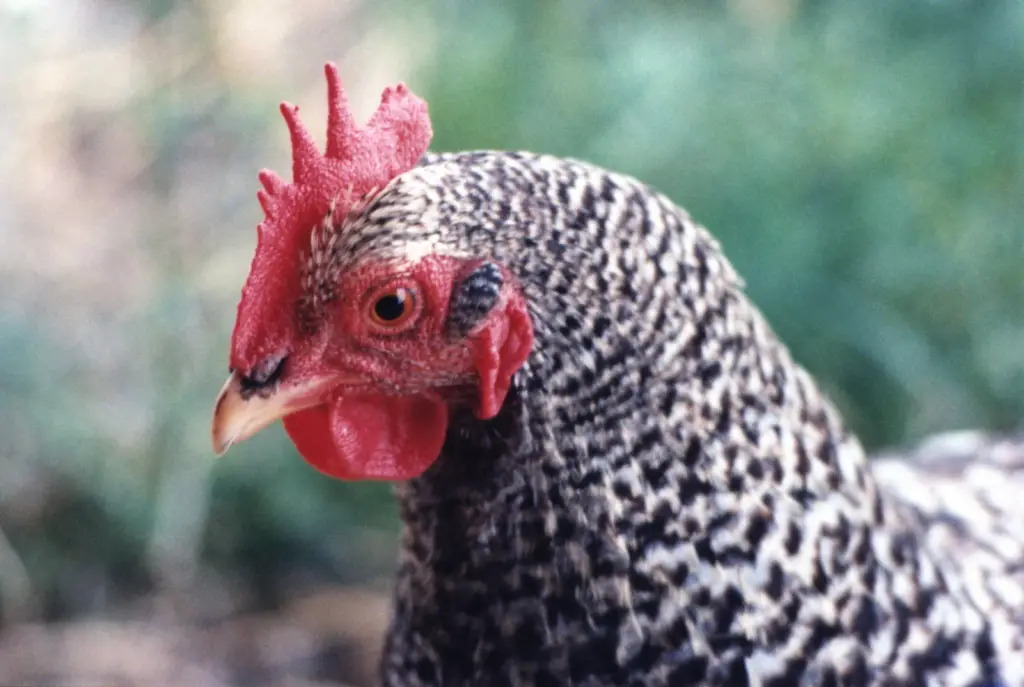
The breed’s single comb (tall, five-pointed, bright red) is part of what makes them recognizable and part of what gets them into trouble in very cold climates. Frostbite on combs and wattles is the most-cited health issue across keeper accounts. It isn’t usually life-threatening, but it’s uncomfortable for the bird and sometimes leaves permanent tip damage.
Roosters carry larger combs than hens and run more exposure risk. If you’re north of roughly zone 5 and planning to keep a rooster, plan for a well-ventilated but draft-free coop, and consider a rose-combed breed instead if frostbite prevention tops your priority list.
They’re good foragers but poor predator-evaders
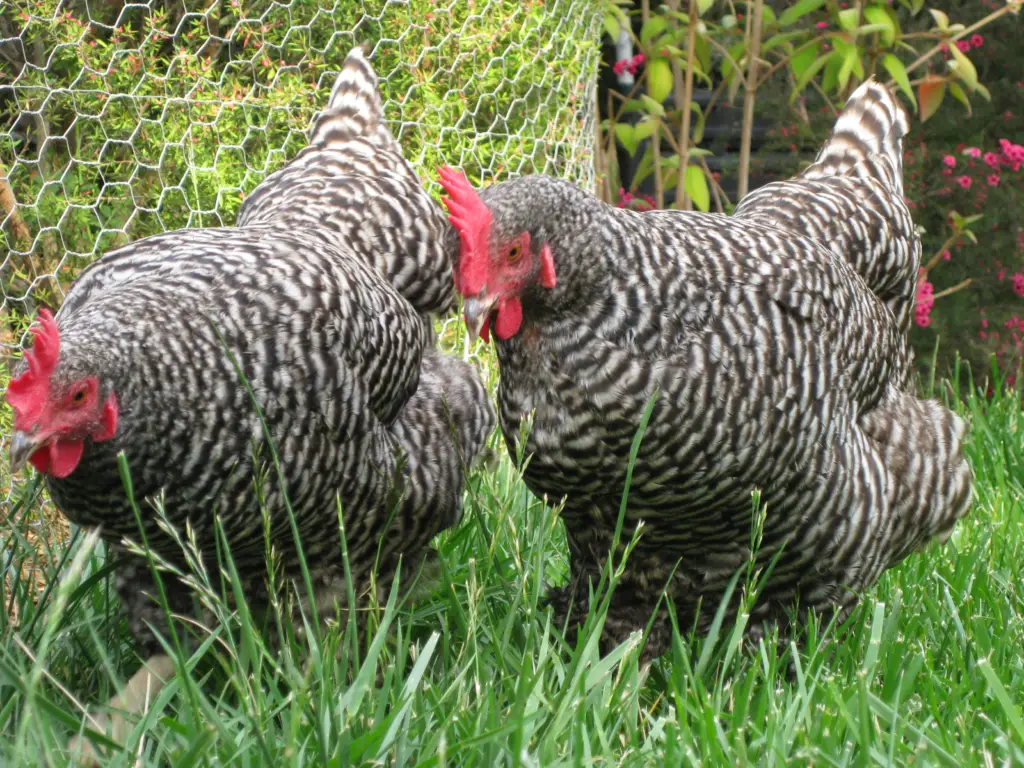
This one catches new keepers off guard. Barred Rocks love to free-range, work a yard methodically, and will return to the coop on their own. They’re also not especially alert to overhead or ground predators. Keeper reports from multiple homesteads describe the same pattern: hens absorbed in scratching for bugs, slow to react to a hawk shadow or an approaching coyote, easily caught.
The practical implication is simple. If your land has hawks, foxes, raccoons, bobcats, or loose dogs, Barred Rocks are not the breed to free-range unsupervised. They do fine in a covered run, and they do fine in free-range setups that include a more alert breed or a livestock guardian animal.
Slower to mature than production hybrids
Sixteen to twenty weeks to first egg is normal for a heritage dual-purpose breed, but the comparison to commercial layers that start at 14 to 16 weeks matters to your feed budget. An extra month of feeding adult-sized birds before they produce anything adds up. Over a year it’s not much. During that first impatient spring, it feels longer.
Broodiness, and the fact that sources contradict each other
This is one of the breed traits where direct keeper experience and hatchery descriptions actively disagree. Tractor Supply calls the breed “prone to broodiness.” Garden State Chickens reports broodiness as occasional, not excessive. The Featherbrain rates it as low-moderate. Practical Self Reliance states Barred Rocks aren’t very broody unless encouraged. Meyer Hatchery’s own blog author described twelve personal birds that never went broody, while the hatchery’s breed page lists them as broody.
What you should take from that: broodiness in this breed varies by strain, individual hen, and conditions. If you want uninterrupted laying, avoid leaving eggs in the nest and order from hatcheries that describe their line as low-broody. If you want a self-replicating flock, Barred Rocks make reliable mothers when they do sit.
Production declines after year two or three
This applies to almost every dual-purpose heritage breed, but beginner expectations often skip it. A Barred Rock hen’s peak production lands in her first laying year, begins tapering after the first full molt, and declines noticeably by year three. She can continue laying for several more years at reduced rates, and some birds still produce lightly at six or seven years old, but the math doesn’t hold if your plan assumes 250 eggs per hen per year for a decade.
The common homestead solution is to cull older hens for meat, which the breed’s dual-purpose size supports. The common backyard solution is to accept the decline and rotate in new pullets every two or three years.
Is this the right first breed for you?
Barred Plymouth Rocks are close to the default-correct answer for most beginners, but most is not all. A quick decision framework:
Buy Barred Rocks if you want a forgiving breed to learn on, you value steady year-round production over peak output, you have kids or guests who’ll interact with the birds, your climate sits between cold and moderately hot, and you want birds equally comfortable in a run or free-ranging in a supervised yard.
Look elsewhere if you want maximum egg production per bird and don’t care about temperament or longevity (consider Leghorns or ISA Browns), you live somewhere with persistent sub-zero winters and intend to keep roosters (consider rose-combed breeds like Wyandottes), or your land has heavy unprotected predator pressure (consider more alert breeds or plan on a fully enclosed run from day one).
The breed is old enough, common enough, and documented enough that nothing about keeping them should surprise you. The most common beginner mistake isn’t choosing Barred Rocks. It’s assuming every keeper testimonial applies to every strain, then being disappointed when the production hatchery hen you bought doesn’t match the heritage-line description you read online.
Buy with clarity on which strain you’re getting and which problem you’re actually trying to solve, and this breed will do exactly what a first chicken should do: teach you the craft without punishing your mistakes.
Sources
- Plymouth Rock chicken, Wikipedia
- The Livestock Conservancy breed listings (Recovering status, 2023)
- Meyer Hatchery Blog, Breed Spotlight: Barred Plymouth Rock
- Tractor Supply, Barred Rock Chickens: An Ultimate Breed Guide
- Mile Four, Barred Plymouth Rock Chickens Ultimate Guide
- Practical Self Reliance, Barred Rock Chicken Breed Guide
- The Seasonal Homestead, Barred Plymouth Rock Chicken Breed Complete Guide
- Reformation Acres, Barred Rock Chickens Breed Profile
- Garden State Chickens, Barred Plymouth Rock Care Guide
- The Featherbrain, Plymouth Rock chickens
- American Poultry Association Standard of Perfection (referenced via breed sources)
Share this content: