12 Best Dual-Purpose Chicken Breeds for Eggs and Meat in 2026
These are 12 chicken breeds that give you eggs from the nest box and meat from the freezer — without keeping two separate flocks. Every number here comes from verified breed data, and every trade-off gets named directly, because the honest version of this topic is more useful than the sales pitch.
If you are choosing your first flock, compare these heavier utility birds with my guide to the best chicken breeds for beginners before you commit, since size, feed cost, temperament, and handling matter more when you are just starting out.
What “dual-purpose” actually means
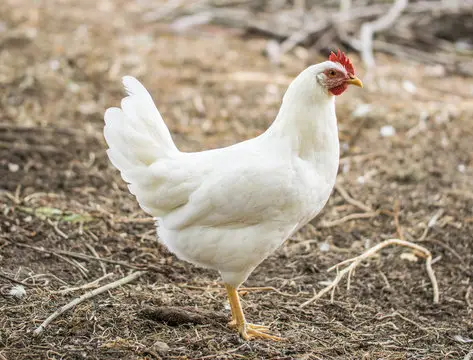
A commercial layer like the White Leghorn pumps out up to 320 eggs per year, but there is almost no body on it — not worth butchering. A Cornish Cross hits butcher weight in six to nine weeks, but it is a poor layer and cannot sustain itself through breeding. Dual-purpose birds sit between those extremes: 150 to 300 eggs per year, five to twelve pounds of body weight depending on the breed, slower growth, and meat that actually has flavor.
The cost is real. Feed per egg and feed per pound of meat will run higher than with specialized breeds. And none of these birds produce grocery-store chicken — that commodity product is almost exclusively Cornish Cross, harvested at six to seven weeks. What these breeds give you instead is a self-sustaining flock, heritage flavor, and one kind of animal doing two jobs.
1. Rhode Island Red
Eggs/year: 200–300 | Male weight: ~8.5 lbs | Table-ready: 16–20 weeks
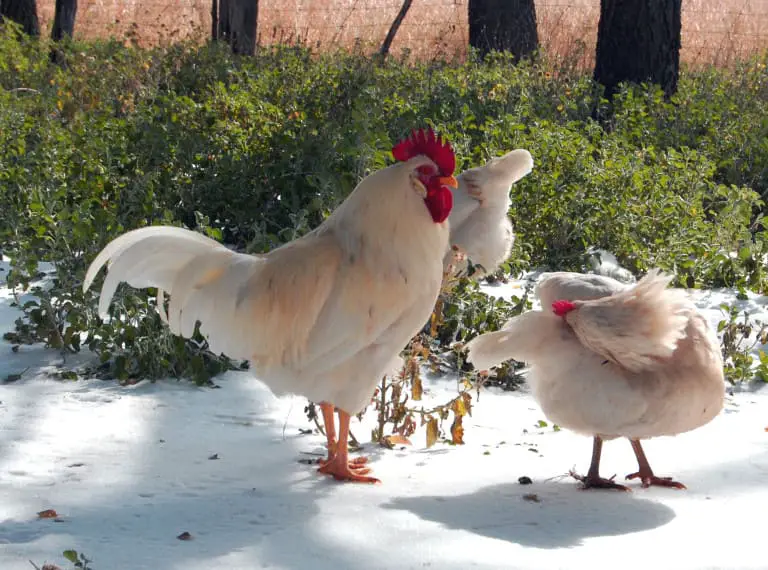
The Rhode Island Red is the baseline. Hens produce 200 to 280 large brown eggs per year, some strains getting close to 300, and roosters hit around eight and a half pounds with birds ready for the table at sixteen to twenty weeks. That speed matters, because feed costs accumulate fast.
Rhode Island Reds forage well, which keeps those costs down. They handle heat and cold with equal indifference, rarely go broody, and live an average of six years — longer than most breeds on this list. These birds are so reliable that Rhode Island Red strains are used directly in the commercial egg industry. If the commercial egg world trusts a heritage breed for its genetics, that is not an accident.
2. Plymouth Rock (Barred Rock)
Eggs/year: 200–300 | Male weight: ~8 lbs | Table-ready: 16–20 weeks

Plymouth Rocks have been on American farms since the 1800s, and their staying power is not nostalgia — it is performance. Two hundred to 280 large brown eggs per year, up to 300 under ideal conditions, with males reaching around eight pounds. They were a cornerstone of the American egg industry for most of the twentieth century, before the shift toward industrial specialization pushed heritage breeds to the margins.
One practical advantage: Barred Rocks do not fly. That makes them a realistic option for urban homesteads and small fenced runs where birds going over the fence is an actual problem. And there is a historical detail worth knowing — until 1871, the Dominique and the Plymouth Rock were classified as the same breed, separated only when poultry standards began formally distinguishing comb type.
3. Buff Orpington
Eggs/year: 180–220 | Male weight: 8–9 lbs | Table-ready: 25–35 weeks
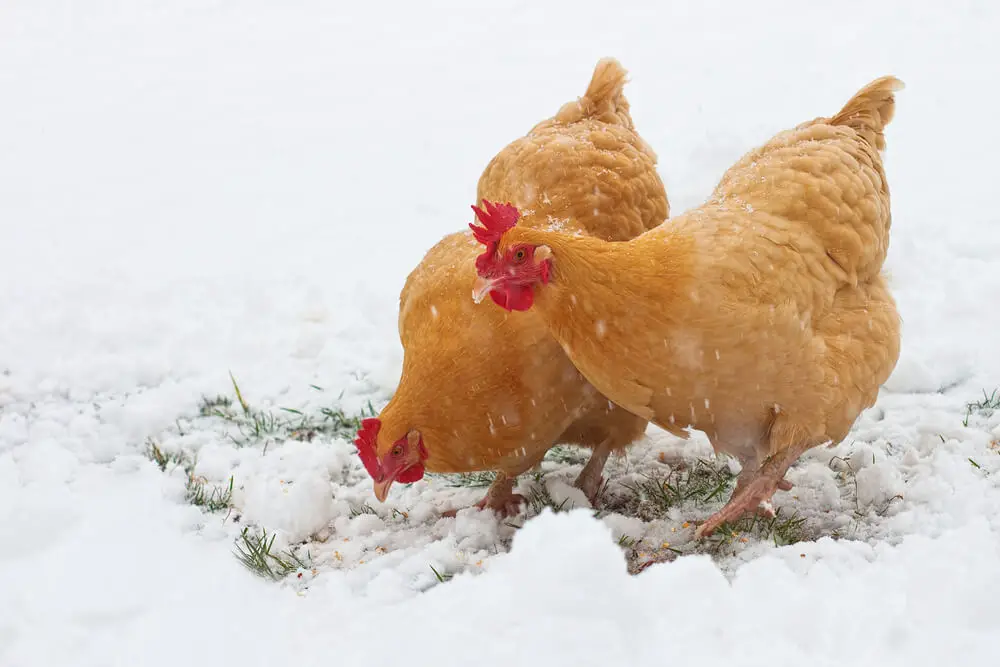
Before World War II, the Buff Orpington was one of the primary sources of eggs and meat for American families. Golden-feathered, round, calm, and easy to find at almost every feed store today. Most new chicken keepers start here, and the reason is temperament as much as production — these birds are genuinely unbothered by children, strangers, and activity around the coop.
Production sits at 180 to 220 large, light-brown eggs per year, with roosters reaching eight to nine pounds. The maturity window is longer than most breeds here: twenty-five to thirty-five weeks before meat birds are ready, compared to sixteen to twenty for Rhode Island Reds. Their larger frame means higher feed consumption per egg. For pure efficiency calculations, they are not the strongest option. For a first flock where handleability and temperament matter alongside production, they make more sense.
4. Black Australorp
Eggs/year: 250–300+ | Male weight: 8.5 lbs | Table-ready: 16–20 weeks

In 1922, a pen of six Australorp hens in Geelong, Victoria, Australia, laid 1,857 eggs in 365 days — an average of 309.5 eggs per hen, without modern lighting programs. One individual hen then laid 347 eggs in 365 days. Another laid 354. Then a hen laid 364 eggs in 365 days, one egg short of every single day of the year. Those records stand.
The Australorp was developed from Black Orpingtons imported from England between 1890 and the early 1900s, with Australian breeders crossing in Minorca, White Leghorn, and Langshan to maximize egg output. By the early 1920s the breed had diverged enough from the original Orpington that it needed its own name. For today’s backyard keeper, expect 250 or more eggs per year, males at 8.5 pounds, females at 6.5 pounds. They are calm, cold-hardy, and heat-tolerant when given shade and water. The breed graduated from The Livestock Conservancy’s threatened list in 2023, meaning population numbers are now considered stable. Measured strictly on eggs per year combined with meat weight and temperament, the Australorp is the strongest all-around performer on this list.
5. Speckled Sussex
Eggs/year: ~250 | Female weight: ~6.6 lbs | Table-ready: 16–20 weeks
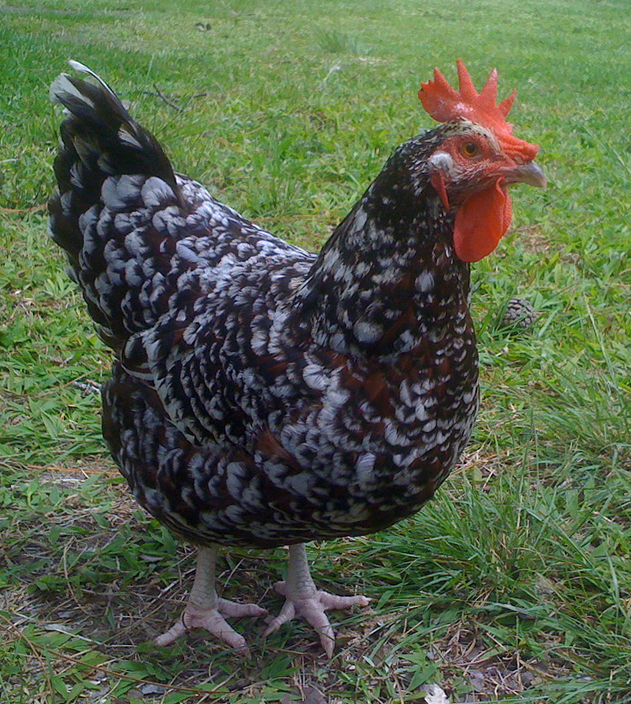
The Sussex is one of England’s oldest recognized breeds, and its case is simple: around 250 light-brown eggs per year, calm temperament, cold-hardy, and adaptable to both confined runs and open free-ranging. There is no drama with the Sussex — it works consistently across climates and management styles, which is exactly what a dual-purpose bird should do.
The Speckled variety is the most popular in mixed flocks, partly because its dark feathers with white-tipped edges become more pronounced and striking after each molt. Older birds actually look more distinctive than young ones — the opposite of most breeds — which is a small but genuinely useful thing when you are trying to identify birds by age in a mixed flock.
6. Wyandotte
Eggs/year: 150–230 | Male weight: ~7 lbs | Table-ready: 16–20 weeks

Developed in the 1880s and named after the Wyandotte people of upstate New York and Ontario, Canada, this breed came off The Livestock Conservancy’s threatened list in 2016 after recovering to stable numbers. Hens lay 150 to 230 eggs per year depending on the strain, with the range reflecting how much diversity exists across color varieties. Silver laced, golden laced, blue, black, buff, Columbian, and partridge are all recognized options.
One consistent trait across strains: Wyandottes forage well, and homesteaders who let them range note that the meat carries more flavor than birds kept entirely on feed. When plucked, the skin holds a yellow tint from their yellow leg and skin genetics — different from the pinkish-white skin of Australorps or Rocks. They are cold-hardy and easy to manage across most setups.
7. New Hampshire Red
Eggs/year: 200–280 | Male weight: 8.5 lbs | Table-ready: 16–20 weeks

The New Hampshire Red started as a university research project. In the early 1900s, poultry breeders in New Hampshire and Massachusetts began selecting the fastest-feathering, fastest-maturing hens from Rhode Island Red stock. The driving figure was University of New Hampshire professor A.W. “Red” Richardson. By 1935 the breed had its own standard, and during World War II it became a meaningful protein source for urban populations across the Northeast. The breed also formed the early broiler industry’s foundation — before the Cornish Cross replaced it.
Today, New Hampshire Reds lay 200 to 280 large, light-brown eggs per year and reach 8.5 pounds, table-ready at sixteen to twenty weeks. The Livestock Conservancy currently lists the breed as “Threatened,” meaning the population needs active support from breeders to remain stable. Some strains run assertive to genuinely aggressive, so early handling of chicks and awareness of source stock temperament matters when buying from individual breeders.
8. Brahma
Eggs/year: 250–300 (Oct–May peak) | Male weight: 10–12 lbs | Table-ready: 28+ weeks
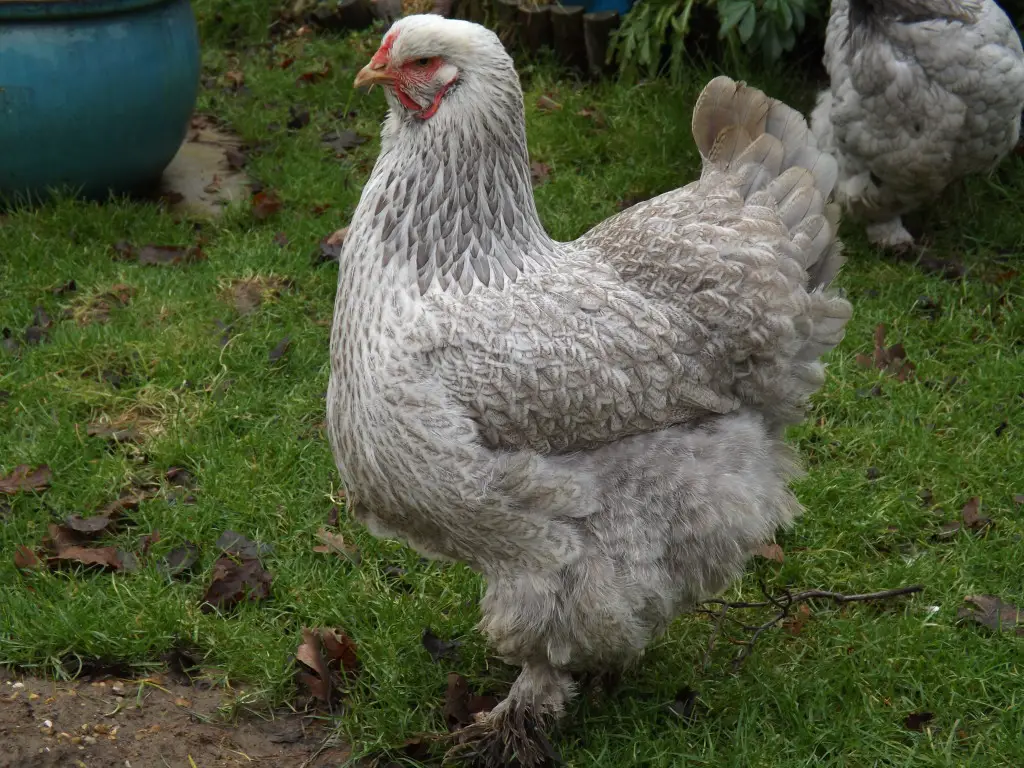
From roughly the mid-1800s until about 1930, the Brahma was America’s primary meat breed. Developed from large birds imported through the Chinese port of Shanghai, it was America’s dominant table bird for the better part of a century. Together with the Cochin, it sparked what became known as “Hen Fever” — a documented national obsession with poultry that swept through both America and England around 1850. By 1901, some birds were documented at eighteen pounds.
Today, males typically run ten to twelve pounds, with hens producing steady medium-to-large brown eggs from October through May. That winter laying window is one of the Brahma’s most practical traits — most dual-purpose breeds slow down significantly in cold months, and the Brahma fills that gap. Feathered feet and dense plumage make it one of the strongest cold-weather birds available, but that same density creates heat stress risk in hot summers. Growth is slow relative to the rest of this list, so the feed investment runs longer before butcher weight. For cold climates, winter egg production, and maximum carcass size, the Brahma earns its place.
9. Delaware
Eggs/year: 200–280 | Male weight: 8.5 lbs | Table-ready: 12–16 weeks
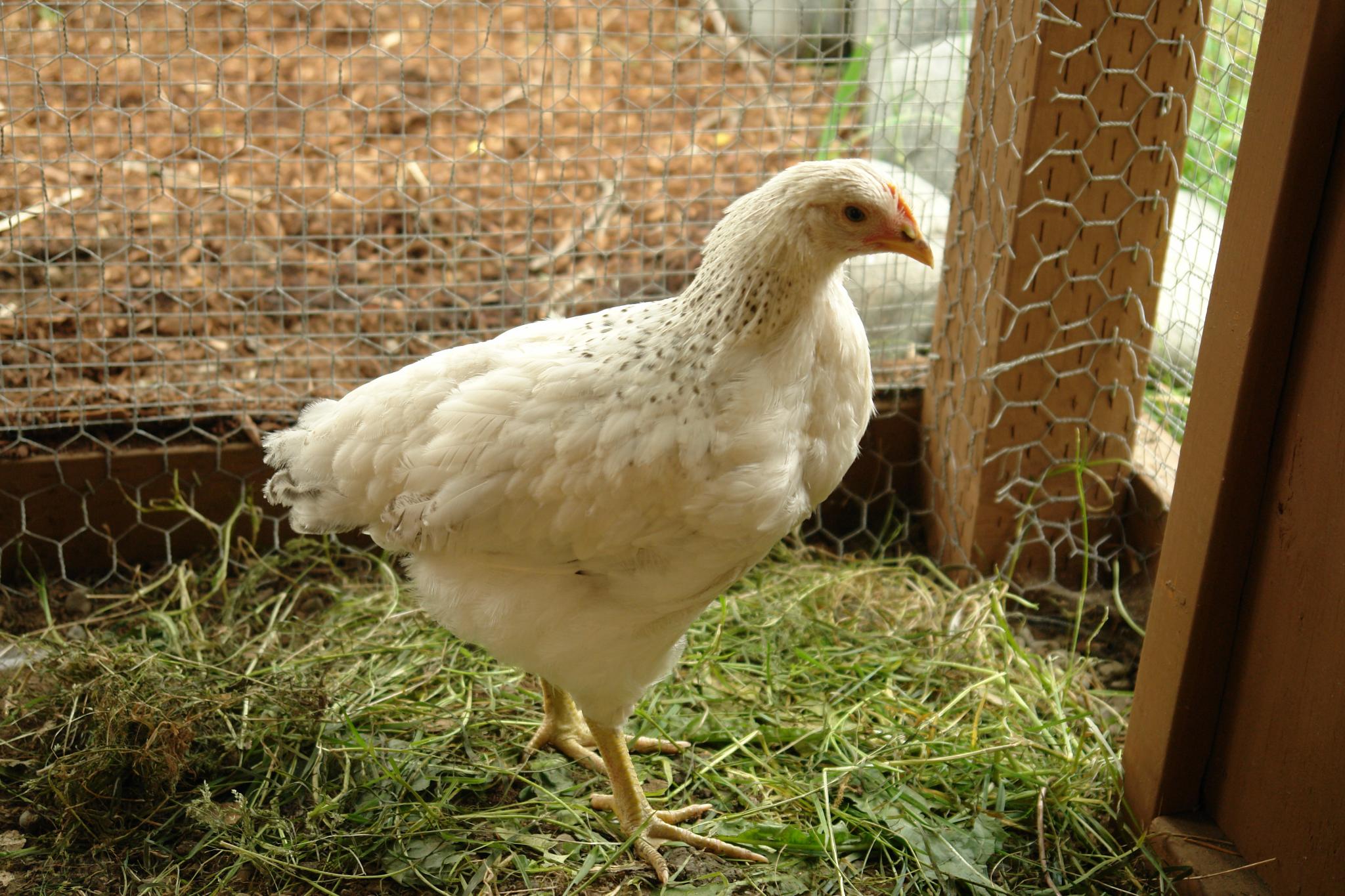
George Ellis of Ocean View, Delaware, was crossing Barred Plymouth Rock roosters with New Hampshire hens in the 1940s when some offspring came out white with black barring at the hackles and tail — a color pattern called Columbian. Ellis worked those birds into a new breed, originally named Indian Rivers. For about twenty years, the Delaware and Delaware/New Hampshire crosses were the dominant broiler chickens on the Delmarva Peninsula. Then the Cornish/Plymouth Rock cross arrived, grew faster, and the Delaware lost its commercial market.
Because the breed had been developed for industrial use rather than homestead keeping, almost no small farms maintained them, and the population collapsed. By 2009 it was listed as “critical.” Dedicated breeders kept it alive, and it has since moved to “Recovering” status. Delaware hens now lay 200 to 280 large-to-jumbo light-brown eggs per year, with males at 8.5 pounds and birds table-ready in three to four months — faster than most heritage breeds on this list. They are fast-feathering, friendly, predator-aware despite their white color, and curious enough to follow their keepers around the yard. One maintenance note: single combs are frostbite-prone in hard winters, and a thin coat of petroleum jelly on the comb during extreme cold is standard practice among Delaware keepers.
10. Buckeye
Eggs/year: 175–240 | Male weight: ~9 lbs | Table-ready: 18–24 weeks
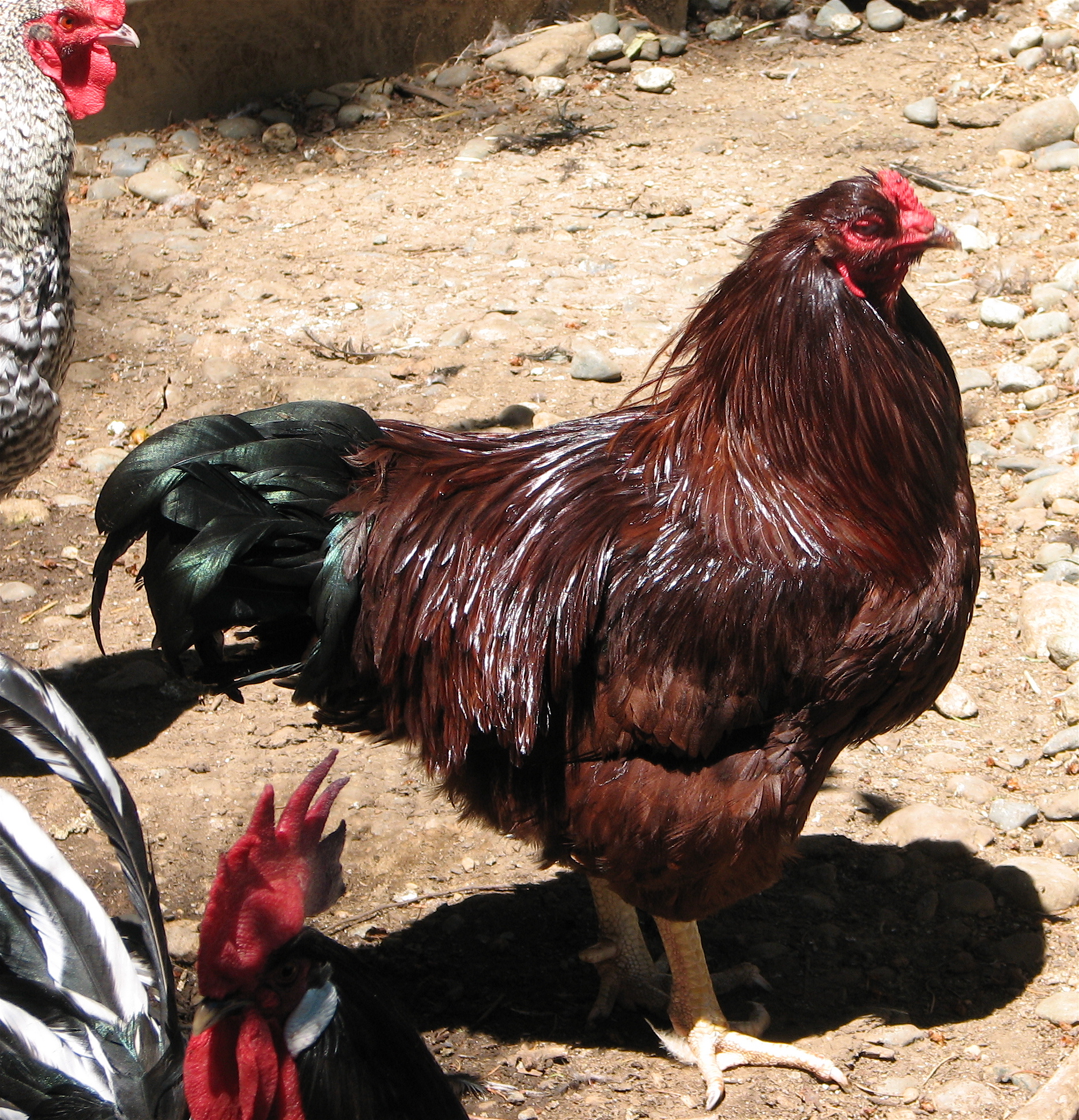
In the late 1800s, Nettie Metcalf of Warren, Ohio, crossed Buff Cochin males with Barred Plymouth Rock females and found the result too slow and heavy. She added a Black-Breasted Red Game male the following year. Several red offspring appeared, and she spent years refining those birds into a distinct breed. By 1902, she was showing them in Cleveland as “Buckeyes.” Admitted to the APA Standard of Perfection in 1905, the Buckeye is the only American chicken breed whose development is credited entirely to a woman.
Early birds produced 150 to 200 eggs per year. Modern lines bred specifically for laying can reach 175 to 240. Roosters weigh approximately nine pounds. The pea comb distinguishes them visually from Rhode Island Reds, and that pea comb is also what makes them reliably cold-hardy — it offers far less surface area for frostbite than a standard single comb. The Buckeye nearly disappeared by the 1950s as industrial poultry consolidation eliminated breeds that did not fit commercial production. Fanciers preserved the line. These birds need room to move and do not do well in tight confinement.
11. Jersey Giant
Eggs/year: Decent layer | Male weight: 13+ lbs | Table-ready: 28+ weeks

The Jersey Giant was developed in New Jersey in the late 1800s with a specific goal: to replace the turkey as America’s large-carcass bird. It is the largest recognized chicken breed, with males capable of exceeding thirteen pounds. Growth is slow by dual-purpose standards, so the feed investment before butcher weight is substantial. For homesteaders who can absorb that timeline, the meat yield is unmatched among heritage breeds.
Hens lay a decent number of large brown eggs, making this a functional dual-purpose bird rather than a pure meat breed. The temperament is gentle — a useful trait in a bird that size. This is not the breed for someone who wants quick turnover. It is the breed for someone who prioritizes maximum carcass weight and is willing to manage the longer production window that comes with it.
12. Dominique
Eggs/year: 230–275 | Peak laying: October–May | Table-ready: 16–20 weeks

The Dominique is the oldest American chicken breed. Colonists brought these birds from southern England, and they were a working part of American homestead life for generations. Until 1871, the Dominique and the Plymouth Rock were officially one breed — separated when poultry standards formalized comb type as a distinguishing trait. The Dominique kept the rose comb; the Plymouth Rock moved to a single comb. Over the centuries these birds have gone by several names: Old Grey Hen, Blue Spotted Hen, Dominic, and Dominicker.
Hens lay 230 to 275 light-to-dark brown, medium-sized eggs per year, with most production concentrated from October through May — a winter laying pattern that makes them more useful through cold months than breeds that taper off dramatically in short daylight. They are hardy, docile, self-sufficient foragers, and carry enough meat to make processing worthwhile. If you want a breed with a direct connection to the agricultural history of this country, this is the one that predates all the others on this list.
Which breed is right for you?
For the most eggs, the Australorp — world record holder, no longer endangered, consistent 250-plus eggs per year — is the clear answer. For maximum carcass weight, the Brahma or the Jersey Giant. For cold climates where frostbite is a real concern, the Buckeye’s pea comb is a genuine structural advantage, and the Brahma’s feathered feet add meaningful cold protection.
For beginners, the Plymouth Rock and the Buff Orpington are starting points for good reasons. And for anyone interested in breed conservation alongside production, the Delaware came back from near-extinction sixty years ago and still makes one of the most practical dual-purpose birds available today.
No single breed on this list does everything perfectly. The industrial system solved that by building breeds so specialized they require industrial conditions to survive. These twelve breeds are for people who want something different — a flock that sustains itself, produces both eggs and meat, and connects the keeper to a lineage of farming that predates modern agricultural consolidation.
Share this content: