Easter Egger vs. Ameraucana vs. Araucana: Blue Egg Breeds Explained
Three chickens lay blue-ish eggs, look vaguely alike, and get mislabeled so often that even breeders lose track of which is which. Here’s what backyard keepers need to know about the Easter Egger vs. Ameraucana vs. Araucana question before handing over cash for “blue egg layer” chicks at a feed store.
One is a hybrid. Another is a purebred American breed. The third is a rare heritage bird from Chile carrying a gene that kills a quarter of its own embryos. They are not interchangeable, and the difference costs real money.
The short answer
The Araucana is a rare, APA-recognized breed from Chile with ear tufts, no tail, and pure blue eggs. Its American descendant, the Ameraucana, shows up with a beard, muffs, a proper tail, and blue eggs, having been developed in the 1970s specifically to strip out the Araucana’s lethal genes. Easter Egger is the category label for any hybrid chicken carrying at least one copy of the blue egg gene, and its eggs can land anywhere from blue to green to olive to pink to plain brown.
That’s the compressed version. The rest is why it matters.
Where blue eggs actually come from
Blue-shelled eggs trace back to a dominant gene called oocyan (O allele), which causes the liver pigment biliverdin to get deposited throughout the eggshell during formation. Because the pigment permeates the shell rather than coating the surface, a true blue egg is blue on the inside too. Brown eggs work differently: they’re white eggs with a brown coating applied at the end of formation. Crack a brown egg and the shell’s inner surface is white; crack a true blue egg and it’s blue all the way through.
Green and olive eggs? Just blue eggs wearing a brown coat. That’s the whole trick.
Reginald Punnett demonstrated in 1933 that the blue egg gene is dominant over white, and when combined with brown-shell genetics, it produces green and olive shades. Modern genetics research, published in PLOS Genetics and referenced by the Araucana Club of America, traces the mutation to an endogenous retroviral insertion (EAV-HP) near the SLCO1B3 gene, with evidence suggesting the mutation arose independently in South American and Asian chicken lineages.
Here’s the part most guides skip: only two eggshell colors are genetically coded — blue and white. Everything else on an Instagram egg-basket photo is a coating painted over one of those two.
Araucana: the original, and the one with the problems
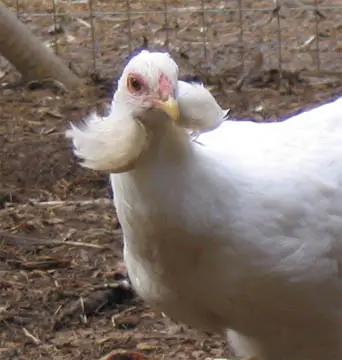
The Araucana originated in Chile’s Araucanía region, where the Mapuche people kept blue-egg chickens long before Europeans arrived. Spanish aviculturist Salvador Castelló first described the birds in 1914 and introduced them to international audiences at the First World’s Poultry Congress in The Hague in 1921. On December 15, 1924, the Pratt Experiment Farm in Morton, Pennsylvania imported the first documented US birds: two males and five females from Chile.
The modern Araucana is a composite of two distinct Mapuche chicken types. Colloncas brought the rumpless, clean-faced, blue-egg traits. Quetros brought the ear tufts, tails, and brown eggs. Crossing the two produced a rumpless, tufted, blue-egg layer. The American Poultry Association recognized the Araucana as a breed in 1976.
Now the catch. Two of the Araucana’s defining traits — ear tufts and rumplessness — come from dominant lethal alleles.
The ear tuft gene kills nearly 100% of embryos that inherit two copies, with the chick dying in the shell around day 18 to 21 of incubation. Even one copy carries roughly 20% mortality, per the Araucana Club of America. Do the breeding math on two tufted birds: about 50% of chicks hatch tufted, 25% hatch clean-faced, and 25% never hatch at all. The rumpless gene isn’t lethal, but it reduces fertility by 10-20% and progressively shortens the birds’ backs over generations.
Hatch rates on Araucana eggs can drop as low as 25-55%, according to the Araucana Club of America. Large hatcheries don’t bother offering them for this reason. The Livestock Conservancy lists the Araucana’s US conservation status as Critical.
Araucana specs:
- APA recognition: 1976
- APA colors (large fowl): Black, Black Breasted Red, Golden Duckwing, Silver Duckwing, White
- Weight: Hens 4-5 lbs; roosters up to 6-7 lbs
- Egg production: 150-200 per year (around 3 per week)
- Egg color: Pure blue
- Price per chick: $15-50+ from dedicated breeders
One wrinkle worth knowing: international standards split on this breed. The UK, Australia, and several other countries treat tailed and rumpless variants as a single Araucana breed. US standards split them into Araucana (rumpless, tufted) and Ameraucana (tailed, bearded).
Ameraucana: the fix
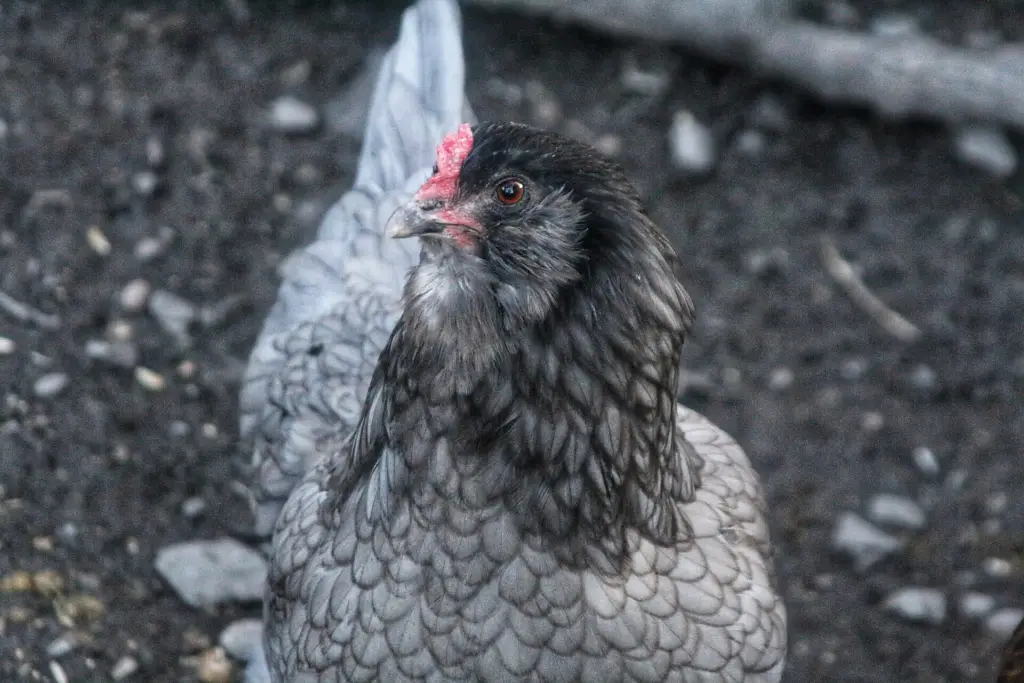
By the 1970s, American breeders had grown tired of losing chicks to Araucana lethal genes. A group of US breeders began crossing Araucana stock with other birds to keep the blue egg while eliminating the tufted and rumpless alleles. What they produced was the Ameraucana — the name a portmanteau stitching together “America” and “Araucana.”
The Ameraucana Bantam Club settled on the name in 1979. The American Bantam Association accepted the first varieties (Wheaten and White) in 1980. In 1984, the APA added the Ameraucana to its Standard of Perfection with all eight color varieties. Self Blue (Lavender) joined the list in 2020 for large fowl only.
Structurally, the Ameraucana is what the Araucana looks like when it follows the rules. Tail present. Beard and muffs covering the cheeks. Pea comb on top. Slate-blue legs underneath. Blue eggs out the back. No lethal alleles attached.
Ameraucana specs:
- APA recognition: 1984 (Self Blue added 2020)
- APA colors: Black, Blue, Blue Wheaten, Brown Red, Buff, Silver, Wheaten, White; Self Blue (Lavender) in large fowl
- Weight: Hens 5.5-7 lbs; roosters 6-8 lbs
- Egg production: 150-250 per year; 3-4 per week
- Egg color: Blue, from pale sky to pastel. The Ameraucana Breeders Club color chart acknowledges occasional green, though it’s not the goal.
- Price per chick: $10-30+ from private breeders; hatchery birds usually come tagged “not for exhibition”
Here’s the part that trips up new keepers: most “Ameraucanas” sold at feed stores are not actually Ameraucanas. The dead giveaway is price. A real Ameraucana chick rarely goes under $10. The other tell is plumage. If the color isn’t one of the APA-recognized eight, you’re looking at something else wearing the name.
Easter Egger: not a breed, and that’s the point
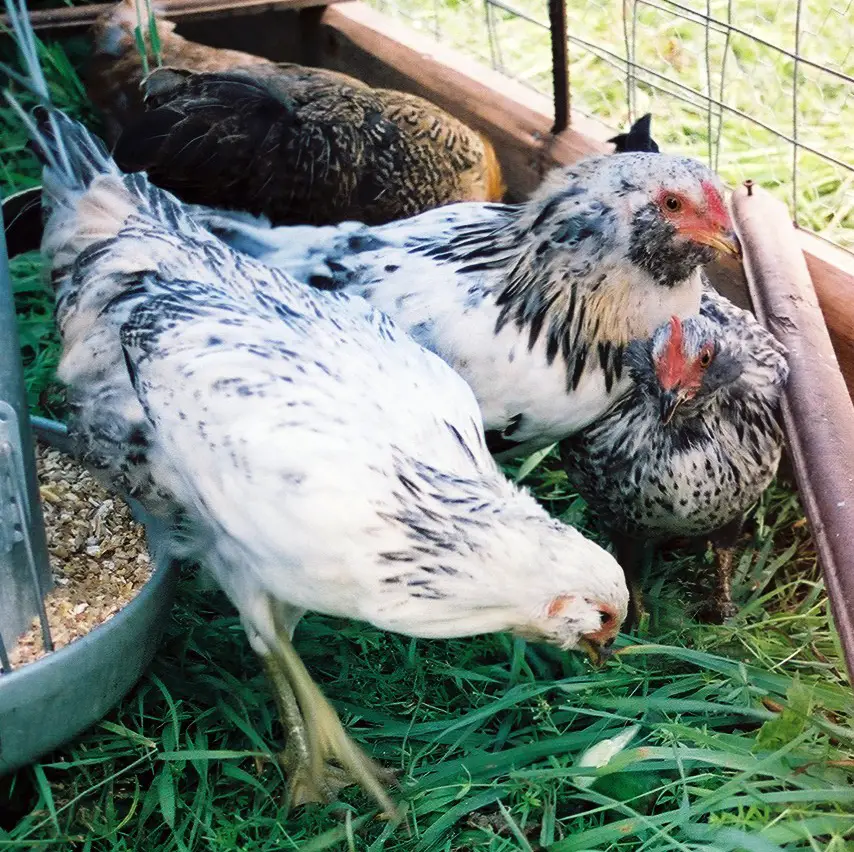
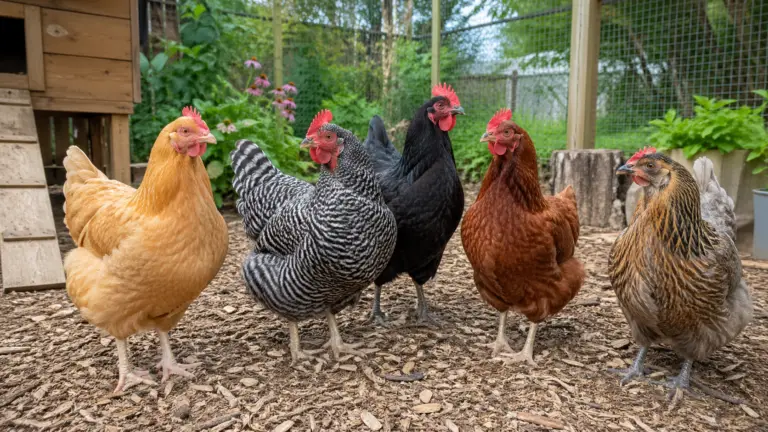
An Easter Egger isn’t a breed. It’s a category. Per Wikipedia and the Ameraucana Alliance, the term covers any hybrid or mixed-breed chicken that results from pairing a bird carrying the oocyan gene with one that doesn’t.
Because Easter Eggers are hybrids, they don’t breed true. Two Easter Eggers won’t produce chicks that look like themselves or lay the same egg colors. One Easter Egger might drop sky-blue eggs into the nest; the next hen over lays pale pink; the next, olive green; the next, a boring brown. Each individual hen sticks to her one color for her entire laying career, but no two hens in a flock are guaranteed to match.
Olive Eggers are a specific subcategory: a blue-egg breed crossed with a dark-brown-egg breed like Marans, Welsummer, or Barnevelder. The offspring lay olive-green eggs, since a blue base plus a dark brown coating reads olive to the eye.
Easter Egger specs:
- APA recognition: None (not a breed)
- Appearance: Variable — any color, any comb, any leg color
- Weight: Depends entirely on lineage
- Egg production: 200-250 per year (4-5 per week), often the most productive of the three
- Egg color: Blue, green, olive, cream, pink, or brown
- Price per chick: Typically $1-3 at feed stores
Easter Eggers run the backyard-chicken market for good reason. Hybrid vigor makes them hardy. Pea combs handle cold well. Friendly temperaments make them beginner-friendly. Cheap pricing makes them accessible. The Easter Egg Club of America, cited by The Chicken Chick, claims they’re the most popular chicken in America today.
The trade-off is simple: you don’t know what you’re getting. Your “blue egg layer” might quietly drop brown eggs. The bird might look nothing like the pea-comb, muffed photograph in the hatchery catalog. This is exactly where “Americana” labels come from — that spelling is a marketing word, tweaked just enough to sound like “Ameraucana” while legally selling you an Easter Egger. The Ameraucana Alliance is blunt about it: “Americana” is not a breed.
How to tell them apart in your own flock
Ear tufts and no tail? It’s an Araucana. Ear tufts are unique to this breed.
Tail, beard, muffs, slate-blue legs, and one of the eight APA-recognized colors? Probably an Ameraucana. Check the feet too. Ameraucanas have slate-blue shanks with white undersoles, while Araucanas come with yellow legs and yellow foot bottoms.
Tail present, muffs maybe, legs olive or green, cost you three dollars at Tractor Supply, came labeled something creative? That’s an Easter Egger. Regardless of what the sign above the bin said.
At-a-glance comparison
| Feature | Araucana | Ameraucana | Easter Egger |
|---|---|---|---|
| APA recognized breed? | Yes (1976) | Yes (1984) | No |
| Tail | No (rumpless) | Yes | Usually yes |
| Ear tufts | Yes | No | No (usually) |
| Muffs and beard | No | Yes | Variable |
| Leg color | Yellow | Slate-blue | Any (often olive) |
| Egg color | Blue | Blue | Blue, green, olive, pink, brown |
| Lethal genes | Yes (tufts) | No | No |
| Annual egg count | 150-200 | 150-250 | 200-250 |
| Price per chick | $15-50+ | $10-30+ | $1-3 |
| Availability | Rare | Moderate | Common |
Which one should you actually get?
Want purebred blue eggs without a quarter of your hatch dying in-shell? Get an Ameraucana from a reputable breeder. The 1970s breeders built this bird to solve exactly your problem.
Want a cheap, colorful egg basket and don’t care about pedigree? Easter Eggers. They’re productive, hardy, and cost roughly a tenth of the purebreds. You trade predictability for volume and save a lot of money doing it.
Want to help preserve a critically rare heritage breed and you’re comfortable with hatch rates that can drop to 25%? Araucana, but source from a dedicated breeder rather than a hatchery, and go in with open eyes about what breeding lethal-gene birds actually looks like.
None of these are wrong choices. They’re different choices for different goals. The only move that’s actually wrong is buying an Easter Egger from a hatchery labeled “Americana,” then telling your neighbor you own an Ameraucana. Real breeders can hear you from three states over.
Share this content: