Hot Weather Chicken Care: How to Keep Your Flock Cool Above 100°F (Without Losing Hens)
Losing a hen to heat stroke on a 103°F afternoon is one of those things that should not happen — but does, every summer, to keepers who figured their birds could handle the heat. Hot weather chicken care is not complicated, but it is time-sensitive. At 85°F, egg production starts sliding. By 100°F, the gap between a healthy hen and a dead one narrows fast.
Here is the whole picture: what happens inside a chicken when temperatures climb, what to do at each threshold, and what the emergency steps look like when a bird goes down.
At a Glance: What to Do at Each Temperature
When the thermometer climbs, find your range in the table below and start there.
| Temp Range | Risk Level | Immediate Action |
|---|---|---|
| Below 85°F | Low | Fresh water + shade available |
| 85°F–94°F | Moderate | Add extra waterers, open coop vents, confirm shade coverage |
| 95°F–99°F | High | Ice in waterers, frozen treats, begin electrolytes |
| 100°F–104°F | Severe | All of the above + check every bird every 30 minutes |
| 105°F+ | Critical | Move vulnerable birds indoors; begin emergency cooling for any bird panting heavily or unable to stand |
Humidity shifts these numbers considerably. At 50% humidity or above, heat stress can arrive at temperatures as low as 68°F, according to Backyard Boost. In dry climates the thresholds are higher, but 100°F dry heat is still dangerous — do not let a low dew point lull you into skipping precautions.
What Heat Actually Does to a Chicken
Chickens do not sweat. Their only cooling mechanism is panting, which pulls moisture off the respiratory tract through evaporation. Fast. Panting burns through electrolytes — sodium, potassium, chloride — and in sustained high heat or high humidity, the process stops keeping up.
A healthy hen runs an internal temperature of 105–106°F. Once that climbs to 113–117°F, she is in danger of organ failure. The gap between “moving a little slow” and dead can be under two hours on a bad afternoon.
Eggs suffer first. Research from Purdue University and the USDA Agricultural Research Service put the average egg production loss during heat stress at 36.4%, with feed conversion dropping 31.6% and egg weight falling 3.41%. A separate peer-reviewed study published in the journal Animals found shell strength drops 30% and shell thickness 13.5% — meaning hens that do keep laying produce worse eggs. Production starts declining at 85°F, well before heat stroke becomes a risk.
85°F–94°F: Prevention Mode
At this range, birds will manage on their own if you set up the right conditions. The goal is removing the obstacles — no shade, warm water, a stuffy coop — that force them to fight the heat rather than avoid it.
Shade First
No shade in the run means heat stress by mid-morning on an 85°F day. Shade cloth beats solid tarps here because it blocks direct sun without blocking airflow. Natural shade from trees or dense shrubs works better than anything man-made. For a fast retrofit, a 30–50% shade cloth over the hottest corner of the run covers the immediate problem.
One thing to watch: birds pack into shade and generate body heat together. Give them enough covered area that the whole flock can spread out without crowding.
Ventilation in the Coop
Hot air traps inside a closed coop and stays there. Windows on opposite walls create cross-ventilation; vents under the eaves let heat rise and escape. What you need is air moving through the coop, not just entering at one point.
Water Tactics
Chickens will stop drinking before they drink warm water. As Lisa Steele of Fresh Eggs Daily points out, a waterer sitting in full sun is functionally useless on a hot day — move every waterer into shade and check them twice during peak afternoon hours.
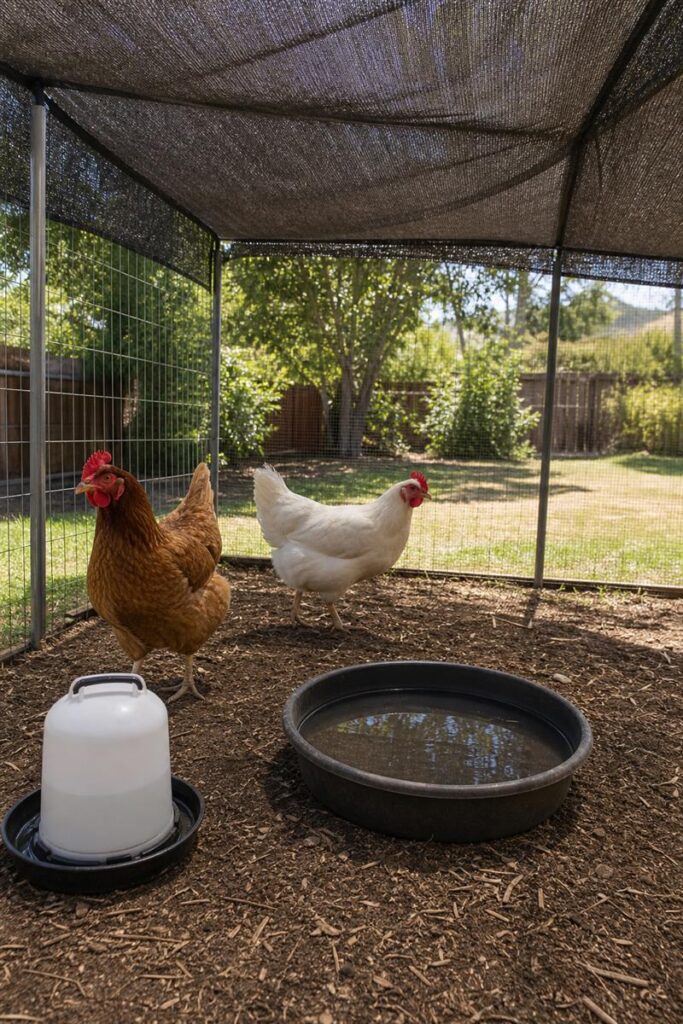
More waterers reduce wait time when every bird wants to drink at once — aim for at least one per four or five hens during hot weather. Freezing water in 1-gallon containers overnight and dropping them into the waterers each morning buys several hours of cool water; replace them mid-day if the heat holds. Shallow dishes with an inch of standing water let hens cool their feet, which actually helps lower core temperature.
95°F–99°F: Active Cooling Mode
Prevention alone stops working here. At 95°F, you need to actively pull heat down, not just stop it from building.
Frozen Treats
Frozen treats cool from the inside and keep birds hydrated at the same time. Watermelon earns its reputation — it is mostly water, chickens love it, and chunks freeze solid overnight. Berries frozen into ice cubes give the flock something to peck at as the block melts, extending the cooling effect over time. Herb ice cubes — mint, parsley, or basil frozen in water — add a mild cooling effect from the menthol in the mint.
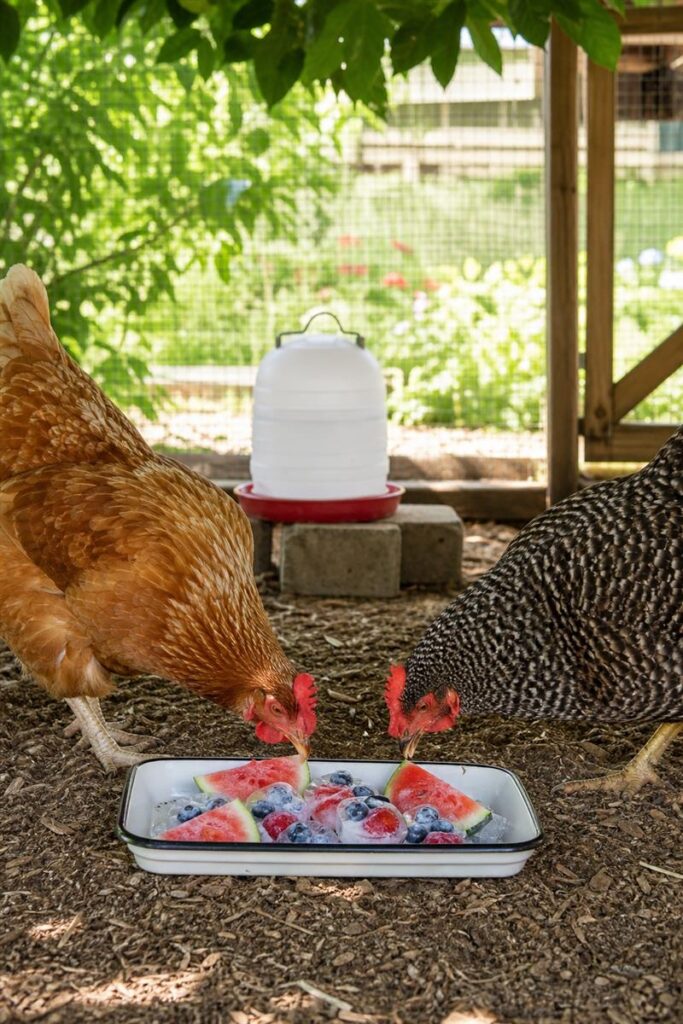
Plain yogurt with chopped herbs, frozen in small silicone molds, provides a protein-rich treat that melts slowly and keeps birds occupied during the hottest stretch of afternoon.
The Electrolyte Protocol
Panting depletes electrolytes faster than water alone replaces them. A bird can drink steadily and still decline because the sodium, potassium, and chloride are not coming back fast enough.
Simple DIY recipe per gallon of water, as shared in Grit Magazine:
- 2 teaspoons sugar
- 1/8 teaspoon table salt
- 1/8 teaspoon baking soda
For a closer match to commercial formulations, The Chicken Chick’s recipe adds 1/2 teaspoon potassium chloride (Morton salt substitute) and increases sugar to 1 tablespoon per gallon.
Two rules worth repeating: electrolytes are for heat-stressed birds, not routine use — too much salt harms chickens. Offer the mix for 4–6 hours during peak heat, then switch back to plain water. Always keep plain water available alongside it so birds can choose. In a pinch, unflavored Pedialyte works.
100°F+: Heat Stroke Territory
Passive monitoring is not enough at 100°F. Check every bird every 30 minutes during peak afternoon heat. Older hens, heavy breeds like Brahmas and Orpingtons, and broody birds sitting on a nest carry the highest risk.
Recognize the Signs
Early heat stress — start cooling interventions now:
- Open-mouth panting
- Wings held out from the body
- Lethargy, reluctance to move
- Pale comb and wattles
- Reduced appetite with increased drinking
Heat stroke — act immediately:
- Rapid, continuous open-mouthed breathing that does not slow after several minutes in shade
- Bird is limp or has collapsed
- Loss of coordination
- Unconsciousness
Emergency First Aid: The First 30 Minutes
Cooling within 30 minutes of heat stroke onset reduces fatalities by up to 40%, according to Az Chickens. Speed matters more than having the perfect setup.
Step 1 — Move the bird. Out of sun, into shade or a cool interior space. Getting her out of direct heat stops additional heat loading immediately.
Step 2 — Offer cool water. A conscious bird that can hold her head up should be allowed to drink. Do not force water into a bird that cannot swallow.
Step 3 — Cool water immersion. Submerge her body up to the neck in cool water — not ice water. The shock of ice-cold water can kill a bird already in distress. Cool tap water is the target. While submerged, mist the comb, wattles, and legs; blood vessels close to the surface in these areas release heat quickly.
Step 4 — Electrolytes after initial cooling. Once breathing slows and she is stable, start the electrolyte mix.
Step 5 — Monitor for one hour. Improved breathing, ability to stand, and renewed interest in water are good signs. Do not return a recovering bird to the coop until evening temperatures have dropped.
When to Call the Vet
Most mild-to-moderate cases resolve with the steps above. Based on guidance from Vet Verified and Grubly Farms, call a poultry vet when:
- The bird shows no improvement after one hour of cooling treatment
- She remains unconscious or keeps collapsing
- Breathing stays rapid and labored 30 minutes into treatment
- Secondary symptoms develop — ongoing weakness, discharge, or swelling
A vet can administer cooled IV fluids, which is the one treatment for severe heat stroke that cannot be replicated at home. Finding a poultry vet before the summer heat arrives is worth doing now. The American Association of Avian Veterinarians (AAAV) maintains a searchable directory by location.
Summer Prep Checklist
Before the next heat wave, run through this:
- Shade cloth or natural shade covers at least half the run
- All waterers are in shade and checked twice daily
- Extra waterers out — minimum one per four to five birds
- Frozen 1-gallon water containers ready in the freezer
- Electrolyte ingredients or commercial product on the shelf
- Silicone molds for frozen treats prepped the night before
- Coop ventilation is open and creating a cross-breeze
- Heat stroke signs and the five emergency steps are memorized
A few hours of setup now — shade cloth, extra waterers, a bag of electrolytes in the cabinet — separates a flock that gets through August from one that doesn’t.
Share this content: