12 Backyard Chicken Essentials That Actually Earn Their Keep in 2026
Disclosure: This post contains affiliate links. As an Amazon Associate, I earn from qualifying purchases — at no extra cost to you. I only recommend gear I’d actually put in my own coop.
Brooder gear matters most before chicks ever reach the coop, so review the best chicken brooders for chicks if you are setting up for babies.
If you keep chickens long enough, you figure out one truth fast: the difference between loving your flock and dreading the morning chore run usually comes down to a few specific pieces of gear. If you are still planning the whole setup, read the guide to raising chickens for the first time before buying extras.
The right automatic door means you stop setting 5:30 a.m. alarms. The right feeder means you stop feeding mice along with your hens. The right brooder plate means you stop worrying about burning your whole setup down. If the coop itself is still the question, start with these chicken coop ideas under $150 before buying gear.
I’ve pulled together the 12 items that are genuinely trending with backyard keepers right now — the stuff that shows up over and over in 2026 best-seller lists, homesteading forums, and chicken-keeping groups. No filler, no “10 cute chicken-themed mugs” nonsense. Just the gear that pays for itself.
1. An Automatic Coop Door (The Single Best Upgrade You’ll Make)
If you only buy one thing on this list, make it this.
An automatic coop door opens at dawn and closes at dusk without you. That means no more rushing home before sunset, no more asking the neighbor to babysit while you’re away for the weekend, and — most importantly — no more finding feathers scattered because you forgot to close up one night.
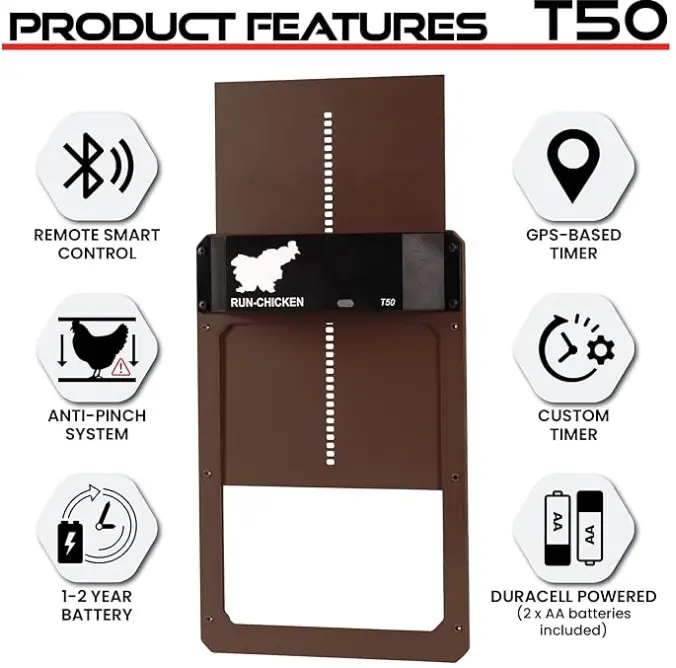
The RUN-CHICKEN T50 has become the default recommendation in chicken forums for good reason: aluminum build, works on both a timer and a light sensor, has a real anti-pinch safety feature, and holds up in cold weather. It runs on batteries that last roughly a year, so you don’t need to wire electricity out to the coop.
If you’re off-grid or your coop doesn’t get much direct sun near an outlet, the solar-powered version is worth the small upcharge.
👉 Shop the RUN-CHICKEN T50 on Amazon
2. A Treadle (No-Waste) Feeder
Chickens are spectacularly good at two things: laying eggs and wasting feed. A typical open feeder can lose 20–30% of its contents to spillage, scratching, and — worst of all — feeding the mice and rats that show up after dark.
Treadle feeders solve all of that. The bird steps onto a platform, the lid lifts, the bird eats. Step off, lid closes. Rodents don’t weigh enough to trigger it.
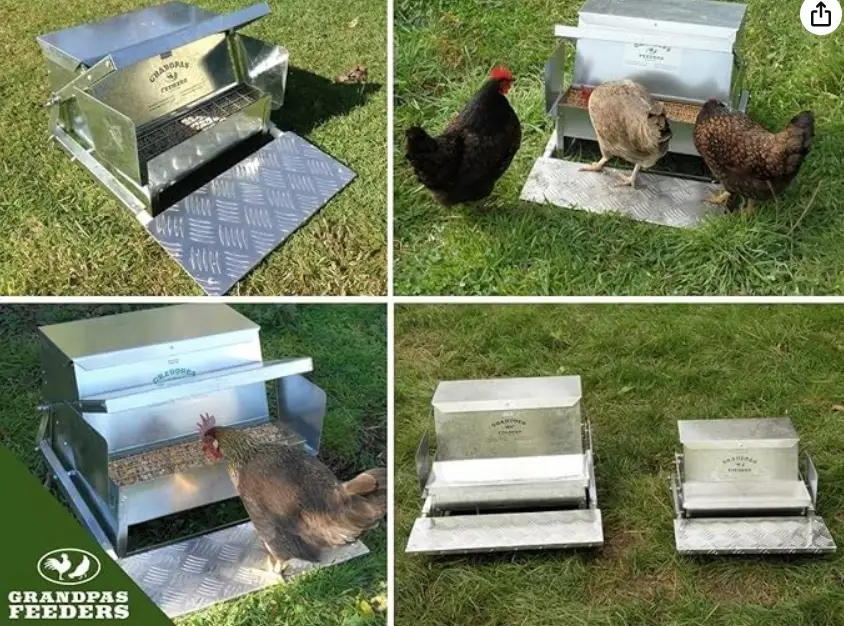
Grandpa’s Feeders is the name you’ll see mentioned most often — it’s built like a tank and lasts for years. For smaller flocks, the metal knockoffs work fine, but the originals genuinely last longer.
Expect it to pay for itself within a year on feed savings alone.
👉 Shop treadle feeders on Amazon
3. A Horizontal-Nipple Automatic Waterer
Open waterers are disgusting. Chickens kick bedding into them, poop in them, and in summer they turn into algae soup within 48 hours.
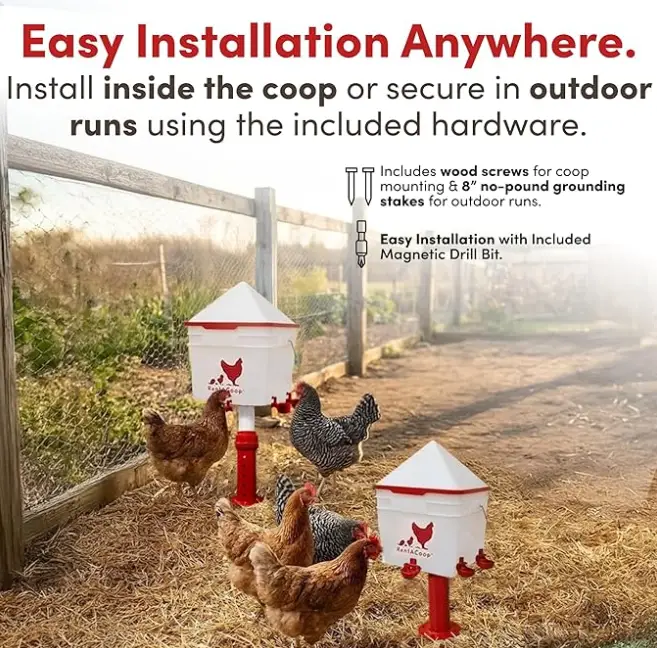
A five-gallon bucket fitted with horizontal nipples (or a pre-made version) stays clean for weeks. The water stays cool, the bedding stays dry, and the hens pick it up in about a day. It’s one of those “how did I ever do it the other way” upgrades.
👉 Shop automatic chicken waterers on Amazon
4. A Brooder Heating Plate (Please Don’t Use a Heat Lamp)
Every year, heat lamps burn down coops and barns. Every year. Brooder plates replaced them for a reason — they mimic a mother hen, use about 15 watts instead of 250, and simply cannot ignite bedding.
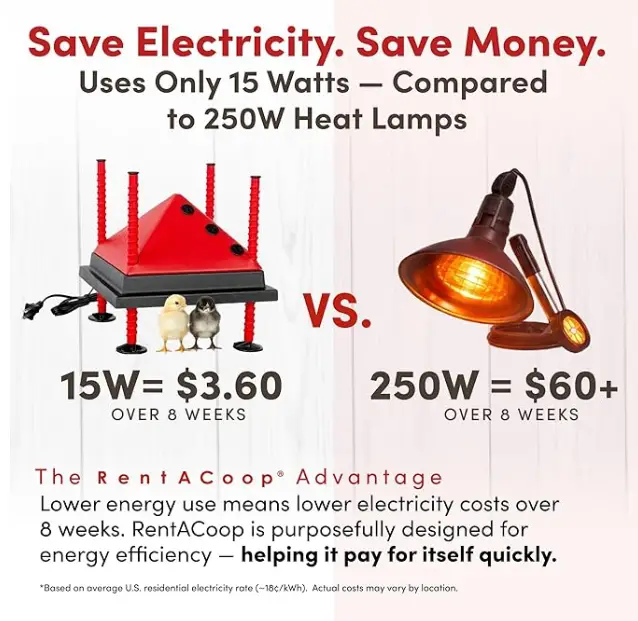
For anyone raising chicks — whether from hatched eggs or day-olds from the feed store — a plate like the RentACoop or ZenxyHoC model is non-negotiable safety gear. The chicks huddle under it exactly like they would under a broody hen.
👉 Shop chick brooder heating plates on Amazon
5. A Predator-Proof Walk-In Run
Free-ranging is wonderful until the hawk shows up. A permanent walk-in run gives your birds space to scratch and dust bathe without exposing them to raccoons, foxes, hawks, and the neighborhood dog.
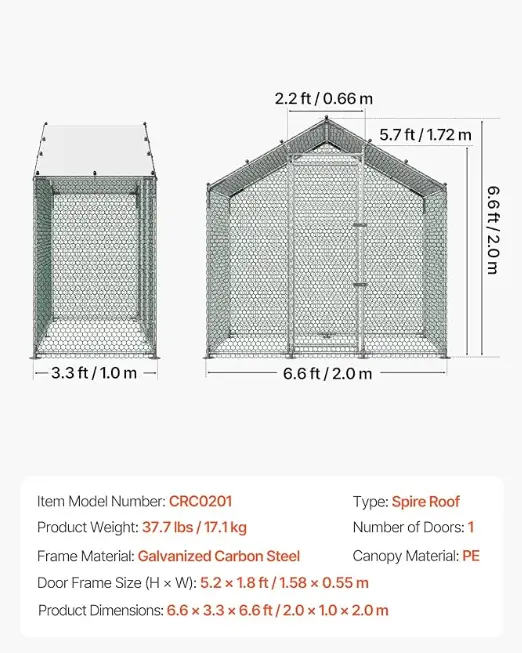
The VEVOR walk-in chicken runs (typically around 6 ft × 6 ft or larger, galvanized steel frame, with a security lock) have become the go-to for keepers who want something sturdier than chicken wire but don’t want to build one from scratch. Spire-roof models shed rain and snow better than flat-roof ones.
Pro tip: bury hardware cloth 12 inches into the ground around the perimeter, or lay an apron flat on the ground outward. Diggers can’t get through either setup.
👉 Shop walk-in chicken runs on Amazon
6. Natural Dust Bath Mix
Chickens clean themselves by throwing dirt on themselves. It sounds backward, but that dust suffocates mites and lice — it’s literally their immune system for external parasites.

If your soil is heavy clay, or your run doesn’t have a dry dusty spot, you need to provide one. Pre-made mixes like Chickie-Whiz or Reliant Pet Chicken Dust Bath combine volcanic ash, food-grade diatomaceous earth, and sometimes herbs like lavender or mint. Dump it in a shallow tub or an old tire, and your hens will fight over it.
👉 Shop chicken dust bath mix on Amazon
7. Premium Nesting Pads
If you’ve ever fished broken eggs out of a wad of soggy straw, you already know why this made the list.
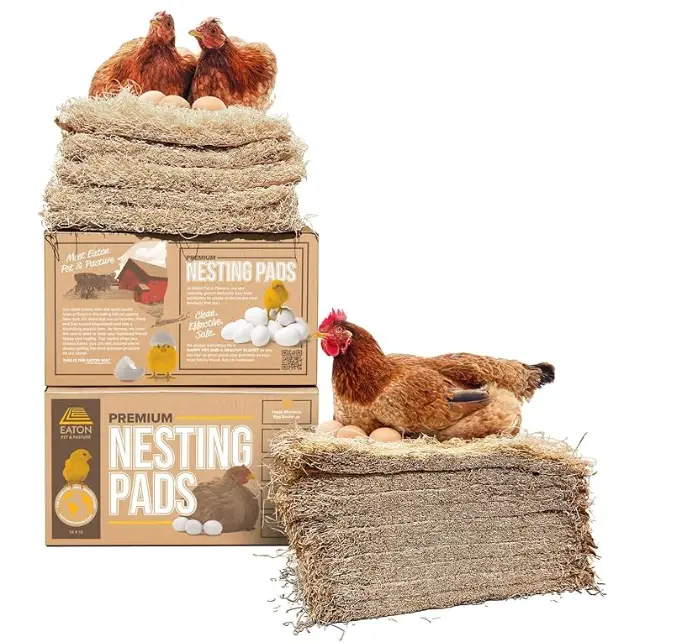
Aspen or excelsior nesting pads (brands like Eaton Pet and Pasture or Small Pet Select) sit flat in the nest box, absorb any mess, and can be lifted out and replaced in about five seconds. No more shoveling out compacted straw every week. Eggs roll into the low spot and stay clean.
A 10-pack typically lasts several months for a small flock.
👉 Shop chicken nesting pads on Amazon
8. Dried Nesting Herbs
This one sounds like it belongs in a Pinterest board, but there’s real logic behind it: aromatic herbs like lavender, mint, rosemary, and thyme deter mites and parasitic flies, and they also seem to calm broody hens.

A handful sprinkled into each nest box once a week keeps the coop smelling like a tea shop instead of a barnyard. Blends from Eaton Pet and Pasture Premium Nesting Herbs or MAQIHAN are reasonably priced and last a while.
👉 Shop chicken nesting herbs on Amazon
9. A Chicken-Specific Poop Scoop
Your garden trowel is not it. Neither is a regular cat-litter scoop.
The Coop Scoop Original 2-in-1 is a rake-and-sifter that was designed specifically for sand-bedding coops. It pulls droppings out and leaves the clean sand behind. Daily coop cleaning drops from 15 minutes to about 2.
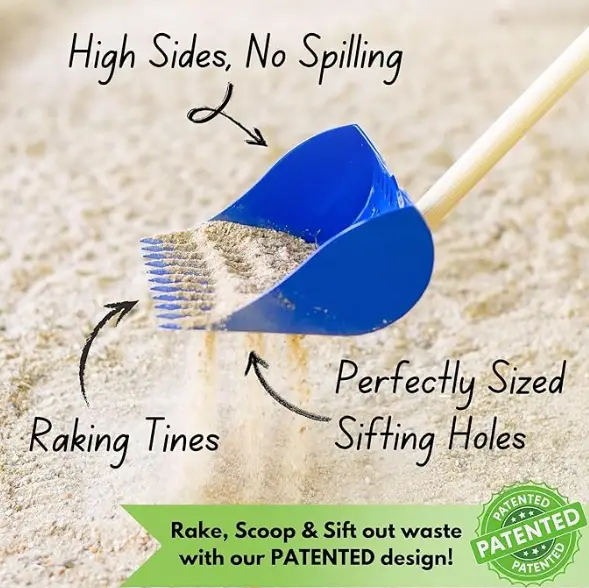
If you’ve been resisting sand as bedding because cleanup sounded like a nightmare — this tool is what changes the math.
👉 Shop the Coop Scoop on Amazon
10. Dust-Free Chicken Coop Sand
Speaking of sand — if you’ve been using pine shavings or straw as bedding and constantly fighting ammonia smell, flies, and mud, it’s worth trying a purpose-made dust-free chicken coop sand. It dries droppings quickly (no ammonia buildup), doesn’t compost in place, doubles as a dust bath when it’s dry, and lasts months with daily scooping.
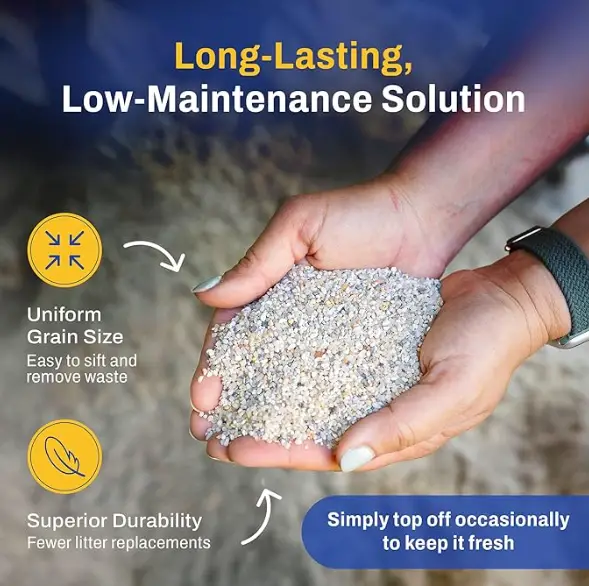
A 50-lb bag covers a small coop floor. Two bags for a bigger one.
👉 Shop chicken coop sand on Amazon
11. A Mobile Chicken Coop (For Rotational Grazing)
If you’ve got a larger yard and want your hens to actually improve your land — eating bugs, scratching up weeds, fertilizing grass — a wheeled “chicken tractor” like the MEDEHOO or Aivituvin mobile coops lets you move the flock to fresh ground every few days.
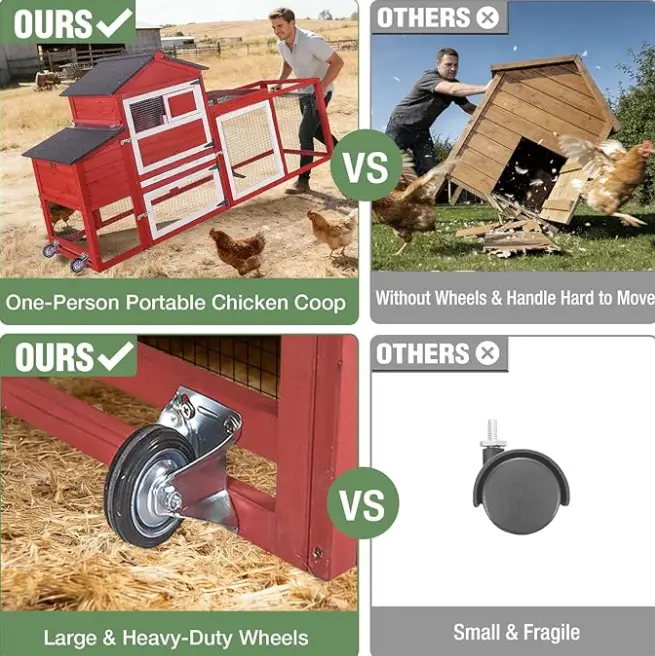
The grass underneath bounces back thick and green. Parasites never get a chance to build up. And you don’t have to deal with one patch of dirt-moonscape in the yard.
These are an investment (usually $300–$600), but for anyone with homesteading goals or half an acre of yard, the payoff is real.
👉 Shop mobile chicken coops on Amazon
12. A Chicken First-Aid Kit (Or the Supplies to Build One)
The feed store closes at 6. Your hen with the injured foot doesn’t care.
At minimum, keep these on hand: Vetericyn wound spray, Corid (for coccidiosis in young birds), electrolyte powder, Blu-Kote or similar antiseptic, and vet wrap. You can buy them piecemeal or grab a pre-built poultry first-aid kit.

This is the category where most new keepers get caught flat-footed, usually at the worst possible moment.
👉 Shop chicken first-aid supplies on Amazon
Putting It All Together
If you’re starting from scratch, the order of priority most experienced keepers agree on is:
- Secure housing and a predator-proof run (the walk-in run, #5)
- Automatic door (#1)
- Treadle feeder + nipple waterer (#2 and #3)
- Brooder plate if you’re raising chicks (#4)
- Everything else as comfort and quality-of-life upgrades
A complete setup from this list runs somewhere between $400 and $900 depending on flock size. That sounds like a lot up front, but spread across the 4–8 years a well-cared-for hen lives, it’s one of the cheapest forms of homesteading you can get into.
Frequently Asked Questions
Do I really need an automatic coop door? Not technically. But if you travel, work late, or just want to stop thinking about it at sundown, it’s the single highest-ROI upgrade for your sanity.
How many hens can I keep in a backyard? Most suburban codes allow 3–6 hens (no roosters). Check your local ordinance before buying. A good rule of thumb is 4 sq ft of coop space and 10 sq ft of run space per bird.
Do chickens need heat in winter? In most of the US, no — adult chickens handle cold surprisingly well as long as the coop is dry and draft-free (but still ventilated). Heat lamps cause more coop fires than they prevent frostbite.
How often do I need to clean the coop? Daily scooping if you use sand. Weekly or bi-weekly full cleans if you use pine shavings. The nesting pads (#7) make this dramatically faster either way.
Share this content: