Genius Cheap Walkway Ideas for Chicken Runs (Gravel, Wood Chips, Rubber Mats, Pavers)
Chicken run turning into a mud wrestling ring? You’re not alone. A good walkway keeps your feet dry, your birds cleaner, and your coop way less smelly. The best part: you don’t need a fancy budget to make it work. Let’s build affordable, low-fuss paths that actually last.
1. Gravel That Drains Like a Champ
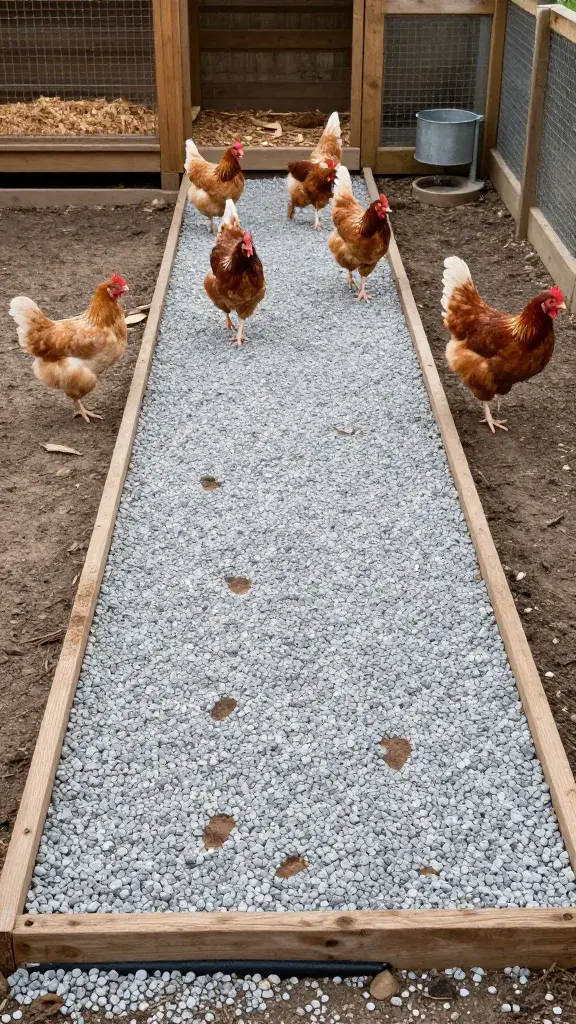
Gravel is the no-nonsense hero of muddy runs. It drains fast, compacts nicely, and holds up under busy chicken feet. If you want a walkway that works year-round, gravel delivers without babysitting.
What To Use
- Crushed gravel or pea gravel (3/8 inch works great)
- Landscape fabric to block weeds and keep gravel from sinking
- Edging: pressure-treated scrap wood, metal, or paver edging
Lay landscape fabric first so your gravel doesn’t disappear into the mud. Add 2–3 inches of gravel and rake it level. If you can edge the sides, even better—no runaway stones.
Pro Tips
- Use crushed gravel if you want better lock-up and stability; pea gravel feels nicer underfoot but rolls a bit.
- Refresh with a thin top-up once a year if your path sees heavy traffic.
- For slick winters, mix a little fines (stone dust) with larger gravel for traction.
Use gravel when you need drainage first and foremost. It’s ideal for low spots that never fully dry out.
2. Wood Chips For A Soft, Compostable Path
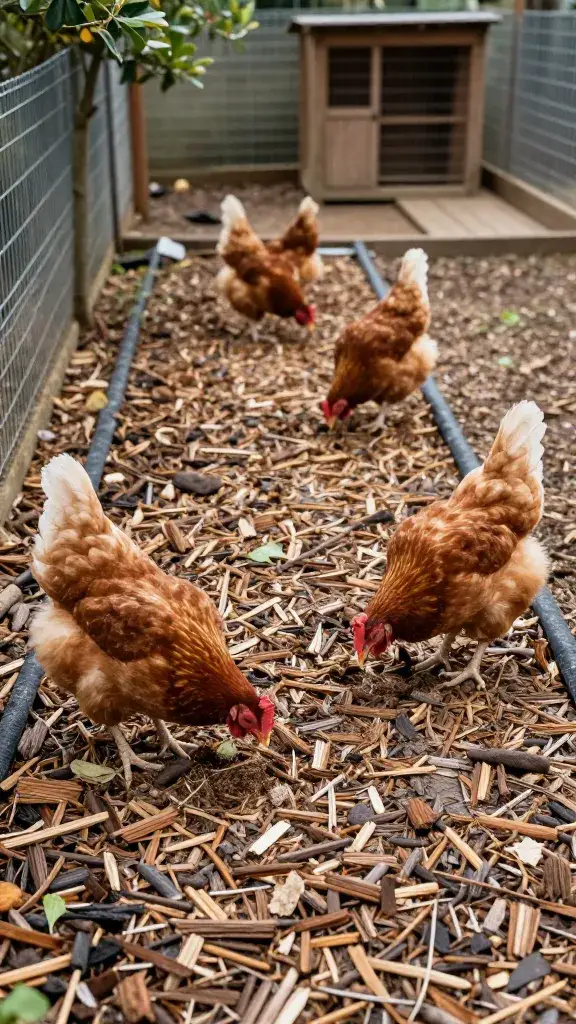
Want something cheap, cushy, and chicken-approved? Wood chips create a soft walkway that absorbs mess and slowly turns into beautiful compost. It’s like a cozy forest floor your flock can scratch through.
Best Chips
- Arborist chips (mixed leaves and twigs) — usually free from tree services
- Hardwood chips — slower to break down, sturdier underfoot
- Avoid dyed mulch and walnut; cedar in moderation only
Spread 3–4 inches over landscape fabric if your run gets swampy, or skip fabric if your soil drains well. Rake smooth and fluff occasionally. You’ll notice smell drops, and dust baths stay cleaner too.
Maintenance
- Top up every 3–6 months depending on weather and traffic.
- Rake older chips to the bed edges and add fresh chips in the center path.
- Pitchfork out soggy spots after heavy rain and patch with dry chips.
Use wood chips if you love low-cost, low-ego maintenance and want to recycle them into your garden later. Seriously, it’s the MVP for smell control.
3. Rubber Stall Mats For The “Set It And Forget It” Path
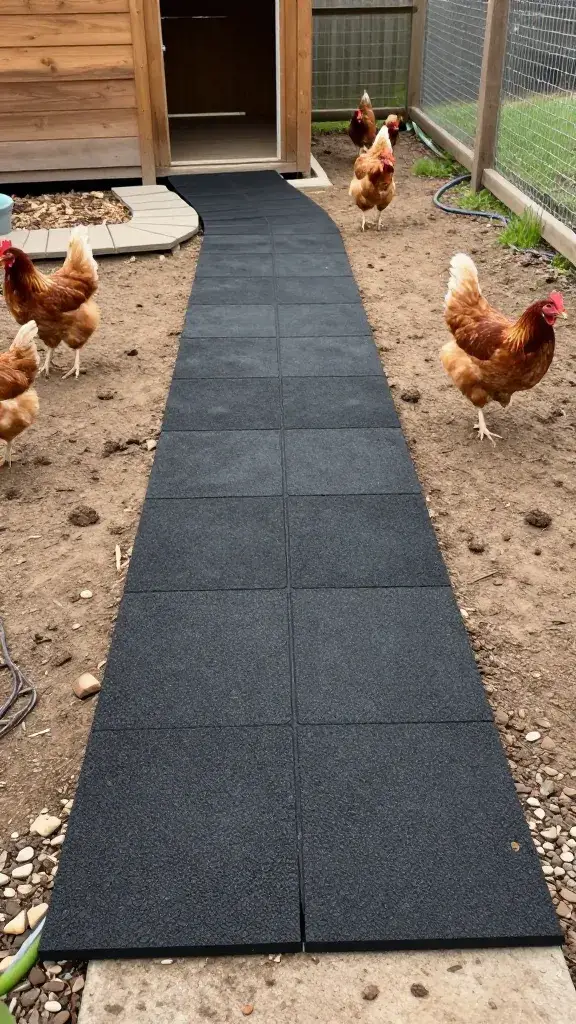
Rubber mats are the cheat code when you’re over mud and over maintenance. They create a firm, hoseable track that doesn’t sink, even in high-traffic zones near feeders and doors. Price per square foot beats many pavers, and they last for years.
What Works Best
- Horse stall mats (4×6 feet, 3/4 inch thick) from farm or hardware stores
- Interlocking recycled rubber tiles for curved paths
- Optional: gravel or sand base to level uneven ground
Level the ground, lay mats snugly with edges touching, and trim with a utility knife if needed. If your birds fling bedding everywhere (they will), sweep it off weekly. Hose down when it gets gross.
Smart Add-Ons
- Scatter a thin layer of washed sand over mats for extra traction in winter.
- Use paver edging or boards to keep mats from shifting on slopes.
- Place mats near the coop door, feeder path, and human gate—anywhere you step daily.
Choose rubber mats when you want instant cleanliness with minimal upkeep. They’re fantastic in spots that always churn to soup after rain.
4. Pavers That Look Polished On A Budget
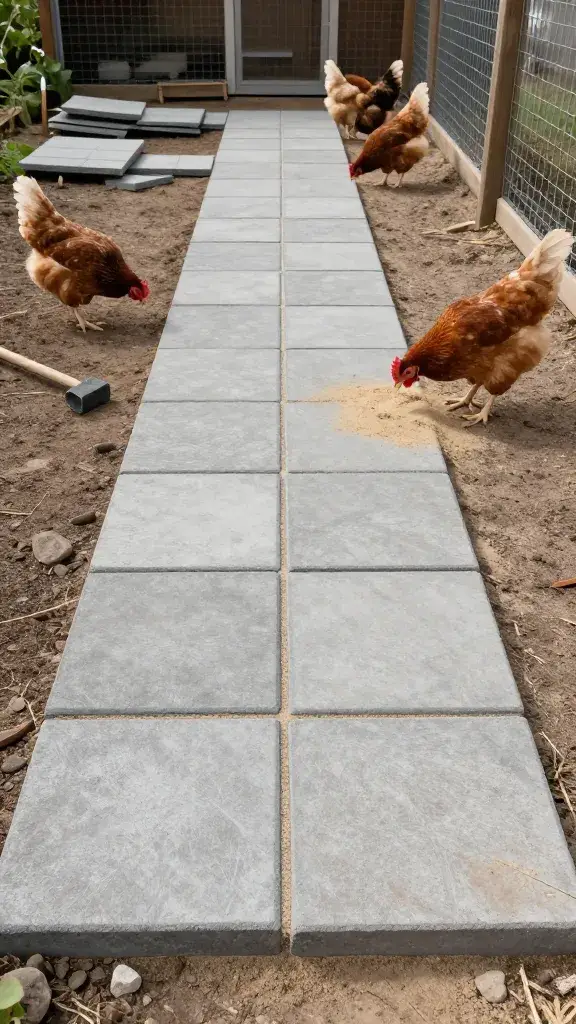
Pavers give your chicken run walkway a legit “I planned this” look without requiring stone mason skills. They’re durable, easy to clean, and perfect for straight, defined paths. Plus, you can grab seconds or leftovers cheap from local listings.
Materials
- Concrete pavers (square or rectangle)
- Sand or stone dust for leveling
- Optional: gravel base if your soil stays squishy
Scrape a shallow trench, add 1–2 inches of sand, and set pavers tightly with a rubber mallet. Sweep sand into the joints to lock them in. Light foot traffic compacts it over a week—chickens help, FYI.
Design Shortcuts
- Lay stepping-stone style with gaps filled with pea gravel or chips to save money.
- Create a center spine of pavers and flank it with gravel—looks custom, costs less.
- Use broken pavers in a mosaic pattern; chickens don’t judge symmetry.
Use pavers when you want a tidy, hose-friendly path that won’t budge. They shine near entrances and along runs that border garden beds.
5. Combo Paths: Mix And Match For Superpowers
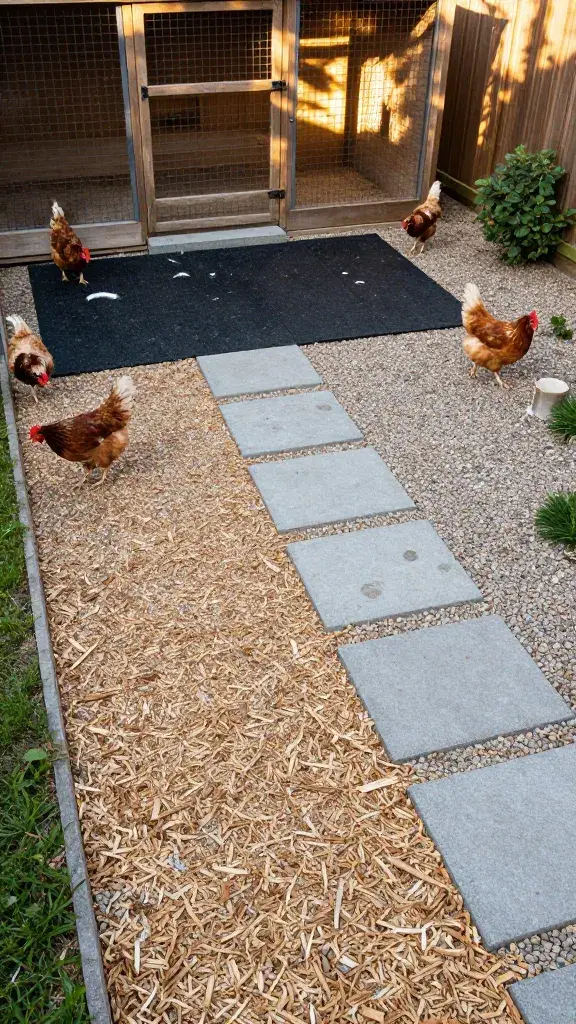
Why pick one when you can cherry-pick the best features of each? Combo paths let you target drainage, traction, and budget like a pro. You get performance where you need it and savings where you don’t.
Winning Combinations
- Gravel base + wood chips top: drains well, soft surface, cheap to refresh.
- Rubber mats + paver thresholds: mats handle mud; pavers look sharp at gates.
- Paver stepping stones + pea gravel infill: stable, flexible layout, easy on the wallet.
- Mats near coop door + chips along run: clean entry, cushy walk for birds.
Map your worst mud spots first. Lay durable surfaces where you always step, and fill the rest with chips or gravel. You’ll use less material and cut your spend without sacrificing sanity.
Quick Planning Guide
- Mark traffic patterns with stakes or chalk after a rainy day.
- Fix drainage first: shallow swales or a French drain beat any surface.
- Edge only where materials migrate—saves money and time.
Go hybrid when your run has mixed conditions—shade, slopes, and puddle zones. It’s the best way to stretch a small budget, IMO.
Ready to banish the muck? Start small: stabilize the entry, then extend as time and budget allow. Your shoes, your flock, and your nose will thank you—seriously. Build the path that makes chores faster, cleaner, and way less “ugh.”
Share this content: