Genius 7 Small Duck Coop Ideas for Backyards That Save Space
Your ducks deserve a cozy home that doesn’t swallow your backyard. These smart, compact coop ideas keep things tidy, predator-safe, and easy to clean—without sacrificing style. You’ll get clever layouts, real-world tips, and builds you can tweak to your space. Ready to give your quackers the upgrade they deserve?
FYI: Each idea focuses on saving square footage while keeping ducks healthy, dry, and secure. Let’s make your yard work smarter, not bigger.
1. The Elevated “Porch Coop” With Under-Run
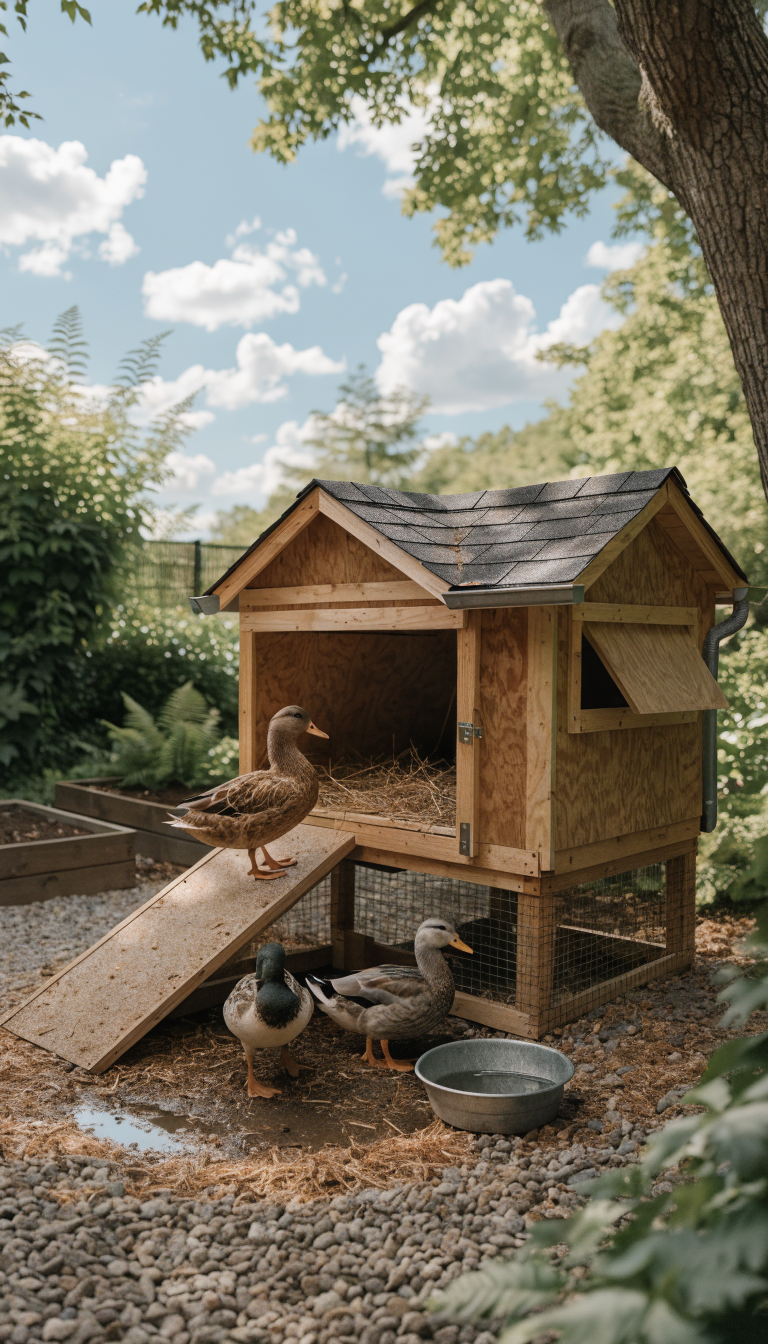
Raise the coop 18–24 inches and use the space below as a shaded mini-run. You double functional space without growing your footprint and keep the house dry during storms. Bonus: elevated floors discourage rodents and make cleaning a breeze.
Why It Works
- Two levels, one footprint: Sleeping up top, dabbling and dusting below.
- Dry equals healthy: Elevation keeps bedding from turning into a swamp.
- Easy maintenance: A drop-down back panel speeds up muck-out time.
Materials
- 2×4 framing, exterior plywood or tongue-and-groove siding
- Hardware cloth (not chicken wire) for the under-run
- EPDM or corrugated roofing
- Hinges for clean-out doors and a secure latch system
Keep the ramp shallow with cleats for webbed feet. Add a small storage cubby up top for feed and grit. Perfect for narrow side yards where vertical space is your friend.
2. The A-Frame “Triangle Tidy” Coop
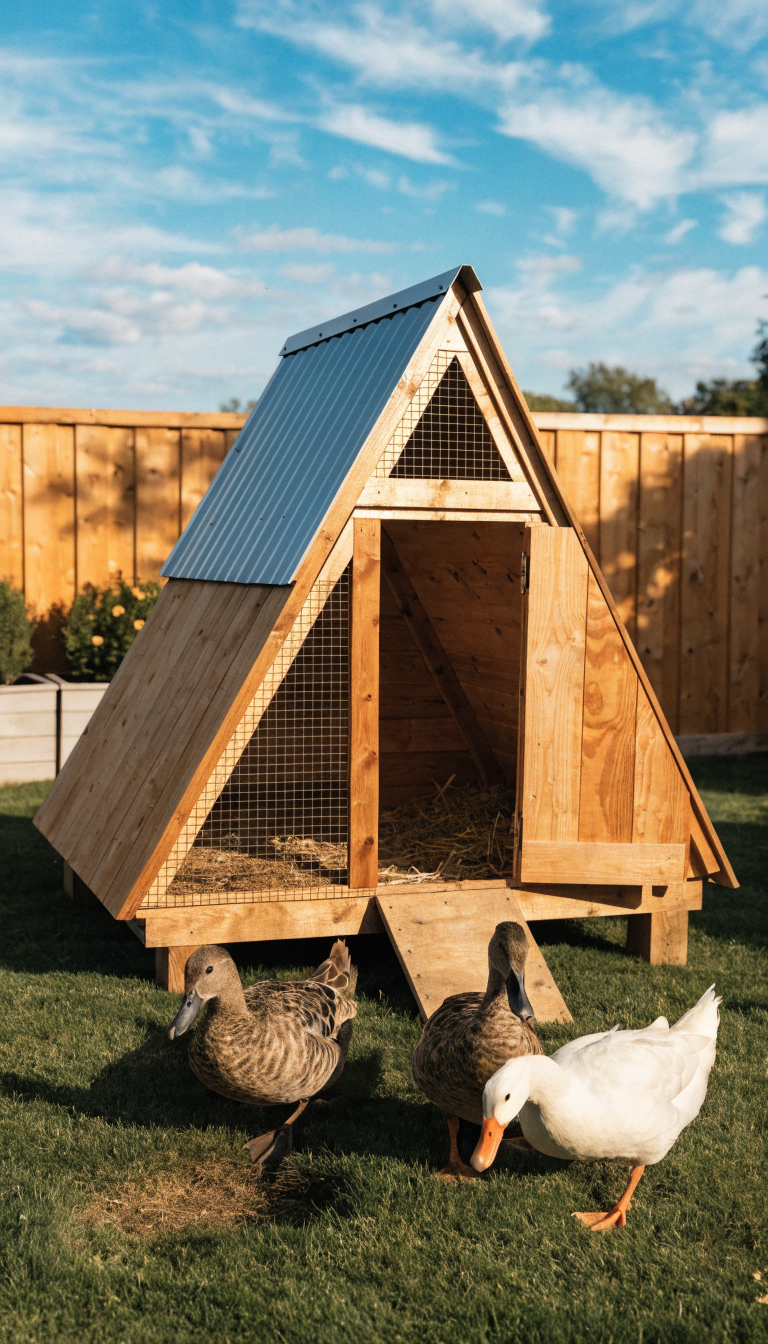
The classic A-frame gives you strength, simplicity, and a tiny footprint. Build it with a hinged roof or side panel, and you’ve got instant access for cleaning and egg checks. It sheds rain like a champ and looks cute in any yard.
Key Points
- Fast build: Two slanted walls meet at a peak—fewer cuts, fewer headaches.
- Weatherproof: The shape resists wind and sheds rainfall.
- Portable option: Add skids to drag it around and refresh the ground.
Tips
- Run hardware cloth along the lower triangular sides for ventilation with predator security.
- Use a removable floor tray (lined with vinyl) for quick clean-outs.
- Keep the peak vented and baffle it to stop drafts on sleeping ducks.
Use this if you want a low-cost, weekend build that’s sturdy and space-savvy. Seriously, it punches above its weight.
3. The “Stacked Condo” With Rooftop Deck
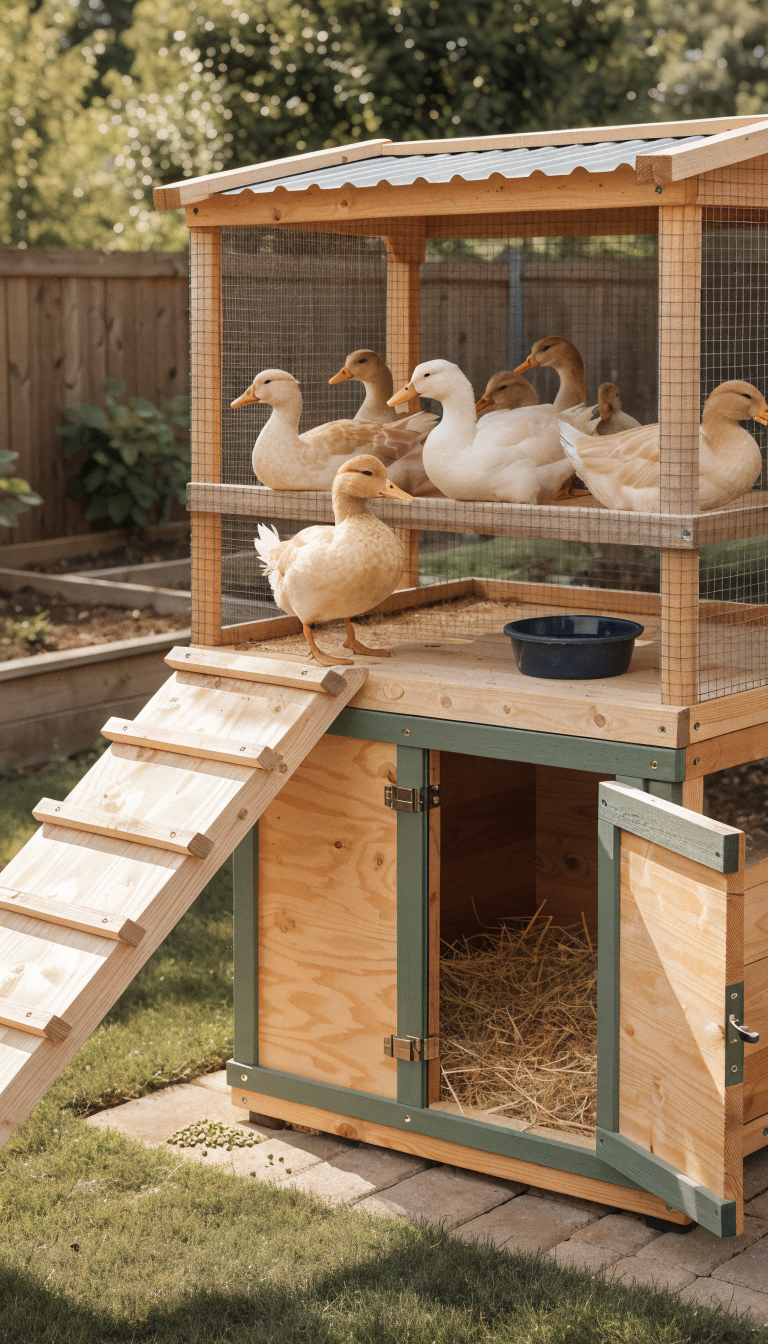
Think tiny house meets spa day. Build a compact sleeping box at ground level and add a secure rooftop deck above for sunbathing and people-watching. Ducks love a spot to loaf, and you gain a second level of enrichment without sprawling out.
Layout
- Ground floor: Enclosed sleeping area with deep bedding and a wide door.
- Upper deck: Fully enclosed with hardware cloth and partial roof shade.
- Ramp: Gentle slope with cleats—no steep climbs for those chunky waddles.
Materials
- Marine plywood or exterior-grade plywood for the sleep box
- Non-slip deck surface (rubber matting or textured paint)
- Hardware cloth, 1/2-inch, stapled and sandwiched with trim for security
Great for small patios or micro-lawns where floor space is tight but vertical space is open. Adds enrichment without redesigning your backyard.
4. The Modular “Panel Coop” You Can Reconfigure
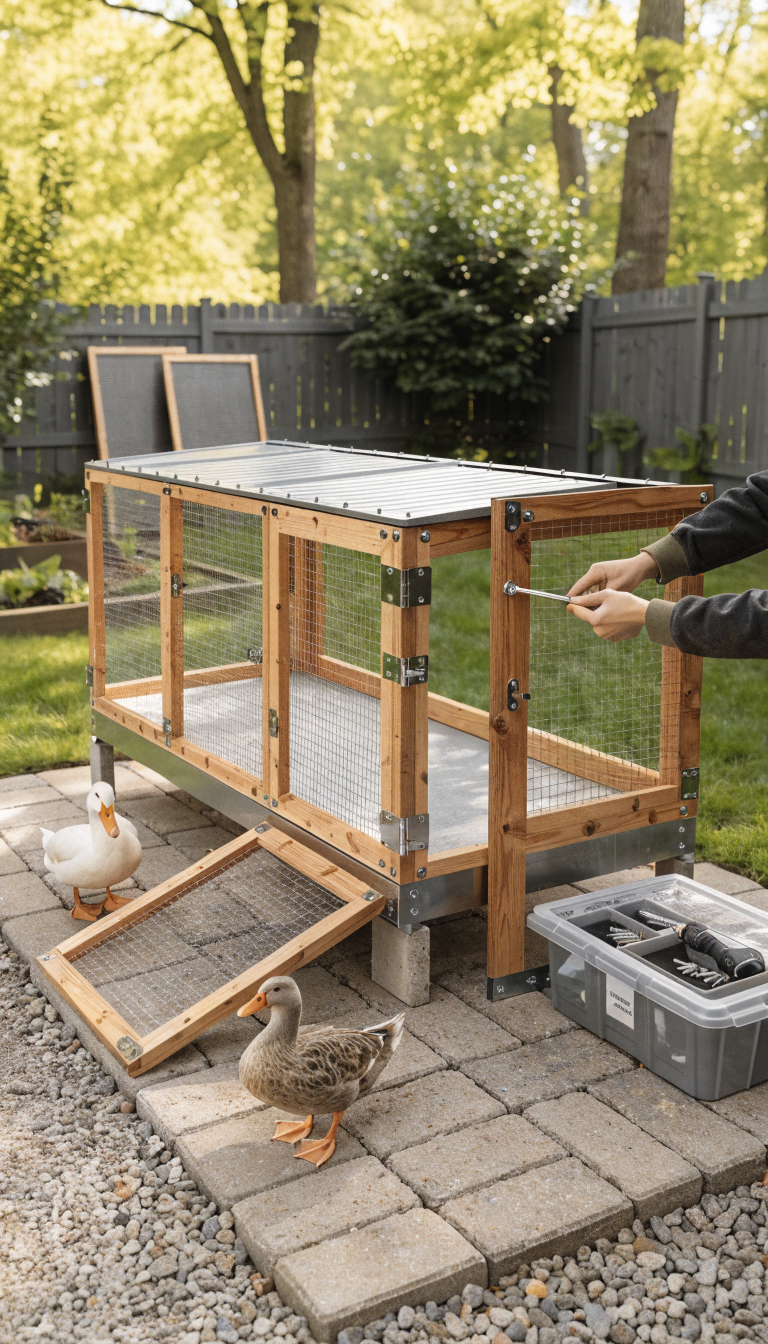
Not sure where the coop should live yet? Build it as panels. Four wall panels, a floor, and a roof that bolt together let you move, resize, or store it seasonally.
Why You’ll Love It
- Flexible footprint: Add or remove a panel to stretch or shrink the run.
- Flat-pack: Break it down for storage or transport.
- Fast repairs: Replace one panel instead of the whole coop.
Pro Tips
- Pre-drill pocket holes and label panels so reassembly stays painless.
- Use rot-resistant lumber and a raised floor with vinyl for wet-duck reality.
- Plan a service panel sized for a muck fork—your back will thank you.
Perfect for renters or tinkerers who like to experiment. IMO, this is the most future-proof option on the list.
5. The “Pondside Pod” With Integrated Splash Zone
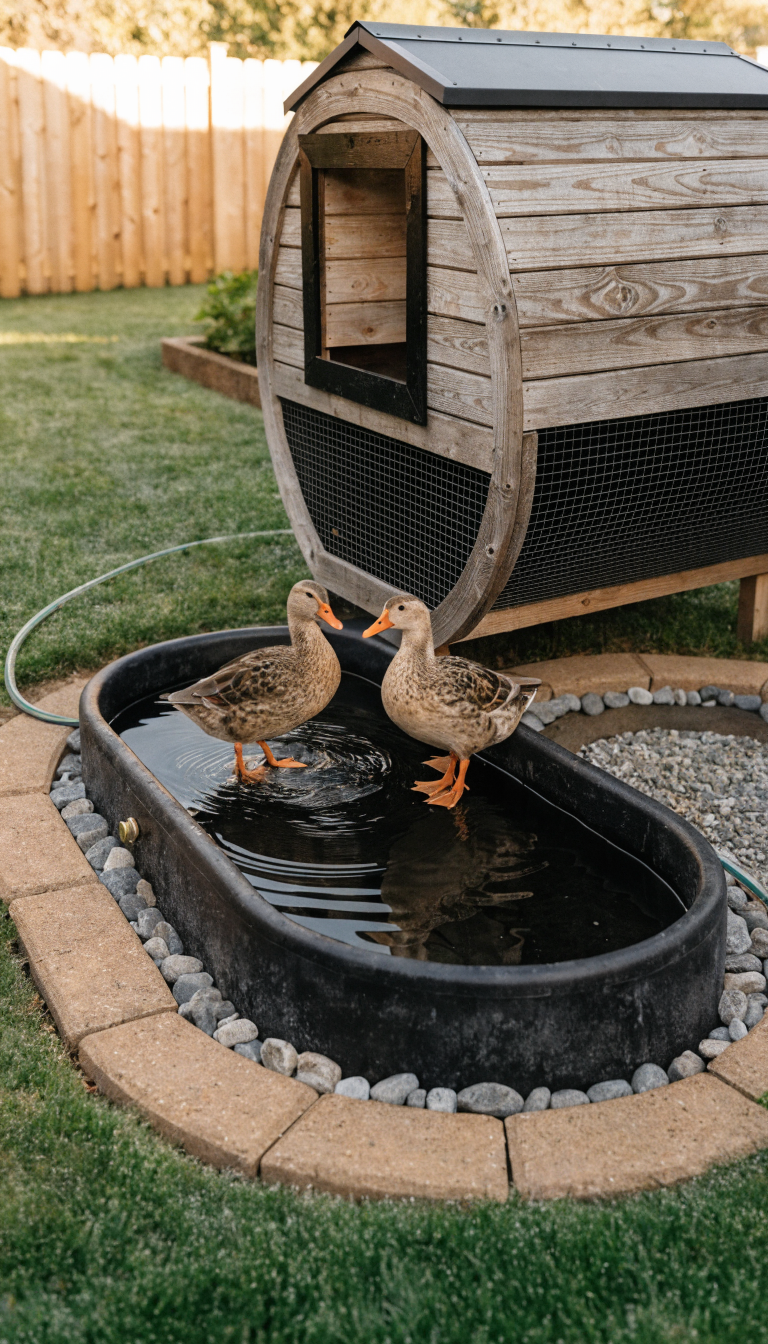
Ducks and water go together like snacks and movie night. Create a compact coop with a small, contained splash area that drains to a gravel basin. You keep mess in a designated zone and save lawn space.
Design Details
- Splash section: Stock tank or mortar tub sunk slightly with a valve for easy draining.
- Drainage path: French drain to a gravel pit—no backyard bog.
- Coop access: A doorway that opens directly onto the splash zone for morning zoomies.
Hygiene & Safety
- Rinse and dump daily; ducks don’t do “clean water” for long.
- Use non-slip mats at edges to protect feet and prevent sludge skids.
- Fence the splash area with hardware cloth to block nighttime predators.
Choose this if your ducks need daily water time and your lawn needs boundaries. Cleaner yard, happier birds, zero regrets.
6. The “Closet Coop” Repurposed From a Deck Box
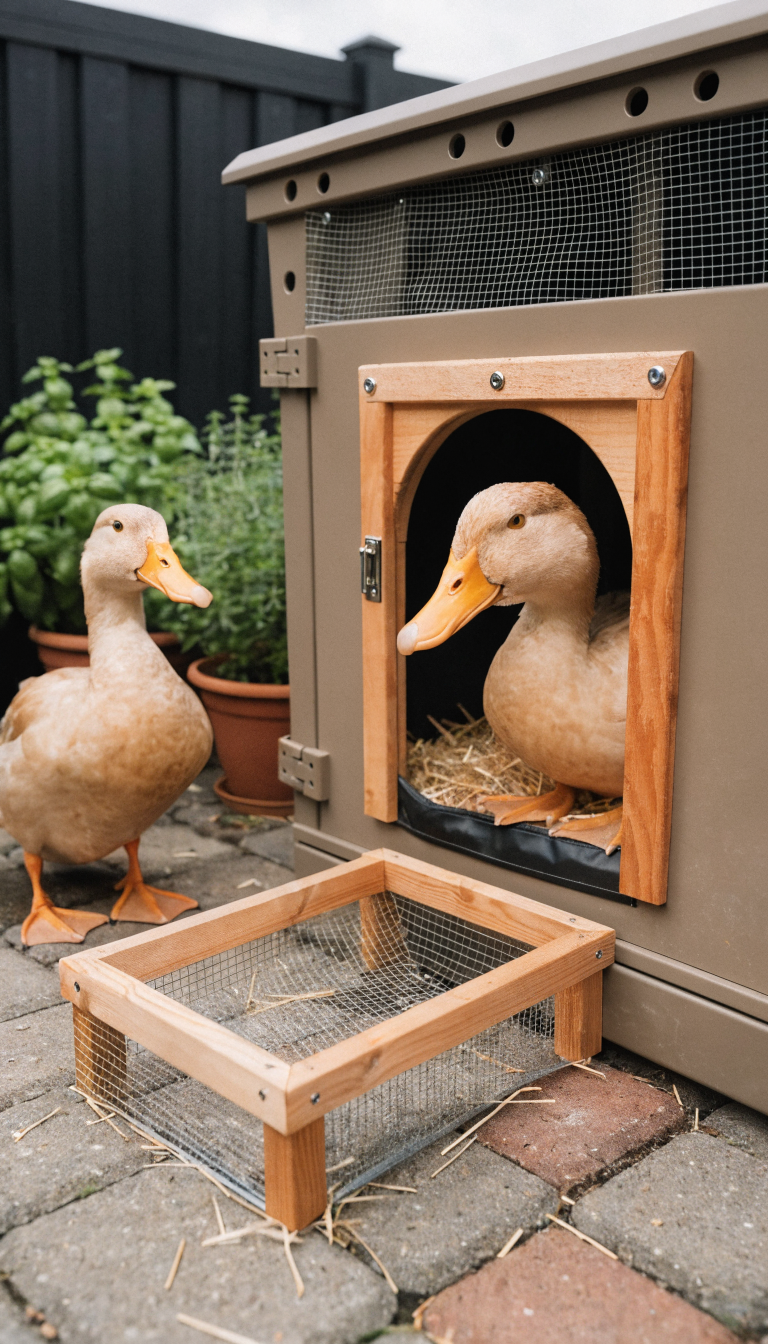
Low on tools or cash? Convert a large resin deck box or old wooden storage chest into a tight, tidy duck house. It’s discreet, weather-resistant, and fits on small patios like a champ.
How-To
- Ventilation: Drill high vents and cover from the inside with hardware cloth.
- Flooring: Add a removable vinyl liner or boot tray for deep bedding.
- Door: Cut a duck-sized entry and attach a predator-proof flap or slider.
- Run: Attach a compact hardware-cloth run to the front with a simple framed tunnel.
Pros
- Stealthy look that neighbors won’t side-eye.
- Fast setup—most work happens in under an afternoon.
- Easy to clean thanks to the wide lid or front opening.
Use this when you need a “blink-and-you’ll-miss-it” duck home that blends in. Trust me, it’s more durable than it looks.
7. The “Roll-Away Tractor” For Daily Fresh Ground
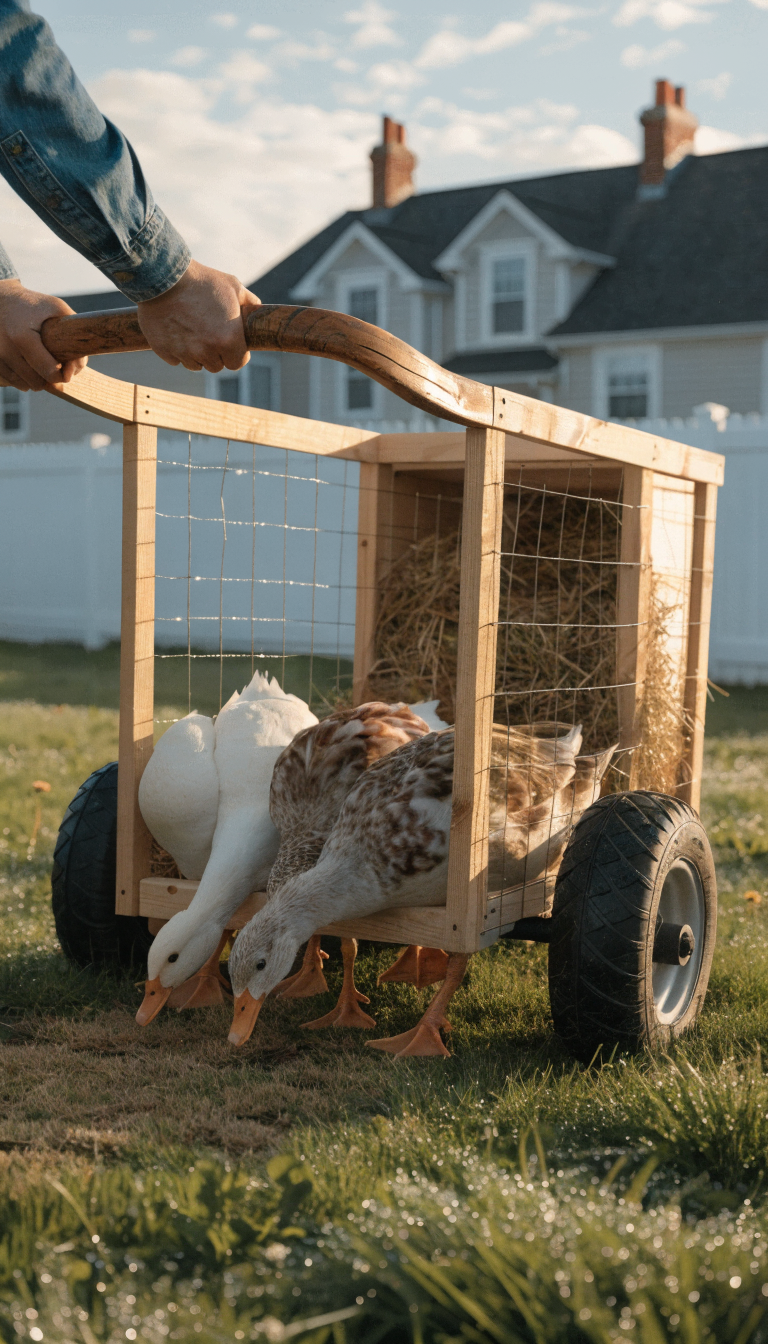
A lightweight, wheeled tractor lets you move ducks to fresh grass every day without expanding your footprint. You keep smells down, bedding minimal, and bugs under control. It’s like a lawn-care plan powered by quacks.
Build Features
- Light frame: 2×2 lumber or EMT conduit with hardware cloth sides.
- Shelter nook: Small enclosed corner with windbreak and deep bedding.
- Wheels + handles: Garden-cart wheels and a wide handle for smooth rolling.
Use Tips
- Move once or twice daily so droppings never overwhelm a spot.
- Place water at the leading edge so spillage lands where you’ll move next.
- Add skirted wire or a “dig guard” if you park it overnight in predator-heavy areas.
Ideal for small lawns where stationary coops get messy fast. Your grass and your nose will both say thanks.
Duck-Smart Essentials For Every Small Coop
- Ventilation without drafts: High vents, covered with hardware cloth, keep air fresh and ammonia low.
- Predator-proofing: Use 1/2-inch hardware cloth, lockable latches, and bury a 12-inch apron to stop diggers.
- Easy-clean design: Big doors, removable trays, and hose-friendly materials save your weekend.
- Dry bedding strategy: Pine shavings or chopped straw with a deep-litter method if ventilation is solid.
- Water management: Keep waterers outside the sleep area to avoid soggy bedding and foot issues.
- Space guidelines: Aim for about 4–6 sq ft per duck in the house and 10+ sq ft per duck in the run, minimum.
Quick Accessories That Save Space
- Vertical storage: Hang feed scoops, nets, and brushes inside doors.
- Nipple waterers: Reduce splash in tight quarters, with a tray underneath for drips.
- Rubber floor mats: Under waterers and doorways to cut mud and slips.
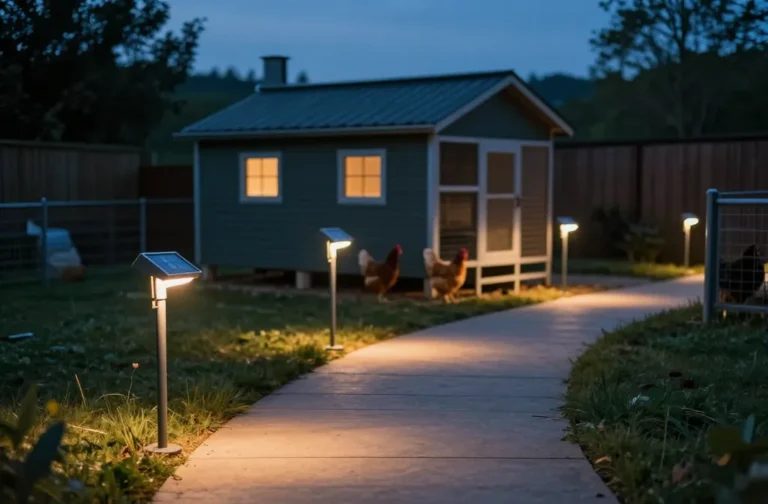
- Solar coop light: A dim light helps evening lock-up if your yard is dark.
Ready to build a small-but-mighty duck setup? Pick one idea and start with the essentials: airflow, dryness, and predator-proofing. Your ducks won’t care how fancy it looks—they’ll care that it’s safe, clean, and cozy. And when your compact coop slaps? Your backyard will look smarter than ever, seriously.
Share this content: