9 Duck House Ideas for Backyards: Cute Setups You Can Actually Build Today
Ducks deserve cute digs, and you deserve a fun weekend project. These backyard duck house ideas look adorable, keep your flock safe, and won’t drain your wallet. From floating rafts to farmhouse-chic coops, you’ll find something you can actually build—no contractor required.
Ready to spoil your quackers? Let’s turn scrap wood and a few screws into duck paradise.
1. The Classic A-Frame With Style
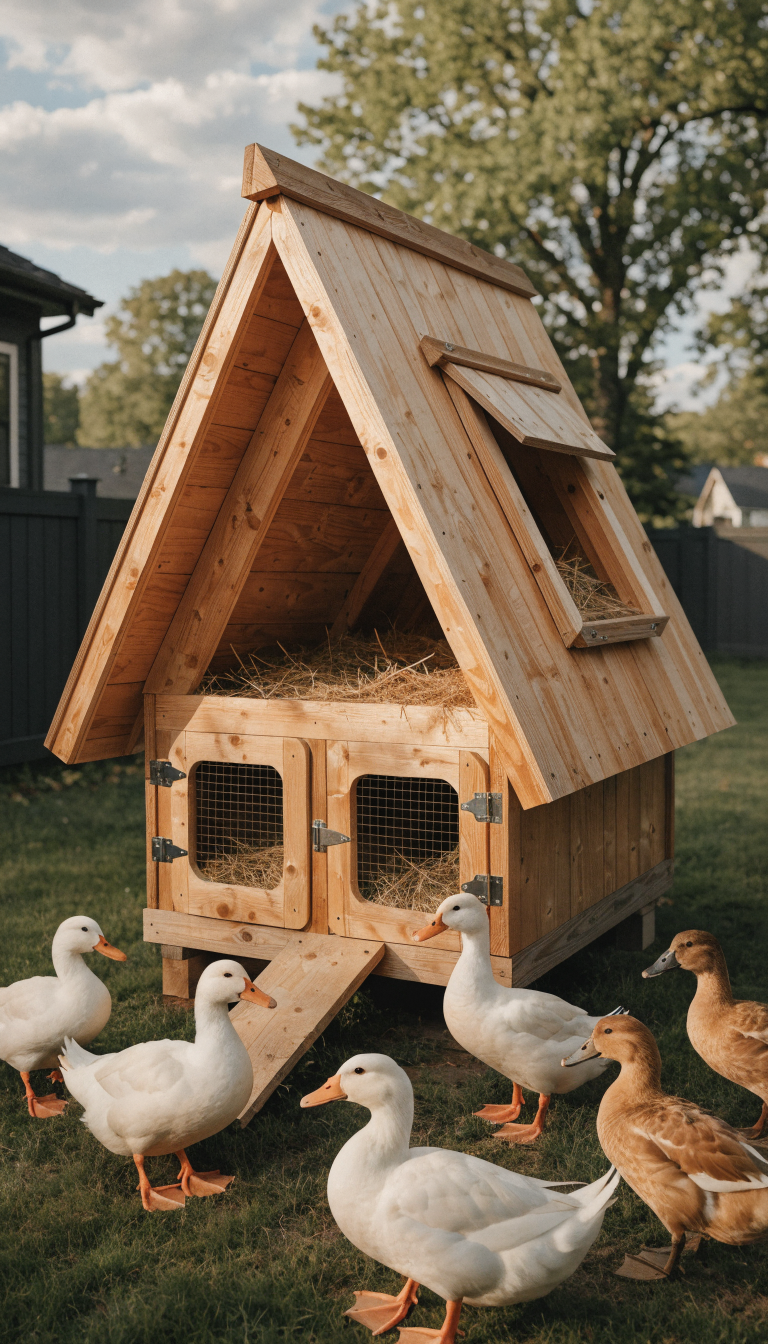
The A-frame checks every box: simple structure, strong lines, and quick build time. It sheds rain and snow like a champ and looks good in any yard. If you’ve got basic tools, you can finish this in a day.
Key Materials
- Exterior-grade plywood or T1-11 siding
- 2×3 or 2×4 framing lumber
- Hinges for a flip-up back panel
- Hardware cloth and latches
Frame two triangles, connect with ridge boards, then skin with plywood. Add a flip-up rear hatch for easy cleaning and front doors cut low—ducks waddle, not climb. Vent the peak with a hardware-cloth strip under a small overhang for airflow without drafts.
Why it works: It’s budget-friendly, predator-resistant, and beginner-proof. Perfect for small flocks or starter setups.
2. Floating Raft House For Pond-Lovers
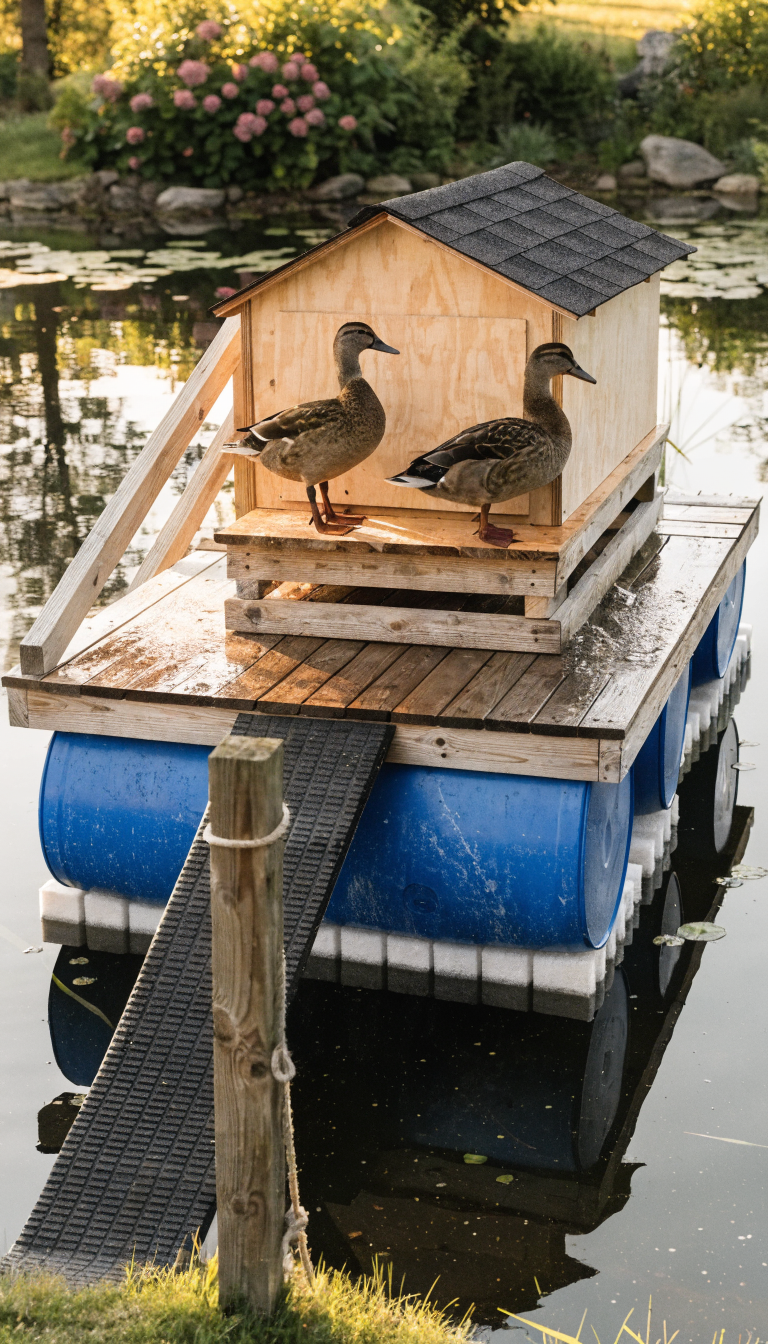
Got a pond or large kiddie pool? Give your ducks a floating getaway. A raft house keeps predators on land and turns every swim into a staycation.
Build Tips
- Base: sealed 2×4 frame on closed-cell foam blocks or plastic barrels
- Deck: cedar or pressure-treated boards
- House: lightweight plywood with a sloped roof
- Anchor: rope to a shore stake so it doesn’t drift
Keep doorways wide and low. Add a textured ramp from shore to raft (old rubber mat = traction). Use roofing shingles or corrugated plastic to shed rain. FYI: plan routine haul-outs to scrub and re-seal the base annually.
When to choose it: Great if you battle raccoons or have limited dry land space. Plus, it looks wildly cool.
3. Mobile Duck Tractor You Can Push
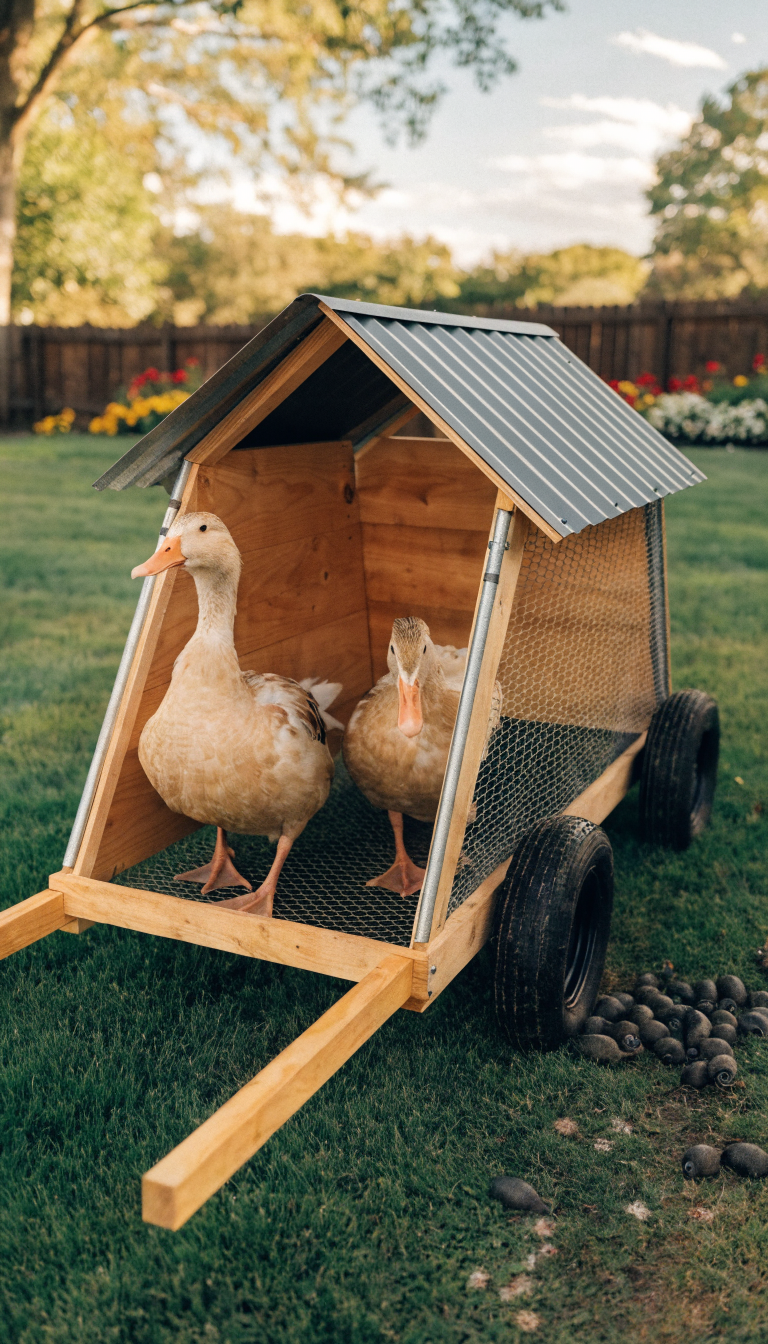
Rotate your ducks around the lawn and let them gobble slugs where you need them. A mobile tractor gives fresh grass daily and keeps mud zones from forming.
Design Essentials
- Lightweight frame: 1x2s or EMT conduit
- Roofed shelter on one end; open run on the other
- Wheels on the back, handles on the front
- Hardware cloth bottom or open bottom depending on predators
Make the shelter section windproof with solid walls on at least two sides. Add a lift-up lid for cleaning and egg checks. Move it once or twice a day—your yard will thank you.
Best for: Urban or suburban yards where you need flexibility and grass management without a permanent footprint.
4. Pallet Palace On A Budget
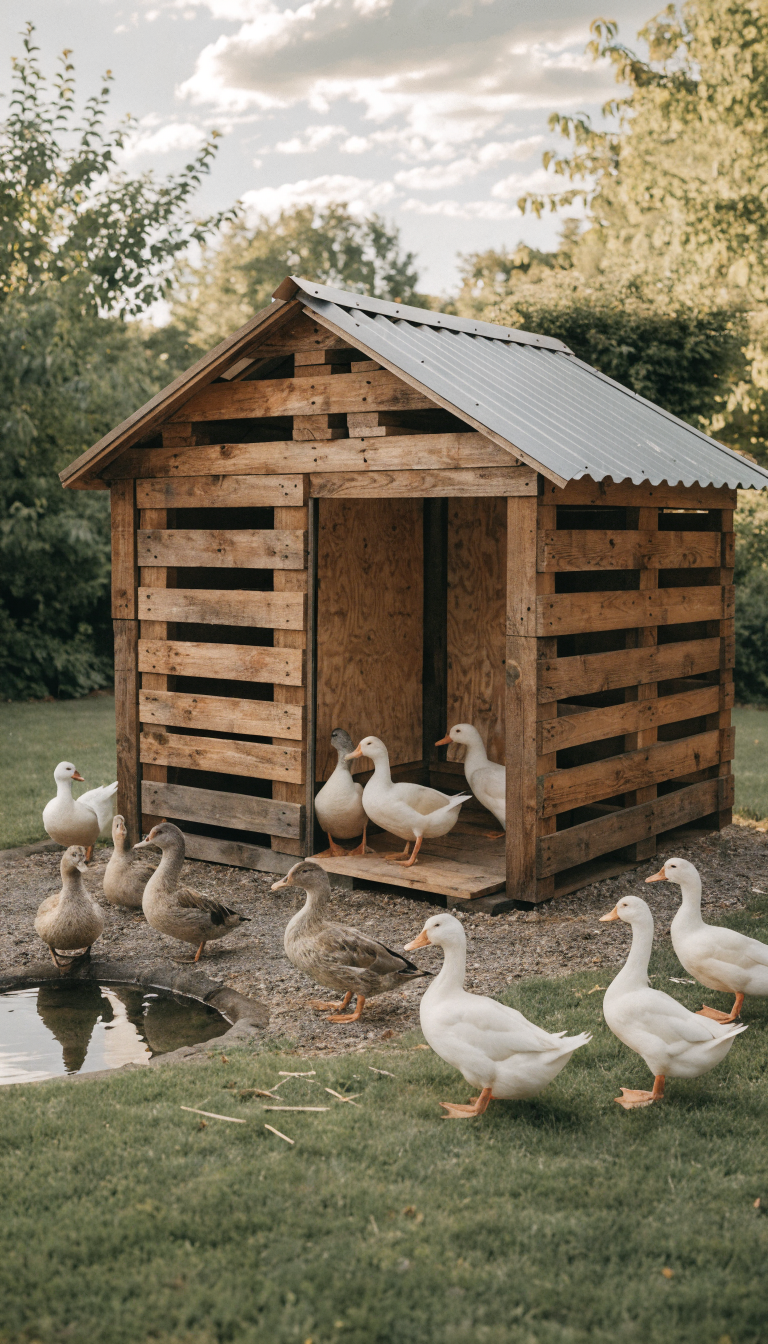
No big budget? No problem. Pallets become rustic-chic walls fast, and the vibe screams “I upcycle.”
How To Pull It Off
- Use heat-treated pallets (marked “HT”)
- Stand pallets upright for walls; screw to corner posts
- Skin with plywood inside to block drafts
- Top with a sloped metal or corrugated plastic roof
Seal gaps with battens or trim to keep breezes gentle. Add a removable floor panel for deep-clean days. Stain the exterior for weather resistance—and because it looks fancy.
Why it’s awesome: Dirt-cheap, fast, and surprisingly sturdy. Ideal for DIYers who love a scrappy project with character.
5. Walk-In Shed Conversion (Minimal Effort, Maximum Comfort)
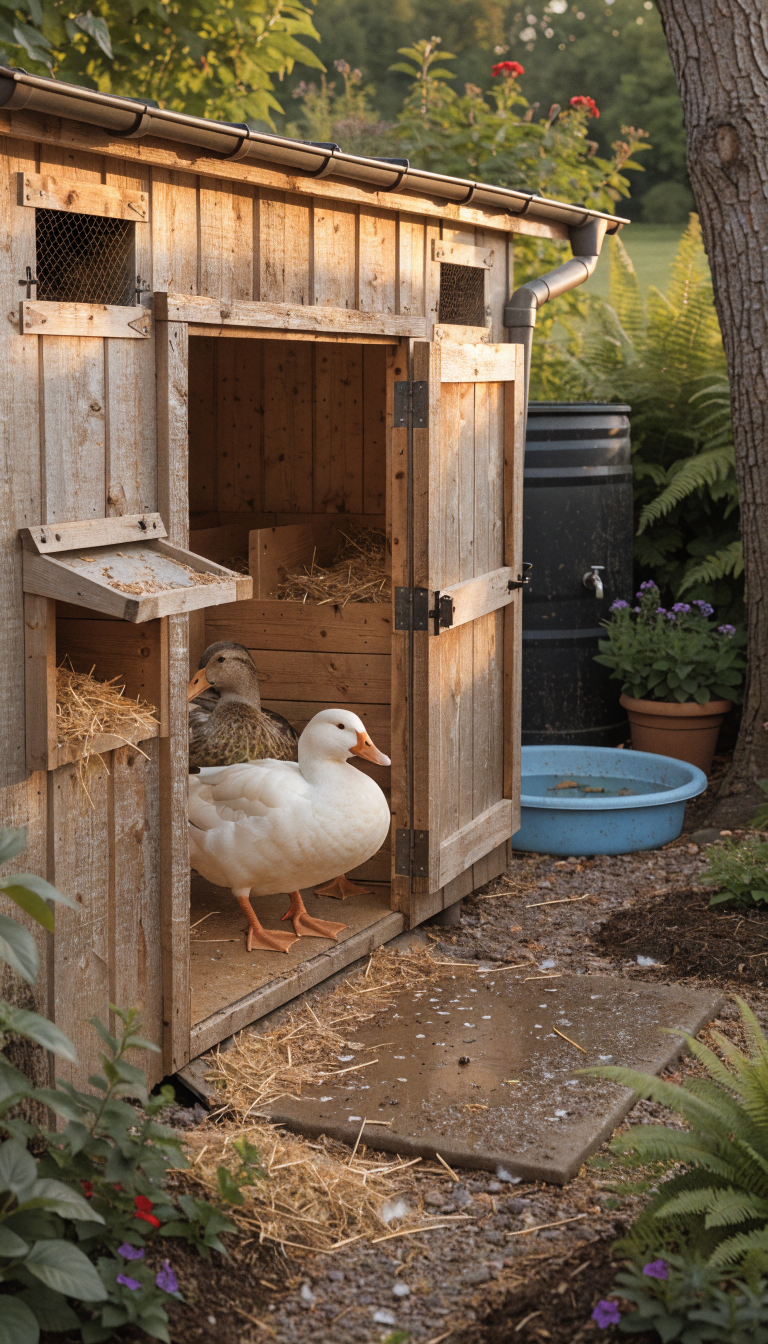
Already have a garden shed? Convert it and call it a day. Ducks don’t need perches, so you can skip most of the chicken-coop extras.
Quick Conversion Checklist
- Ventilation high on walls (covered with hardware cloth)
- Low entry door plus a people door for cleaning
- Vinyl flooring or linoleum for easy hose-downs
- Nesting corners with low partitions and lots of straw
Install a boot scraper by the entrance because you’ll track in shavings. Make a covered pop-out for feed and a gutter-to-barrel system for rinse water if you want to get fancy. Seriously, this is the speedrun to duck luxury.
Use it when: You want space to walk in, clean easily, and store gear out of the rain.
6. Green-Roof Hideaway That Doubles As Garden Art
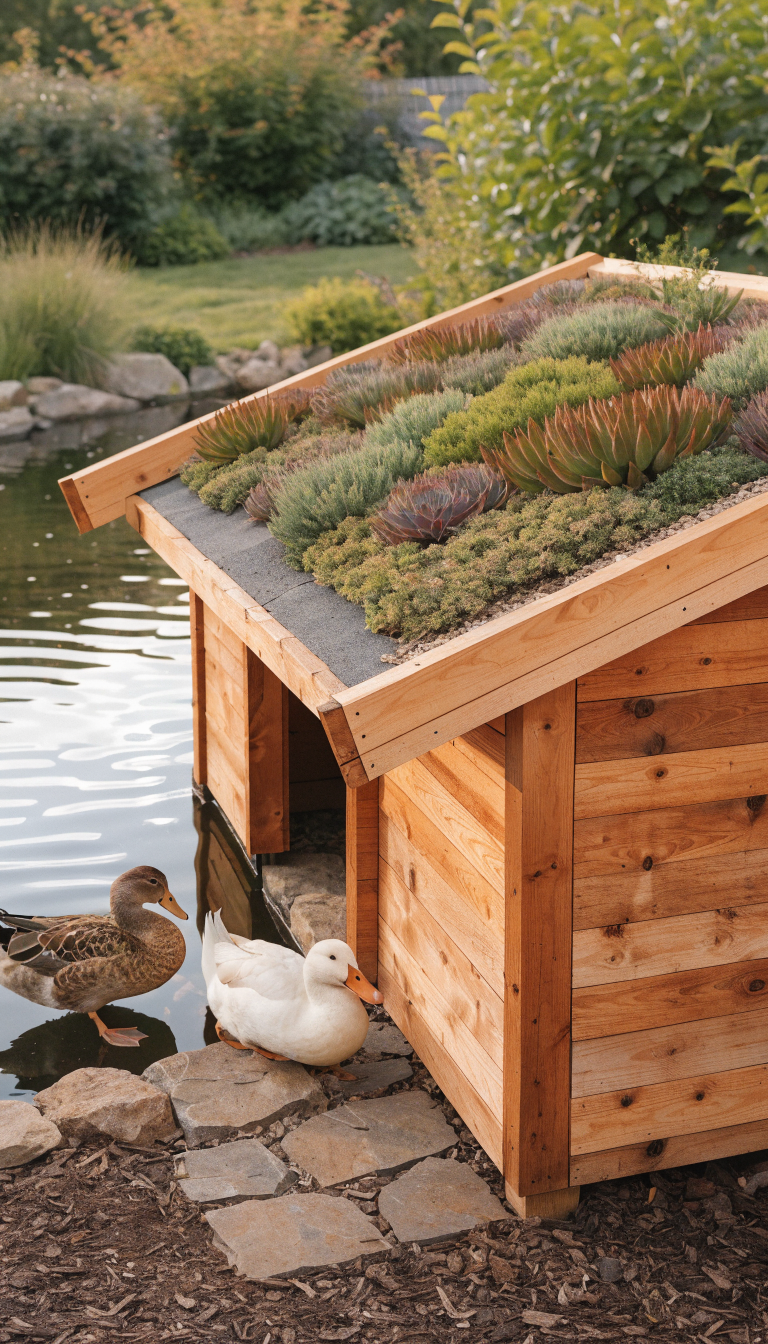
Want a duck house that wows your neighbors? Build a low-slung coop with a living roof. It insulates in summer and winter and looks ridiculously good.
Key Points
- Sturdy, slightly pitched roof with edge borders
- EPDM pond liner, drainage layer, and lightweight soil mix
- Sedums, thyme, and drought-tolerant groundcovers
Keep the structure stout—wet soil weighs more than you think. Add large eaves to keep walls dry. Vent high, and leave a cleaning door on the backside. The plants help regulate temps, so the interior stays comfy without gadgets.
Best for: Design lovers who want sustainability, noise-damping, and extra curb appeal. IMO, it’s the coolest option here.
7. Raised Deck House For Mud-Free Mornings
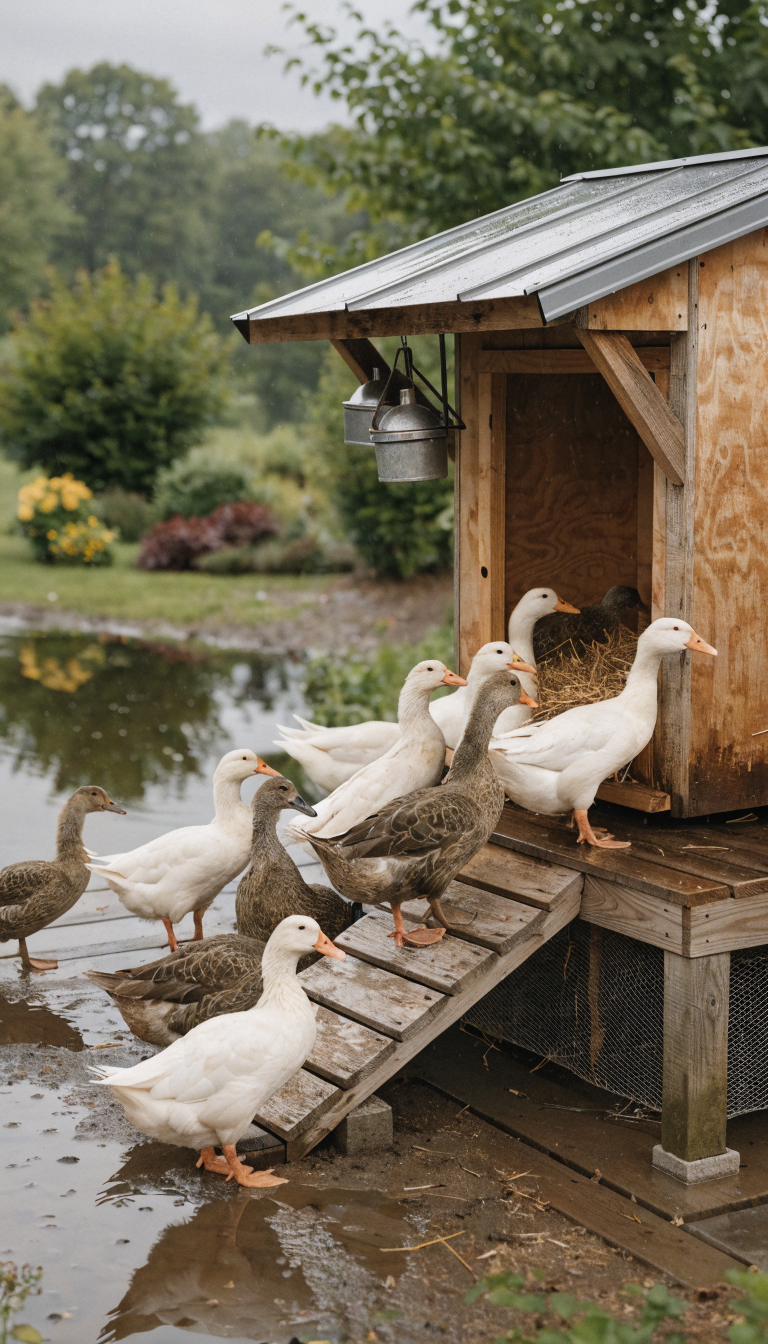
Ducks adore water, which means mud happens. A raised house on a deck keeps bedding dry, extends straw life, and saves your sanity.
Build Notes
- Deck 8–12 inches off the ground with 4×4 posts on concrete pavers
- House walls of exterior plywood; roof with a wide overhang
- Gapped deck boards or drain channels to shed water
- Gentle ramp with cleats every 4–5 inches
Put a boot-high lip at the door to keep bedding inside. Hang waterers outside under a small lean-to to avoid soaked floors. Add skirting around the deck if you have skunks or rats trying to den underneath.
Why it shines: Cleaner bedding, better airflow under the floor, and fewer muddy messes after rain.
8. Modular Panel System You Can Expand Later
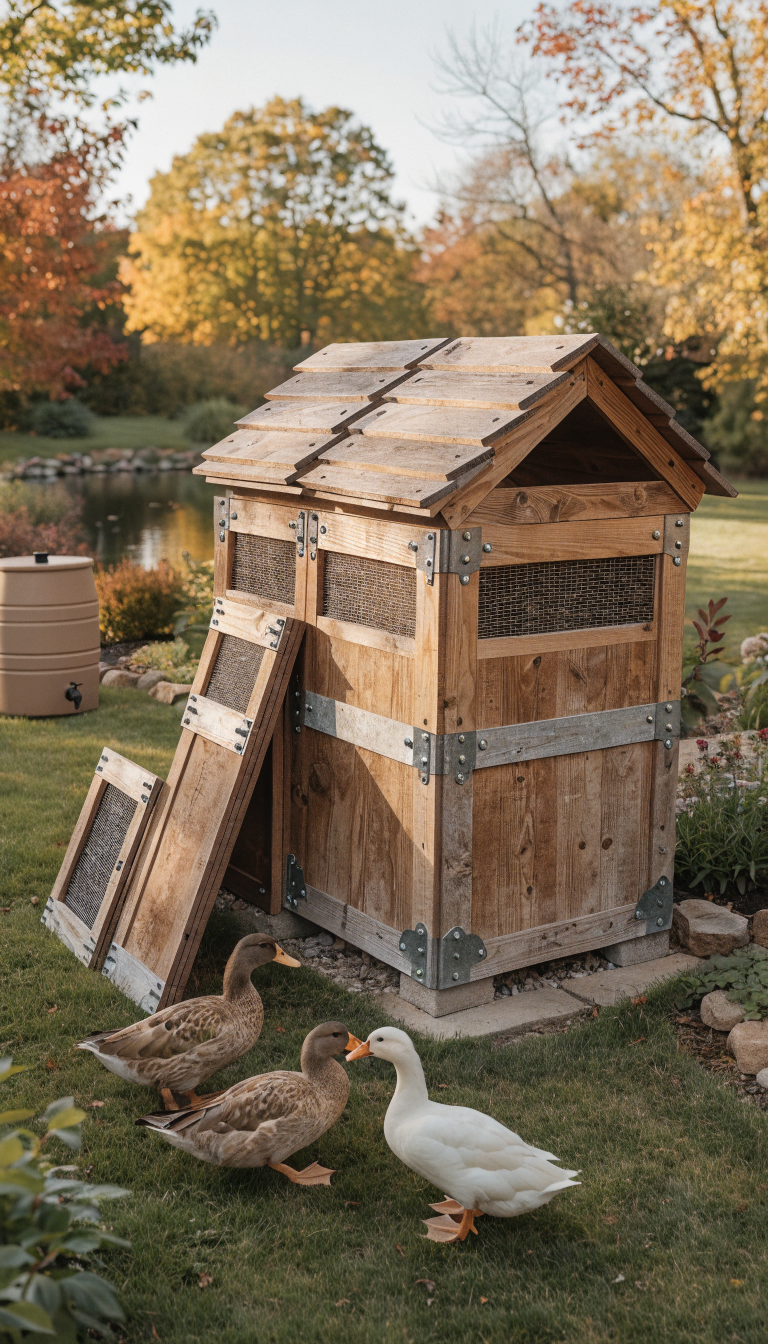
Commitment issues? Build a house from interchangeable panels so you can resize or relocate easily. Panels bolt together in an afternoon and come apart just as fast.
How It Works
- Standardized 4×4 or 4×6 framed wall panels
- Pre-cut vent slots with hardware cloth
- Bolt-together corners with barrel bolts or carriage bolts
- Roof panels that overlap like shingles
Start small for two to four ducks, then add panels as your flock grows. Swap a solid panel for a window or door panel anytime. Trust me, future-you will love this flexibility when you catch duck math.
Perfect for: Renters, planners, and anyone who likes to iterate without starting from scratch.
9. The Farmhouse Charmer With Porch And Planters
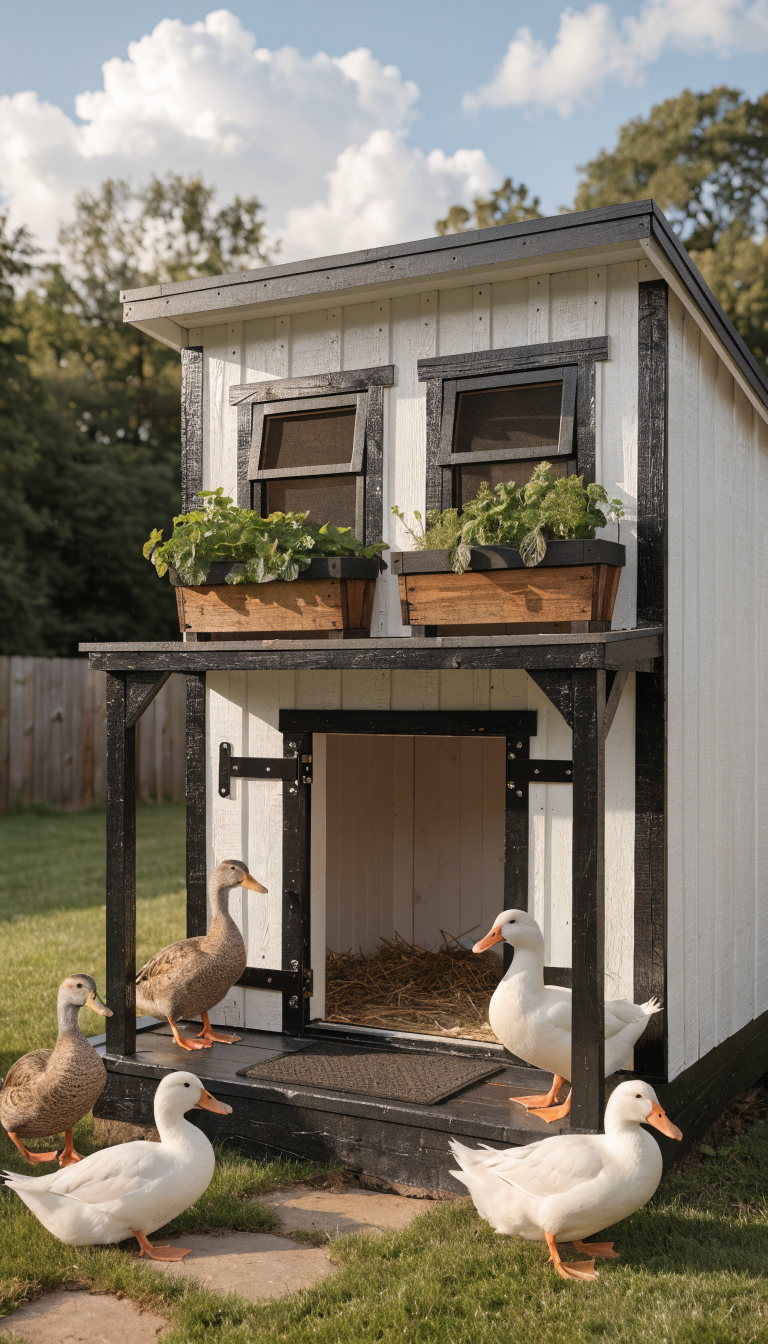
If you want something that looks magazine-ready, build a mini farmhouse with a front porch. It’s extra, but in the best way.
Design Details
- Board-and-batten siding with crisp trim
- Small covered porch with a rubber mat for messy feet
- Flower boxes planted with duck-safe herbs (parsley, dill, mint)
- Top-hinged windows with screens for breezes
Keep function first: wide doors, easy-clean floors, and predator-proof latches on everything. Style comes from paint, hardware, and symmetry. Your ducks get shade and airflow, and you get the cutest photo backdrop ever.
Choose it when: You want a focal point that blends with your home and makes you smile every morning.
General Duck House Must-Haves (Quick Reference)
- Ventilation, not drafts: High vents with hardware cloth; avoid wind at duck height.
- Predator proofing: 1/2-inch hardware cloth, locking latches, buried apron around runs.
- Moisture control: Deep, dry bedding (straw or shavings), raised floors, gutters if possible.
- Easy cleaning: Big doors, removable trays or floors, hose-friendly surfaces.
- Access to water: Splash zones outside under cover; keep the interior mostly dry.
Suggested Dimensions And Layout
- Space: About 4–6 square feet per duck inside; more in runs.
- Door: 12–14 inches high and wide; ducks prefer low thresholds.
- Nesting: Cozy corners with high straw; ducks lay on the floor, not in boxes.
- Ramps: Gentle slope with cleats; they waddle, they don’t climb stairs.
Finish And Maintenance Tips
- Seal and paint: Exterior-grade paint or penetrating sealers extend life.
- Deep-litter method: Add fresh straw weekly; full clean every 4–8 weeks depending on flock size.
- Seasonal tweaks: Shade cloth in summer, windbreaks in winter. Avoid heat lamps; aim for dry and draft-free instead.
You’ve got nine solid ways to build a duck house that’s cute, practical, and totally DIY-able. Pick the one that fits your space, budget, and vibe, then start cutting. Your ducks will move in like they own the place—which, let’s be honest, they kind of do.
Snap before-and-after pics, flex your build, and enjoy the happiest quacks on the block. Go get it!
Share this content: