15 Mud-Free Paths From Coop to Run Chickens Will Love
Your chickens hate soggy ankles as much as you do. A mud-free path saves feet, eggs, and sanity—plus it keeps the coop cleaner and stink down. These ideas range from five-minute fixes to weekend warrior projects. Ready to retire that swampy slip-n-slide between the coop and run? Let’s build something your flock—and your laundry—will love.
1. Gravel Ribbon With Geotextile Magic
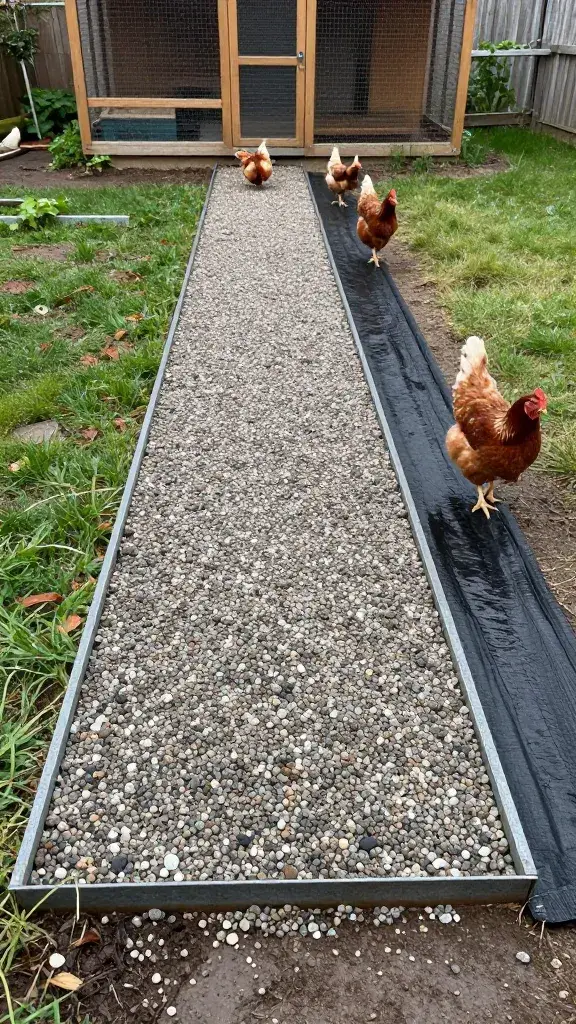
Gravel drains like a dream, but the real hero here is the geotextile fabric underneath. It stops gravel from sinking into the mud, so your path stays firm and tidy.
Materials
- Geotextile landscape fabric (non-woven for drainage)
- 2–3 inches of 3/8″ crushed rock or pea gravel
- Edging (metal, composite, or treated wood)
Roll the fabric, pin it, add edging, pour gravel, rake level. You’ll get a quick, durable path chickens and people both like. Use this when you need fast drainage without concrete vibes.
2. Paver Stones On Sand Base
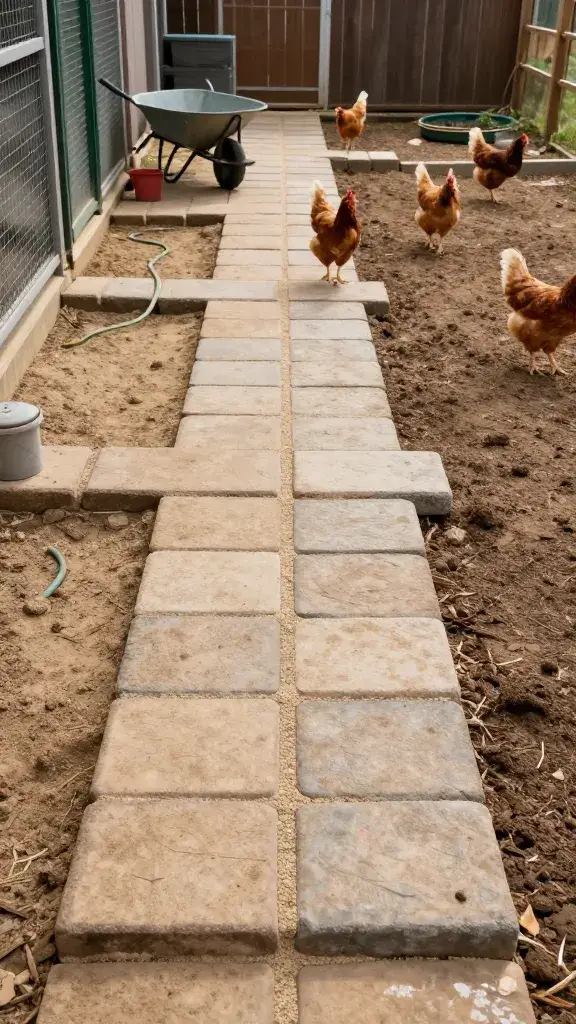
Want a tidy, hose-cleanable walkway? Pavers look sharp and handle traffic well, even after a downpour. They also keep your wheelbarrow from burying itself.
Tips
- Excavate 3–4 inches, lay compacted crushed stone, then 1 inch of sand
- Set pavers tight; sweep polymeric sand to lock joints
- Slight slope away from the coop for runoff
Great next to doors where muck accumulates. Bonus: it doubles as a clean staging zone for feed and water refills.
3. Wood Chips Over Cardboard Base
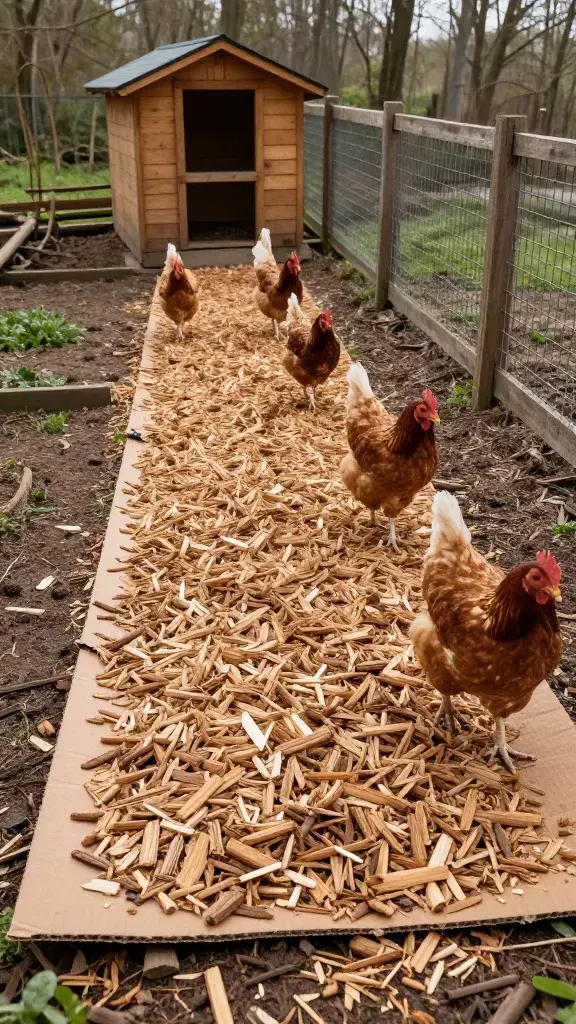
Chips give you instant texture and absorbency for almost no cost if you snag arborist drops. The cardboard underneath blocks weeds and slows chips from sinking.
Key Points
- Lay two layers of cardboard (overlapping), then 4–6 inches of chips
- Use hardwood chips, not bark mulch
- Top up yearly as it composts
Perfect for wide, forgiving paths. It smells forest-fresh and keeps feet happy, FYI.
4. Crushed Granite (Decomposed) With Stabilizer
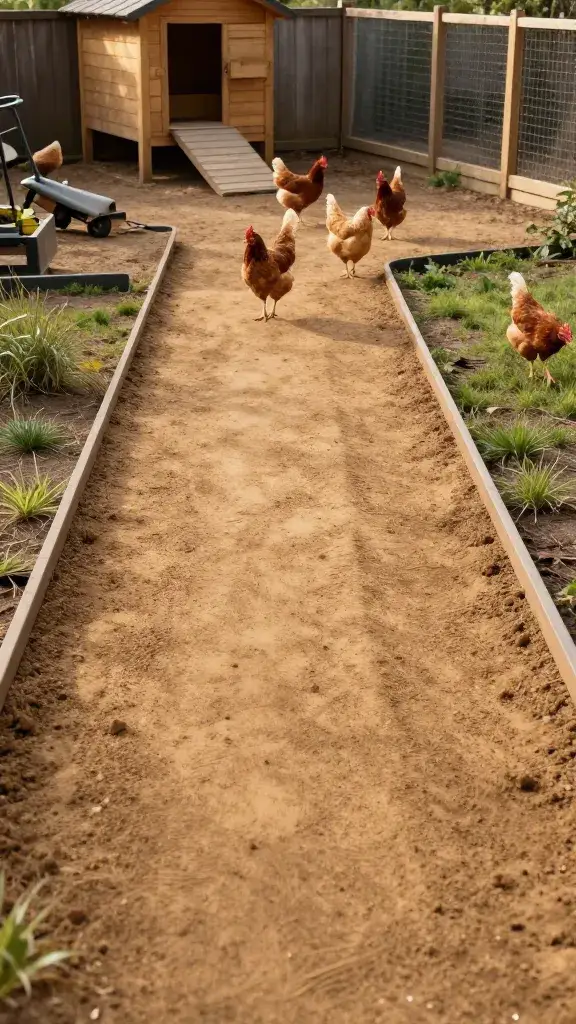
Decomposed granite compacts into a firm, natural-looking trail. Add a stabilizer and you’ll get fewer ruts and less dust.
Materials
- Decomposed granite (DG)
- Organic DG stabilizer or binder
- Tamper or plate compactor
Install like gravel but moisten and compact thoroughly. Use when you want a clean, rustic look that drains and sweeps easily.
5. Pallet Board Walkway
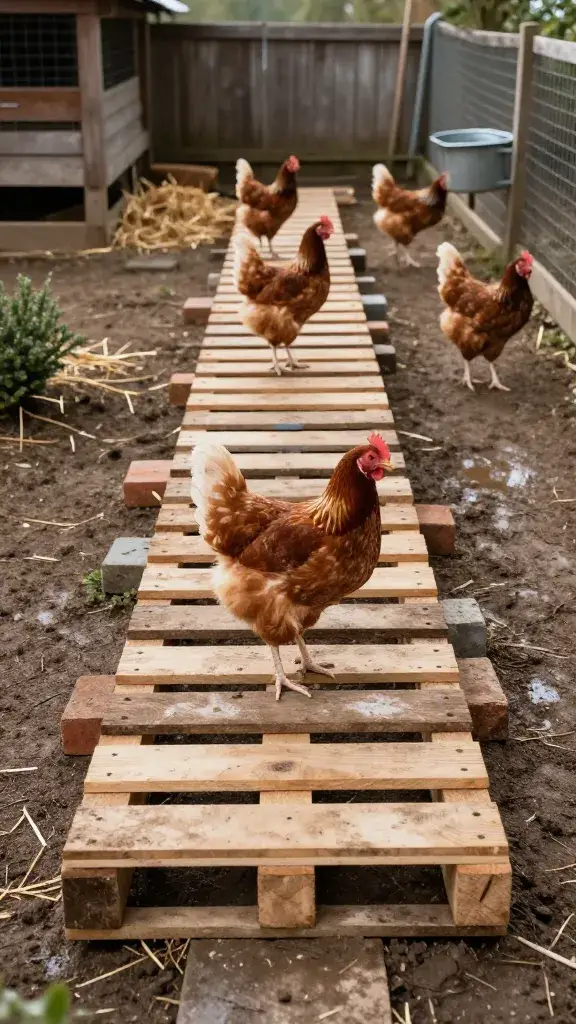
Got pallets? Flip them into a quick boardwalk that lifts your feet above the muck. It’s thrifty, charming, and surprisingly sturdy.
Tips
- Choose heat-treated (HT) pallets only
- Lay on stepping stones or bricks at support points
- Add anti-slip strips if boards get slick
Use this for seasonal trouble spots or temporary fixes. It buys time until you build something more permanent.
6. Perforated Pipe French Drain + Mulch Cover
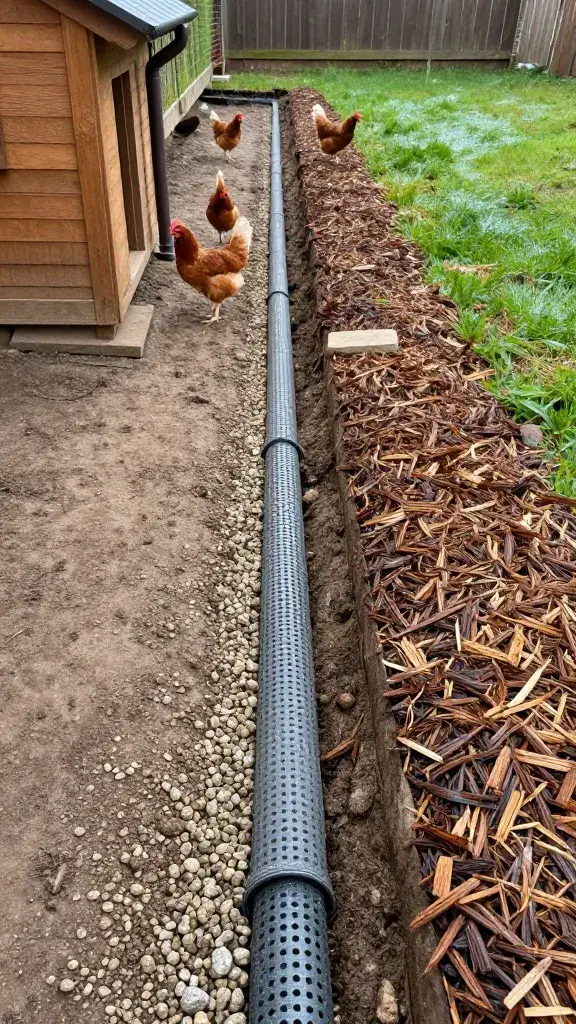
If water pools on the way to the run, stop it at the source. A simple French drain redirects water underground while the surface stays neat.
How-To
- Trench along the path low side, slope 1% toward daylight
- Wrap perforated pipe in fabric, bed in gravel
- Backfill and top with mulch or gravel
Use when runoff from a roof or slope turns your path into a river. You’ll fix the cause, not just the symptom—seriously.
7. Rubber Stall Mats Over Gravel
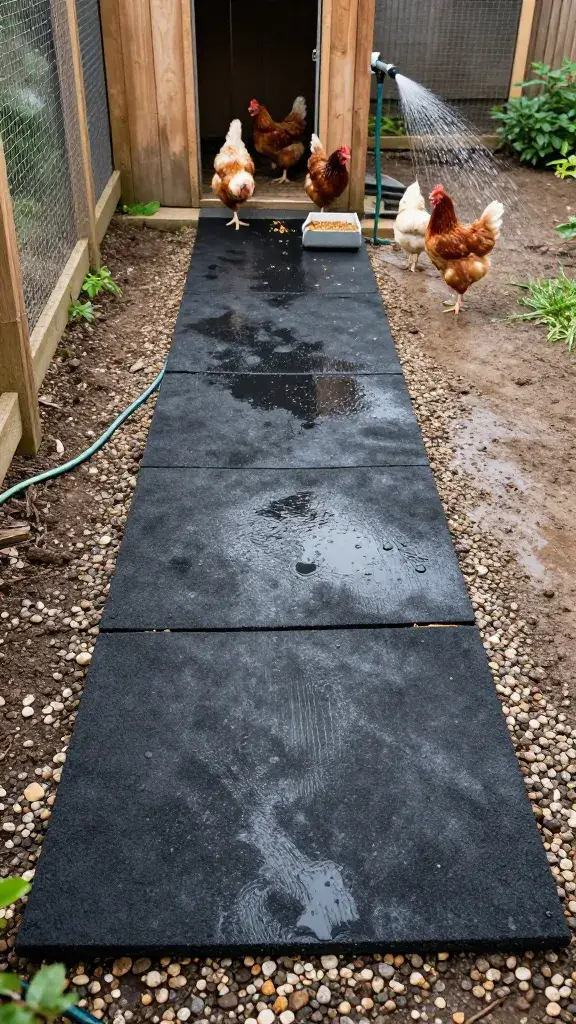
Stall mats create a tough, flat surface that laughs at claws and shovels. Put them over gravel so water can still escape below.
Key Points
- 2–3 inches of compacted gravel base
- Heavy 3/4″ rubber stall mats, cut to fit
- Slight crown or slope for drainage
Great near coop doors and feed zones where spills happen. Cleanup takes one hose blast—chef’s kiss.
8. Brick Edge With Packed Fines Center
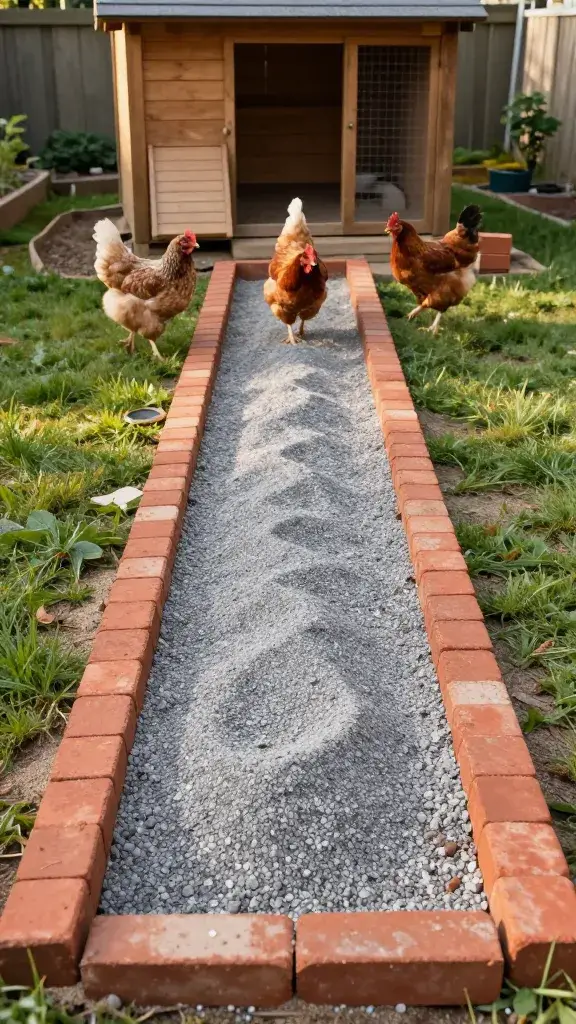
Combining brick edges with a center of packed quarry fines gives structure and style. Edging keeps fines in place so you don’t chase grit every week.
Materials
- Bricks or cobbles set on a sand or mortar bed
- Crushed fines or screenings for the center
- Compactor for a firm finish
Use for narrow paths you want to look intentional, not farm-chic chaotic. It’s sturdy and fancy without trying too hard.
9. Raised Timber Walk With Pea Gravel Infill
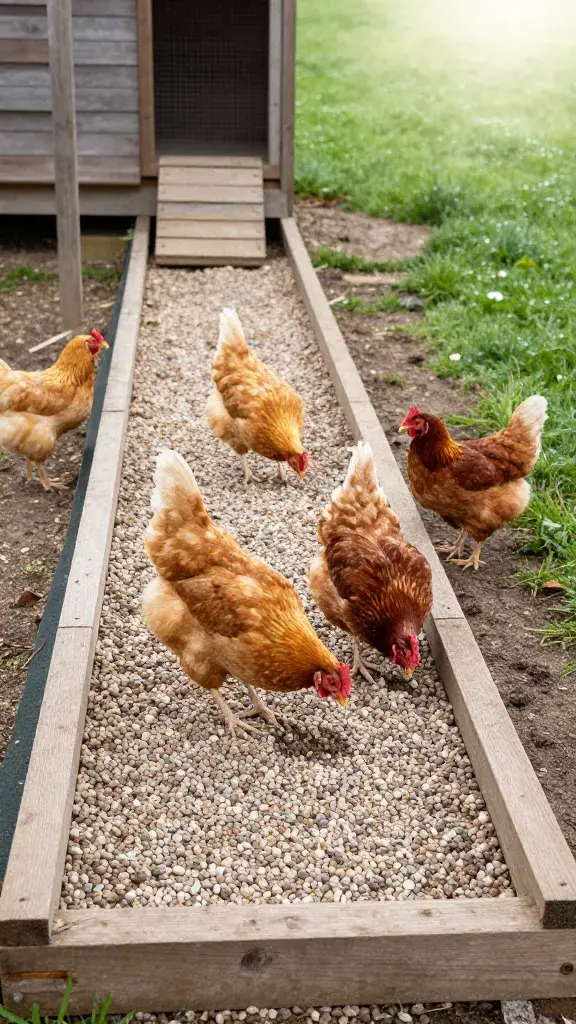
Build a shallow frame with treated timbers and fill it with pea gravel. Think sandbox for your shoes, but clean.
Build Notes
- Set 4×4 or 2×6 borders on level ground with stakes
- Weed fabric underlay
- 2–3 inches of pea gravel inside
Ideal when you want clean edges that keep gravel corralled. Chickens dig it for dust baths on the edges, too.
10. Permeable Pavers With Grass or Clover
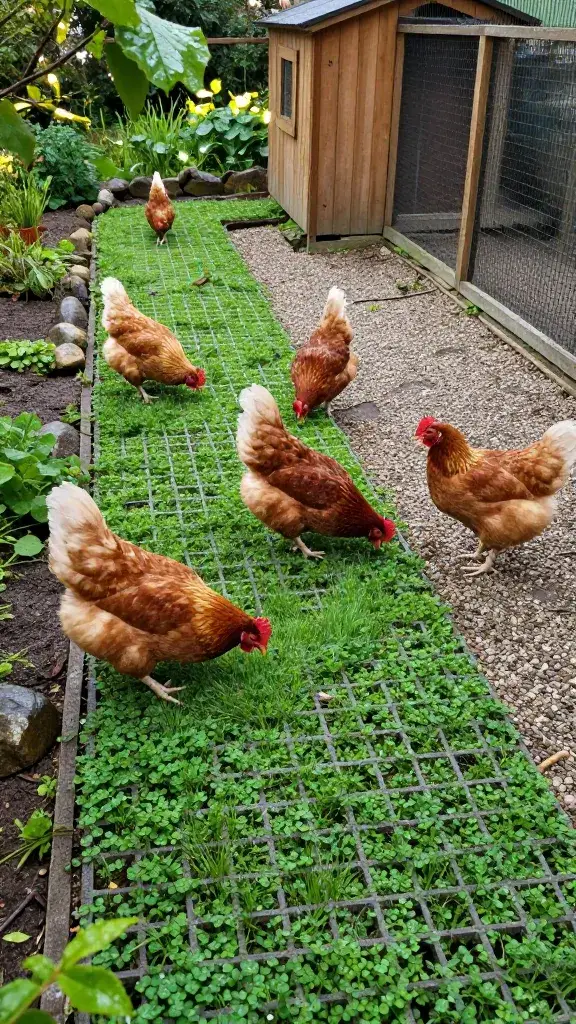
Permeable grid pavers support weight while letting greenery grow through. You get traction, drainage, and soft footing.
Planting Options
- Low-traffic: microclover or hardy grass
- Higher-traffic: gravel or sand infill
- Shade: mixes with fescue or groundcovers
Use when you want a green look that resists turning to soup. It’s like lawn armor for your walkway.
11. Shell Path (Crushed Oyster Or Clam)
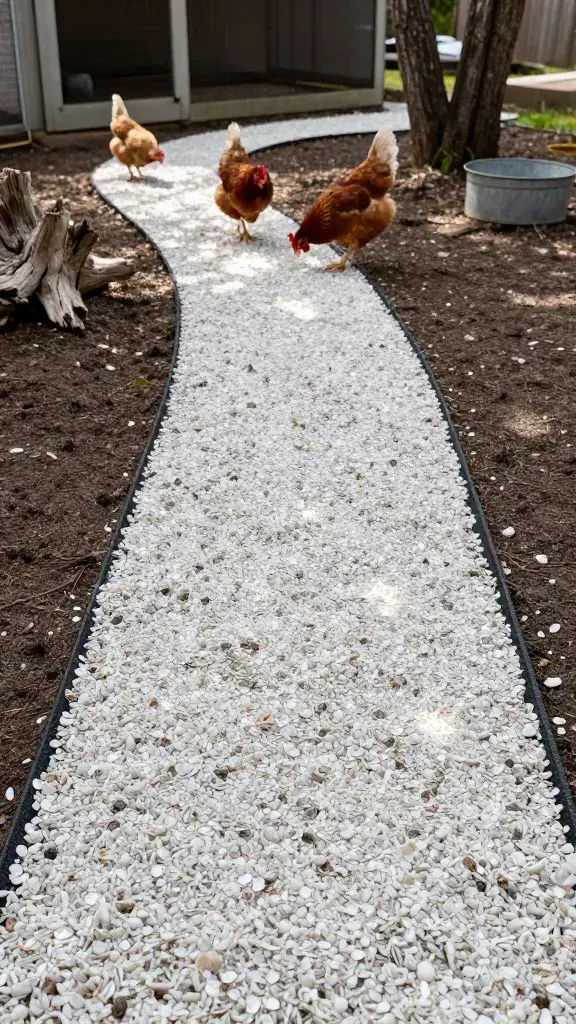
Crushed shell packs down beautifully and drains fast. It brightens shady spots and adds coastal vibes, even if your coop sits in Kansas.
Tips
- Lay over landscape fabric to stop sinking
- Compact lightly after a misting
- Top up yearly to keep it crisp
Great for light-to-moderate traffic. It resists odor and mud while adding a little sparkle.
12. Hardy Mat Grass Strips With Step Stones
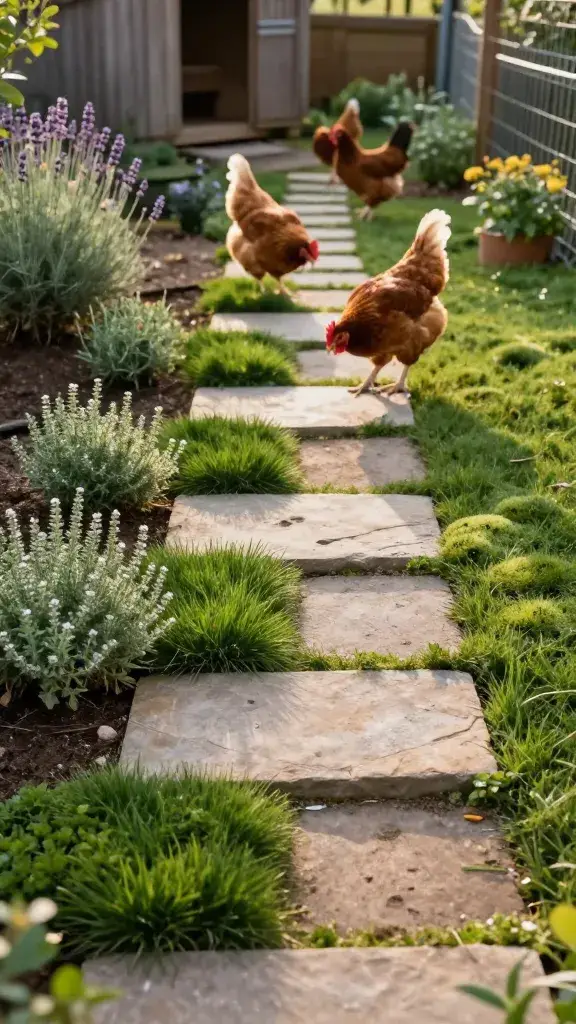
Alternate stepping stones with tough mat-forming grasses to keep mud at bay without losing the garden feel. Stones take the traffic; plants fill the gaps.
Good Picks
- Creeping thyme (sunny, fragrant)
- Dwarf mondo grass (shade, tidy)
- Irish moss (cool, moist areas)
Use when you want pretty and practical. It’s low-key gorgeous and forgiving of chicken footprints.
13. Recycled Asphalt Millings
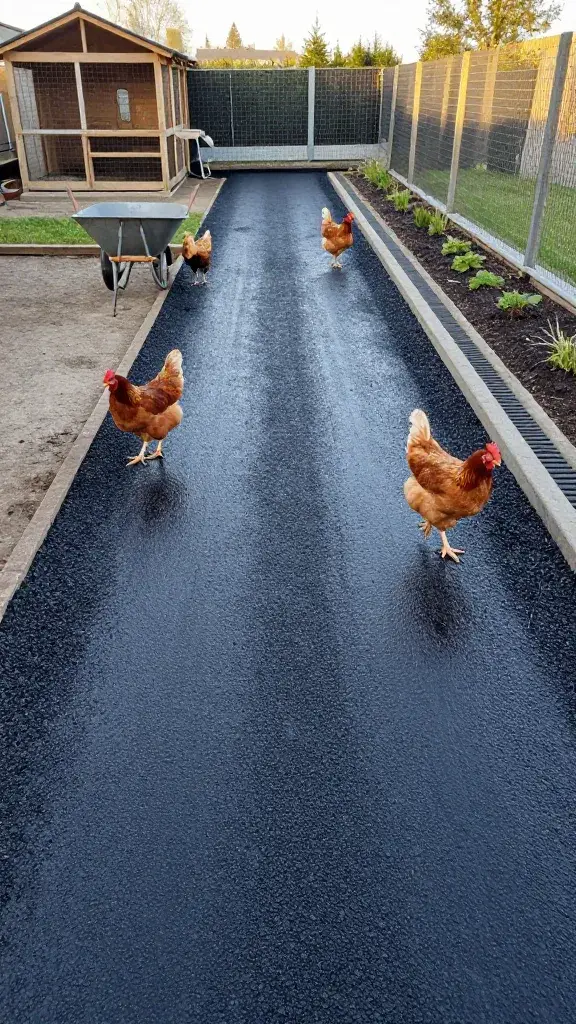
Asphalt millings compact into a firm, water-shedding surface that behaves like budget-friendly pavement. It stands up to ruts and wheelbarrows like a champ.
Key Points
- Spread 2–3 inches on a compacted base
- Moisten and compact thoroughly for binding
- Crown the path for runoff
Use for long, high-traffic stretches. It’s rugged, affordable, and low maintenance, IMO.
14. Straw Over Permeable Base (Emergency Fix)
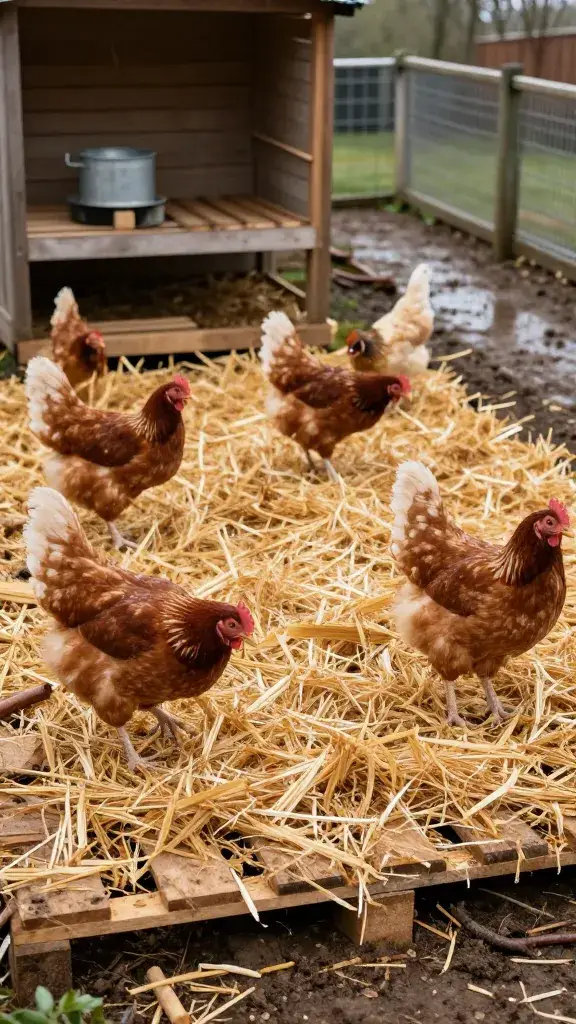
Need mud relief by dinner? Lay straw over a permeable base like pallets or coarse brush. It won’t last forever, but it buys you dry steps now.
Quick Steps
- Flatten the worst ruts
- Lay brush or pallets for airflow
- Top with thick straw; refresh weekly
Best as a temporary solution during storms or freeze-thaw chaos. It keeps chores sane until you install something permanent.
15. Concrete Ribbon With Broom Finish
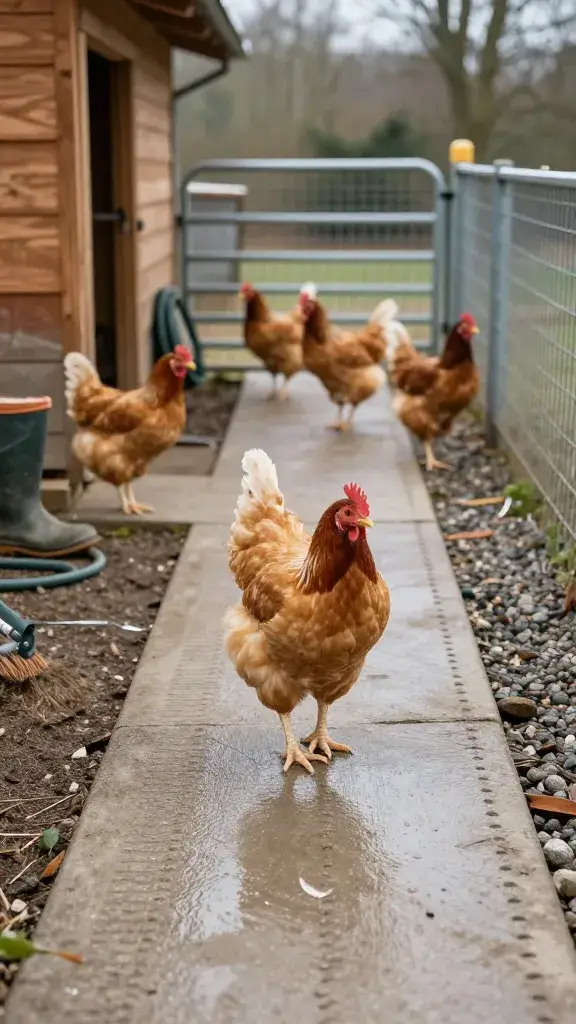
When you want zero fuss and maximum durability, pour a narrow concrete ribbon. Add a broom finish for traction and slope it to shed water.
Build Notes
- 4-inch slab with wire mesh or fiber reinforcement
- Expansion joints every 6–8 feet
- Gentle 1–2% slope away from the coop
Perfect for the most trafficked segments—coop door to run gate. It cleans fast, never churns to mud, and feels pro-grade.
There you have it: 15 ways to retire the swamp and strut to the run like you own the place. Pick one, mix a few, or start simple and upgrade over time. Your boots, your birds, and your nose will all say thanks—trust me.
Share this content: