What to Plant in July: Fast Crops for a Fall Harvest
If you’re standing in a half-empty garden in July feeling like you blew it, take a breath. You haven’t missed your chance. July is one of the most productive sowing windows of the year, and figuring out what to plant in July is less about racing the calendar than doing a little math against your first frost.
There are two jobs in July. Squeeze in fast crops that mature before the season ends, and start the cool-season vegetables that actually taste better once cold weather shows up. Both are wide open right now, and a few of them double as winter feed for the flock. If you ran a spring round, think of this as the sequel to what to plant in April.
First, count back from your first frost
Before you drop a single seed, find your average first fall frost date. Everything in July hinges on it.
The method is simple. Take the days to maturity printed on the seed packet, then add a buffer, because plants grow more slowly as days shorten and nights cool in fall. University extension guidance calls this a “fall factor” of about 14 days. For frost-tender crops like beans and squash, add another 14-day frost factor on top. Then count that total backward from your average first frost date to find your planting deadline.
Here’s a worked example. A 55-day cucumber needs 55 days to maturity plus a 14-day frost factor plus a 14-day fall factor, which is 83 days of runway. Count back 83 days from an October 10 frost date and your drop-dead planting date is July 17. That’s the whole trick. The buffers push the real planting date much earlier than the bare days-to-maturity suggests.
Two things worth knowing about frost dates. They’re probabilities, not promises. The common “50% date” means a freeze happens before it in half of all years, so if you want a safer margin, use your earlier 10% date. Also, your USDA hardiness zone is not your frost date. Zones are based only on average extreme winter lows and tell you what survives the winter. Frost dates tell you when to plant. Two gardeners in the same zone can have very different growing seasons, so schedule by frost date, not by zone.
Fast crops to direct-sow now
These are your quick wins. All of them go straight in the ground, no transplanting required, and most are forgiving enough to sow in succession.
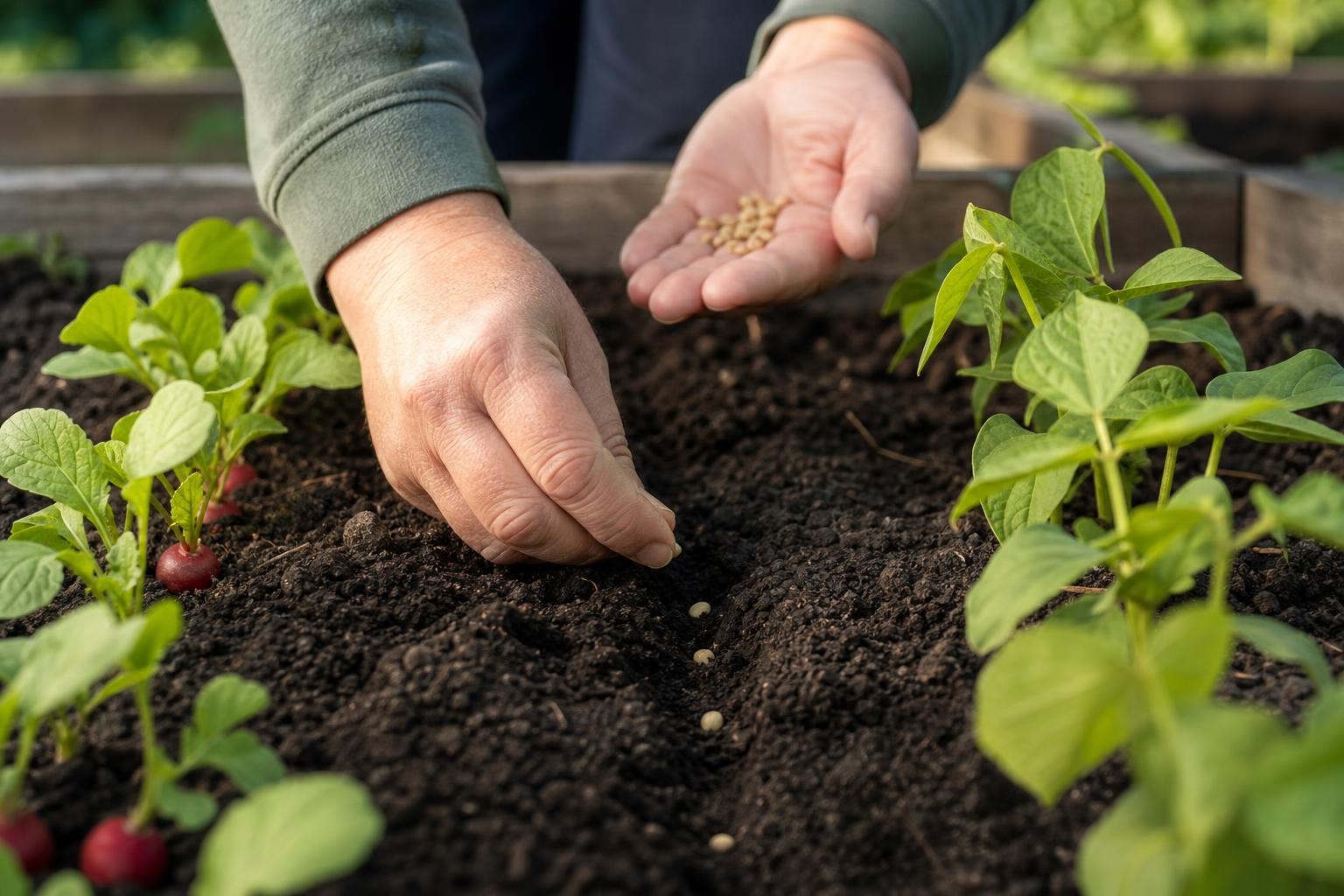
- Radishes. The fastest crop on the list at roughly 25 to 35 days. Sow a quarter to a half inch deep; seedlings emerge in 7 to 10 days. One caveat: summer heat makes spring radishes spongy and prone to bolting, so a true July sowing does best aimed at a cool fall harvest. French Breakfast handles heat better than most if you keep it watered.
- Bush beans. Fast at 50 to 60 days, and a strong July pick. Direct seed only (they don’t transplant well) into soil above 50F. Sow a fresh round every 2 to 3 weeks through mid-to-late July for a rolling harvest.
- Summer squash and zucchini. Roughly 50 to 65 days, and many varieties set fruit within about a week of flowering. Sow an inch deep once soil hits 70F. A July sowing still has time before frost in most regions.
- Cucumbers. About 55 to 60 days. Sow once soil is consistently above 65F. A second sowing about a month after the first stretches your harvest by another 5 to 6 weeks, which is exactly why July works as a natural succession crop.
- Beets. Around 50 days. Sow a half inch deep, 1 to 2 inches apart. For a fall harvest, sow midsummer through early fall, about 4 to 6 weeks before frost. With straw or a hoop cover, roots can sit in the ground into December.
- Carrots. Typically 50 to 80 days, with baby carrots in about 30. Direct sow where they grow; they hate being moved. For fall, sow about 10 weeks before your first frost. Roots that finish in cool weather come out especially sweet and tender.
- Swiss chard. A heat-tolerant green that shrugs off July far better than spinach and rarely bolts. Start cutting outer leaves around 40 days, full maturity at 50 to 60. Fordhook Giant and Lucullus both handle heat. Growth slows in peak heat, then recovers.
A quick word on succession
The whole point of staggered sowing is that a little matures each week instead of everything at once. Re-sow quick roots and greens every 7 to 10 days, and space beans and cucumbers 2 to 3 weeks apart. The rule of thumb I go by is to plant at roughly the rate you’ll actually eat.
What to plant in July for a fall harvest
This is the half of July planting that surprises people. Many of these crops are at their best in fall, because a light frost converts their stored starches into sugars and they sweeten noticeably. Brassicas like kale, collards, and cabbage even release antifreeze proteins. Plenty of gardeners deliberately wait for that first frost before harvesting collards.
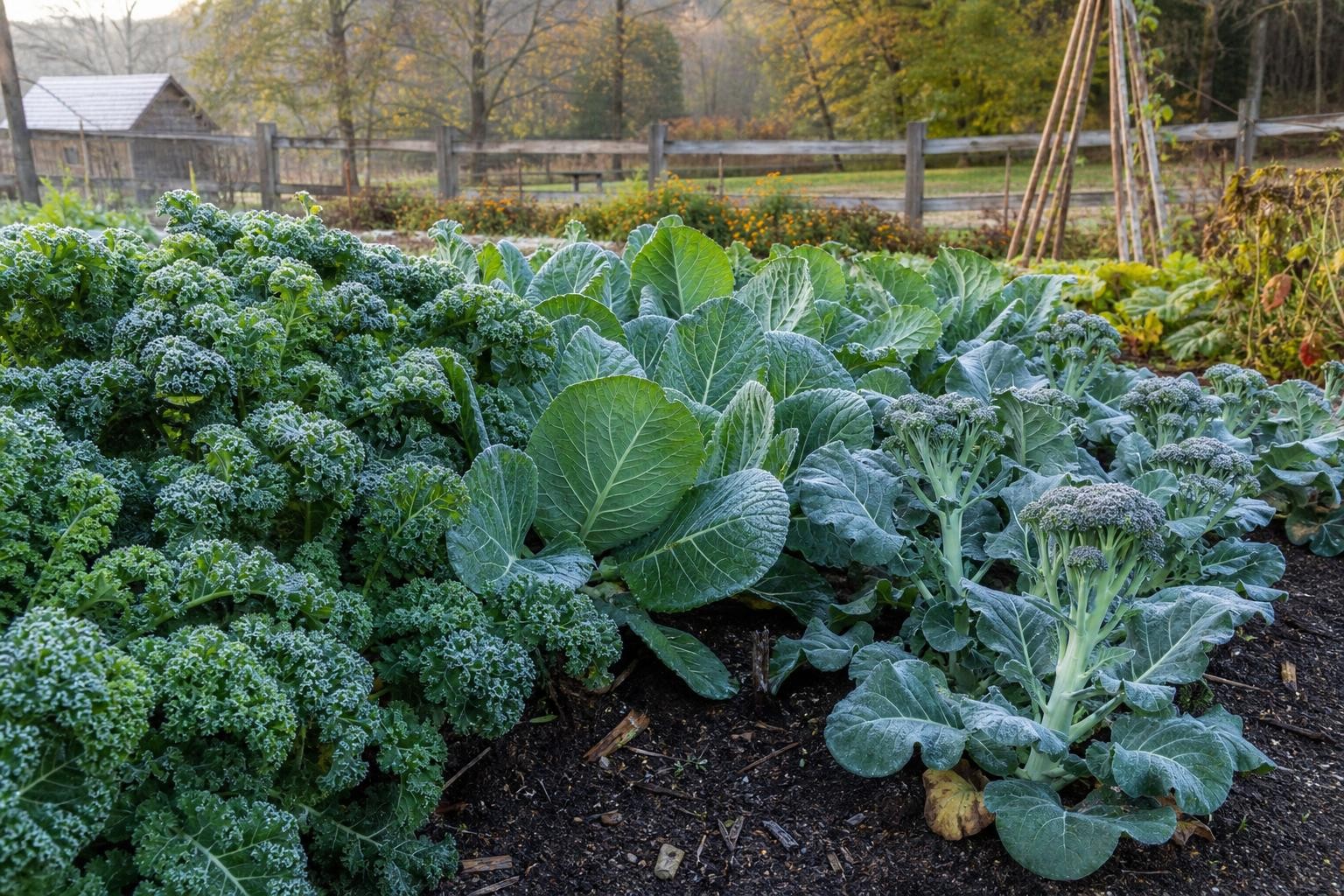
Cool-season crops are also forgiving on timing. Where a frost flat-out kills a tomato plant, hardy greens and roots keep producing into freezing nights. Kale tolerates roughly 25 to 28F. Collards are the toughest common brassica and hold down to about 20F, with some varieties surviving near 5F. In Zones 7 through 10, both can be harvested well into winter.
Here’s the July start schedule, all counted back from your first frost:
- Broccoli. Start seed 10 to 12 weeks before frost; set transplants out 4 to 6 weeks before. A July seed start fits most temperate zones.
- Cabbage. Set transplants out about 6 weeks before frost, which means starting seed in midsummer to have them ready.
- Cauliflower. Plant 6 to 8 weeks before frost, ideally once daytime temps stay below 75F. A July seed start gives you transplants for an early-fall set-out.
- Kale and collards. Sow in July into early August; transplants need about 4 to 6 weeks before going out. Kale runs roughly 60 to 65 days to maturity. For example, kale started July 12 lands an October 15 harvest.
- Brussels sprouts. The slowpoke at 100 to 110 days from seed, and they need cool weather to avoid bitterness. Start seed in late June into July, set transplants out 90 to 110 days before frost, and harvest after a frost for the best flavor.
Fall lettuce deserves its own note. Lettuce bolts when days top about 75F, and the seed won’t germinate at all once soil passes 80F, which it easily does in July. So start it indoors or somewhere cool, lean on bolt-resistant loose-leaf types like Salad Bowl, and remember that fall growth is slower. Add about 10 to 15 days to the packet’s days-to-maturity, since a 45-day lettuce may take 55 to 60 in fall. The upside is that young hardened plants shrug off temperatures down to 32F.
Heat and watering tips for July sowing
July soil is the real enemy here, not the calendar. A few cheap moves make the difference between a row that sprouts and a row that bakes.
Pre-sprout heat-sensitive seed. Lettuce won’t reliably germinate above about 72F. Sprinkle seed on a damp paper towel, seal it in a bag, and chill it in the fridge for a few days to break dormancy, then sow the pre-sprouted seed. Primed or pelleted seed also germinates at warmer temperatures than raw seed, which widens your July window.
Cool the soil with mulch. A 3-inch layer of light-colored straw keeps soil roughly 10 to 15F cooler than bare ground and softens the daily temperature swings that stress new seedlings. Save the cooling mulch for cool-season greens, since it can also slow down the heat-lovers.
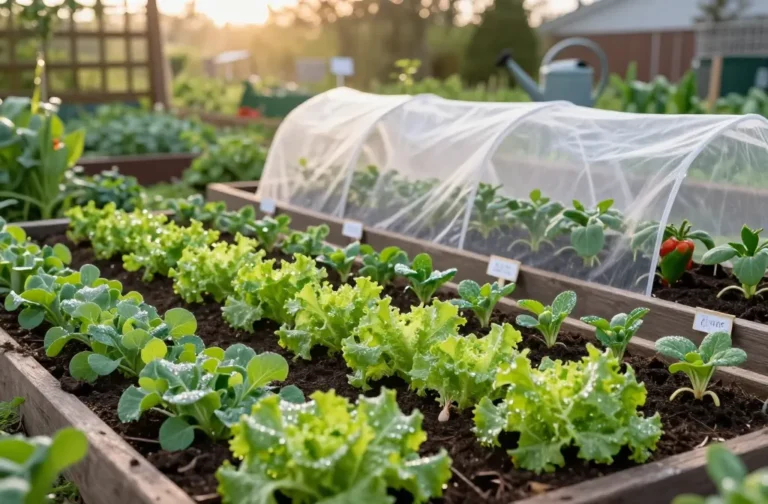
Shade the bed. A 30 to 50% shade cloth is the sweet spot for leafy greens and can drop soil temperature by 8 to 15F at peak heat. Use it for new transplants too, stepping up to 50 to 70% for tender young seedlings in their first 3 to 4 weeks.
Water early and deep. Water between roughly 5 and 9 a.m. so little is lost to evaporation and foliage dries during the day. Then water deeply 2 to 3 times a week to soak the root zone 6 to 8 inches down, aiming for about 1 to 1.5 inches per week including rain. The exception is germination: in hot, dry, or windy weather, seedbeds may need a light watering 2 to 3 times a day. If a sprouting seed dries out, it usually won’t recover, so keep that surface damp.
Try the board trick. Lay a long, narrow board flat over a newly sown row. It traps moisture and shades the soil. Check underneath after a day or two and pull it the moment seeds sprout.
Chicken-keeper and homestead picks
If you keep a flock, July is your last realistic call for a crop that feeds them through winter. Pumpkins and winter squash can still go in by early July in many regions. Winter squash needs roughly 75 to 100 frost-free days, and pumpkins run about 70 to 120 days depending on variety, so do your count-back and pick accordingly.
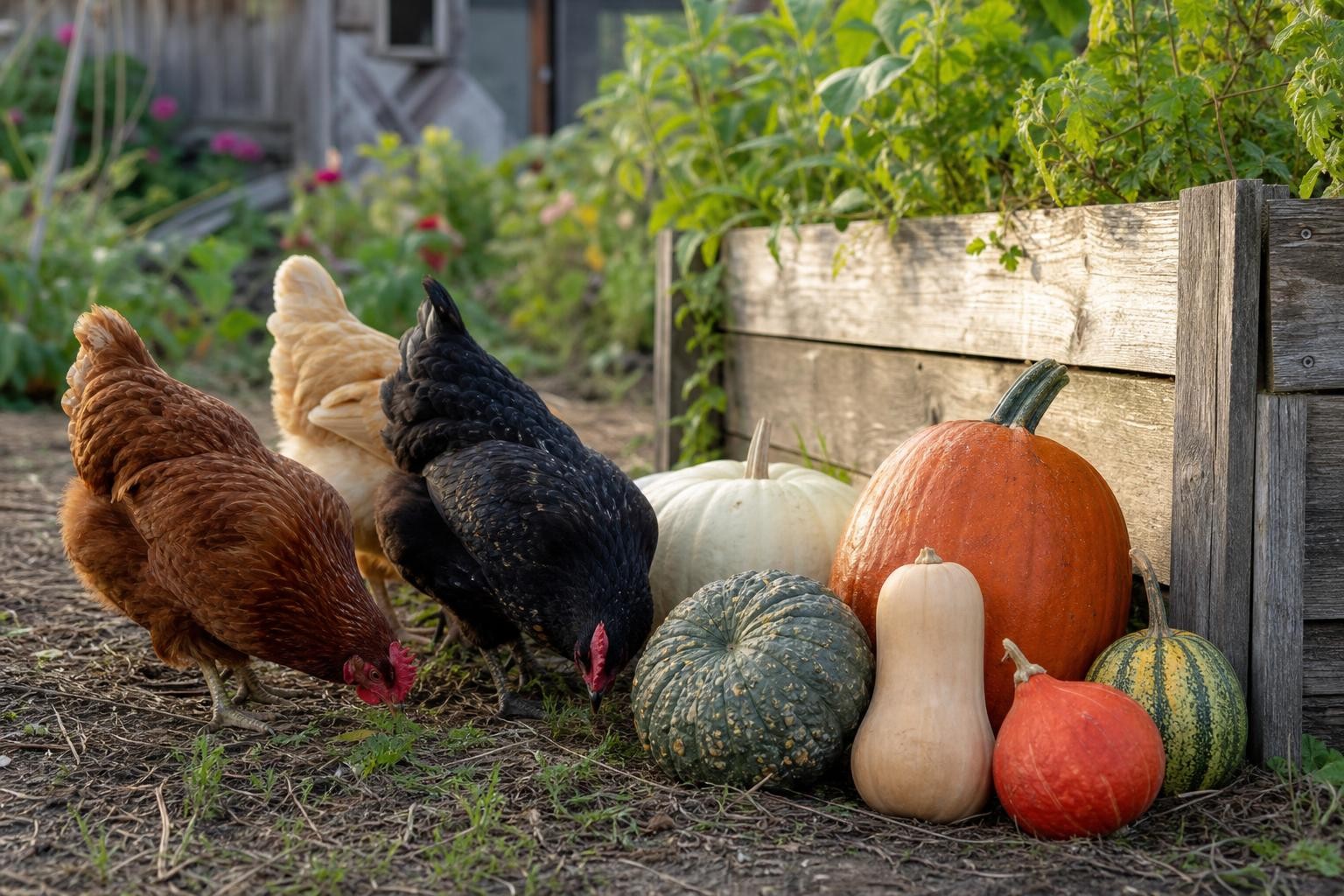
The payoff is real. Pumpkin and winter squash are high in vitamin A, vitamin C, and beta-carotene, and the seeds add fiber, zinc, protein, and healthy fats. Cured squash keeps for months, and once it’s cut you can scoop the flesh and freeze it in small portions for an all-year treat. That turns a July planting into a cold-weather vitamin boost for the birds, and there is more on feeding squash and zucchini scraps to chickens if you want the full safe-list.
A few honest cautions:
- Keep treats to no more than about 10% of the diet, a few times a week. Clear away leftover pumpkin at dusk, because it attracts rats and mice, and never feed flesh that has gone soft or moldy.
- Skip the deworming myth. The claim that pumpkin seeds reliably deworm chickens is overstated, and poultry research is limited and mixed. Don’t rely on them for parasite control.
July is also a fine time to tuck in chicken-friendly herbs for late-summer cuttings. Oregano, thyme, parsley, basil, and mint are all safe and useful, and oregano is a flock-health favorite. Just feed whole fresh or dried herbs, never concentrated essential oils, which can harm a bird’s sensitive respiratory system. If you want low plants that hold up to scratching around the run, our list of chicken-safe ground covers is a good place to start. And keep raw nightshade foliage, potatoes, tomatoes, eggplant, peppers, away from the run, since the leaves, stems, and green parts contain solanine.
Common July mistakes
A short stretch of midsummer neglect can undo months of work. Weeds take over, pests multiply, and moisture-sensitive plants wilt past saving. Watch for these:
- Light daily sprinkling. It only wets the top inch and trains roots to stay shallow, right where the heat is worst. Water deep and less often instead.
- Blaming blossom end rot on calcium. Those sunken patches on tomatoes and squash come from uneven moisture disrupting calcium uptake, not from low soil calcium. Dumping calcium on the bed rarely fixes it. Steady moisture and mulch do.
- Expecting fruit set in a heat wave. When days top about 90F or nights stay above 75F, tomato pollen goes sticky and flowers drop. A healthy-looking plant can simply stop producing. If you’re setting tomatoes now, choose heat-set varieties like Solar Fire, Phoenix, or Heat Master.
- Sowing lettuce into hot soil. Above 80F the seed just sits there. Pre-sprout it or wait for a cooler late-summer window.
FAQ
Is it too late to plant a vegetable garden in July?
No. July is prime time for fast direct-sow crops and for starting cool-season vegetables for fall. The key is to count back from your first frost date to confirm each crop has enough runway.
What grows the fastest if I plant in July?
Radishes are the quickest at about 25 to 35 days, followed by baby carrots around 30 days and bush beans at 50 to 60. These are ideal for succession sowing every couple of weeks.
How do I figure out my last safe planting date?
Take the days to maturity, add about 14 days as a fall factor, add another 14 for frost-tender crops, then count that total backward from your average first frost date.
Can my chickens eat the pumpkins I plant in July?
Yes. Pumpkin and winter squash are a vitamin-rich treat, kept to about 10% of the diet a few times a week. Just don’t count on the seeds as a dewormer, and remove leftovers at dusk.
If you take one thing from all of this, let it be the count-back. Knowing what to plant in July is really just knowing your frost date and doing a little subtraction. Find that date, pick a few fast crops and a few that sweeten in the cold, keep the soil cool and damp while seeds get going, and you’ll be harvesting long after the people who gave up in midsummer have packed it in.
Share this content: