Viral 12 Easy Duck Coop Ideas for Beginners with Simple Materials
Ducks don’t need a palace—they need dry floors, draft-free nights, and a safe spot to snooze. These beginner-friendly coop ideas keep things simple, cheap, and fast to build. You’ll use basic supplies, a weekend’s worth of effort, and a little creativity. Ready to give your quackers a comfy home without stress?
1. Pallet Palace With A Tin Roof
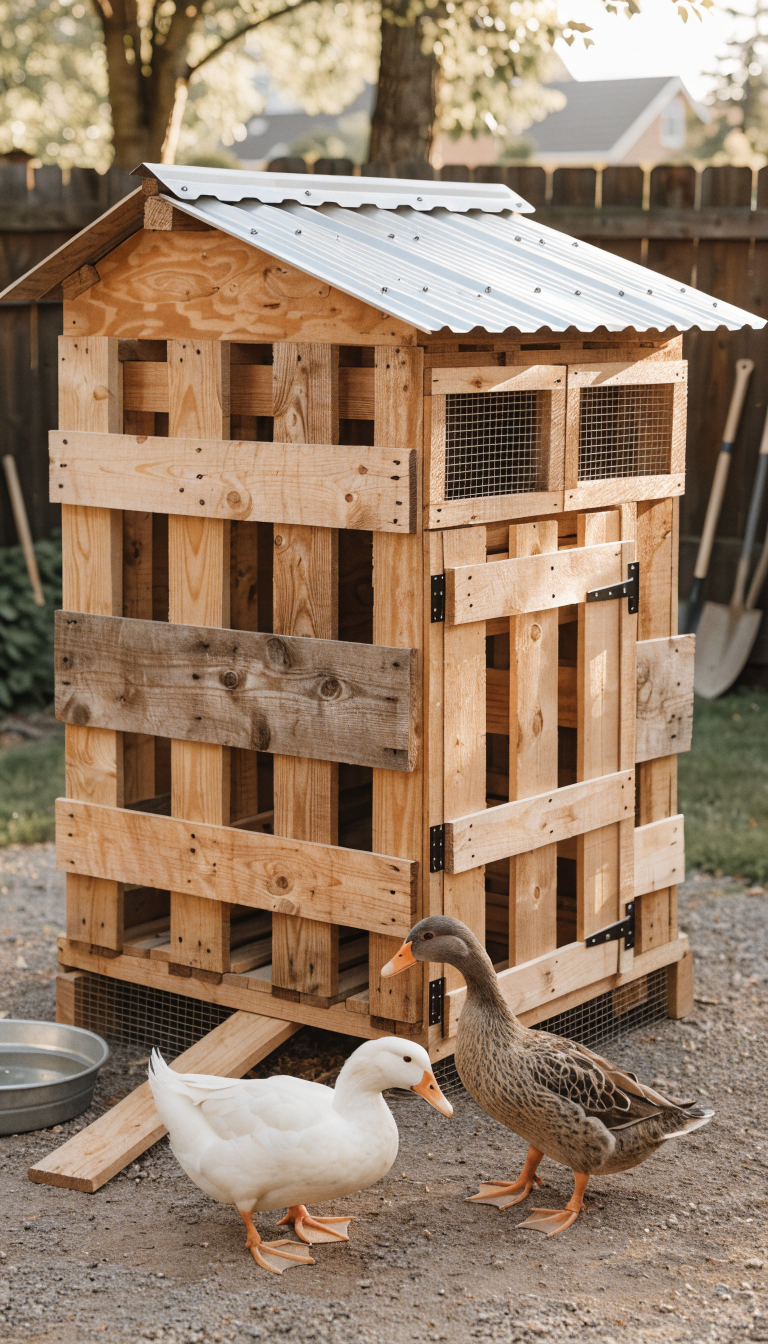
Pallets make great walls because they’re sturdy, cheap, and everywhere. Screw them together, clad the outside with plywood or fence boards, and top it off with a corrugated tin roof. Boom: instant coop that looks rustic in a good way.
Materials
- 3–4 shipping pallets
- Exterior screws, hinges, latch
- Plywood or reclaimed fence boards
- Corrugated metal or polycarbonate panels
- Hardware cloth (1/2-inch) for vents
Cut a door into one pallet, hinge it, and frame a couple of high vents covered with hardware cloth. You’ll get excellent airflow without drafts. Great for small flocks (2–6 ducks) who want a no-frills, solid shelter.
2. Doghouse Glow-Up
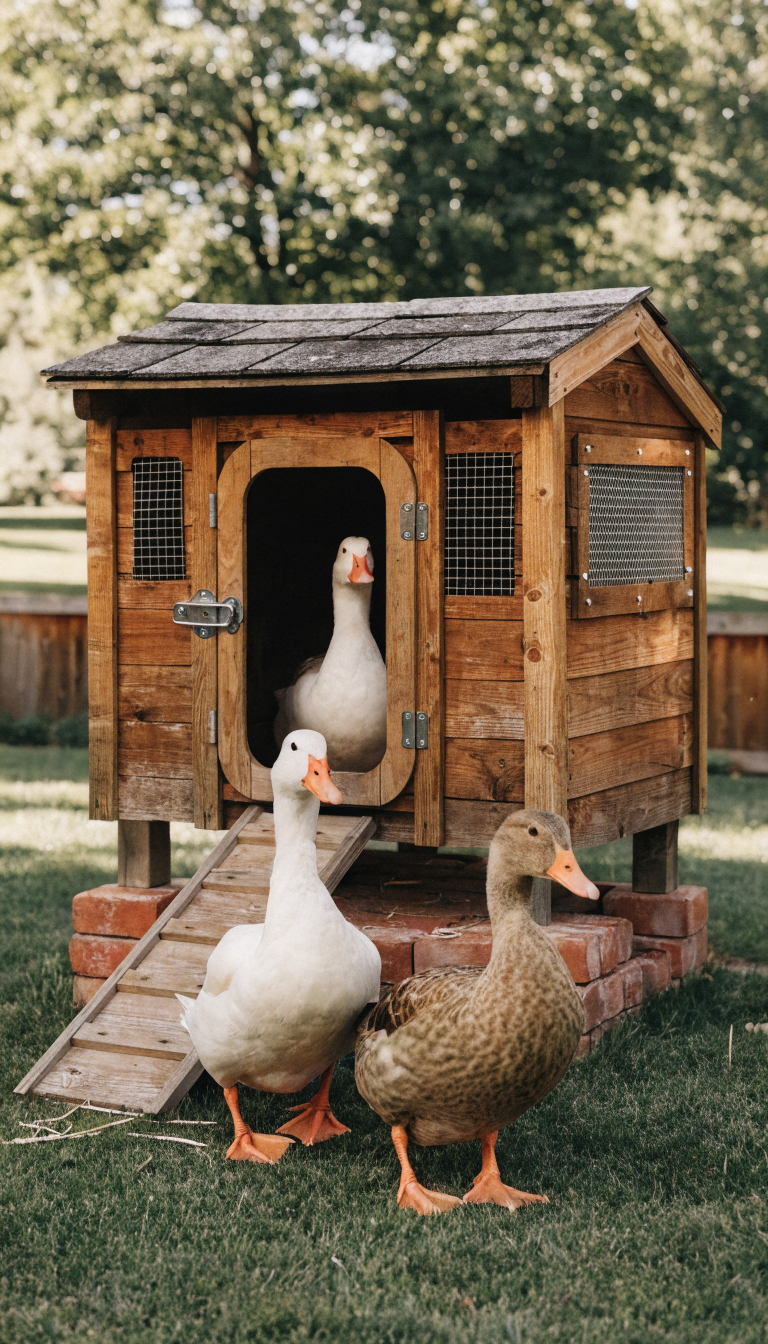
Got an old doghouse? Turn it into a duck coop with a few fast tweaks. It’s already weatherproof and cozy, so you just add ventilation and a safe door, and you’re basically done.
Tips
- Raise it on bricks or 4x4s for a dry floor
- Cut two vents near the roofline and cover with hardware cloth
- Widen the doorway for waddles and add a ramp
- Install a sturdy latch (raccoons are sneaky)
This works best for 2–3 ducks. You’ll love the minimal work and your ducks will love the snug sleep zone.
3. Hoop House Haven (PVC + Tarp)
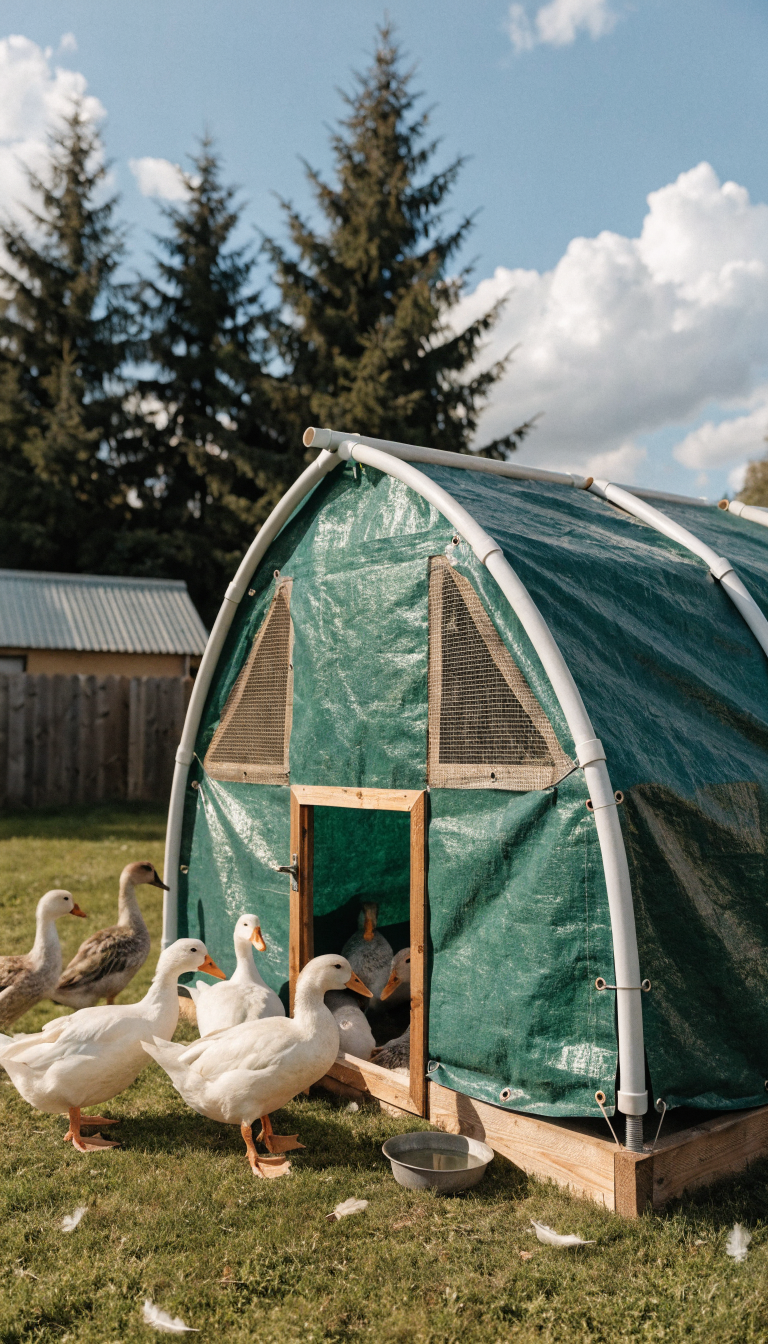
A hoop house gives you fast shelter that’s light to move and big on space. Bend PVC into an arch over a simple base, wrap with a heavy-duty tarp, and leave screened windows for airflow.
Key Points
- Use 1-inch PVC for stronger hoops
- Anchor the base with stakes or screw it into a wood frame
- Cut window openings and back them with hardware cloth
- Add a simple framed door with a latch
This shines for seasonal setups or mild climates. You’ll get a roomy coop without much cash, IMO the best bang-for-buck starter.
4. Trash Shed Turned Duck Den
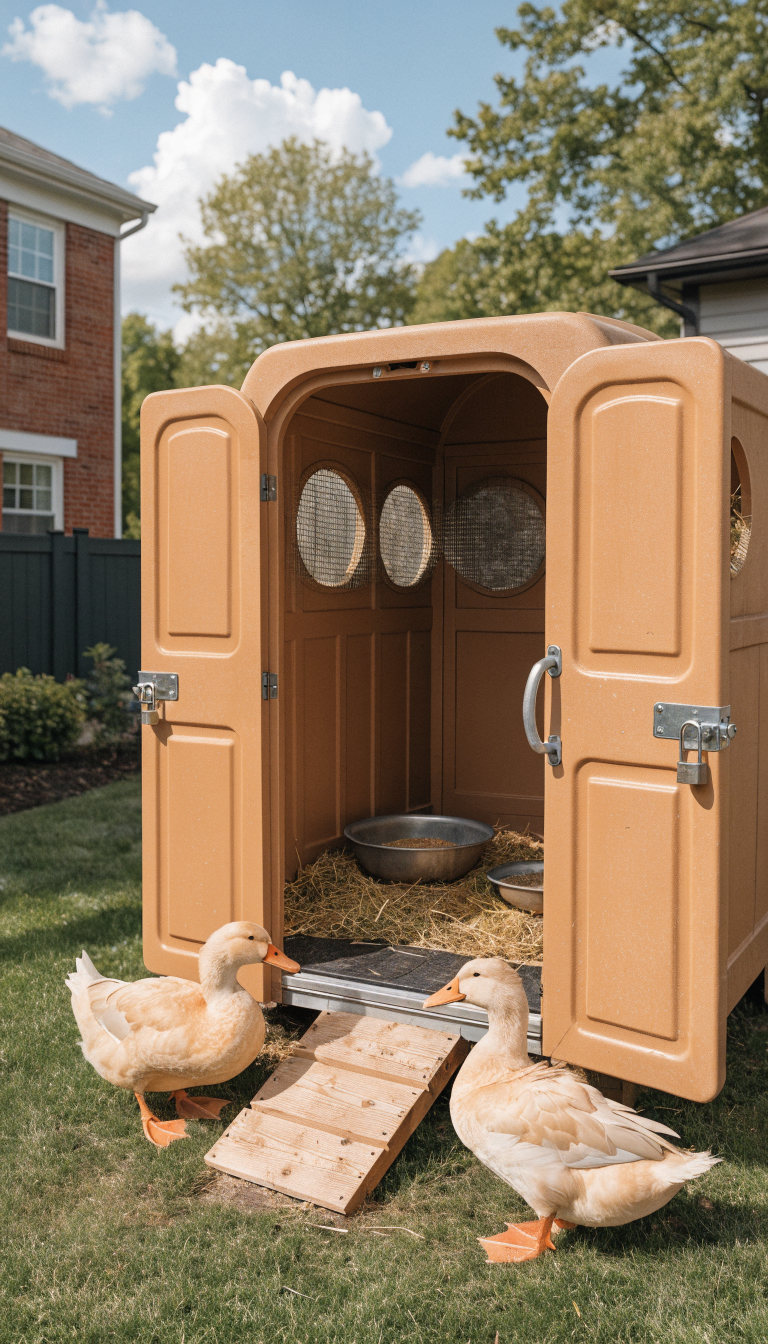
Those resin or wooden trash/recycling sheds make excellent duck coops. They’re weather-tight, easy to clean, and open wide for chore time. Minimal tools, maximum satisfaction.
How-To
- Drill vents high on both sides and add hardware cloth
- Lay down a removable rubber stall mat or vinyl flooring
- Add a low ramp to make waddling easy
- Secure the handles with a predator-proof hasp and lock
Perfect if you want a clean look in a suburban yard. You’ll love the quick conversion and low mess factor.
5. Skid Coop You Can Drag Anywhere
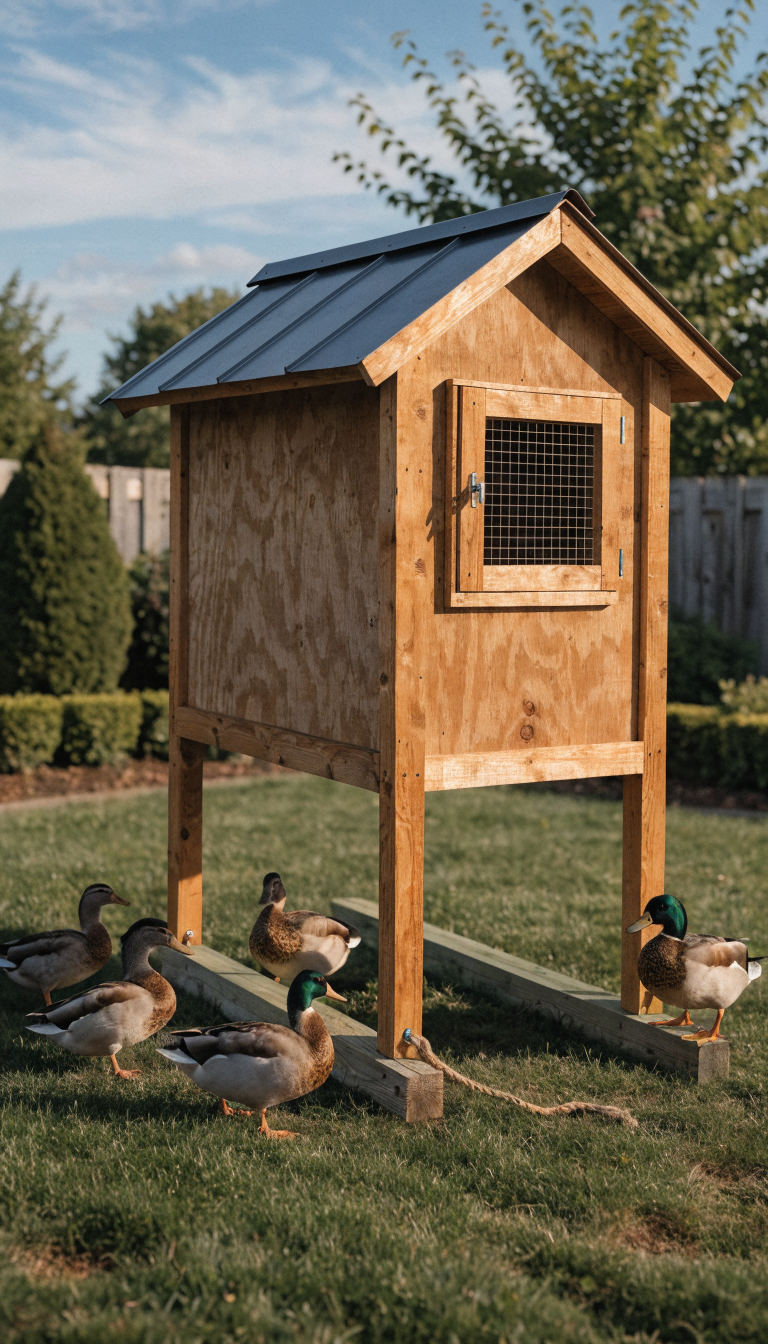
Build on skids so you can move the coop to fresh ground. Two 4x4s as runners with a simple frame on top keep the floor dry and the ground happy. It’s mobility without fancy wheels.
Materials
- Two 8-foot 4x4s (pressure-treated)
- 2×4 framing, plywood siding
- Roofing: shingles or metal
- Eye bolts and rope for dragging
This setup reduces smell and mud since you can rotate spots. Great for backyards where grass matters and neighbors care—seriously, they’ll thank you.
6. A-Frame Simplicity With Scrap Wood
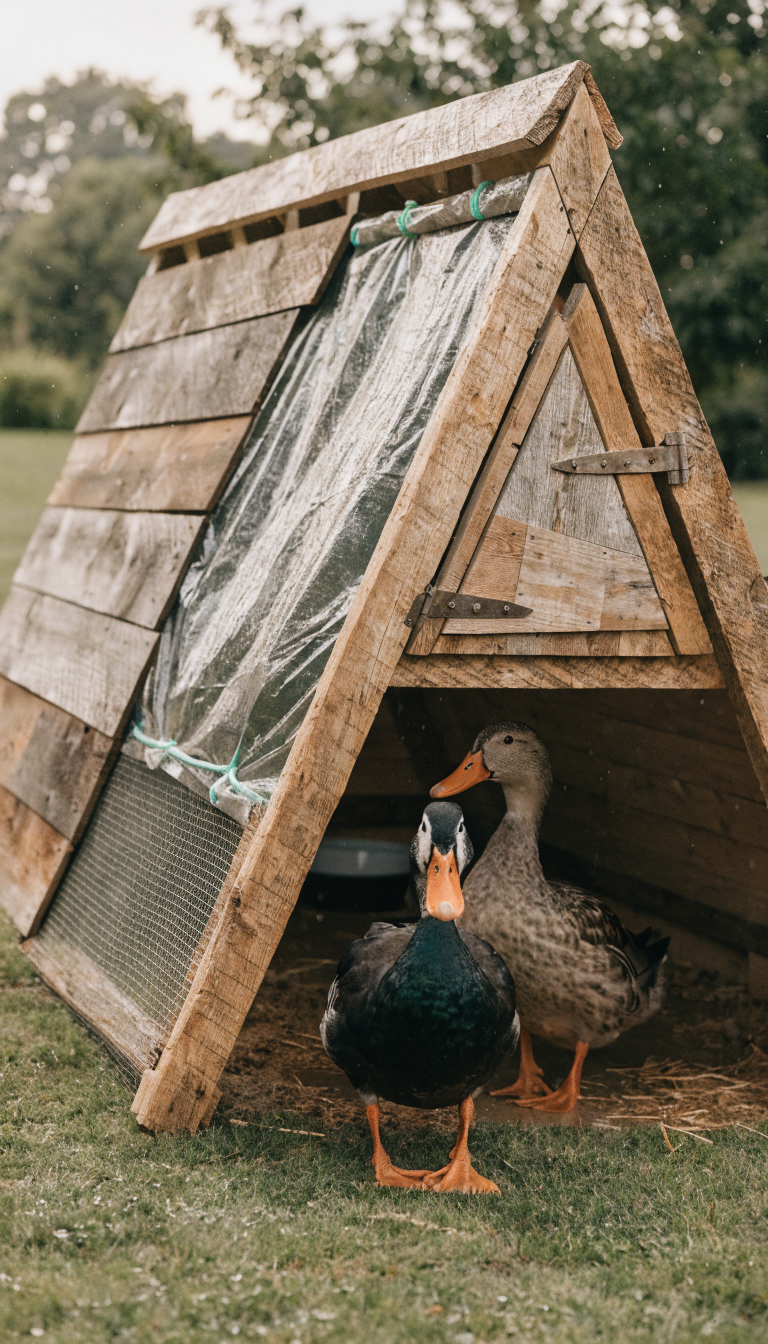
An A-frame uses fewer cuts and stands strong in wind. It sheds rain like a champ and looks cute. Build two triangles, connect with a ridge board, and clad the sides.
Build Notes
- Keep one triangular end as a hinged door
- Vent across the ridge under a small overhang
- Use one solid side, one partial side with hardware cloth and a roll-down tarp
Use this if you want fast construction with clean lines. It’s sturdy, beginner-friendly, and ducks approve.
7. Cattle Panel Coop (Arched And Airy)
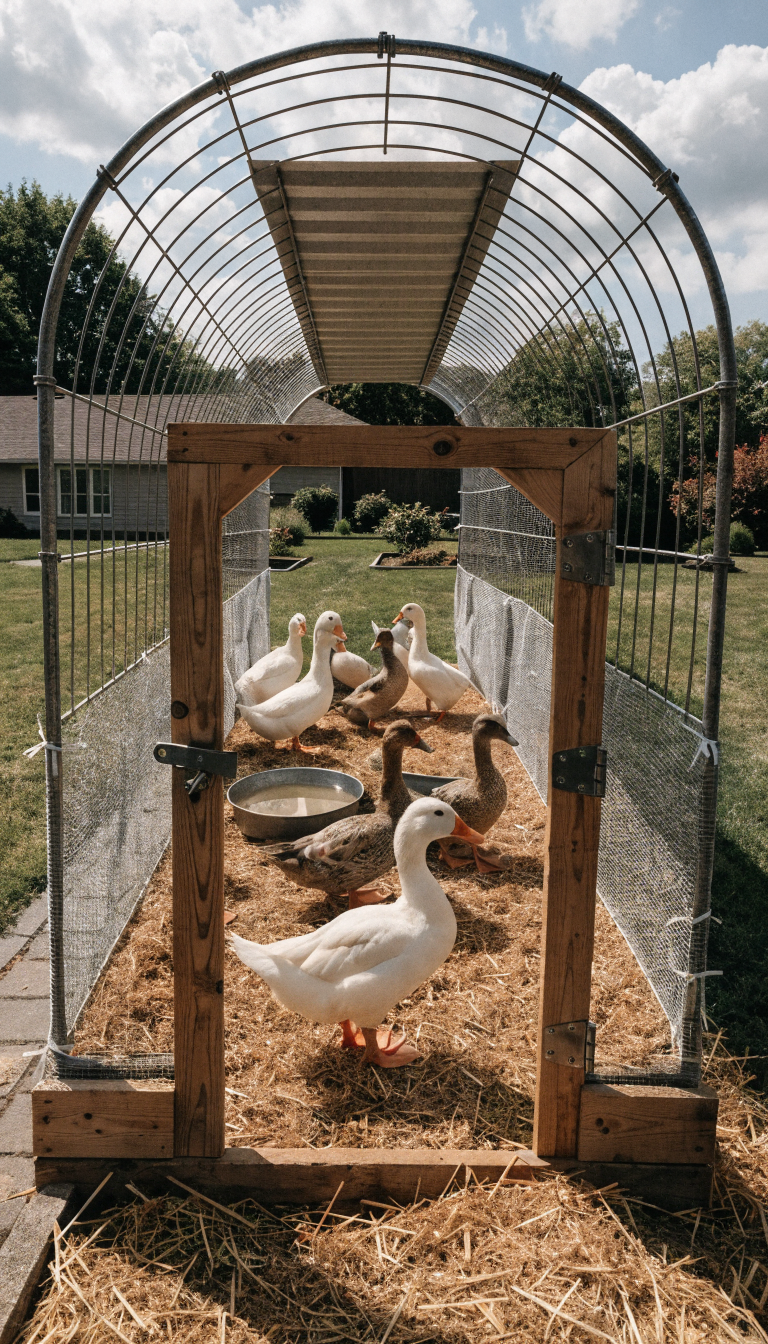
For a larger flock, cattle panels make strong, airy arches. Attach two panels to a wooden base, anchor securely, and cover with a mix of roofing and wire.
Key Points
- Zip-tie hardware cloth to the bottom 2 feet for predator protection
- Use a solid roof section for rain and shade
- Install a framed door at one end with a tight latch
This gives you walk-in height and great light. Ideal if you want a coop you can actually stand in while doing chores—your back will cheer.
8. Shipping Crate Cozy Cabin
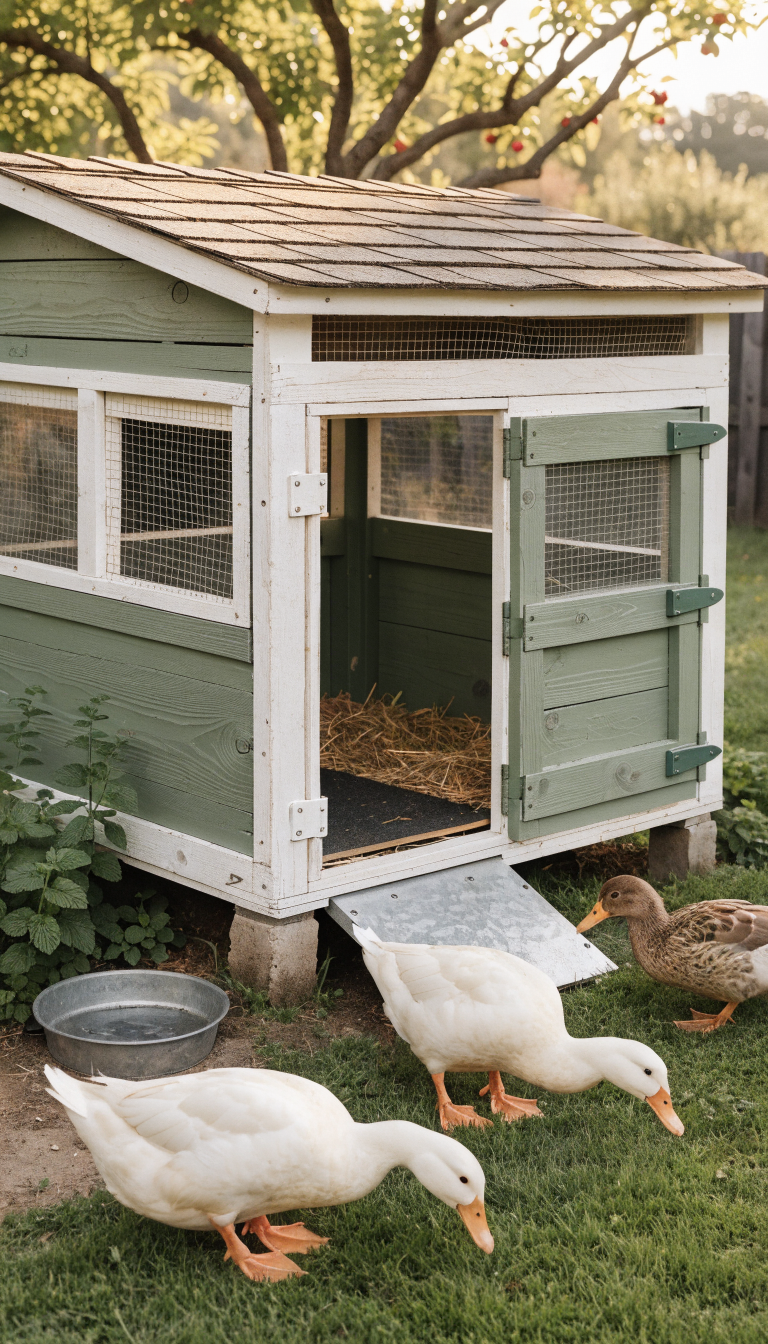
Shipping crates or large wooden boxes turn into sturdy coops with minimal work. They’re already framed, so you mostly add doors, vents, and a roof upgrade.
Materials
- Large wooden crate
- Exterior paint or sealant
- Hinges, latch, hardware cloth
- Roofing panels or shingles
Paint the outside for durability and add a removable floor mat inside. Great for thrifty builders who like reclaiming materials and scoring deals.
9. Convertible Day Pen + Night Box
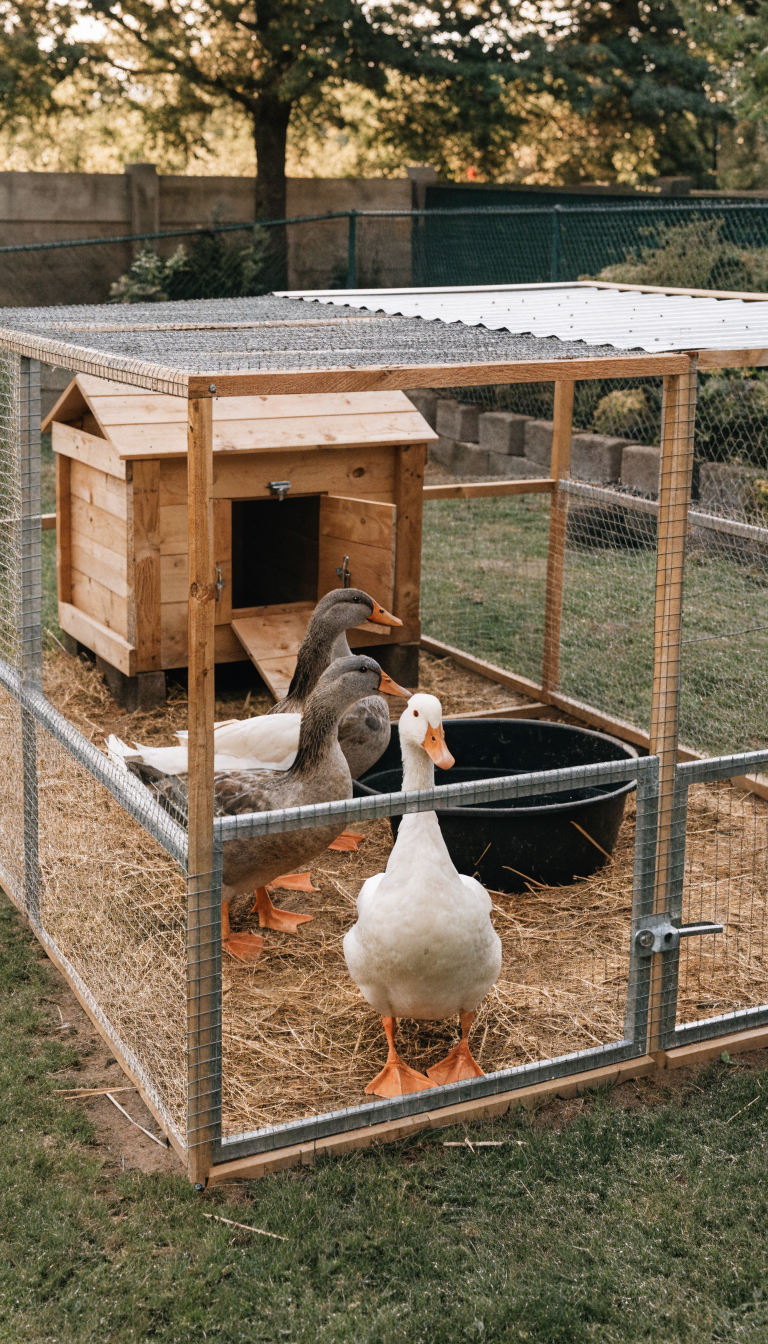
Ducks thrive with a big day space and a snug night nook. Pair a secure hardware-cloth run with a small insulated sleep box inside. Lock them in the box overnight and open to the run at dawn.
Setup
- 4×8 or 6×10 run framed in 2x2s with hardware cloth
- Small wooden box with a pop door and bedding
- Roof the run with metal or poly panels
This combo nails convenience and safety. Use it if predators visit at night and you want fast morning routines.
10. Upcycled Wardrobe Coop With Style
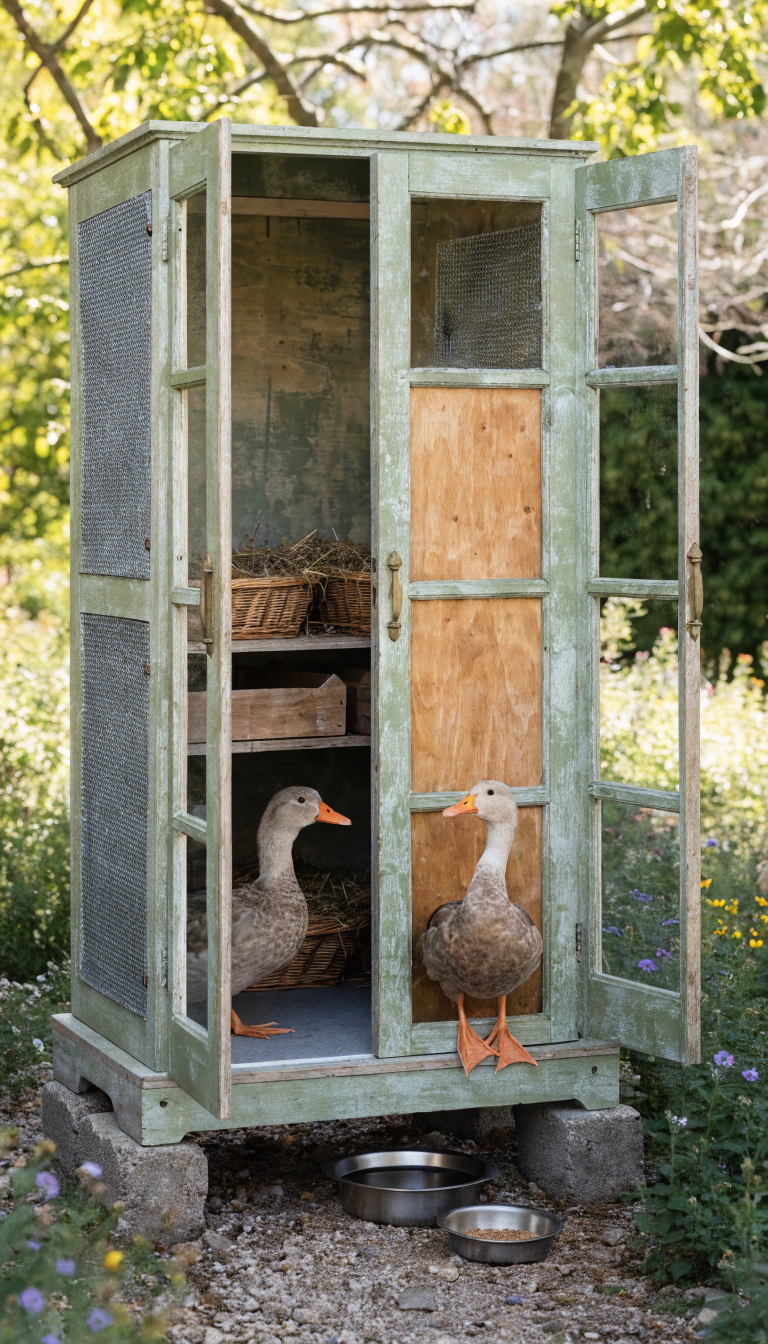
Old wardrobes or armoires can become charming duck coops. They already have doors and shelves—convert those into vents and nest nooks.
How-To
- Elevate on blocks and add vinyl flooring inside
- Cut side vents and back them with hardware cloth
- Replace glass with plywood if needed
- Use baskets or low boxes as bedding zones
Perfect for a backyard with a touch of whimsy. You’ll get function and a conversation piece in one go, FYI it photographs great.
11. Low-Cost Lean-To Against A Fence
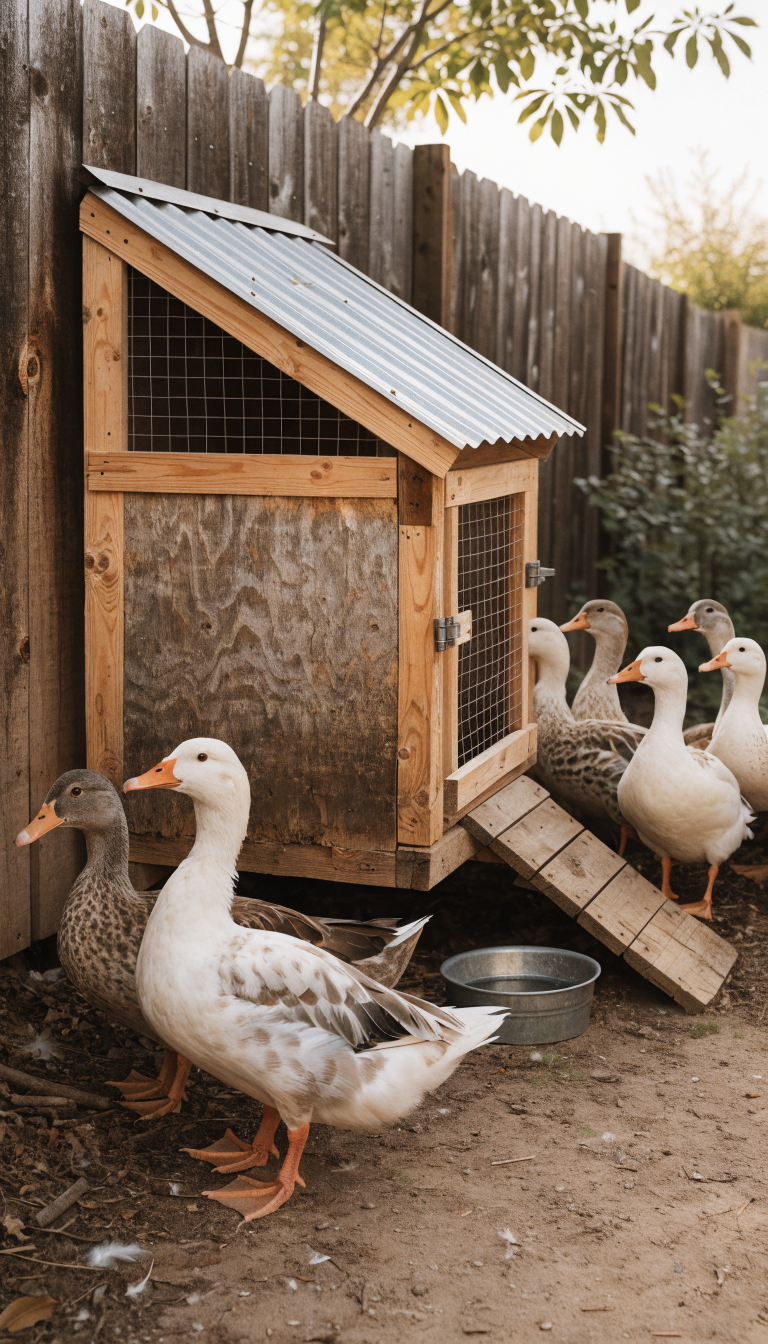
When space runs tight, build a lean-to along a fence or wall. It uses fewer materials and tucks away neatly while staying sturdy.
Materials
- 2×4 frame, sloped roof (metal or shingles)
- Plywood or fence boards for back and sides
- Hardware cloth vents under the eaves
- Front access door with a low ramp
This works well in narrow side yards. Choose it if you want discreet, compact, and effective without overbuilding.
12. Winter-Ready Box With Deep Litter
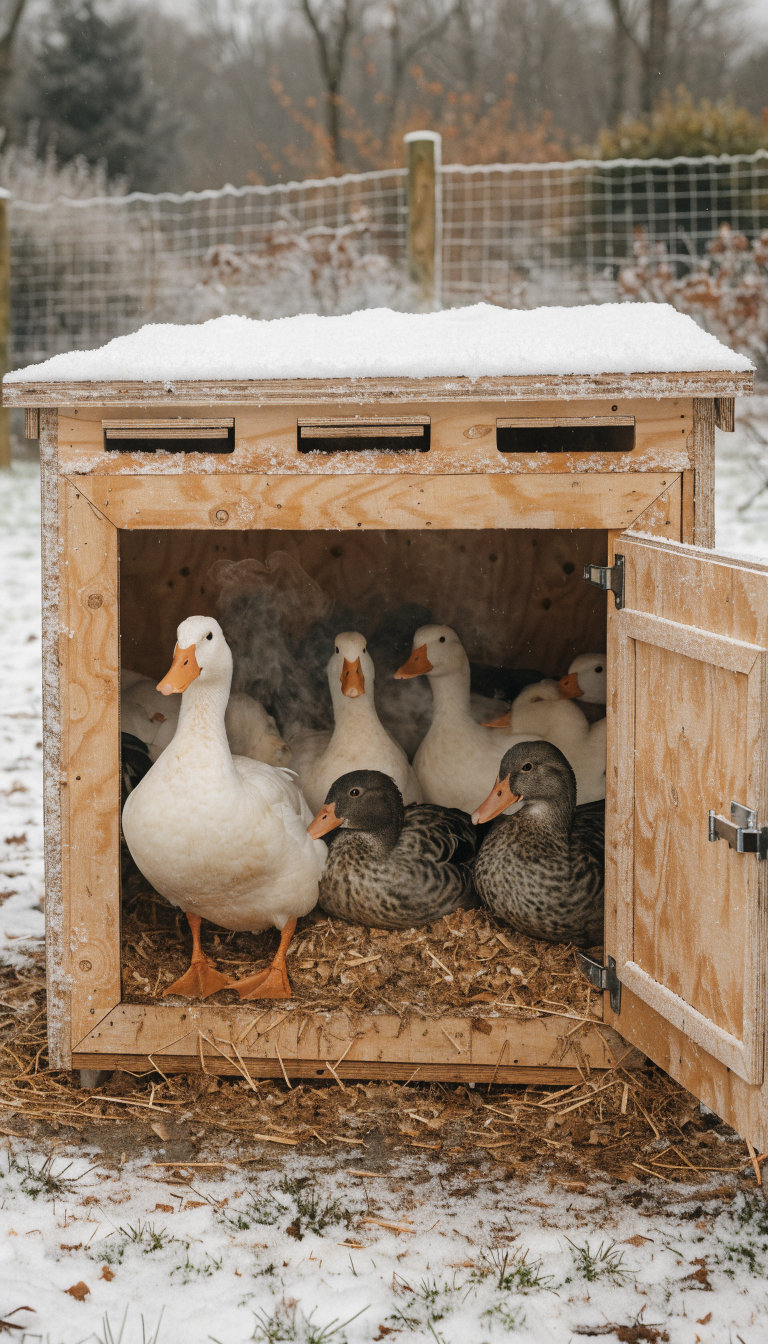
If your winters bite, build a tight, insulated box that keeps ducks warm without drama. Focus on controlled ventilation, a weatherproof door, and the deep-litter method to generate gentle heat.
Key Points
- Insulate walls with foam board, cover with plywood
- High vents only, adjustable with flaps
- Start with 4–6 inches of straw or wood shavings, add more weekly
- Use a wide door to make mucking out easier
Best for cold climates where drafts ruin nights. You’ll keep moisture in check and ducks comfy all season.
Essential Duck Coop Smarts (Use With Any Design)
- Flooring: Ducks splash. Choose vinyl, rubber mats, or packed gravel under a raised floor.
- Ventilation: High vents prevent moisture buildup. Cover all openings with 1/2-inch hardware cloth.
- Predator Proofing: Bury wire apron 8–12 inches out from the base, lock all doors, no gaps bigger than a thumb.
- Access: Big human door = fast cleaning. Hinged roof panels help, too.
- Bedding: Straw or large-flake shavings. Swap wet spots often; deep litter works great in winter.
- Run Drainage: Add pea gravel around waterers and gutters on roofs. Mud is the enemy.
Size Guide (Quick Math)
- Indoor sleep space: About 4–6 square feet per duck
- Covered run: 10–15 square feet per duck (more is better)
- Door: 12–14 inches wide so nobody snags a wing
Ready to build? Pick one idea that fits your yard, grab a few basic tools, and make your ducks the coziest neighbors on the block. Keep it simple, keep it sturdy, and you’ll nail it—trust me, the quacks of approval are coming.
Share this content: