10 Chicken Predators and How to Protect Your Lock
Your chickens look cute; predators think they look like lunch. The good news? You can outsmart almost every critter with a few smart upgrades. We’ll break down the top threats and exactly how to turn your coop and run into a no-go zone. Quick fixes, practical gear, and some “wish I knew sooner” tips—let’s keep your flock clucking.
1. Foxes: The Silent, Sneaky Ninjas
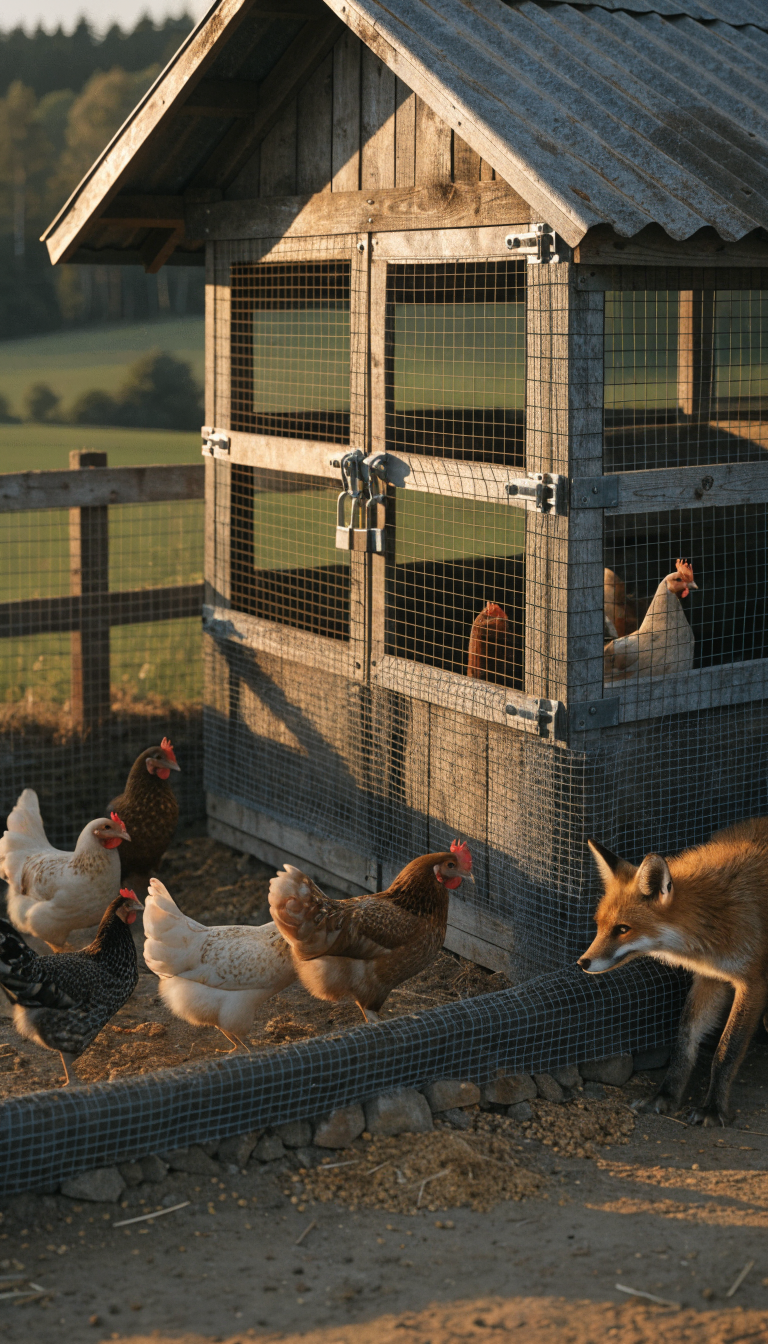
Foxes hunt with stealth and speed, and they love dusk and dawn raids. They squeeze through gaps, dig like excavators, and grab-and-go before you blink. You need layered defenses that block ground access and reinforce weak links.
Tips
- Install a hardware cloth skirt: 12–18 inches out from the run, buried 2–3 inches deep.
- Use 1/2-inch galvanized hardware cloth—never chicken wire—for runs and vents.
- Add two-step locks or carabiners on doors to foil quick flips.
A solid dig-proof perimeter and tight mesh keep foxes outside looking annoyed. Result: calm mornings, zero feathers everywhere.
2. Raccoons: Tiny Hands, Big Trouble
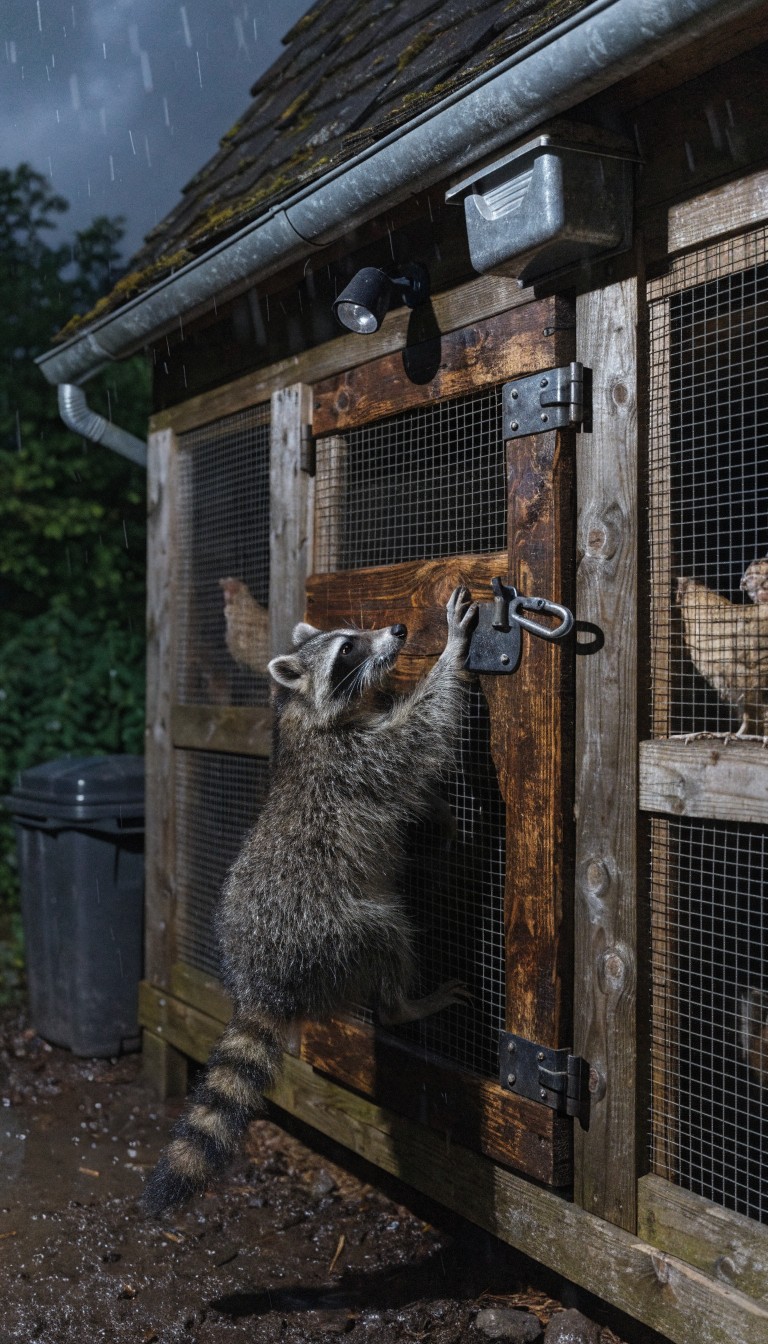
Raccoons open latches, reach through gaps, and pull off brutal night attacks. They climb well and test every corner. Think of them as furry locksmiths with bad intentions.
Key Points
- Use locking hasps plus spring-loaded carabiners—raccoons can open simple latches.
- Cover all openings with 1/2-inch hardware cloth; they reach through 1-inch gaps.
- Secure feed and trash nightly to reduce drive-by visits.
When you outsmart raccoon fingers, you massively cut nighttime losses. Your lock setup matters more than you think—seriously.
3. Coyotes: Endurance Predators With Group Tactics
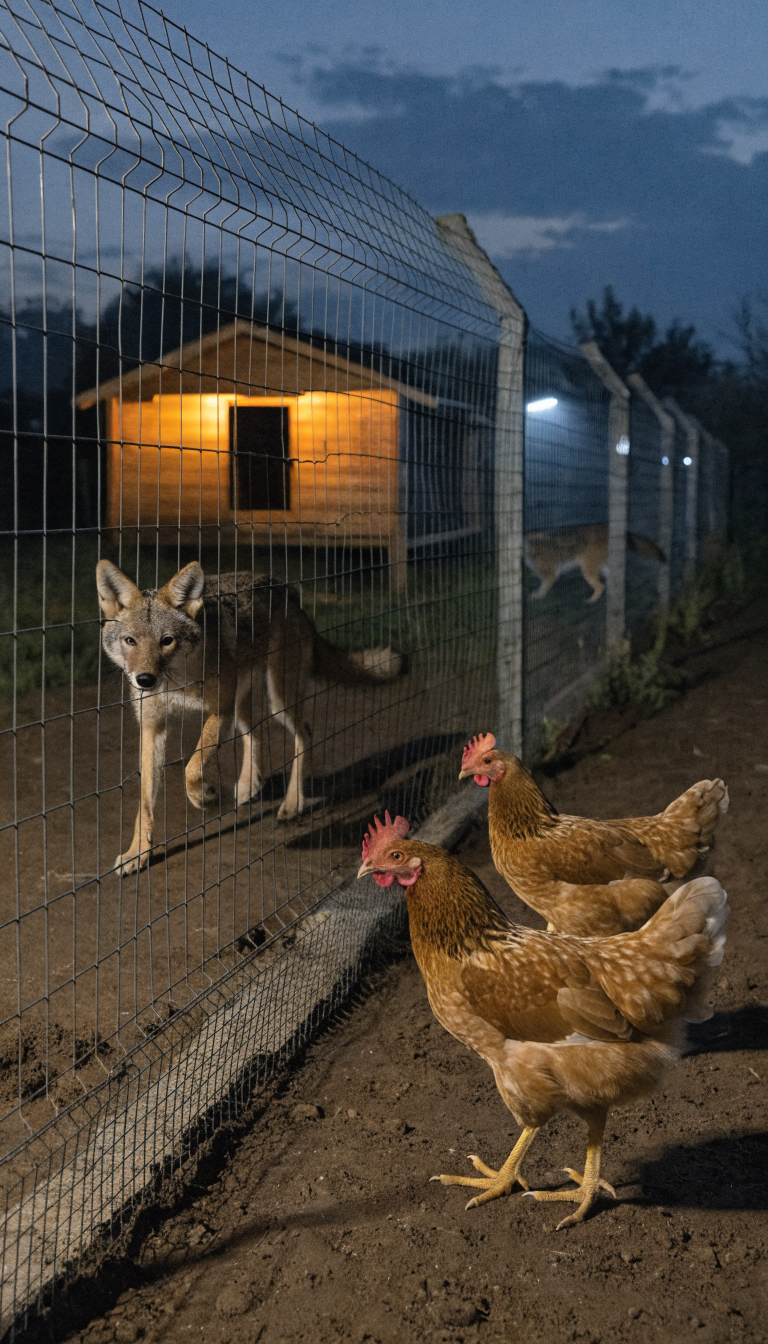
Coyotes test fencing, patrol regularly, and learn your routine fast. They can jump medium-height fences and dig shallow trenches. You need height, tension, and clean sightlines.
Defensive Moves
- Install a 6-foot fence with an outward 12-inch coyote roller or angled top.
- Add a buried apron or trench with hardware cloth to stop digging.
- Use motion lights or alarm beacons to disrupt approach paths.
With better fencing and lighting, coyotes move on to easier targets. IMO, rollers plus an apron feel like cheat codes.
4. Hawks And Owls: Aerial Snipers
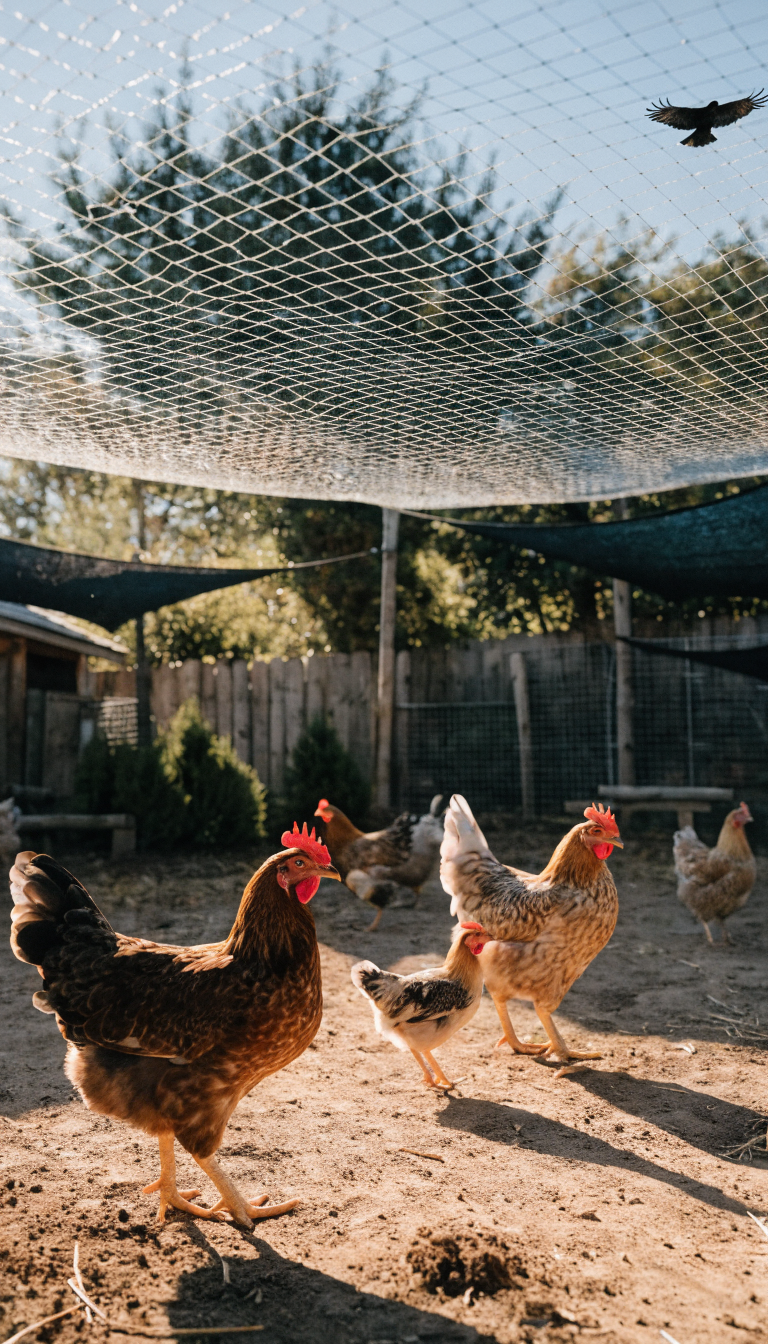
Raptors strike fast from above and love open runs. They target smaller birds and juveniles. You block the sky and give your flock cover.
Materials
- Overhead netting or aviary mesh (UV-rated) across the entire run
- Shade sails, tarps, or evergreen shrubs for quick cover
- Perch structures under cover, so birds can hop to safety
Once you net the run, aerial attacks plummet. Bonus: overhead shade cools birds and cuts heat stress.
5. Snakes: Quiet Egg Thieves (And Sometimes Chick Snatchers)
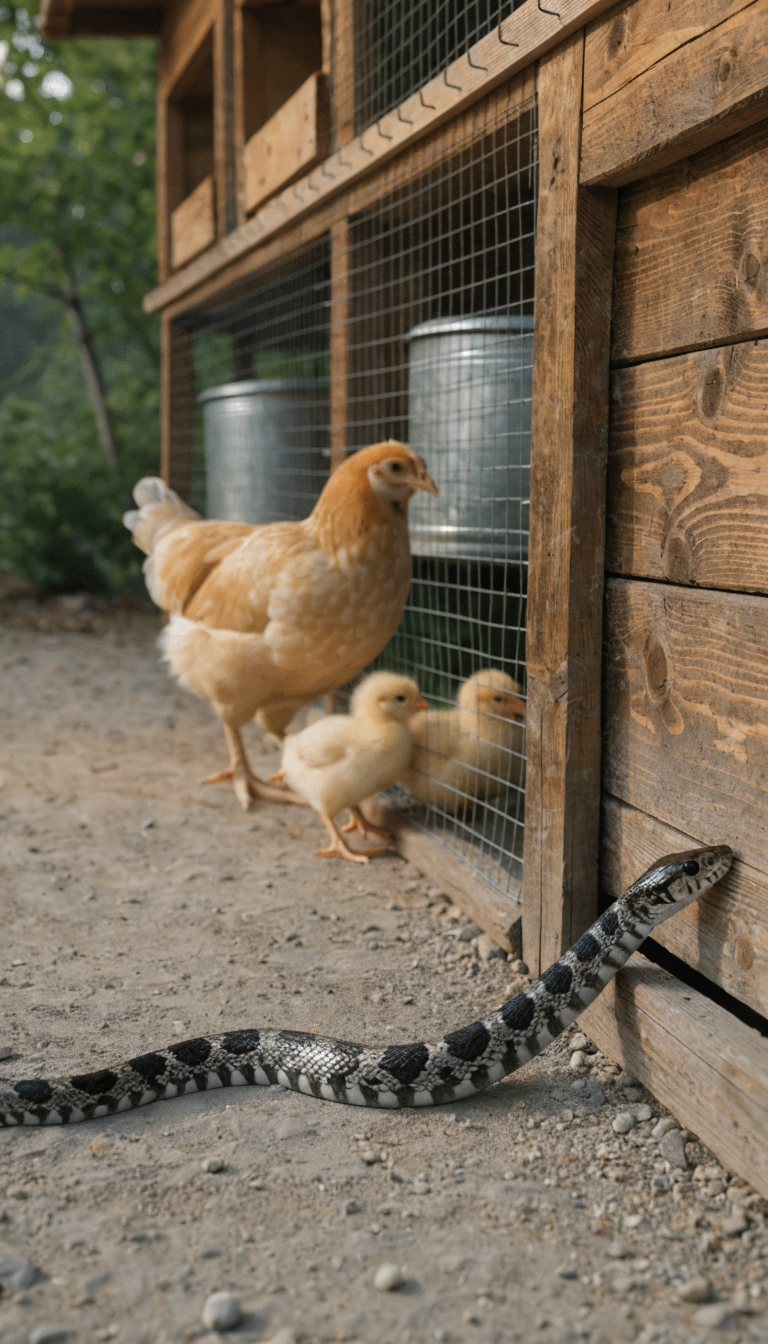
Most snakes want your eggs, not your hens, but small chicks face real risk. They slide through tiny gaps and love cluttered, rodent-filled zones. You need tight mesh and tidy storage.
Tips
- Seal gaps larger than 1/2 inch; use weather stripping around doors.
- Elevate nest boxes and collect eggs twice daily.
- Remove rodent attractants: spilled feed, open compost, messy bedding piles.
Minimize gaps and rodent activity, and snakes usually vanish from the equation. Simple, effective, low drama.
6. Weasels And Mink: Small Bodies, Big Damage
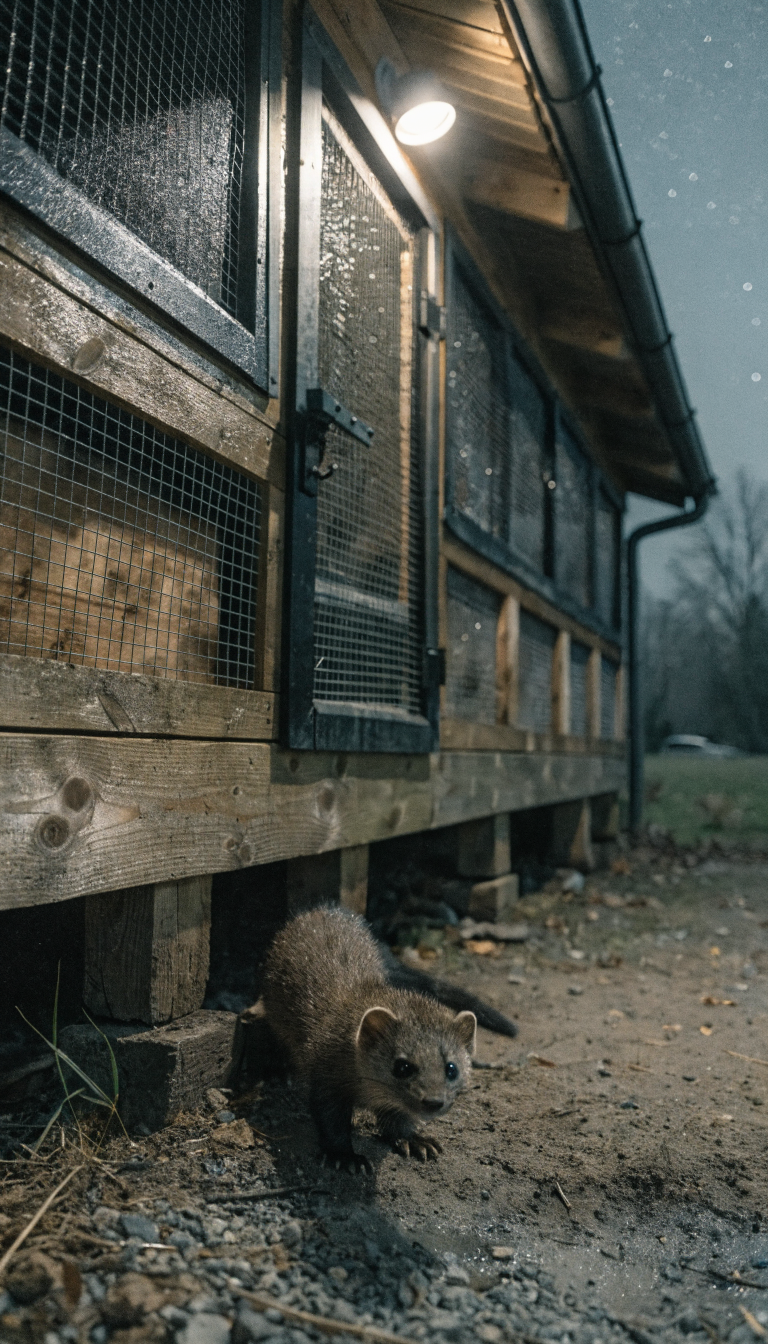
Weasels slip through holes the size of a quarter and can wipe out a coop in one night. They hunt for sport and sneak through vents or loose boards. Build like you’re keeping water out—no gaps, no excuses.
Key Points
- Use 1/2-inch hardware cloth on every vent and opening, inside and out.
- Add an inner pop-door barrier at night for a double-seal effect.
- Remove clutter near the coop; they use junk piles as cover.
When you close every tiny gap, weasel attacks drop to almost zero. Overkill? Not when it saves your whole flock.
7. Dogs: The Well-Meaning Menaces
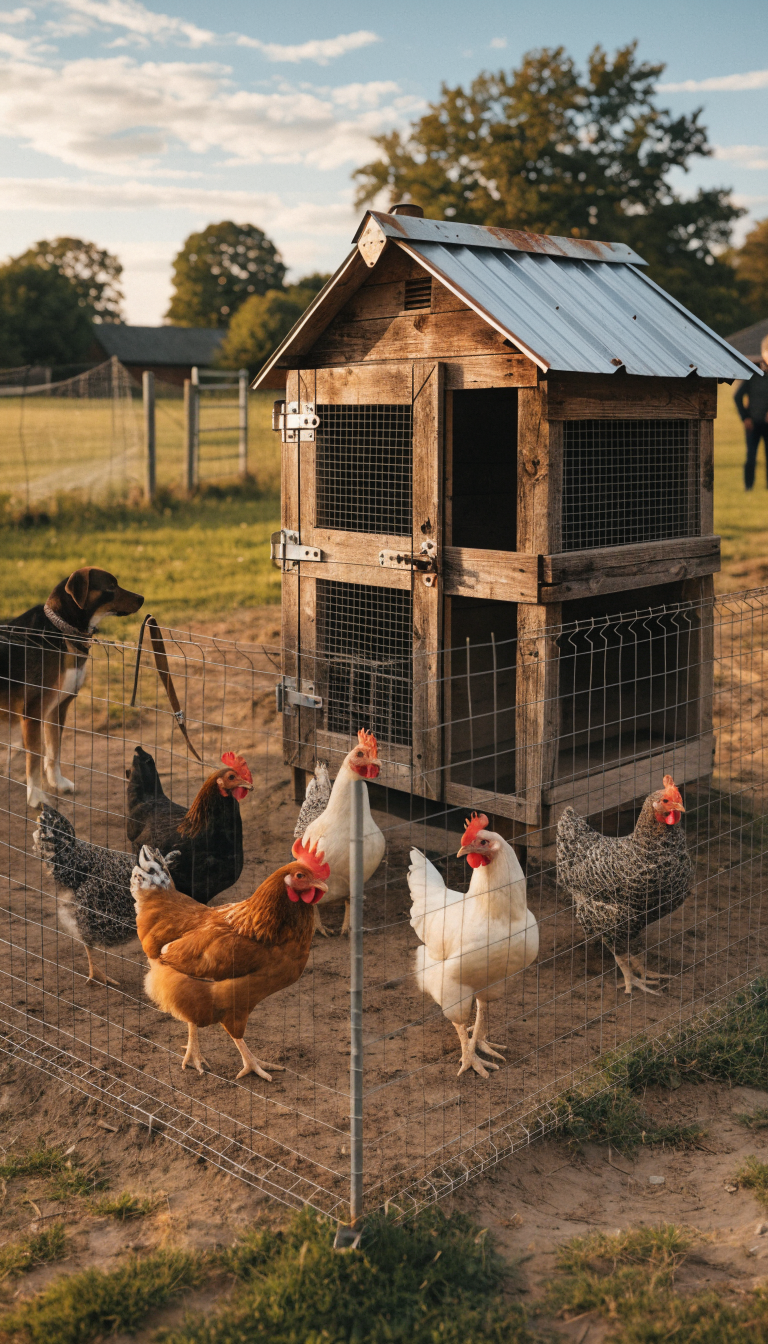
Neighbor dogs don’t hate your birds—they just love to chase. Still, one “play” session can mean disaster. You need firm boundaries and friendly but clear neighbor communication.
Practical Moves
- Solid 5–6 foot fencing with ground anchors to stop digging and ramming.
- Post clear signage near property lines and coop entrances.
- Supervise free-ranging or use portable electric netting for field time.
With solid fences and a quick chat with the humans, dogs stop being a problem. Everyone wins, including the dog’s social life.
8. Opossums: Scavenger Opportunists
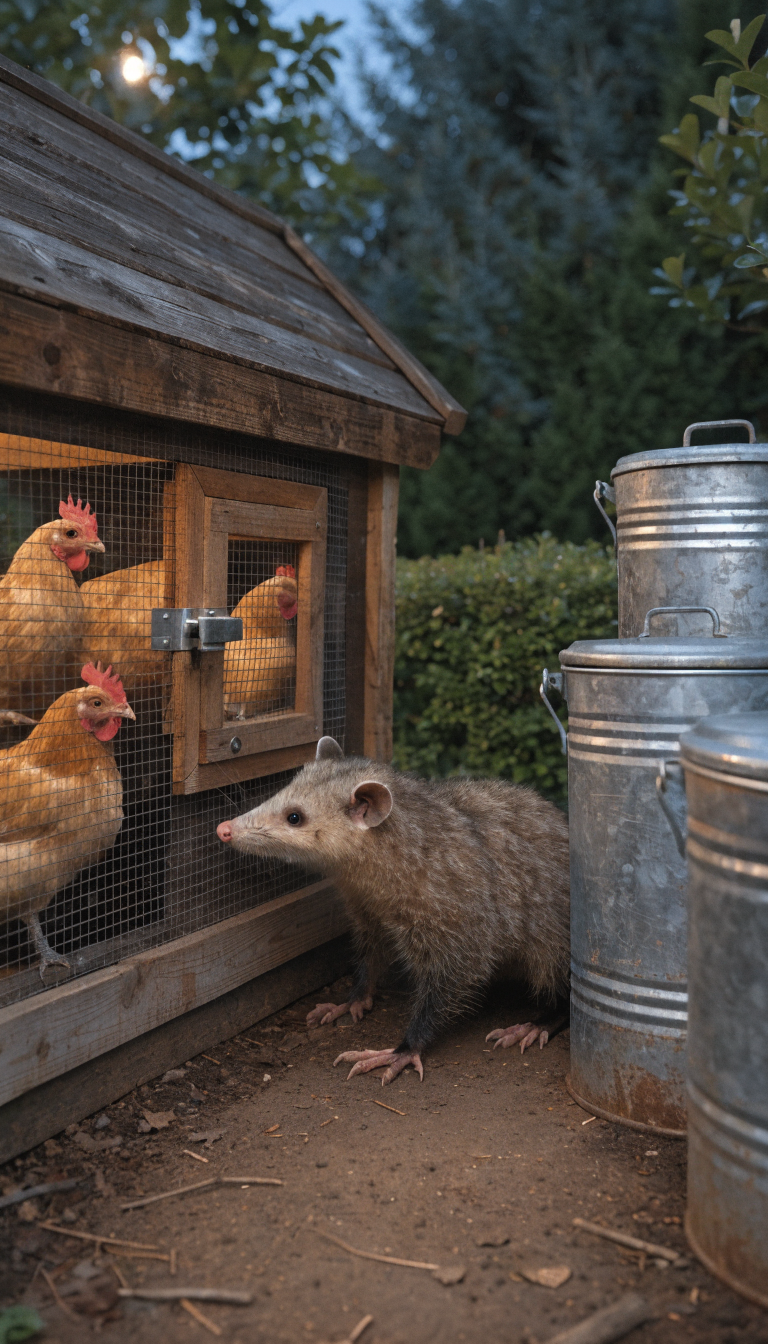
Opossums rarely smash their way in, but they love easy access to eggs, feed, and weak chicks. They’ll test loose doors and snack on whatever you forget. Nighttime discipline keeps them bored.
Tips
- Latch the pop door at dusk, every dusk—no “I’ll get it later.”
- Store feed in sealed metal cans; sweep up spills.
- Trim branches and remove leaning boards that create ramps.
Good housekeeping starves their interest. Keep things locked and tidy, and they wander off to easier dinners.
9. Bobcats: Athletic Climbers With Patience
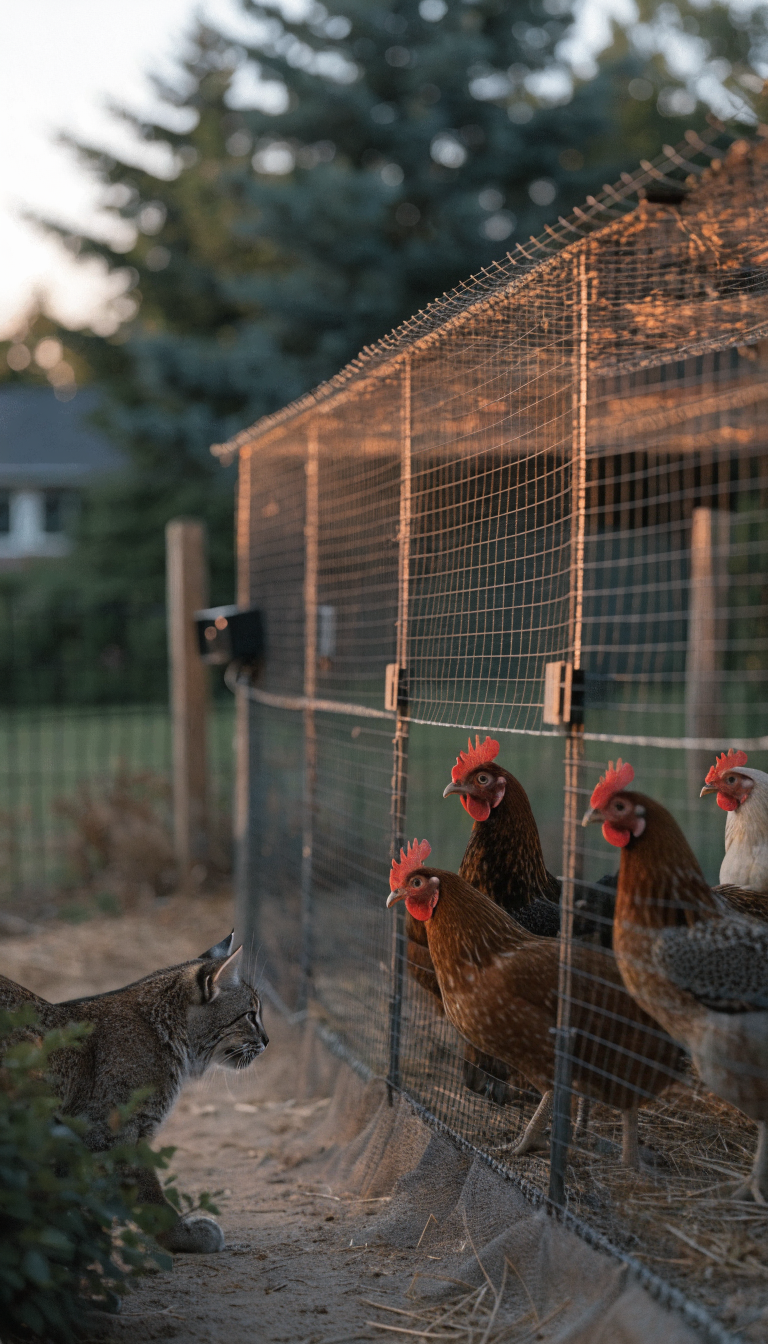
Bobcats stalk quietly and can clear high fences or climb like it’s nothing. They wait for the perfect opening, usually twilight. You counter with full enclosures and smart perimeters.
Defensive Moves
- Use fully roofed runs—rigid panels or heavy-duty netting with tight tension.
- Install game cameras to spot approach routes and adapt your defenses.
- Keep vegetation low around the run to remove ambush cover.
A roofed run flips the script on bobcats. They respect a fortress and keep moving.
10. Rats: The Underminers You Don’t See Coming
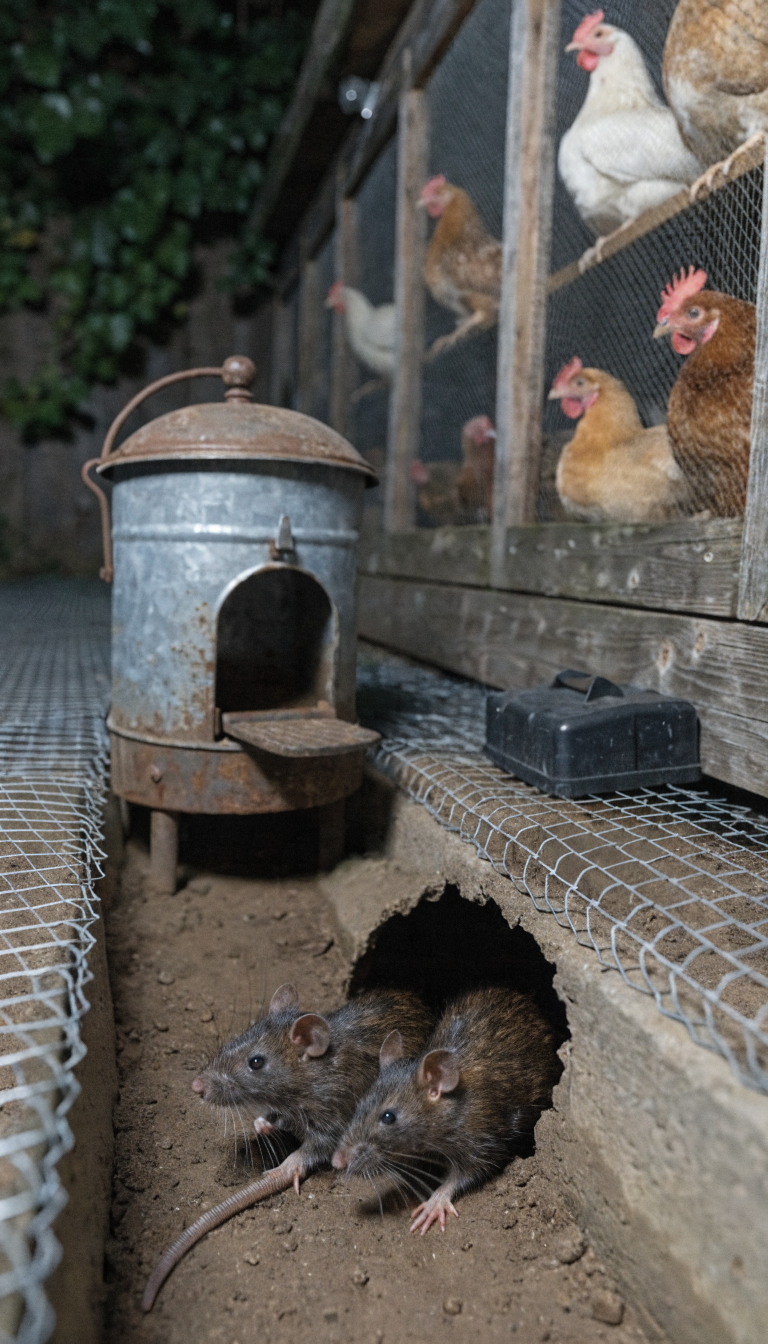
Rats rarely kill adult hens, but they raid feed, chew holes, and target chicks. They also attract bigger predators. Stop the buffet and you stop the problem.
Key Points
- Switch to treadle feeders and remove food overnight.
- Pour a 6–8 inch deep hardware cloth or concrete base under coop floors.
- Use snap traps in locked boxes outside the run; never poison near poultry or pets.
Control feed and shore up the floor, and rat pressure collapses. FYI: less rat traffic equals fewer snakes and fewer night raids overall.
Bonus: Your “Protect Your Lock” Checklist
- Upgrade every latch to a two-step mechanism: hasp + carabiner or keyed lock.
- Put door frames in square and add metal kick plates to stop chewing and prying.
- Use exterior-grade screws and metal washers on all mesh—no staples alone.
- Install an automatic pop door with a light sensor and manual override.
- Do a monthly “find the quarter” test: if a quarter passes through a gap, fix it.
You’ve got this. Shore up the mesh, outsmart the clever critters, and lock it down like a pro. Your birds will thrive, and you’ll sleep like a rock—no midnight squawking, just happy clucks in the morning. Trust me, small upgrades today save a whole lot of feathers tomorrow.
Share this content: