Rooster Temperament by Breed (Calm Vs Aggressive) + Handling Tips
Thinking about adding a rooster or trying to decode the one crowing at 5 a.m.? Rooster personalities vary wildly by breed, and that matters for your sanity—and your shins. Some boys play bodyguard like sweet golden retrievers; others act like feathered bouncers with tiny daggers for feet. Let’s break down which breeds tend calm, which lean spicy, and how to handle every personality without drama.
1. Gentle Giants: Calm, Family-Friendly Roosters
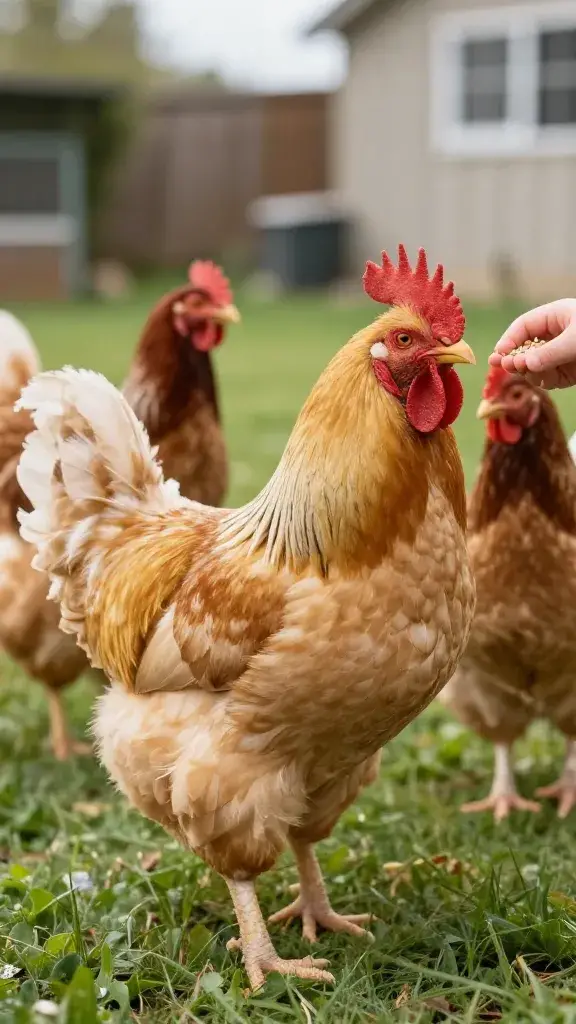
Want a rooster that vibes with kids, newbies, and peaceful backyard life? These breeds earned their rep for steady temperaments and easy handling. They still protect their girls, but they won’t treat you like an intruder every time you refill water.
Breeds That Tend To Be Chill
- Orpington (especially Buff): Big, fluffy, and mellow. Often more interested in snacks than dominance battles.
- Cochin: Feathery feet, big hearts. Slow-moving and usually gentle, even during breeding season.
- Brahma: Calm giants. Excellent winter birds with a laid-back “I’ll allow it” attitude.
- Faverolles: Sweet, quirky, and friendly with people. Often curious rather than confrontational.
- Silkie: Tiny and gentle, though not the best flock protectors. Great for small setups.
These roosters usually tolerate handling if you start young and keep interactions calm. They read your energy, so if you move smoothly and confidently, they relax.
Tips To Keep Them Sweet
- Handle gently but consistently from 6–12 weeks onward.
- Offer treats from a flat hand to build trust without begging behaviors.
- Maintain routine: same feeding times, same entry routes, same signals.
Best for families, new chicken keepers, and anyone prioritizing low-drama flock vibes. If you want a rooster that feels like a calm hall monitor, start here.
2. Middle Of The Road: Watchful But Manageable Protectors
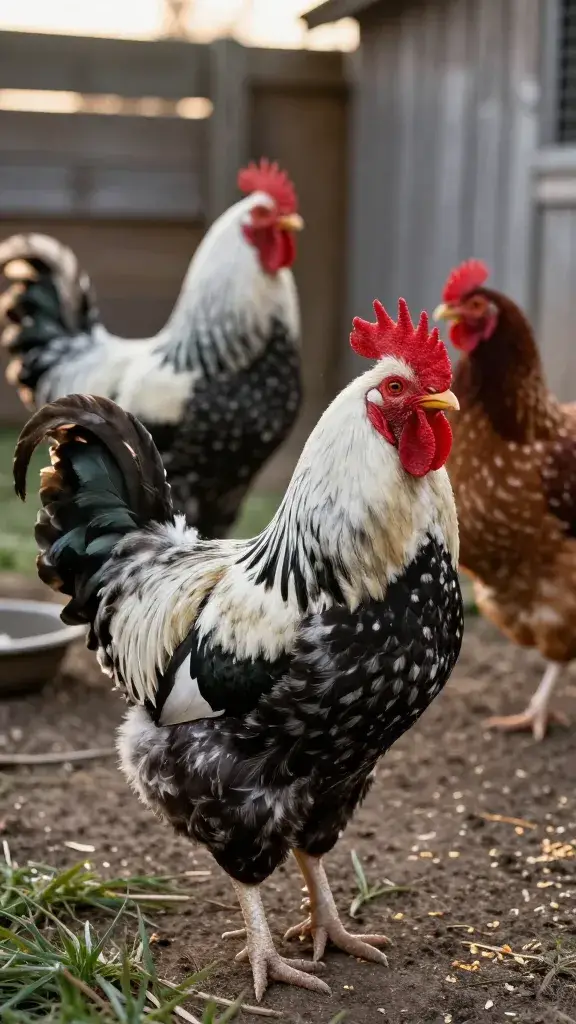
These roosters sit in the “firm but fair” category. They’ll watch you like a mall cop but rarely escalate if you respect boundaries. Great balance between protection and people-friendliness—if you provide good socialization.
Breeds With Balanced Temperament
- Plymouth Rock (Barred Rock): Dependable, alert, and usually polite if handled young.
- Wyandotte: Confident and sometimes aloof, but not typically mean without provocation.
- Speckled Sussex: Curious and chatty. A little bold, but often friendly with humans.
- Australorp: Calm layers’ companion. Protective, yet rarely reckless.
- Easter Egger (mixed heritage): Personalities vary, but many are chill and quirky.
Expect alertness and occasional posturing, especially in spring. With daily contact and clear boundaries, they become solid flock guardians without the spice.
How To Keep The Peace
- Never run from a rooster. Walk past with purpose and ignore the posturing.
- Use a lightweight herding stick or small feed bucket to guide, not whack.
- Avoid cuddling hens in front of him—jealousy is real, and IMO it sparks 50% of scuffles.
Choose these if you want reliable protection with minimal drama and you’re comfortable setting gentle boundaries.
3. Spicy Boys: Breeds Known For Aggression (Handle With Respect)
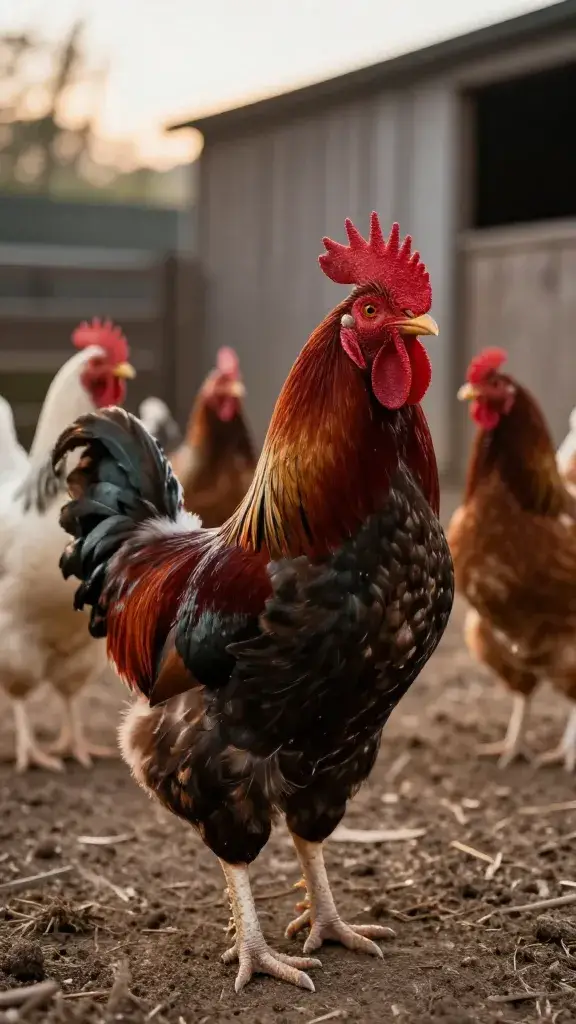
Some breeds come wired like security alarms. They guard hard, they escalate fast, and they need confident handlers. Not bad birds—just very serious about their job.
Breeds That Can Run Hot
- Old English Game/Gamefowl: Athletic, territorial, and intensely protective of hens.
- Rhode Island Red: Productive and bold; hatchery lines can skew feisty.
- Leghorn: High-energy, flighty, and quick to challenge if provoked.
- Malay/Asil (Aseel): Strong-willed, upright posture, and serious presence. Advanced keepers only.
- Sumatra: Stunning birds with a wary, sometimes confrontational attitude.
Remember: individual roosters vary. A sweet Leghorn exists, just like a mean Cochin does. Still, breed tendencies give you a solid starting point.
De-Escalation Tactics
- Read signals: lowered wings, side-eye, circling, and tidbitting near you = testing boundaries.
- Hold space: stand tall, face him sideways, and slowly step into his bubble until he yields ground.
- Gloves + boots: not overkill if you have spurs in play. Safety first, pride second.
- Limit triggers: don’t sprint, crouch low, or wave tools near hens.
Good fit for rural setups where predator risk runs high and you want a serious guardian. Just commit to training and clear expectations from day one.
When Aggression Crosses The Line
- Repeated surprise attacks from behind
- Targeting children or vulnerable people
- Escalating despite consistent training
Options include rehoming, separate housing, or in some cases culling. Hard choices, but safety matters more than pride, seriously.
4. Nature Vs. Nurture: Why Temperament Varies (And How To Shape It)
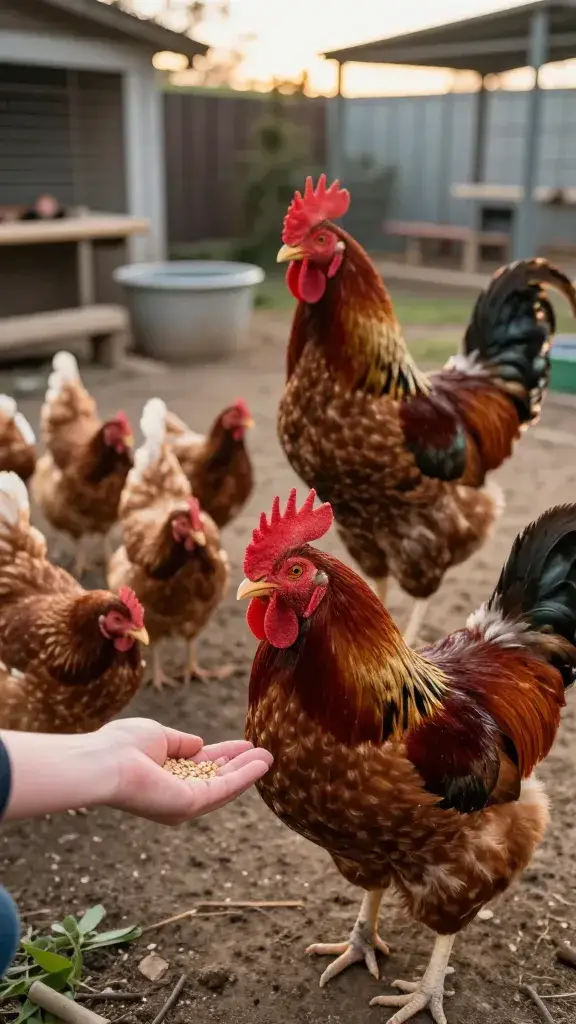
Why do two roosters from the same hatch act totally different? Genetics start the story, but handling, environment, and hormones write the plot. You can influence outcomes more than you think.
Key Factors
- Genetics: Some lines select for calmness; others for vigor and drive. Buy from reputable breeders who cull for temperament.
- Imprinting: Gentle, frequent handling during weeks 6–14 pays off. Sporadic handling teaches unpredictability.
- Flock ratio: Aim for 1 rooster per 8–12 hens. Too few hens = overbreeding and stress.
- Space: Provide room to retreat. Crowded runs spark dominance eruptions.
- Season: Spring hormones crank up. Expect extra vigilance and give him some grace (and structure).
Socialization That Works
- Hand-feed greens and grain mixes calmly; end sessions before he gets pushy.
- Walk through the run daily with slow, purposeful steps. You’re the big calm buffalo.
- Pick him up occasionally: one hand under the breast, other controlling legs, hold firmly but gently.
- Practice stationing: teach him to hop on a perch or stump when you enter. Reward with treats.
Invest a little time early and you’ll save your ankles later. FYI, consistency beats intensity—five minutes daily trumps an hour on weekends.
5. Handling, Training, And Spur Management: Real-World Tips
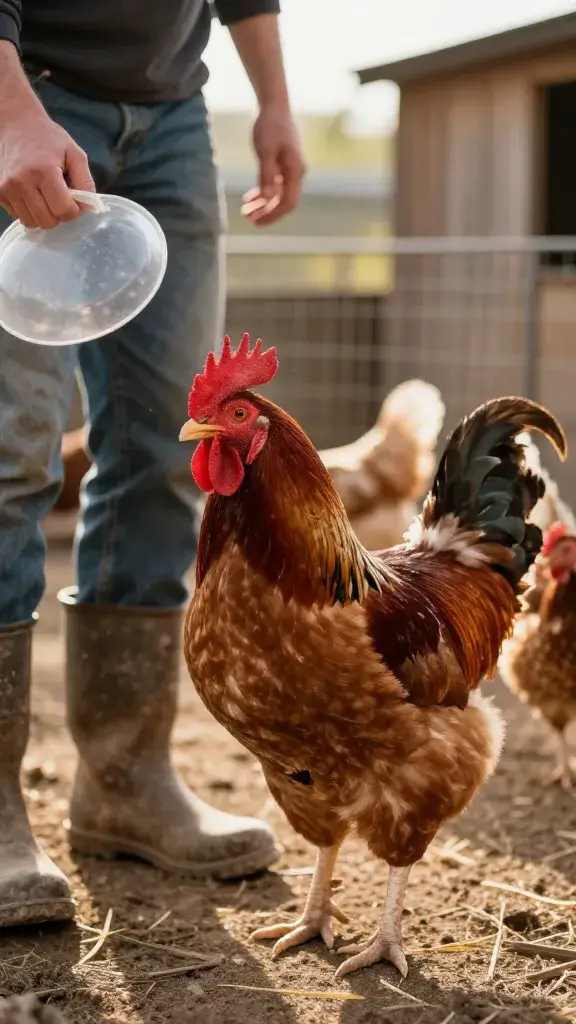
Even the nicest rooster tests boundaries now and then. With a few simple routines, you’ll prevent most conflicts and handle the rest like a pro. No drama, no panic—just calm leadership.
Daily Handling Playbook
- Enter with confidence: announce yourself, step in smoothly, don’t tiptoe.
- Claim space: if he crowds you, take one slow step toward him until he yields. Reward calm.
- No chasing, no kicking: that turns training into a grudge match. You will lose the long game.
- Use tools: a small tote lid or broom acts as a visual barrier if he rushes. Hold it low, between you and him.
- Routine matters: feed, check waterers, collect eggs, then leave. Predictable = peaceful.
Breaking Bad Habits
- Flying at you? Block with the lid, step forward, hold until he backs off, then relax. End on calm.
- Stalking or circling? Face him, step into his arc, make him yield space. Don’t retreat.
- Jealousy spikes when you handle hens. Separate him for a minute with a fence panel, do chores, then reunite.
Spur Safety And Grooming
- Blunt the tips: use a Dremel or file to round sharp points. Quick, safe, and effective.
- Sheath method: warming and twisting the outer sheath off is common, but can bleed. Have styptic powder ready.
- Boots + jeans: practical armor. Think farm-chic, not runway.
When To Separate Or Rehome
- He injures hens or people despite training.
- Multiple roosters brawl constantly, especially in tight quarters.
- Kids or guests can’t safely enter the run.
Separation pens, bachelor flocks, or rehoming solve persistent conflict. You’ll protect your flock and your peace of mind—trust me.
Ready to pick your feathered gentleman? Choose a breed that matches your vibe, invest in early handling, and set clear boundaries. With the right rooster and a little know-how, you’ll get a loyal guardian, a calmer flock, and way fewer sprinting-from-the-run moments. Go meet some roos and let the best bird win your heart (not your shins).
Share this content: