Quick Wins 5 Chicken Coop Upgrades That’Ll Make Your Life Easier
Your coop can work smarter, not harder. These upgrades cut chore time, boost hygiene, and keep hens healthy without turning your yard into a construction site. Ready to spend less time scrubbing and more time collecting beautiful eggs? Let’s dial up the convenience, fast.
1. Install Roll-Out Nesting Boxes That Keep Eggs Clean
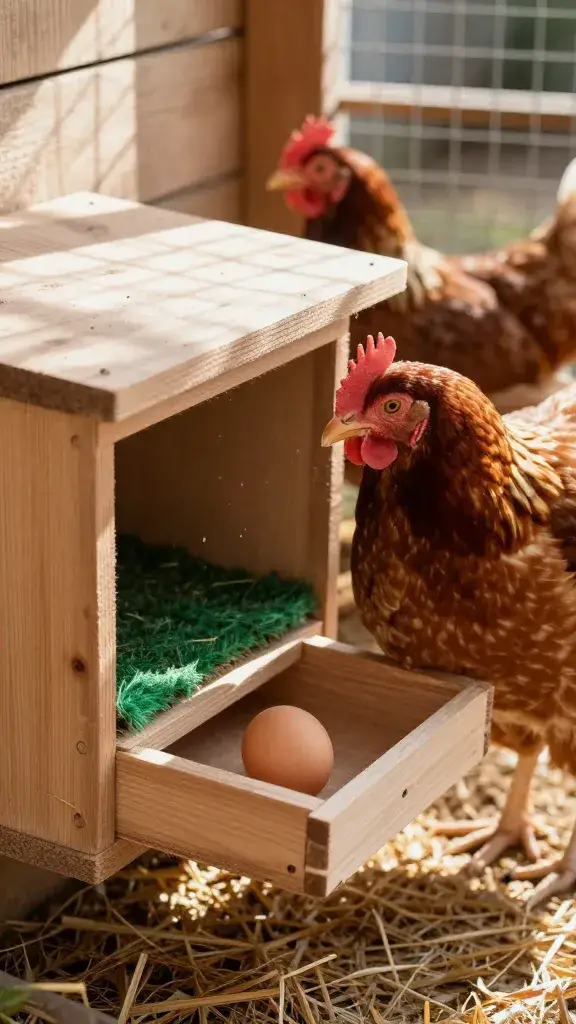
Cracked, dirty eggs? Hard pass. Roll-out nesting boxes gently guide eggs away from busy feet and curious beaks the moment they’re laid, so you get clean, unbroken treasures every time.
This setup also reduces egg eating, which can become a sneaky habit if a hen gets a taste. You’ll collect faster, clean less, and feel like a genius daily.
Why It Works
- Angled floor lets the egg roll forward into a covered tray.
- Soft liner (like astro turf or nesting pads) cushions the egg during the roll.
- Front-access tray makes collection quick, even in bad weather.
Tips
- Position boxes about 18–24 inches off the ground to prevent scratching.
- Keep the angle subtle (around 5–7 degrees) so eggs roll slowly, not like a bowling lane.
- Block access at night to stop roosting inside the boxes—less mess, fewer broken eggs.
Use roll-outs if you value clean eggs, zero peck marks, and faster collection. FYI, they also help when you go a few hours between checks.
2. Add Droppings Boards With Easy-Scrape Liners Under Roosts
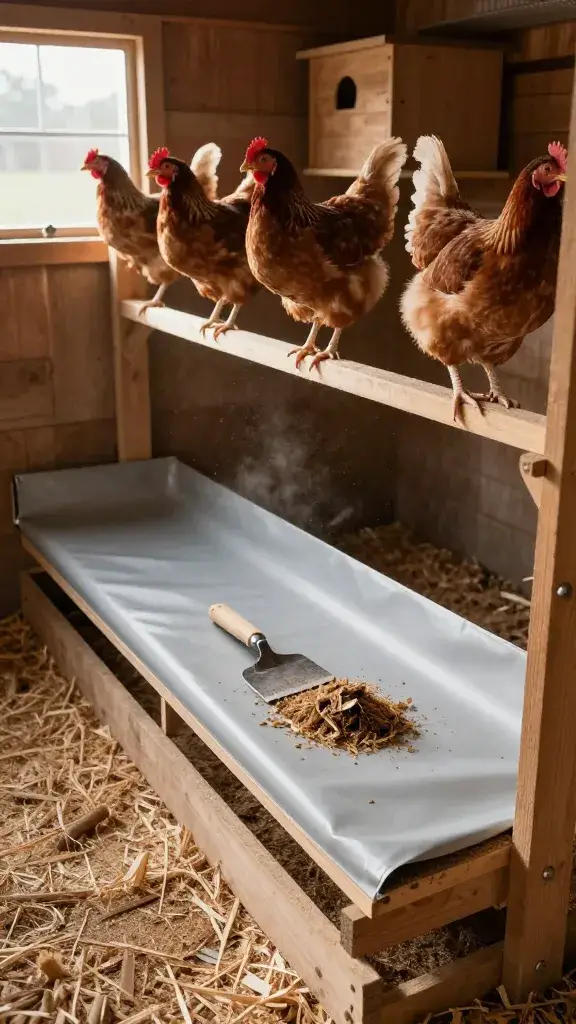
Let’s be honest: the poop under the roost bars is the villain of coop cleaning. A droppings board catches the mess overnight so you can scrape it in seconds and move on with your day.
Pair that board with a slick liner and you’ll cut deep cleans by half. Your nose and your weekend schedule will thank you.
Materials That Make Life Easier
- Board: 1/2-inch plywood or a shallow tray the width of your roosts.
- Liner: Vinyl flooring scrap, corrugated plastic, or a plastic barn mat.
- Scraper: Putty knife, drywall taping knife, or a small manure rake.
Setup Notes
- Mount the roosts over the board with 8–12 inches of clearance so you can scrape easily.
- Consider Sweet PDZ or zeolite granules on the board to absorb moisture and reduce ammonia.
- Angle the board slightly or add a lip so nothing falls behind it—because, of course, it will.
This upgrade shines if you want fresher air, fewer flies, and lightning-fast morning cleanup. Seriously, it turns a dreaded chore into a 60-second task.
3. Create a Deep-Litter System That Practically Cleans Itself
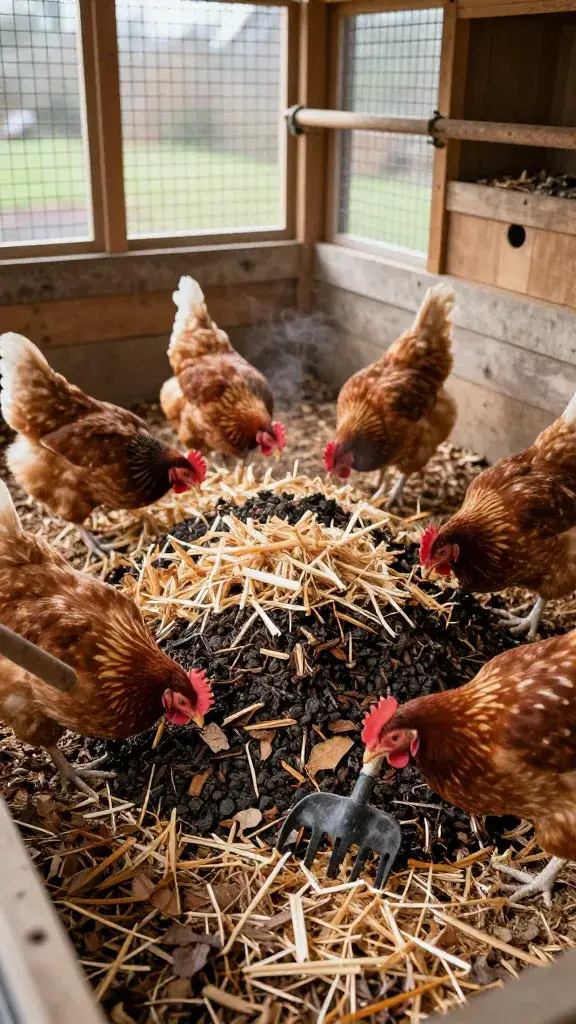
If you hate constant coop clean-outs, the deep-litter method was made for you. Instead of stripping bedding every week, you build layers and let good microbes break things down.
It’s warm in winter, dry in summer, and your compost pile gets an upgrade too. Less labor, more soil gold—win-win.
How to Do It Right
- Start with a base of coarse carbon: wood shavings, chopped straw, dried leaves.
- Add thin layers of fresh bedding whenever things look damp or you notice odor.
- Turn the top few inches with a rake weekly to aerate and control smell.
- Maintain dryness: if it’s wet, add more carbon; if it’s dusty, add a touch of moisture.
Pro Moves
- Use pine shavings as the main material, not cedar (too aromatic for hens).
- Keep good ventilation so ammonia never builds up—your lungs and the flock’s will appreciate it.
- Harvest compost from the bottom every few months, especially before spring garden season.
Choose deep litter if you want low-maintenance bedding, better insulation, and free compost. IMO, it’s the closest thing to a set-it-and-forget-it coop floor.
4. Upgrade Ventilation With Predator-Proof Vents and a Solar Fan
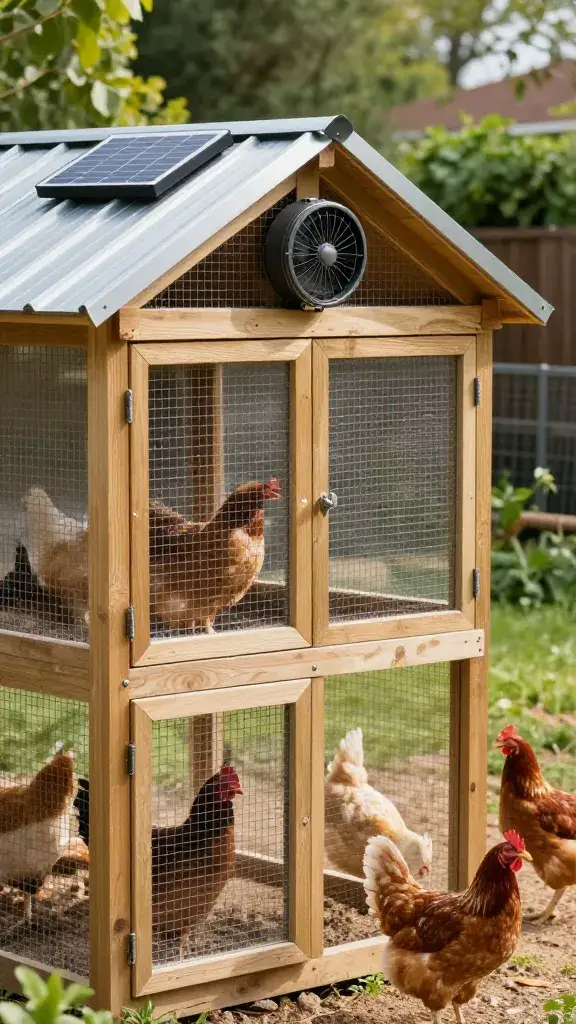
Fresh air changes everything: fewer respiratory issues, drier bedding, and less stink. But you need smart ventilation that doesn’t invite raccoons to an all-you-can-eat buffet.
Enter predator-proof vents paired with a solar-powered fan. You’ll move air without running a cord, and your coop won’t feel like a sauna in July.
Vent Strategy
- High vents near the roof let moist, warm air escape.
- Low intake openings bring in fresh air without blowing directly on roosting hens.
- Hardware cloth (1/2-inch) over every opening keeps critters out—no exceptions.
Solar Fan Tips
- Mount the fan on the leeward side to pull air through instead of fighting the wind.
- A small exhaust-style solar fan works for most backyard coops; larger flocks may need two.
- Add a simple weather hood or baffle over vents to block sideways rain and snow.
Use this upgrade if you want dry litter, healthier birds, and less odor. It’s a quiet hero that pays off year-round, especially in humid climates.
5. Set Up a Gravity-Fed Waterer and Treadle Feeder Station
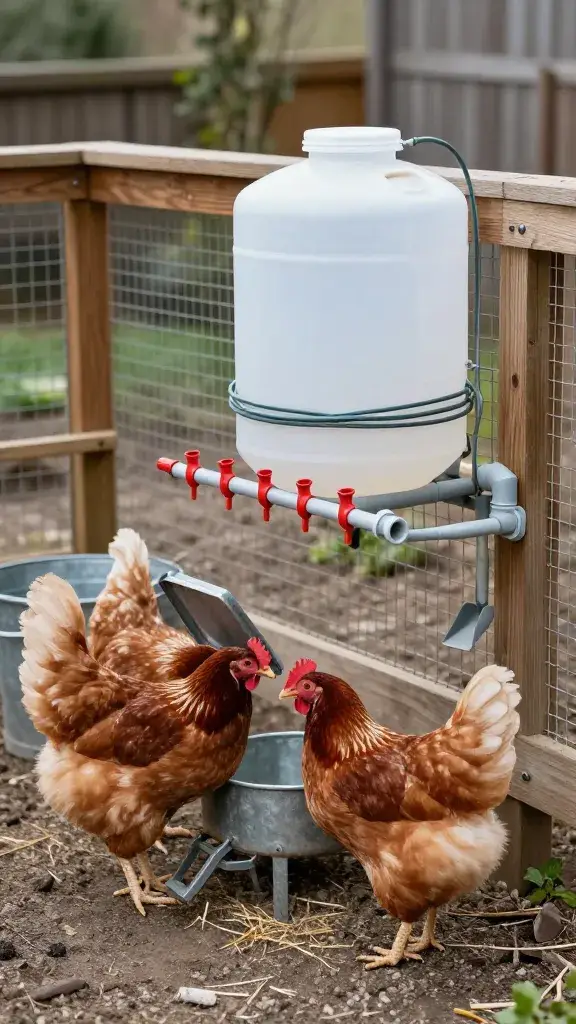
Feed and water chores can feel endless—unless you automate them a bit. A gravity-fed water system and a treadle feeder keep supplies clean, constant, and protected from freeloaders.
Translation: fewer refills, fewer spills, fewer rodents. Your future self will high-five you daily.
Watering That Doesn’t Spill Everywhere
- Use a sealed reservoir (5–10 gallon food-grade container) with horizontal poultry nipples to prevent drips.
- Mount at beak height for your smallest hen; raise as they grow.
- Wrap the reservoir with insulation in winter and add a safe stock-tank de-icer where needed.
Feed Only Your Chickens (Not Every Squirrel Within 3 Miles)
- Treadle feeders open under a chicken’s weight but stay shut for pests.
- Adjust the spring tension so bantams can open it without inviting rats to brunch.
- Keep the station dry and slightly elevated to deter moisture and mold.
Station Layout
- Place both on a hard, level surface like pavers to stop burrowing pests.
- Cover with a small roof or awning to keep rain off.
- Train the flock by wedging the treadle open for 2–3 days, then slowly lower it.
Pick this setup if you want low-maintenance feeding, cleaner water, and fewer rodents. Trust me, it saves time every single week.
Ready to upgrade your coop without turning it into a construction zone? Start with one tweak and watch your chore list shrink. Your hens will thrive, your eggs will sparkle, and you’ll finally enjoy that morning coffee instead of sprinting out with a scrub brush.
Share this content: