How to Start a Container Garden in a Small Space and Thrive
Short on square footage but big on plant dreams? You can absolutely grow a lush, productive garden on a balcony, stoop, or even a sunny window ledge. These tips pack serious punch, save space, and keep things low maintenance. Ready to harvest tomatoes from a fire escape and basil from a windowsill? Let’s dig in—literally.
1. Map Your Microclimate Like a Garden Sleuth
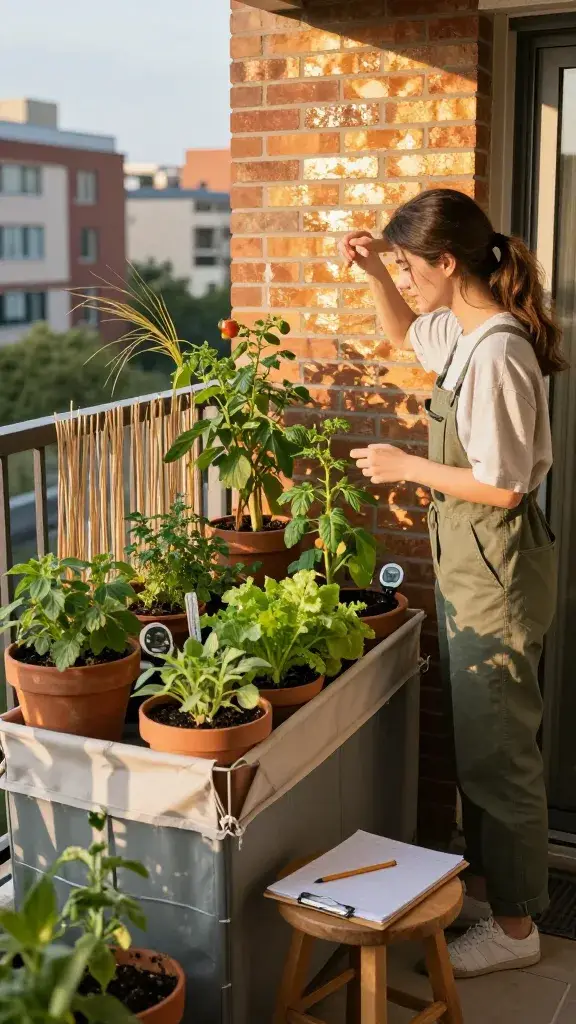
You don’t need acres—you need intel. Understanding your tiny plot’s sun, wind, and heat will make you look like a plant whisperer. Once you map those conditions, you’ll pick containers and plants that thrive without drama.
Quick Recon Checklist
- Sun Hours: Track direct sun for one day—morning, midday, evening. Aim for 6–8 hours for fruiting crops; 3–5 hours suits leafy greens and herbs.
- Wind Zones: Balconies funnel gusts. Add a screen or cluster pots to shield delicate plants.
- Heat Islands: Brick and metal bake. Great for peppers and rosemary, not so great for lettuce at noon.
- Weight Limits: Balconies have load ratings. Lighter containers and soil mixes keep you safe.
Use this data to position sun-lovers front and center and tuck shade-tolerant friends under railings. FYI: This 20-minute audit saves months of frustration.
When To Use This
Do this first if you’ve ever “mysteriously” killed a basil plant. The right spot turns okay growth into “whoa, is that a jungle?” results.
2. Choose Containers That Work (And Look Good Doing It)
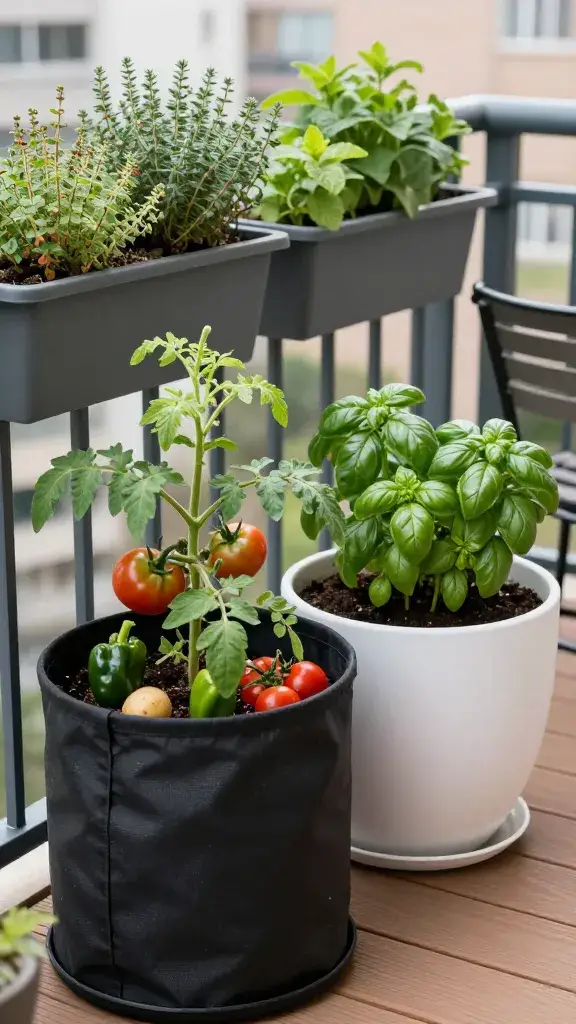
Containers are your plant’s house—pick the right size, material, and drainage and everything gets easier. Bonus: the right pot also makes your space look curated, not cluttered.
Container Types That Punch Above Their Weight
- Fabric Grow Bags: Lightweight, breathable, and affordable. Great for tomatoes, potatoes, and peppers.
- Self-Watering Planters: Built-in reservoirs mean fewer watering sessions and steadier moisture. Perfect for busy folks.
- Rail Planters: Instant space gain. Use them for herbs, strawberries, and flowers for pollinators.
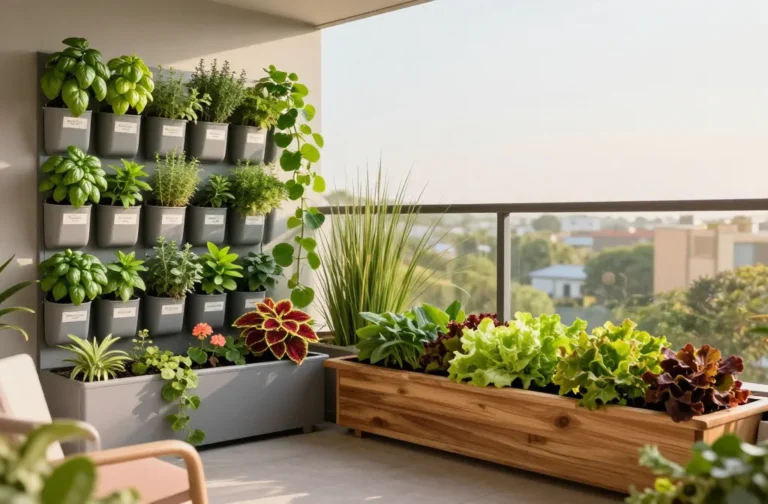
- Vertical Pockets & Towers: Stack herbs, lettuce, and strawberries upward. Hello, living wall.
- Window Boxes: Basil, chives, and dwarf nasturtiums thrive here—and they smell incredible when you crack the window.
Size And Drainage, The Non-Negotiables
- Tomatoes/Peppers/Eggplant: 5–10 gallon containers, minimum.
- Leafy Greens/Herbs: 6–8 inches deep. Mix several in one box.
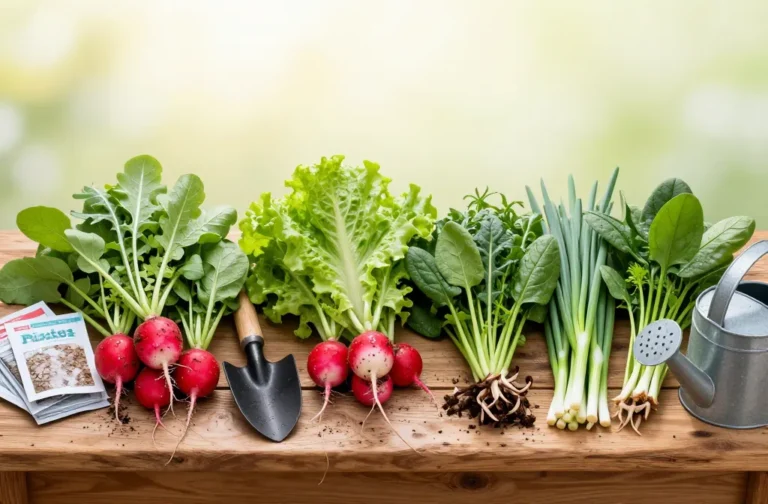
- Root Crops (Carrots/Radishes): 10–12 inches deep with a fluffy mix.
- Drainage: Holes are life. Add a saucer to protect floors but never waterlog.
Pick one visual theme—terracotta tones, matte black, or woven textures—to keep things cohesive and chill, not chaotic.
Best Use Case
When you want a beautiful, low-stress setup that won’t crack in winter or weigh a ton. Your future self will applaud this choice, seriously.
3. Build A Soil Mix Plants Actually Want
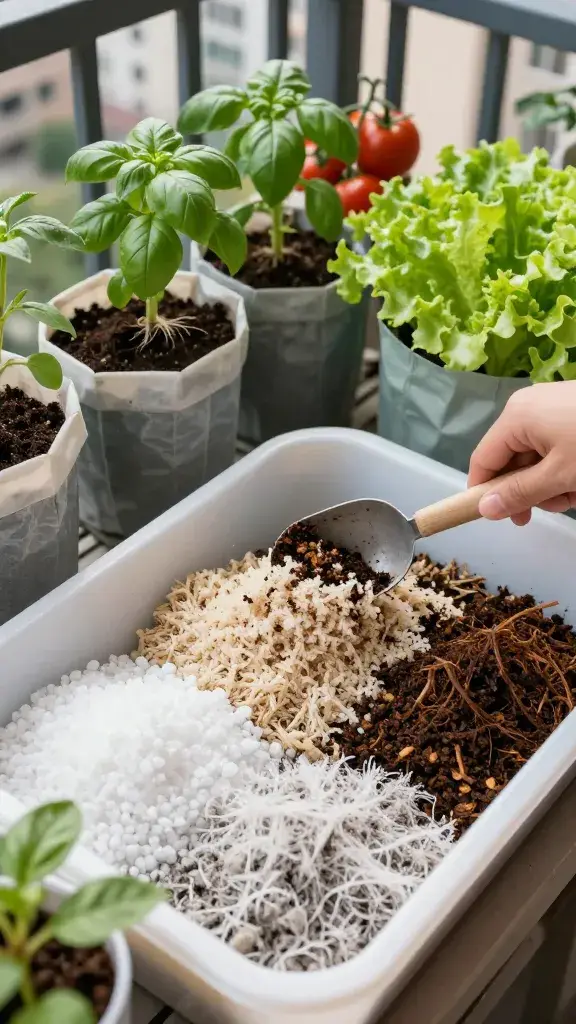
Garden soil compacts in containers like a bad mood. Your plants need a light, fluffy, nutrient-rich party in a pot. The right mix means bigger harvests and fewer headaches.
Simple, Proven Potting Mix
- Base: High-quality potting mix (not topsoil), 60–70%.
- Structure: Perlite or pumice, 15–20% for drainage and air.
- Moisture Hold: Coconut coir or peat moss, 10–15% to keep water steady.
- Nutrition: Compost, worm castings, or a slow-release organic fertilizer mixed in at planting.
Fertilizer That Fits Your Style
- Set-And-Forget: Slow-release granules every 2–3 months.
- Control Freak (in a good way): Liquid feed every 1–2 weeks. Tomatoes and cucumbers go wild with this.
Want pro-level growth? Top-dress with compost mid-season and mulch the surface with shredded leaves or straw to lock in moisture.
Why It Rocks
This mix breathes, drains, and feeds—so roots stay happy. Happy roots equal lush leaves and actual produce, IMO the best kind of win.
4. Grow The Right Plants For Tiny Spaces
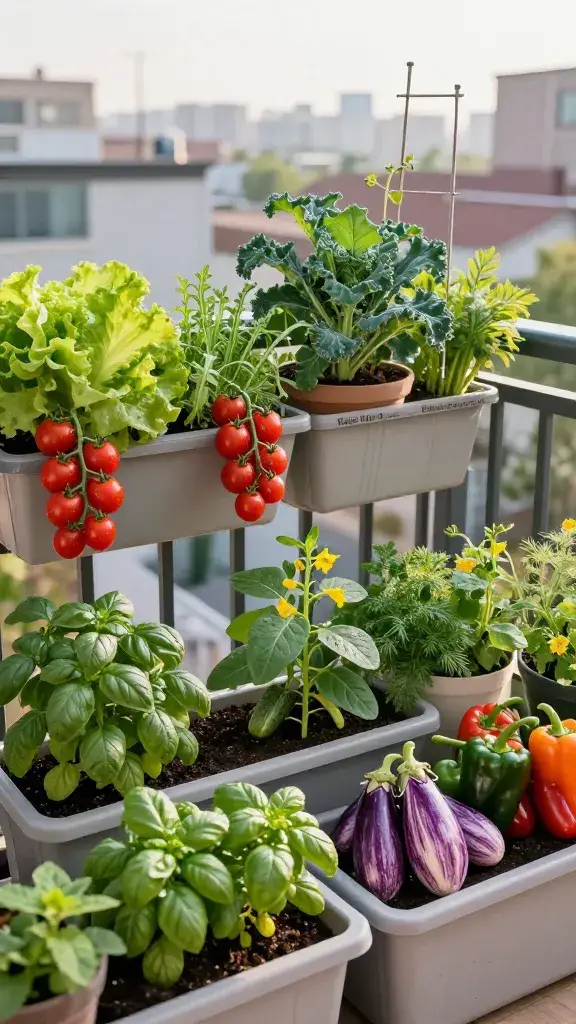
Small space doesn’t mean small harvests. Choose compact or dwarf varieties and you’ll pull impressive yields out of a few square feet. Think abundance without the sprawl.
Fail-Proof Plant Picks
- Herbs: Basil, chives, thyme, mint (in its own pot), parsley, dill, cilantro.
- Leafy Greens: Cut-and-come-again lettuce mixes, arugula, spinach, kale (dwarf varieties).
- Fruit & Veg: Cherry tomatoes (‘Tumbling Tom’, ‘Tiny Tim’), bush cucumbers (‘Patio Snacker’), patio peppers, compact eggplant (‘Fairy Tale’), bush beans.
- Snacks & Pretty Things: Strawberries (everbearing), edible flowers (nasturtium, viola, calendula) to attract pollinators.
Smart Pairings (Companions That Get Along)
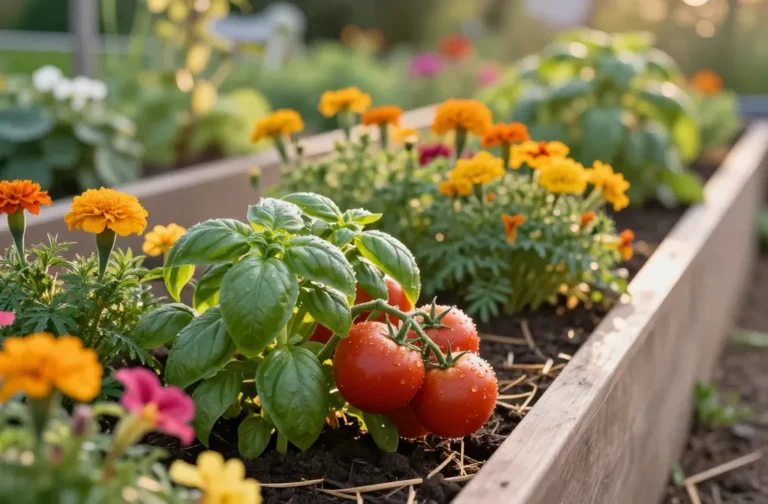
- Tomato + Basil + Marigold: Flavor, pollinators, and fewer pests.
- Lettuce Under Peppers: Peppers give light shade; lettuce stays cool.
- Strawberries + Thyme: Cascading fruit with a fragrant understory.
Planting Tips
- One Big Thing Per Pot: Tomatoes, peppers, and eggplants want their own throne.
- Succession Planting: Sow a small batch of greens every 2–3 weeks for steady salads.
- Staking/Support: Add cages or trellises at planting, not after the plant flops.
These choices give you fast wins and steady harvests—perfect for beginners or impatient gardeners (no judgment).
Best For
Anyone who wants edible results fast. You’ll snack right off the plant—zero food miles, maximum smugness.
5. Water, Feed, And Tidy: Your 10-Minute Garden Routine
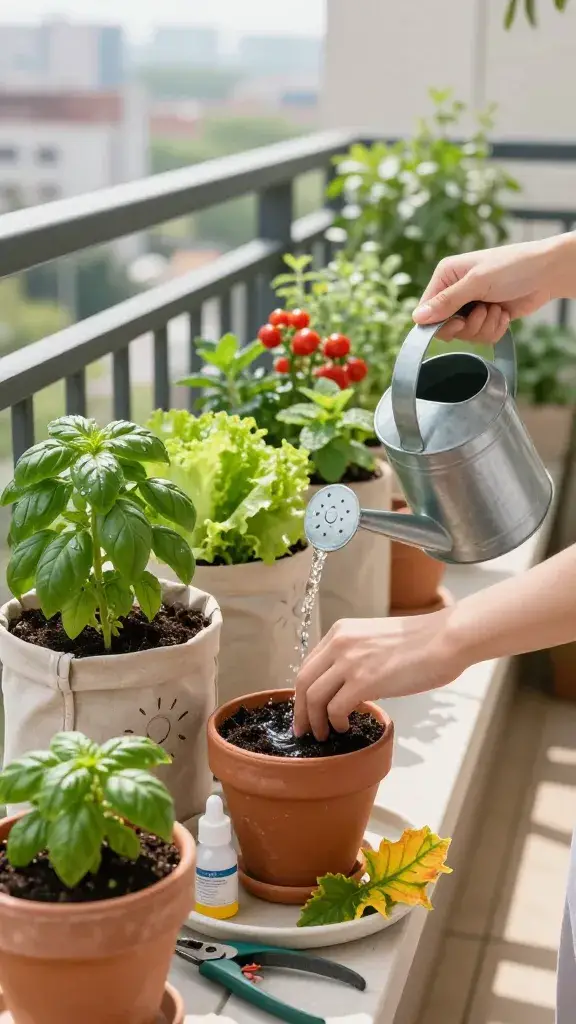
Consistency beats heroic weekend marathons. A tiny daily check-in keeps plants thriving and problems small. Think of it like skincare for your garden: cleanse, moisturize, glow.
The Easy Daily/Weekly Flow
- Daily: Stick a finger into the soil knuckle-deep. If dry, water deeply until it drains out. Morning watering beats evening to reduce pests.
- Twice Weekly: Rotate pots a quarter turn for even sun. Pinch basil tops, harvest greens often, and remove yellow leaves.
- Weekly: Feed with diluted liquid fertilizer (unless using slow-release). Check for aphids or mites—blast them off with water or use insecticidal soap.
- Monthly: Refresh mulch, top-dress with compost, and retie vines.
Pro Moves For Minimal Effort
- Self-Watering Upgrade: Add reservoirs or saucer wicks to cut watering frequency.
- Hydration Helpers: Mix water-retaining crystals or extra coir for hot balconies.
- Gutter Guards For Cleanliness: Use saucers and a boot tray to corral drips and soil. Your landlord will adore you.
- Pruning Rule: Remove crossing or crowded stems to boost airflow and reduce disease.
This rhythm prevents stress, keeps growth steady, and turns your space into a mini produce aisle. Trust me, it’s way easier than you think.
Ready to turn your compact corner into a thriving, delicious oasis? Start small, stay curious, and let your tiny jungle teach you what it likes. Before long, you’ll be handing neighbors cherry tomatoes like a produce fairy—seriously, it happens fast.
Share this content: