Genius Diy Duck Coop with Pool Ideas for Backyard Flocks
Your ducks deserve more than a glorified shed and a kiddie pool that turns swampy by Wednesday. These DIY duck coop with pool ideas keep your flock happy, your yard cute, and your chores easier. We’re talking smart drainage, predator-proofing that doesn’t look like Fort Knox, and pool setups that won’t destroy your grass. Ready to give your quackers the glow-up they deserve?
1. The Splash-Savvy Starter: Coop + Kiddie Pool, Upgraded
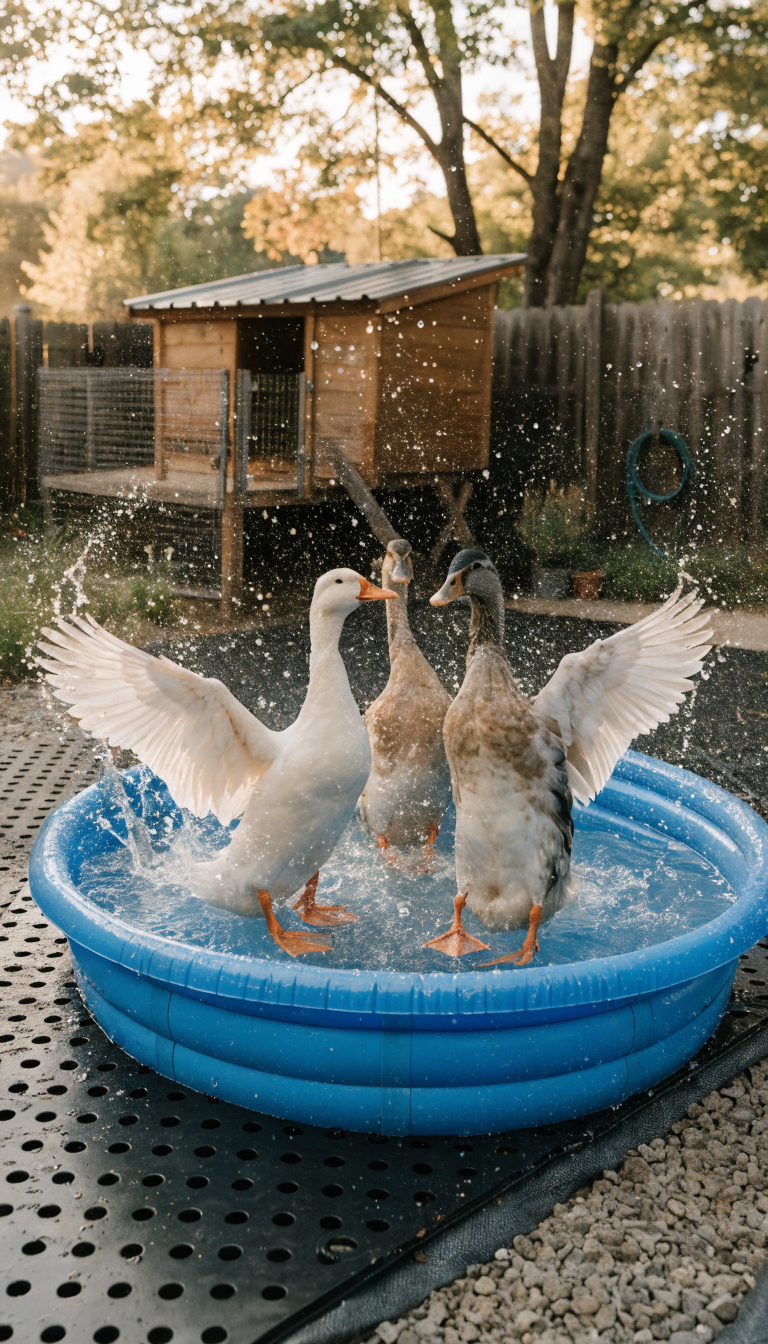
Let’s start simple and make it smart. A basic coop with a fenced run and a kiddie pool works great if you add drainage and keep mud under control. You’ll spend less time bailing swamp water and more time enjoying those happy duck wiggles.
Key Upgrades That Change Everything
- Gravel trench + drain mat: Dig a shallow trench under and around the pool, line it with landscape fabric, fill with 3/4″ gravel, and top with a heavy-duty rubber stall mat with holes. Water drains fast, mud stays away.
- Quick dump system: Set the pool on two 2x4s with a slight tilt. Add a bulkhead fitting and hose to route dirty water to a garden bed. Free fertilizer, FYI.
- Shade + splash shield: Hang a shade sail and mount a corrugated plastic splash panel along the fence behind the pool to stop overspray.
Materials
- Hard plastic kiddie pool (avoid inflatables)
- Landscape fabric, gravel, rubber stall mat
- Bulkhead fitting, short hose, hose clamp
- Shade sail, zip ties, two 2x4s
This setup shines for small flocks (2–4 ducks) and renters who need a moveable solution. It’s cheap, fast, and way less messy than “pool on grass” chaos.
2. The Walk-In Duckhaus: Dry Coop, Easy Clean, Zero Drama
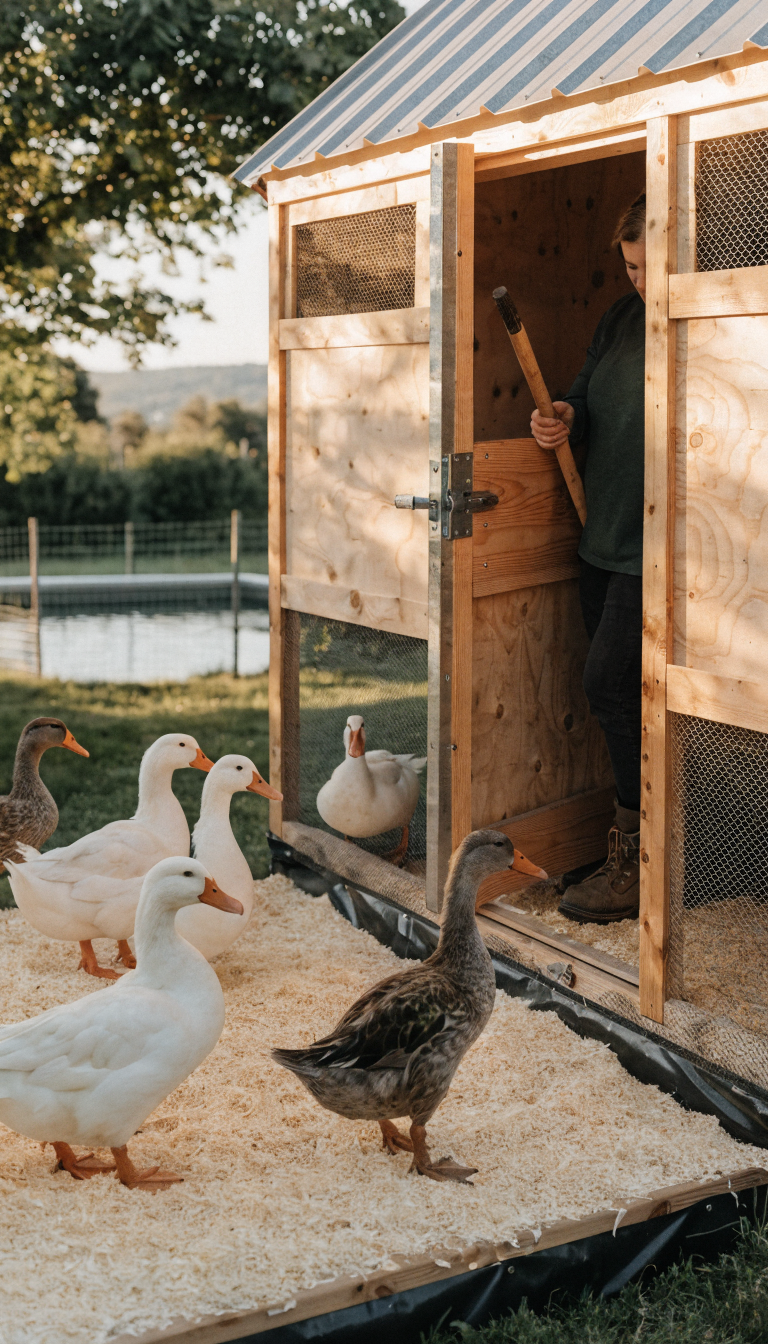
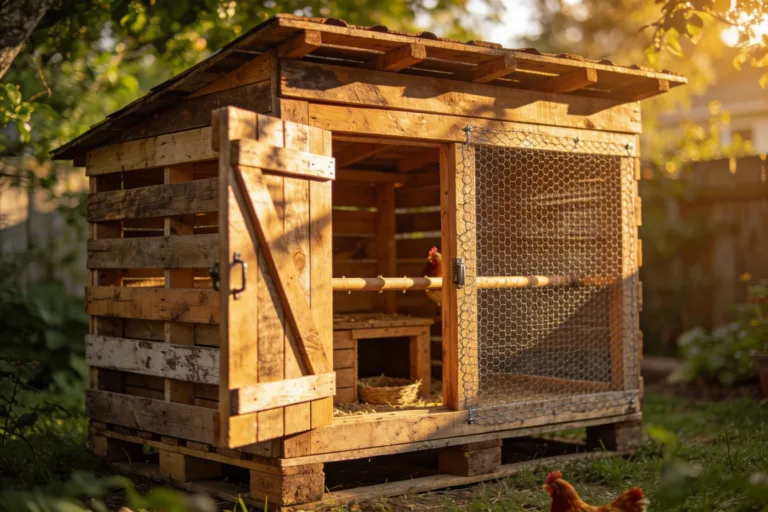
Build a roomy, walk-in coop and your future self will high-five you every morning. You’ll ventilate like a pro, clean in minutes, and keep everything predator-safe. Ducks don’t roost like chickens, so think floor-level comfort and open space.
Design Must-Haves
- Raised floor with deep litter: 6–8 inches of pine shavings on a raised plywood floor with a vinyl sheet topper. Dry feet, happy ducks, less smell.
- Serious ventilation: Hardware-cloth-covered vents high on at least two walls. Ducks breathe damp—move that air out.
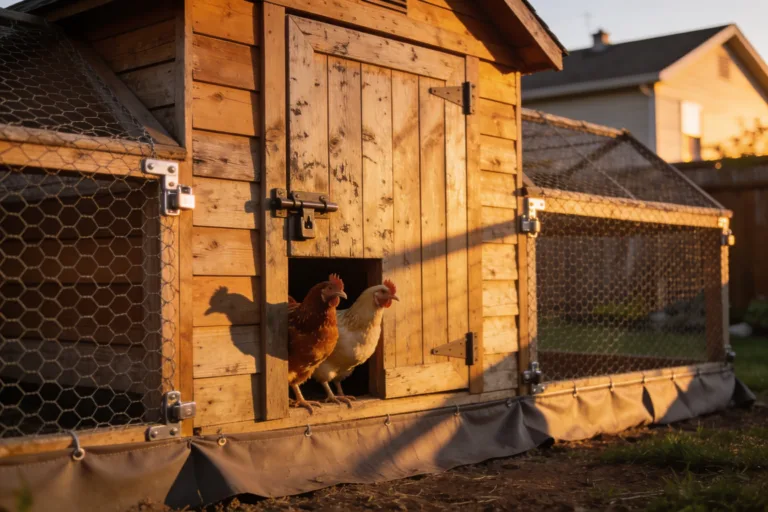
- Predator-proof doors: Lockable, solid latches (two-step). Use 1/2″ hardware cloth—not chicken wire—on any openings.
- Wide pop door + ramp: Ducks waddle, not hop. Go at least 14–16 inches wide with a shallow, grippy ramp.
Inside Layout Tips
- Feed and water outside: Keep the mess in the run, not the coop.
- Nesting corners: Low, cozy baskets or framed corners with straw.
- Night lights: A small solar motion light outside the pop door helps them find home at dusk.
Use this when you want minimal daily maintenance and maximum durability. IMHO, a walk-in coop is the ultimate “buy once, cry once” move.
3. The Pond-In-A-Box: Stock Tank Pool With Real Filtration
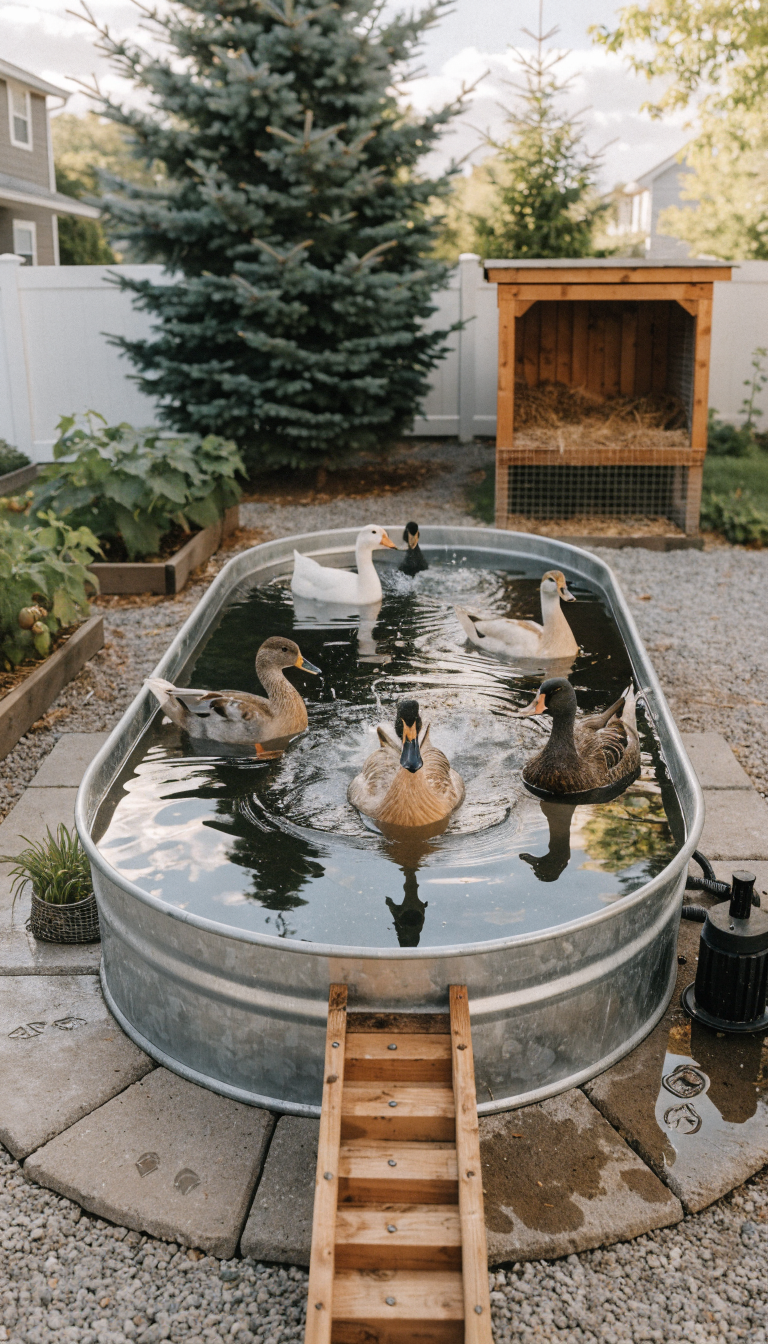
Ready to graduate from kiddie pools? A galvanized stock tank or heavy-duty poly trough makes a killer duck pool that looks clean and lasts forever. Add a filter and you’ll stretch water changes from daily to weekly or even biweekly, depending on flock size.
Build It Like You Mean It
- The tank: 100–150 gallons fits most backyards and 4–6 ducks. Go oval for easier access.
- Stable base: Compact gravel pad topped with pavers. Level matters—no one wants a lopsided lagoon.
- Filtration: Small pond pump (800–1200 GPH), pressurized pond filter with backflush, and a short waterfall return for oxygenation.
- Skimmer basket: DIY a leaf basket on the intake to catch feathers and greens before they clog anything.
- Drain: Tanks often have a factory drain—attach a hose for targeted water dumping into fruit trees or berry canes.
Maintenance Routine
- Net out big debris daily.
- Backflush the filter every 2–3 days.
- Partial water change weekly; full change every 2–3 weeks as needed.
- Rinse bio-media with pool water only—never chlorinated tap—to protect good bacteria.
This is perfect for folks who want a cleaner look, easier maintenance, and ducks who act like they own a spa. You’ll use way less water over time and keep your yard from turning boggy.
4. The Mud-No-More Run: Dry Paths, Green Space, Happy Feet
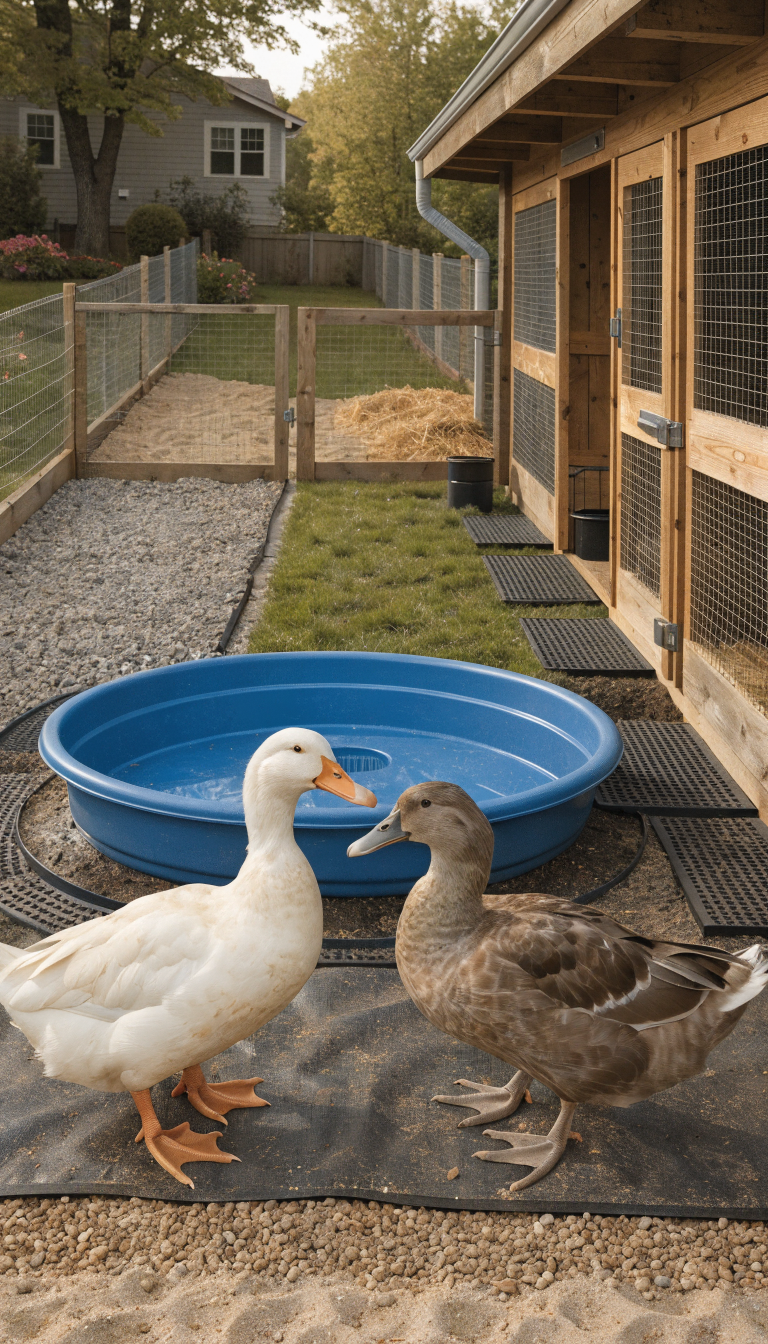
Ducks and mud have a toxic relationship. Break it up with layered footing, smart drainage, and a split run that lets grass recover while your flock still parties in the other half. Your boots will thank you. So will your nostrils.
Run Footing Formula
- Base: Landscape fabric to stop soil migration.
- Drainage layer: 2–3 inches of compacted gravel.
- Comfort layer: 2 inches of coarse sand or pea gravel. Add straw in winter for warmth.
- High-traffic mats: Rubber stall mats near doors, feeders, and pools.
Split-Run Strategy
- Divide the run with a simple gate so you can rotate areas every 2–4 weeks.
- Overseed the resting side with tough turf mix (tall fescue + rye) and toss in clover.
- Protect sprouts with wire hoops and bird netting until established.
Drainage Boosters
- French drain: A perforated pipe in gravel along the low side of the run to redirect water.
- Gutter magic: Add gutters to the coop roof and route rain away from the run.
Pick this if your yard turns to soup after a drizzle. You’ll cut cleaning time and keep your ducks’ feet healthier, which means fewer vet headaches later, seriously.
5. The Zen Water Garden: Plants, Biofilters, And A Pretty Backyard
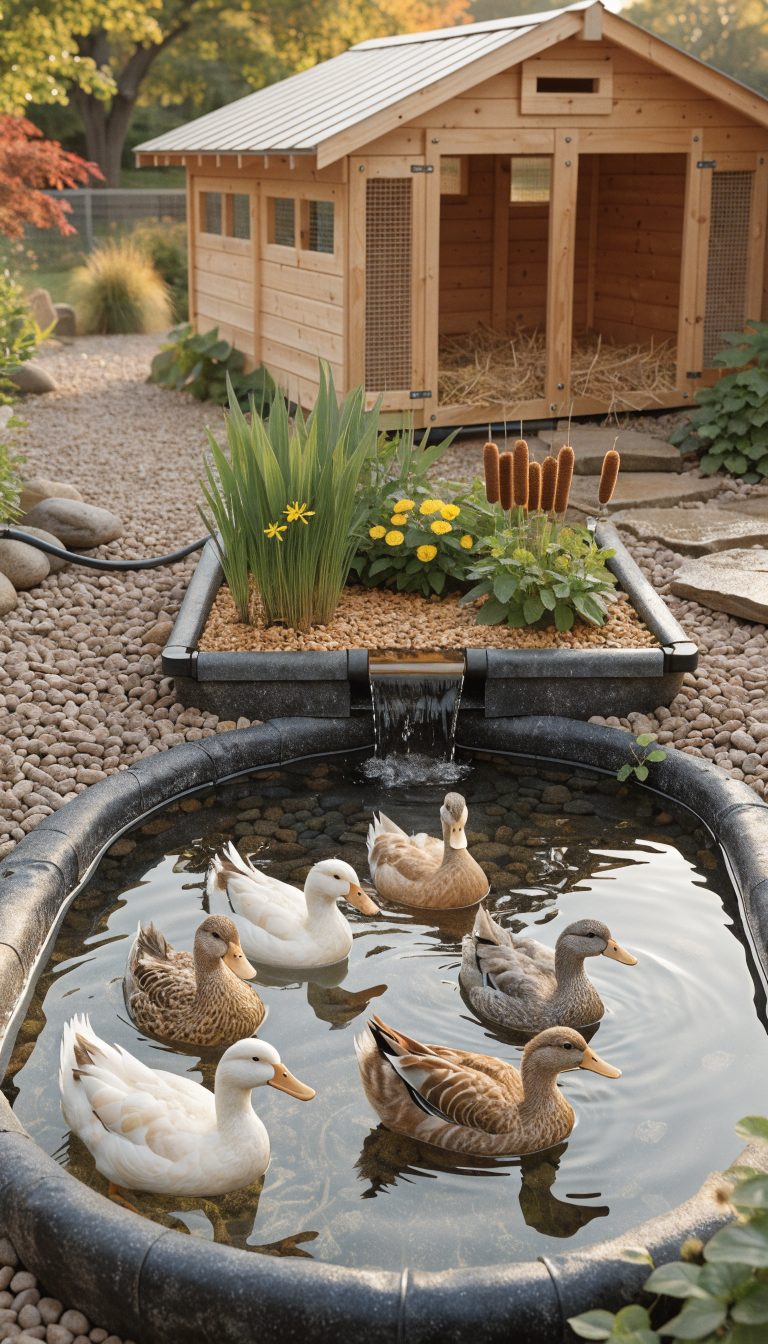
Want function and curb appeal? Create a plant-filtered duck pool zone that doubles as a mini water garden. Think hardy plants, gravel bog filters, and a layout that looks intentional, not farmyard-chic-gone-wild.
Layout That Works
- Two-level system: Duck pool feeds a shallow bog filter via pump. Water returns through a spillway. Cleaner, clearer, prettier.
- Bog filter build: Waterproof tub or lined box filled with pea gravel; pump water up through bottom manifold (PVC with slits) and out the top.
- Plant choices: Pickerel rush, iris, water mint, cattail in moderation, sweet flag. Use containers sunk in gravel to control spread.
- Duck barrier: Low decorative fence or river stones around the bog so your feathered landscapers don’t uproot everything.
Care And Safety
- Keep water 12–20 inches deep with one gentle beach entry so ducks waddle in safely.
- Shade at least one-third of the surface to slow algae; float a few hardy lilies if you want drama.
- Clean pump prefilter weekly. Trim plants monthly. Remove decaying leaves fast.
- No chemicals—ever. Ducks drink it.
This shines when you want a backyard focal point that earns compliments and keeps maintenance sane. It’s the “wow” build that still respects duck reality.
You’ve got options—from quick wins to showpiece builds—and every one makes duck care easier and more fun. Start small or go full spa day; your flock will reward you with contented quacks and cleaner feathers. Now grab a shovel and make some splashy magic happen.
Share this content: