Genius 5 Raised Bed Garden Layout Ideas for a More Productive Backyard
Want bigger harvests without turning your weekends into dirt boot camp? Raised bed layouts make your backyard work smarter, not harder. These five ideas dial in airflow, sunlight, and access so you grow more with less fuss. Grab your gloves—these plans turn “meh” beds into a thriving mini farm, fast.
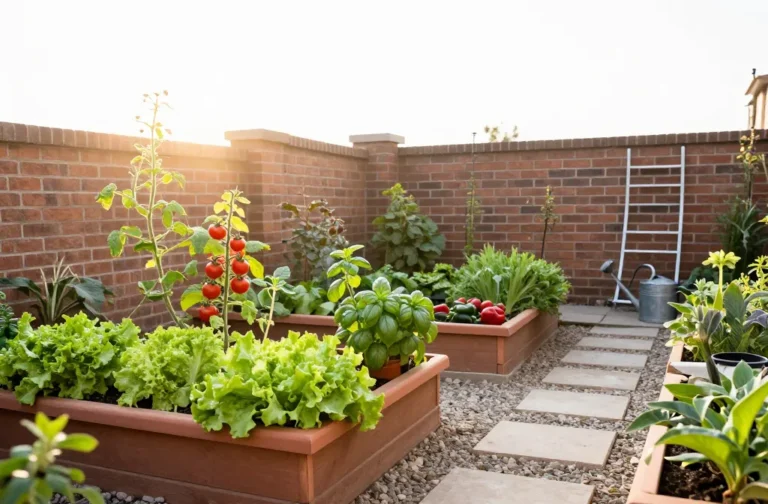
1. The Classic Grid: Neat Rows, Zero Guesswork
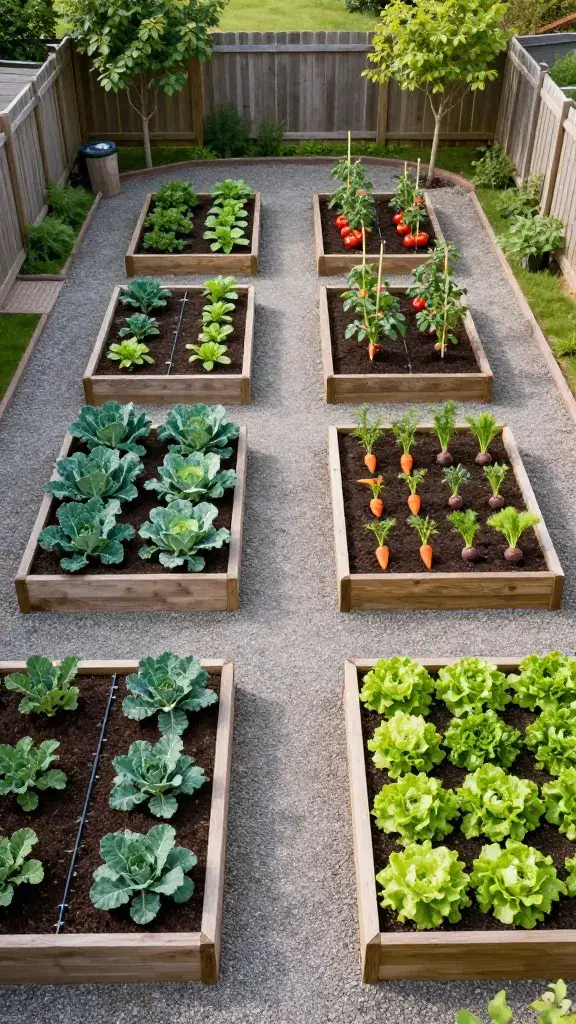
Sometimes simple wins. A tidy grid layout gives every plant the space it needs, makes weeding painless, and keeps harvests super organized. If you love clean lines and easy planning, this one’s your gold standard.
How It Works
- Arrange multiple beds in even rows with consistent walking paths.
- Use standard bed sizes like 4×8 feet to maximize reach from both sides.
- Plant by squares or rows inside each bed for fast crop rotation.
You can map each bed for a crop family—like one for brassicas, one for roots, one for legumes—and rotate yearly. That reduces pests and keeps soil nutrients balanced. FYI: consistency = fewer headaches later.
Tips
- Path width: Keep paths 24–30 inches wide for comfy wheelbarrow moves.
- Bed height: 10–12 inches works for most crops; go 18 inches for deep roots or poor native soil.
- Irrigation: Install drip lines per row and cap them; swap plantings without rerunning lines.
- Labels: Use weatherproof tags so you actually remember which carrot is which.
Use this when you want predictability, tidy aesthetics, and straightforward planning. It’s the “little black dress” of garden layouts—always flattering.
2. The U-Shape “Chef’s Kitchen”: Harvest Without Stepping In
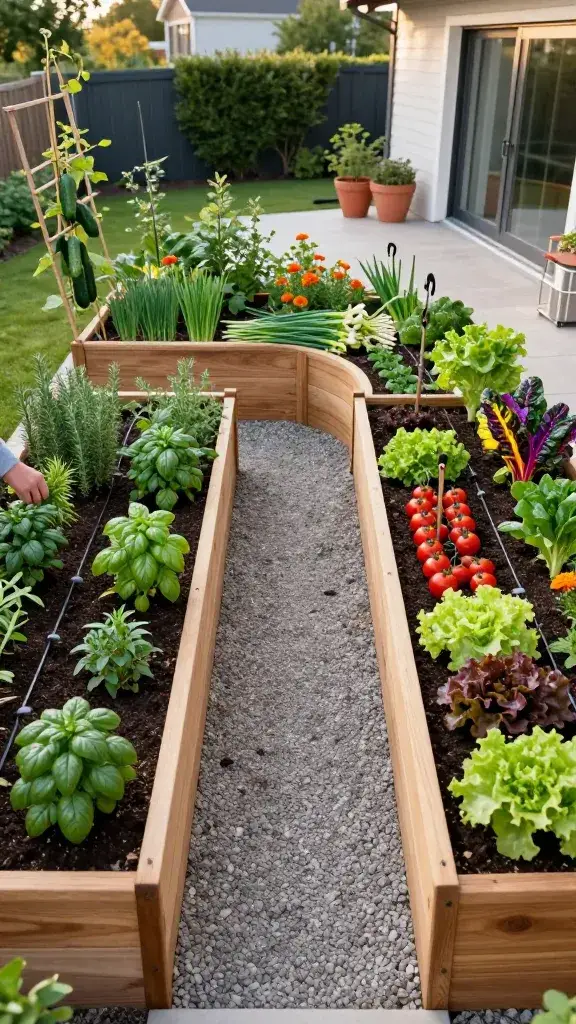
Want to feel like you’re cooking in your garden? Build a U-shaped raised bed with a cozy interior aisle. You’ll reach everything without compacting soil, and you’ll never do the awkward fence lean again.
Layout Essentials
- Shape: Three beds form a U, open side facing your home or patio for easy access.
- Dimensions: Side beds: 2–3 feet wide; back bed: 3–4 feet wide; inner aisle: 30–36 inches.
- Orientation: Back bed faces south if possible for the most sunlight.
This layout shines for high-use crops—think salad bar plantings, herbs, and cut-and-come-again greens. You can chop chives with scissors while sipping coffee. Efficient? Yes. Slightly extra? Also yes.
Planting Strategy
- Back bed (tall stuff): Tomatoes, trellised cucumbers, pole beans.
- Sides (mid-height): Peppers, eggplant, kale, bush beans.
- Front edges (low growers): Lettuces, strawberries, thyme, basil.
You’ll get layered sun exposure and a steady flow of ready-to-snack produce. Use this layout if you love cooking and want all your MVPs within reach, seriously.
3. The Four-Season Pinwheel: Rotate Like a Pro
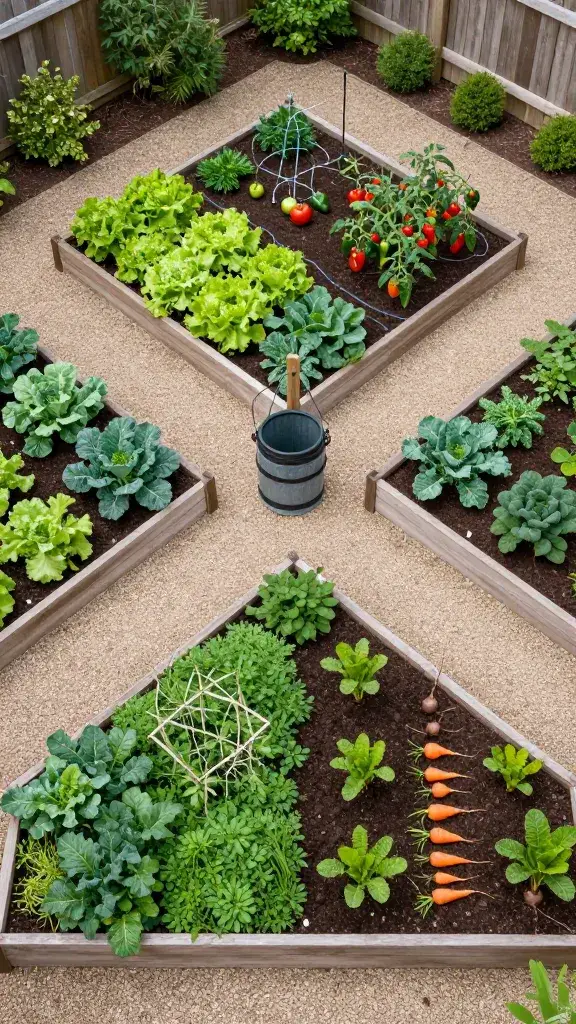
Pest waves got you over it? Divide a square footprint into four wedge-shaped or rectangular beds around a central hub. You’ll rotate crops with zero confusion and build a predictable maintenance rhythm.
Design Snapshot
- Shape: Four beds around a center space for a compost bin, rain barrel, or tool post.
- Access: Cross-shaped paths for instant reach to every corner.
- Zones: Dedicate each bed to a crop family: Leaf (lettuce, brassicas), Fruit (tomatoes, peppers), Root (carrots, beets), Soil Builders (beans, peas, cover crops).
Rotate clockwise every season. You’ll break pest cycles, diversify nutrients, and keep things balanced with minimal mental math. It’s basically an accountability system for your soil.
Seasonal Flow
- Spring: Leaf bed bursts with spinach, arugula, and Asian greens.
- Summer: Fruit bed takes the spotlight with tomatoes and peppers.
- Fall: Roots mature while the leaf bed resets with cool crops.
- Winter: Soil builder bed gets a cover crop—crimson clover or winter rye.
Use this when you want a long-term plan that keeps pests guessing and nutrients flowing. It’s gardener chess, but you actually win.
Pro Tips
- Central feature: Add a small arch trellis or obelisk for climbing peas—cute and useful.
- Mulch paths: Wood chips suppress weeds and keep shoes clean.
- Consistent spacing: Standard 3–4 foot beds keep your reach comfortable year-round.
The benefit? Visual symmetry plus science-backed rotation equals a productive, low-drama garden.
4. The Vertical Powerhouse: Trellis Everything
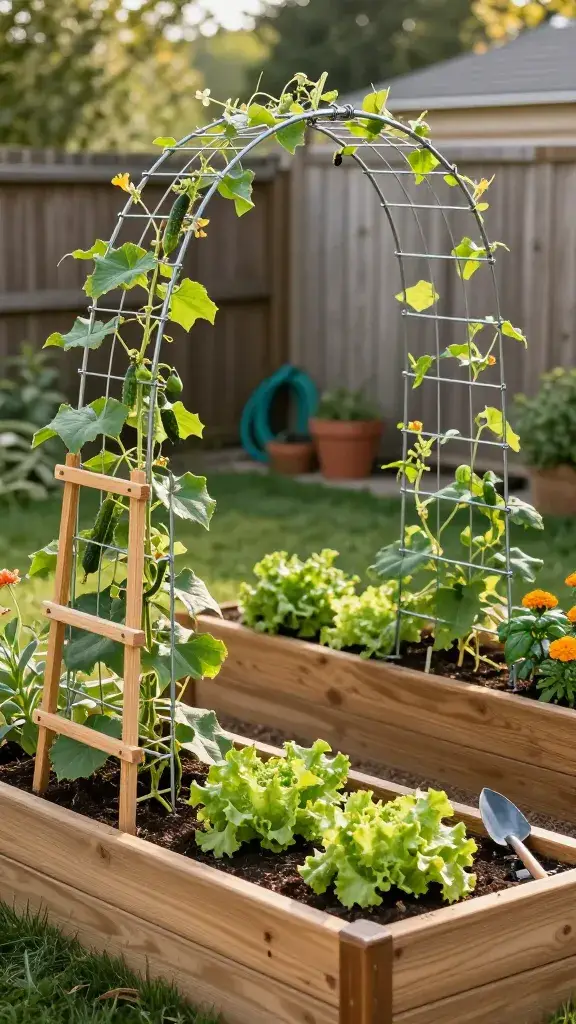
Short on space but big on harvest goals? Go vertical. Add sturdy trellises to your raised beds and launch cucumbers, beans, and squash into the sky while freeing up bed space for more crops.
Build It Right
- Trellis types: Cattle panel arches, A-frames, T-posts with galvanized wire, or string trellises.
- Anchoring: Bolt to bed corners or sink posts 12–18 inches deep for wind resistance.
- Materials: 16-foot cattle panels for arches, 2×2 cedar for A-frames, heavy-duty zip ties.
Train climbers early and prune ruthlessly. You’ll keep airflow strong, reduce mildew, and harvest without crawling through a leafy jungle. FYI: vertical growing also shades tender greens beneath in midsummer—built-in microclimate hack.
Planting Combos
- North side (tall climbers): Pole beans, Malabar spinach, indeterminate tomatoes on strings.
- South side (sun lovers): Peppers, basil, marigolds for pest control.
- Under-planting: Lettuces, cilantro, or parsley thrive in dappled shade.
Use this layout when you want high yields from a small footprint and easier harvests. Bonus: trellis tunnels look incredible—your backyard just became Instagram-ready, IMO.
Maintenance Cheats
- Prune weekly: Remove tomato suckers and rogue squash leaves for airflow.
- Clip, don’t yank: Use soft ties to guide vines without damage.
- Feed strategically: Heavy feeders up top, lighter feeders underneath. Side-dress compost midseason.
Result: a compact, photogenic jungle that actually behaves.
5. The Pollinator Border + Power Core: Beauty Meets Beast Mode
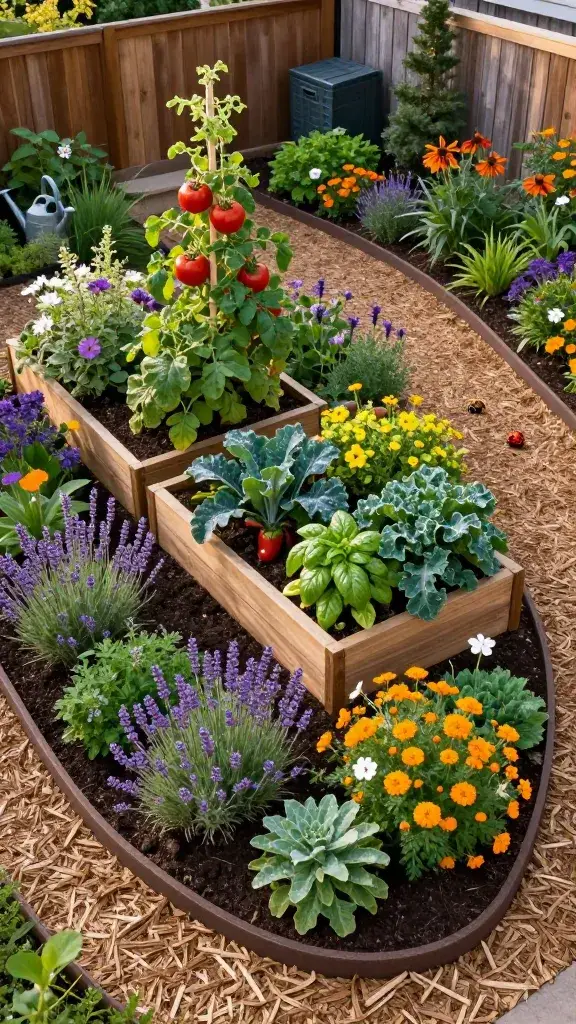
Want production and pollinator traffic? Frame your raised beds with a border of flowers and aromatic herbs. You’ll attract beneficial insects, boost fruit set, and create a backyard that looks like a magazine spread.
Layout Game Plan
- Core beds: Cluster 2–4 rectangular beds in the center for veggies.
- Perimeter border: A 1–2 foot ring around the beds with pollinator magnets.
- Pathways: Curved or straight, but keep them mulched and defined.
Flowering borders bring ladybugs, lacewings, and native bees that annihilate aphids and boost yields. Plus, neighbors stop to compliment your “cottage-core farm.” Not mad about it.
Winning Plant List
- Herbs: Thyme, oregano, chives, dill, fennel, lemon balm, mint (in pots, trust me).
- Flowers: Calendula, borage, cosmos, zinnias, nasturtiums, yarrow, alyssum.
- Perennials (if room): Echinacea, lavender, sage, rudbeckia.
Stagger bloom times so something always flowers. Interplant marigolds at bed corners for a pop of color and minor pest deterrence. Your tomatoes will say thanks by the pound.
Irrigation + Care
- Separate zones: Veggies want more water than many herbs; split drip lines if possible.
- Deadhead often: More blooms mean more pollinators and longer color.
- Edge the border: Brick, steel, or stone keeps mulch in and grass out.
Use this when you want high performance with curb appeal—and when you secretly want to become “the flower person” on your block.
Extra Productivity Boosters For Any Layout
- Soil mix: 40% high-quality compost, 40% aged bark-based mix, 20% coarse aeration (pumice/perlite).
- Mulch: 2 inches of shredded leaves or straw to lock moisture and block weeds.
- Succession planting: Replant harvested space within a week—radishes after lettuce, beans after garlic.
- Row covers: Use insect netting on brassicas and lightweight fabric for season extension.
- Test and amend: Simple soil test yearly; add organic fertilizer based on results, not vibes.
These small moves stack up to massive gains across any bed shape or size.
Ready to build your most productive backyard yet? Pick the layout that fits your vibe, sketch it, and start with one or two beds this weekend. Your future self—and your dinner plate—will be very, very pleased.
Share this content: