Garden-to-Coop Walkway Ideas: Layouts That Keep Chickens Out of Your Beds
Your chickens have zero respect for boundaries, and your lettuces know it. The right walkway layout solves that problem fast—and looks gorgeous while doing it. These ideas direct foot traffic (yours) and bird traffic (not yours), cut down mess, and make every trip to the coop feel like a little garden tour. Ready to keep those flappy garden rototillers out of your beds for good?
1. Hedge-Hugged Runway
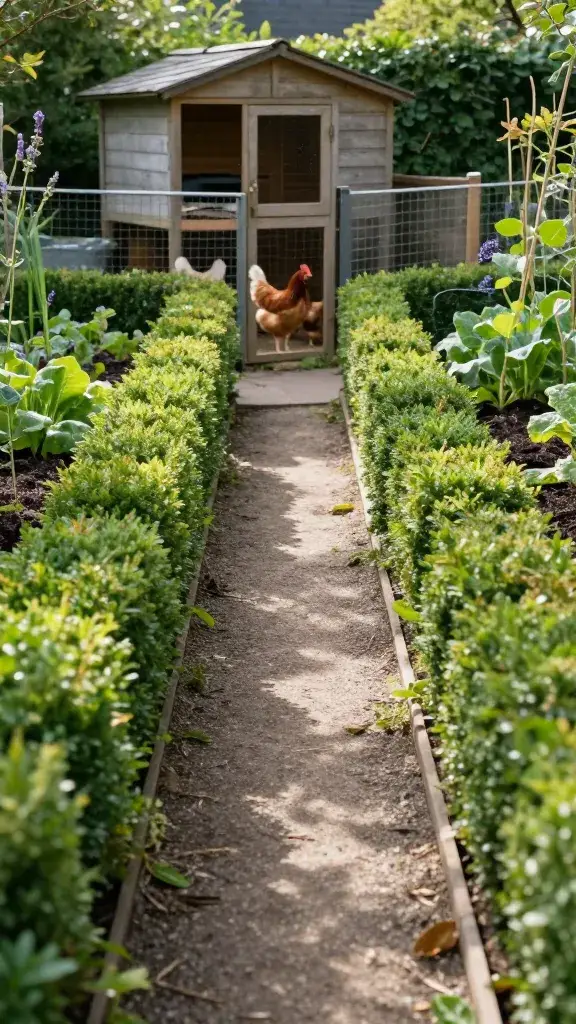
Think of this as your green corridor: a narrow path flanked by low, dense plants that chickens hate to push through. You create a gentle but firm “nope” line that guides your feet to the coop while blocking curious beaks from the veggies. It feels lush, formal, and a bit secret-garden—minus the feathered chaos.
Why It Works
- Visual and physical barrier: Dense, low shrubs read as a wall to chickens.
- Wind and dust buffer: Keeps coop dust and mulch spray out of your beds.
- Seasonal structure: Your path stays defined even in winter.
Best Plants For The Job
- Boxwood (dwarf varieties) for tidy edges that trim easily
- Lavender for scent—hens dislike brushing past the oils
- Rosemary (upright) for fragrance, drought tolerance, and bee love
- Santolina or germander for tough, neat mounds
Plant hedges 18–24 inches from the path edge so growth fills in without swallowing your walkway. Keep the path 30–36 inches wide so you can carry feed buckets without hip-checking your hedge. FYI: Add a drip line and mulch heavily to keep maintenance easy.
Tips
- Layer a low edging (stone or steel) under the hedge line to stop scratching at the roots.
- Prune lightly 2–3 times a season for dense growth that chickens won’t slip through.
- Weave in herbs you can actually harvest—dual-purpose planting for the win.
Use this when you want a classic look and a reliable barrier that doesn’t scream “chicken problem.” It’s elegant, smells amazing, and it works.
2. Crunchy Gravel Spine With Hard Edges
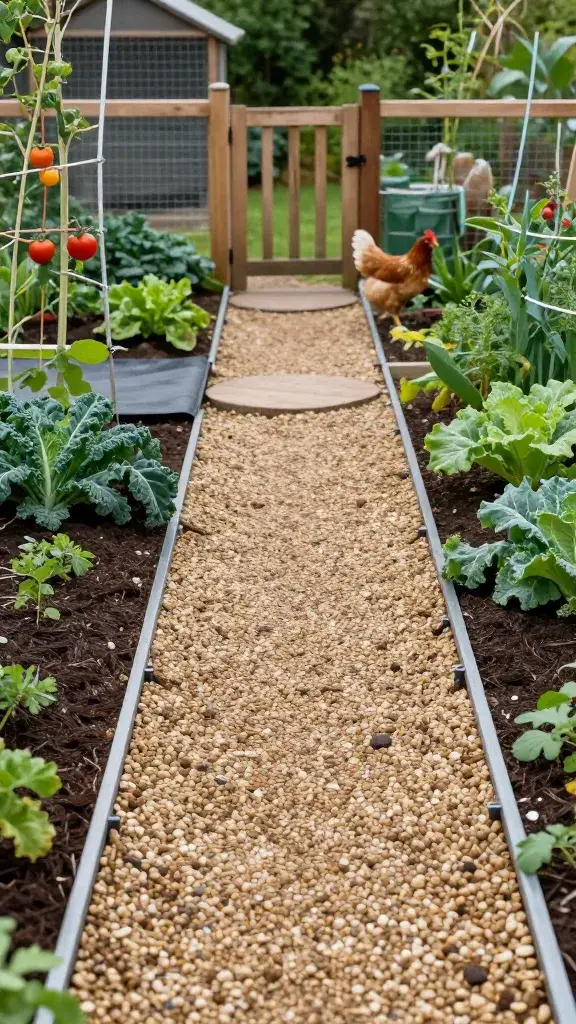
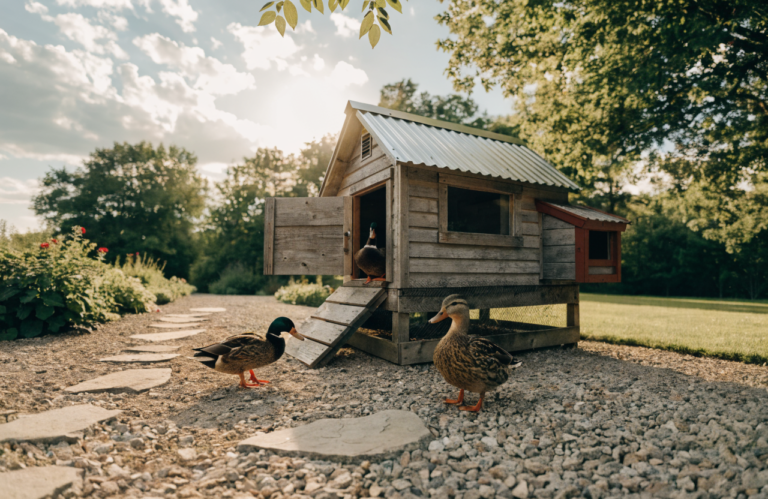
Chickens hate walking on loose, noisy gravel—great news for your walkway. Pair that with crisp edging and you get a path that’s easy to maintain, drains well, and keeps the flock off your veggie beds. Plus, the crunch underfoot? Chef’s kiss.
Materials
- 3/8-inch pea gravel or decomposed granite (DG) for comfort and stability
- Steel or aluminum edging staked firmly every 2–3 feet
- Landscape fabric to block weeds under the path
- Stepping stones or pavers as “landing pads” at gates or tight turns
Build It Right
- Excavate 3–4 inches, lay fabric, add 2–3 inches of base (crushed rock for DG), then top with 1–2 inches of gravel.
- Compact DG lightly with a hand tamper for a firm but permeable surface.
- Install edging flush with path surface so you don’t trip—or snag a wheelbarrow.
Want extra chicken deterrent? Tuck a 12-inch strip of river rock beyond the edging on the bed side. They hate scratching through round stones, and the look feels polished.
Pros And When To Use
- Low maintenance: Occasional raking and a top-up every year or two.
- All-weather access: No mud, no slipping, even after storms.
- Great if you like minimalist, modern lines or you need a fast install on a budget.
Use this when you want maximum function with a clean aesthetic—and birds that keep their talons to themselves.
3. Split-Rail Buffer With Bee-Friendly Border
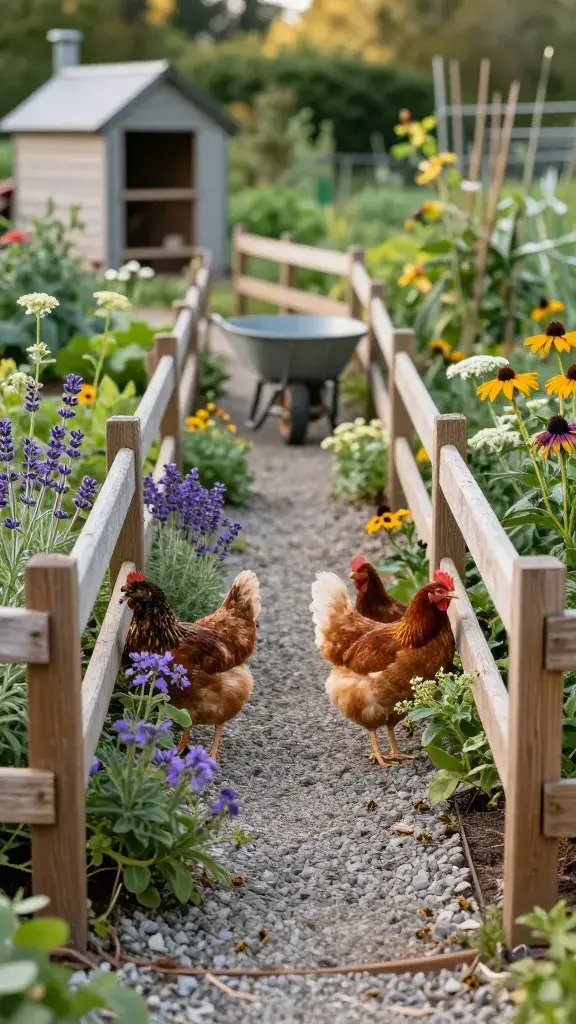
Sometimes you need a visible “this way, cluckers” line that still looks natural. A short split-rail or post-and-rope border along both sides of your walkway creates a polite-but-firm barrier. Add tightly planted pollinator perennials along the rails, and you’ve got beauty, biodiversity, and a chicken speed bump all in one.
Layout Recipe
- Path width: 36 inches works for a wheelbarrow and wide baskets.
- Rails: 24–30 inches high, with lower crosspieces around 10–12 inches to block under-scoots.
- Planting strip: 18–24 inches deep outside the fence line for a lush border.
Plant Picks Chickens Avoid
- Catmint (Nepeta), salvia, and anise hyssop for bees and bloom power
- Yarrow and echinacea for sturdy stems that don’t flop into the path
- Russian sage or ornamental grasses for airy structure
Pack plants tight—about 12 inches apart—so you form a leafy curtain that hens won’t bother to bulldoze. Mulch heavily with shredded bark; it locks in moisture and doesn’t kick as easily as chips. If you want extra insurance, run a discreet black poultry netting between lower rails—nearly invisible from a distance.
Why You’ll Love It
- Farmhouse charm: Looks intentional and welcoming.
- Gentle containment: No tall fences, just enough structure to guide the flock away.
- Pollinator lane: Your daily walk to the coop turns into a bloom parade.
Use this when you want cottage-garden vibes with real-world chicken control. It’s friendly, photogenic, and seriously effective.
4. Brick-and-Timber Ribbon With No-Scratch Zones
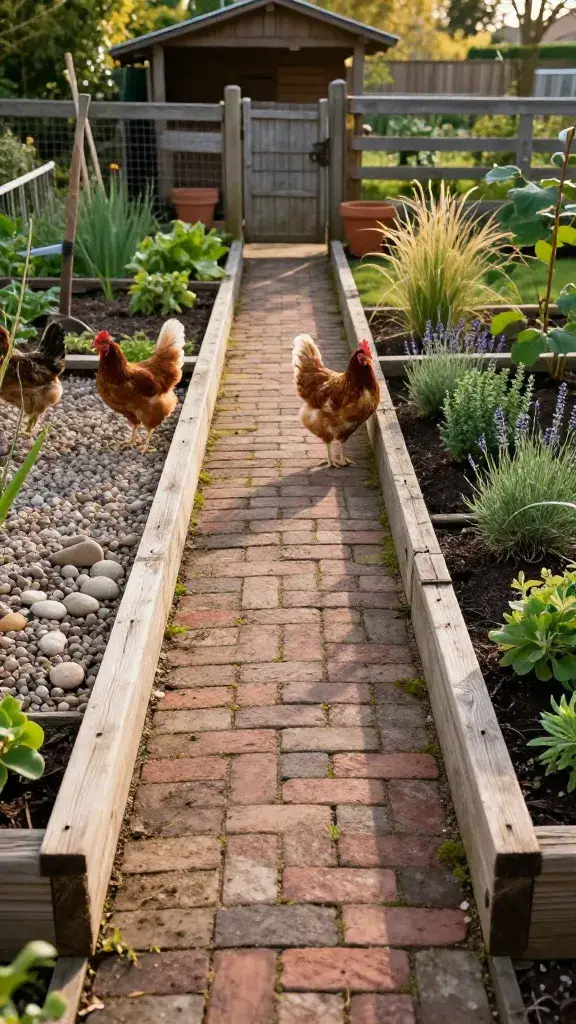
Mix warm brick with chunky timber rails and you get a walkway that feels handcrafted and tough. The brick ribbon gives you a smooth, permanent surface, while the adjacent timber-framed strips create clear “not for chickens” zones you can fill smartly. It screams old-world charm—and chickens read it as “keep off.”
How To Build The Ribbon
- Center path: Lay reclaimed brick in a running bond or herringbone pattern, 24–36 inches wide.
- Border rails: 4×4 or 6×6 timbers pinned with rebar, one strip on each side.
- Fill strategy: Inside the timber frames, use river rock, crushed shell, or dense groundcovers instead of soil.
Chickens love loose soil. So don’t give them any. Rock fill or shell stays put, looks great, and kills the urge to scratch. If you want green, plant thymus serpyllum (creeping thyme) in small, stony pockets—fragrant, walkable, and unappealing to your feathered tillers.
Pro Moves
- Set brick on a compacted sand base with a polymeric-sand sweep to lock joints and block weeds.
- Use flush timber with beveled edges so you don’t create trip points.
- At bed entrances, add a paver threshold—a visual “doorstep” that discourages birds from crossing.
Benefits? Durable, mud-free walking, and built-in scratch-proof buffers that still look cozy. Use this if you crave vintage charm with hardwearing practicality—IMO, it’s the sweet spot for style and sanity.
5. Curved Boardwalk With Underplanting “Moat”
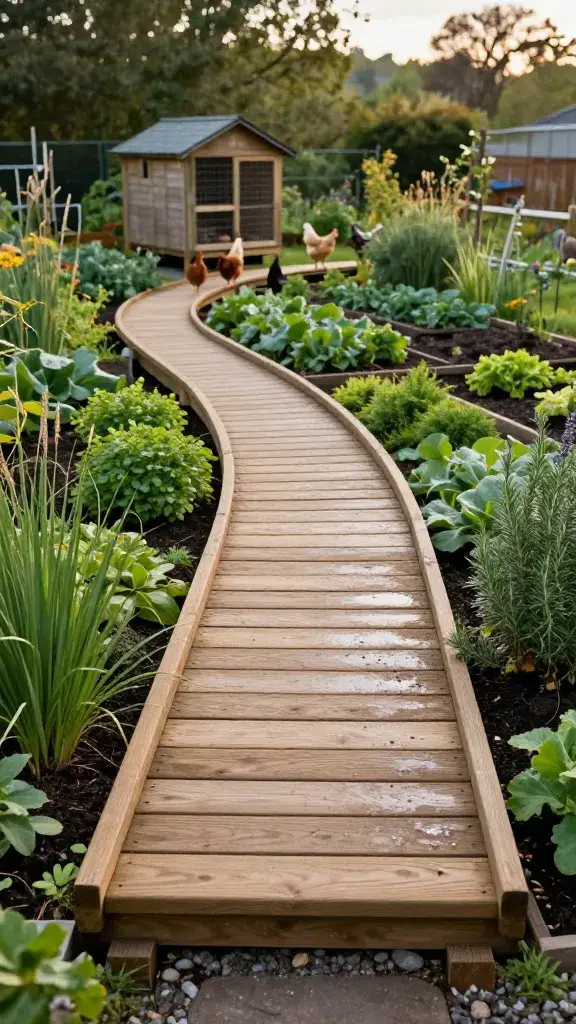
If your path bogs after rain or crosses uneven ground, a raised boardwalk solves everything—and keeps birds off your beds through smart underplanting. The gentle curves look intentional and guide the eye (and feet) to the coop. Meanwhile, the shady, dense plant “moat” under and beside the deck becomes a living keep-out line.
Build Basics
- Structure: Pressure-treated stringers on gravel pads, 4–6 inches off grade.
- Decking: Cedar or composite boards with 1/4-inch gaps for drainage.
- Width: 36–42 inches so you can carry a feeder without side-shuffling.
- Curve: Gentle S-bends that avoid cutting across your garden beds.
Plant The Moat
- Hosta, ferns, and hellebores for lush shade if you’ve got trees
- Bergenia or ajuga for thick groundcover chickens won’t bother
- Low ornamental grasses (like carex) to soften edges and block line-of-sight to beds
Chickens avoid tight, dark spaces under structures and dislike pushing through damp, broad leaves. That combo makes your boardwalk an instant boundary. Add low solar lights along the edges so your 6 a.m. egg run doesn’t turn into a shin-banging obstacle course.
Smart Extras
- At the coop door, add a gravel landing to knock mud off boots and paws (do chickens have paws? debatably).
- Install a boot brush and a small storage box for scoop, grit, and treats.
- Use hardware cloth skirting at the coop end if you need a chew-proof barrier near the run.
Choose this when drainage stinks or you want serious garden drama. It’s beautiful, practical, and—trust me—surprisingly quick to build for the impact you get.
Ready to outsmart the flock and save your kale? Pick one layout and start sketching it onto your yard this weekend. You’ll walk cleaner paths, harvest cleaner produce, and your chickens will finally stop “helping.” Seriously, you’ve got this—your garden beds will thank you with extra fluff-free greens.
Share this content: