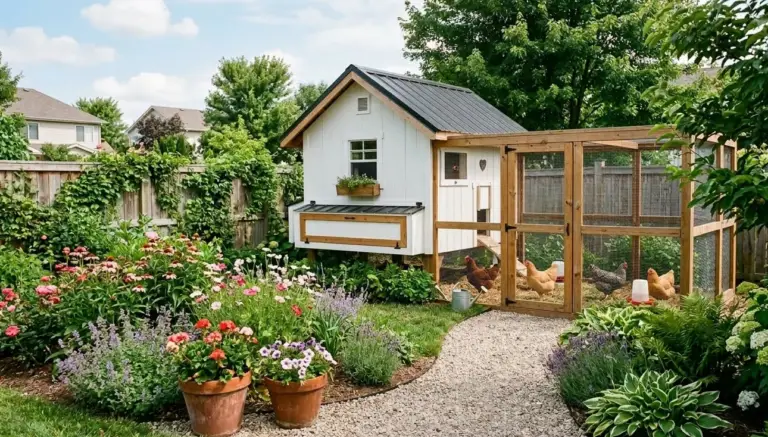
Fix Mud Fast 4 Best Chicken Run Drainage Ideas for Muddy Yards
Muddy chicken runs aren’t just messy—they smell bad, spread bacteria, and stress your birds. Good news: you can fix it fast with a few smart drainage tweaks. These four ideas punch above their weight, work in most climates, and don’t require a backhoe or a trust fund. Ready to turn swamp city into a dry, happy chicken runway?
Let’s dig into the best ways to keep your flock’s feet clean, your eggs cleaner, and your nose a whole lot happier.
1. Build a French Drain Perimeter That Actually Moves Water
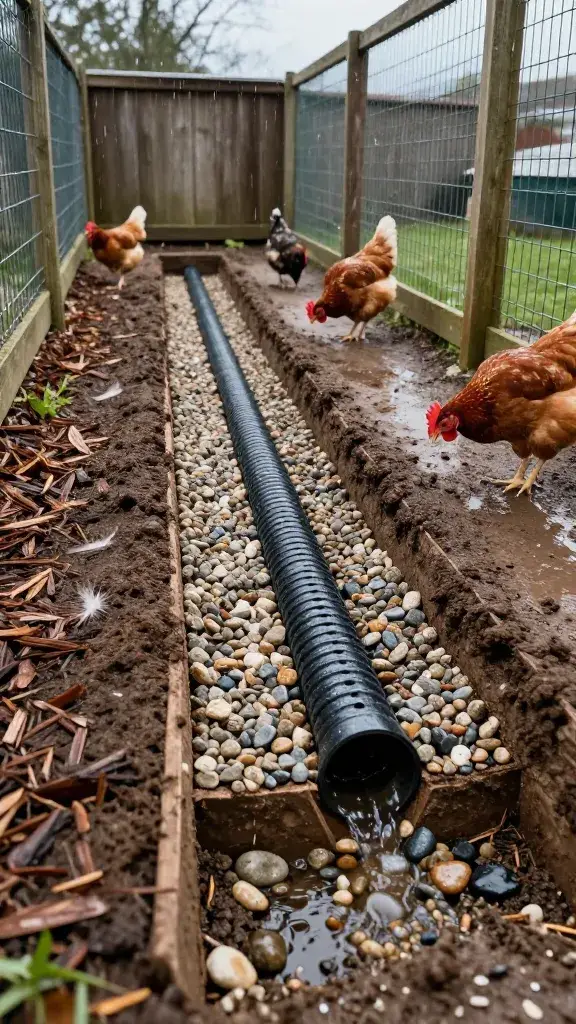
When your run turns into a kiddie pool, a French drain saves the day. It pulls water away from the run and out to a spot where it can soak in or drain off. Set it up once and it quietly works every time it rains. Seriously, it’s like a moat but for mud management.
How It Works
- Dig a trench around the run, slightly deeper on the downslope side.
- Line it with landscape fabric so it won’t clog with silt.
- Add a layer of gravel, lay in perforated drain pipe (holes down), then bury with more gravel.
- Wrap the fabric over the top and cover with soil or decorative rock.
The pipe grabs groundwater and surface runoff, then carries it away from your birds. Point the outlet somewhere legal and sensible—like a swale, dry well, or a garden that loves extra moisture.
Materials
- Perforated drain pipe (4-inch corrugated or PVC)
- Landscape fabric (heavy-duty, not the flimsy stuff)
- Washed gravel (¾ inch works great)
- Shovel, level, utility knife, and a bit of grit
Tips
- Maintain a 1%–2% slope so gravity does the work (1–2 inches drop per 10 feet).
- Keep roots and bedding out of the outlet—add a critter guard if needed.
- Combine with gutters on the coop to reduce how much water hits the run in the first place.
Best when your run sits at the bottom of a slope or near a downspout. It’s a medium-effort, high-payoff project you’ll thank yourself for every storm.
2. Create a Dry Base With Layers: Gravel, Sand, And Deep Litter
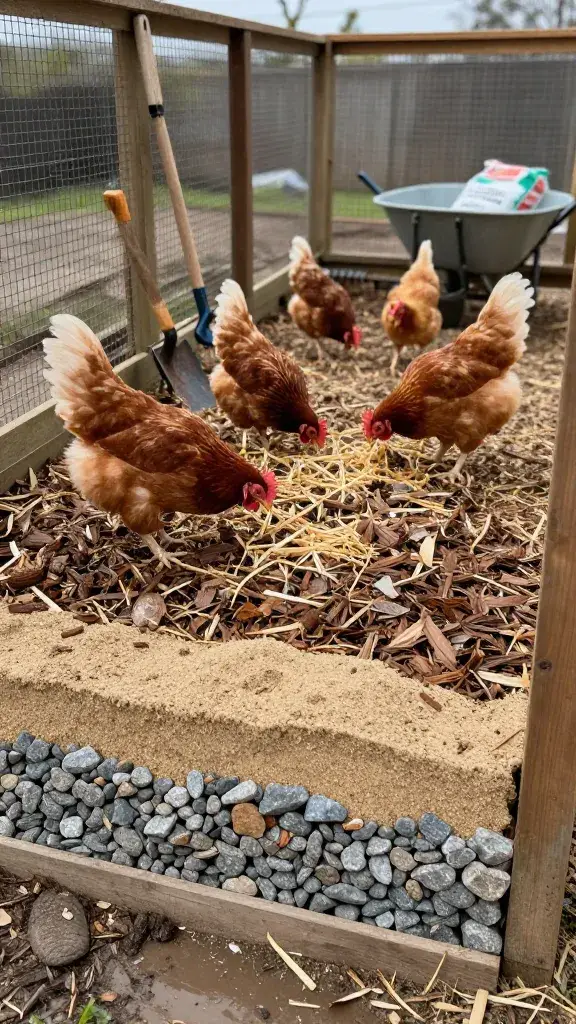
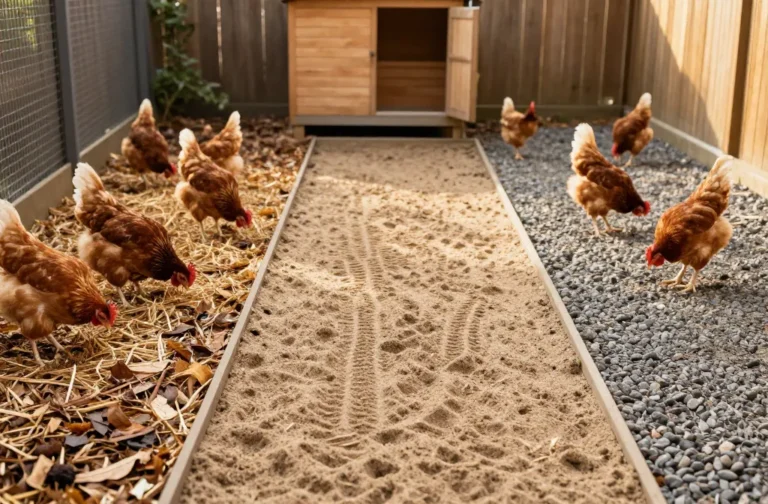
Mud forms because fine soil particles stay saturated and compacted. Fix that by swapping the sponge for a drain. A layered base gives water a place to go and your hens a place to scratch without turning everything to slime.
The Layer Cake Setup
- Bottom layer: 3–4 inches of compacted crushed stone (¾ inch minus). This locks up the mud and drains fast.
- Middle layer: 2–3 inches of coarse, washed construction sand (not play sand). It drains and levels beautifully.
- Top layer (rotational): Deep litter like wood chips (arborist chips, not bark mulch), coarse straw, or chopped leaves. Refresh as needed.
The stone moves water down and away. The sand resists compaction and dries quickly. The deep litter keeps feet clean and smells down. Bonus: as litter breaks down, it becomes garden gold.
Maintenance
- Rake weekly to fluff and dry the surface.
- Top up litter monthly or after heavy storms.
- Spot replace sand if it clumps with droppings near feed and water stations.
Why It’s Awesome
- Fast mud control even in high-traffic zones.
- Foot health win: fewer bumblefoot issues than slick mud or concrete.
- Smell control because organic top layers absorb and compost droppings.
Use this when your soil is clay-heavy or your run sits flat. IMO, this is the most chicken-friendly base you can build without pouring concrete.
3. Redirect Rain At The Source: Gutters, Diverters, And Simple Swales
Stop the flood before it starts. Half your mud probably comes from roof runoff and yard flow. Catch and redirect it and your run stays dry without constant firefighting.
Do These First
- Add gutters to the coop roof with downspouts that carry water away from the run.
- Attach downspout extenders (10–15 feet) or connect to your French drain if you built one.
- Shape a shallow swale (gentle trench) uphill from the run to intercept sheet flow and curve it around the perimeter.
Smart Add-Ons
- Rain barrels to catch roof runoff (free garden water = win).
- Splash blocks to prevent erosion at downspout ends.
- Mulch berms as a quick, temporary levee during wet seasons.
Think of this as crowd control for rain. You’re not wrestling water inside the run—you’re keeping it from showing up at the party in the first place.
Quick Checks
- Does water pour off the coop roof right into the run? Fix that ASAP with gutters.
- Does the yard slope toward the run? Carve a swale to send water around it.
- See puddles near entry gates? Extend splash pads or add a small channel drain there.
Perfect for runs that only flood during storms. Combine with any other method to multiply results, FYI.
4. Install High-Traction Pads And Drainage Hotspots In Traffic Zones
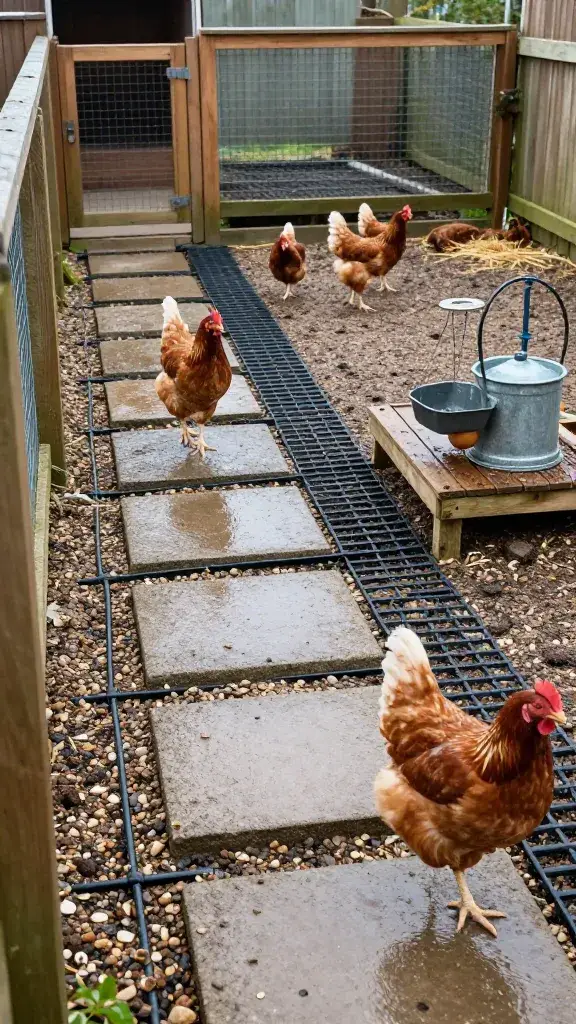
Chickens create highways: around feeders, under roosts, by doors. Those spots churn into soup first. Harden them with targeted fixes so you stop chasing mud with a rake every weekend.
Targeted Solutions
- Geogrid or ground stabilization mats: Lay over a thin gravel base near gates and feeders. They lock in aggregate so it doesn’t pump up through the mud.
- Paver pads or stepping stones: Place at human entry points and around waterers to stop boot-sucking messes.
- Raised platforms for feeders/waterers: Simple pallets topped with plywood or composite decking keep essentials high and dry.
- Mini trench drains: For chronic puddles, cut a 3–4 inch channel filled with gravel to speed drainage to the run’s edge.
Materials
- Geogrid or heavy-duty landscape reinforcement fabric
- Crushed rock (¾ inch minus) and pea gravel for top dressing
- Concrete pavers or rubber stall mats (trim to fit)
Pro Tips
- Slightly crown the surface around feeders so spills run off, not under.
- Switch to nipple waterers to cut spillage that fuels mud.
- Rotate scratch areas weekly so birds don’t till the same patch into oblivion.
Use this when specific spots drive you nuts. It’s cheap, fast, and stops the worst mud where it starts—high-traffic zones.
Before you pick your plan, take 10 minutes right after a rain and watch how water moves. Where does it enter? Where does it pool? Start there. You’ll fix 80% of the problem with one well-placed drain or swale. Trust me.
Extra Considerations
- Predator safety: If you dig near the fence, add hardware cloth aprons back in to block diggers.
- Health: Keep ammonia down with regular litter refreshes and good airflow.
- Seasonality: In winter, avoid fine sand that freezes into concrete; wood chips shine then.
- Legal/neighbor-friendly: Don’t discharge water onto someone else’s property—route it to your own garden or a dry well.
Ready to retire your mud boots? Start with the easiest win—gutters and a swale—then add a layered base or a French drain if your soil needs extra help. Your flock will explore more, your coop will smell better, and your yard will finally look like a place you planned, not a swamp you inherited.
You’ve got this. Go make that run the driest, happiest hangout on the block—your chickens will cluck about it all week.
Share this content: