7 Chicken Run Flooring & Ground Cover Ideas
Let’s be honest: a muddy chicken run smells like regret. The right flooring fixes stink, controls pests, and keeps your flock’s feet healthy. These seven options work in real backyards, not just Pinterest boards, and you can mix and match for your climate and coop setup. Ready to kick mud to the curb and make your hens strut?
1. Deep Litter Done Right
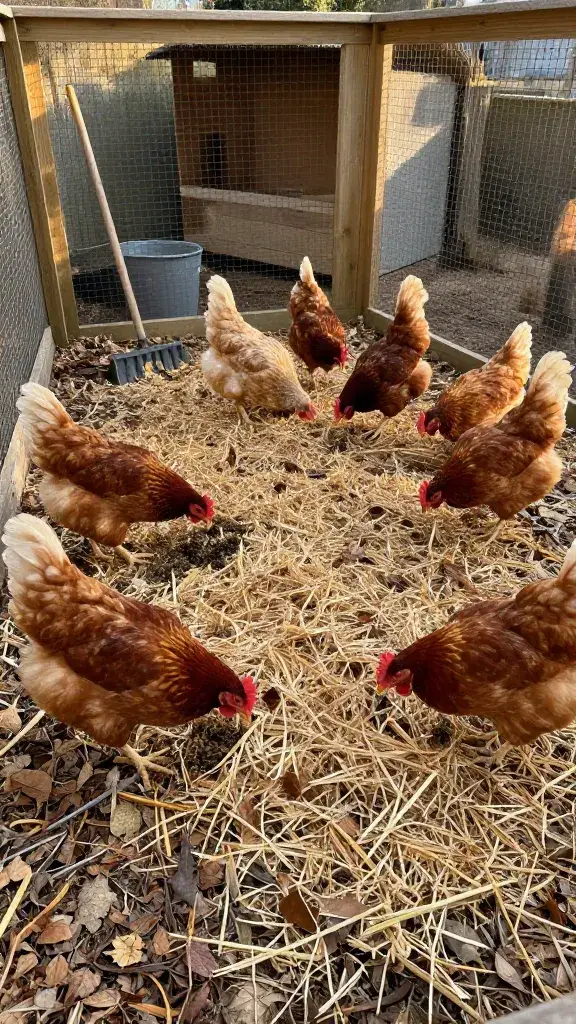
Think compost pile meets spa day. The deep litter method layers carbon-rich materials so droppings break down naturally and smell stays in check. It’s low-maintenance and turns mess into garden gold.
How It Works
- Start with 4–6 inches of dry carbon material like pine shavings, dry leaves, or shredded straw.
- Add fresh layers weekly as it compacts. Aim for 8–12 inches total over time.
- Let the flock fluff it by scratching, then spot-toss with a rake when it compacts.
Use this when you want minimal weekly cleaning and maximum compost. It shines in covered or well-drained runs where moisture won’t turn it into a swamp.
2. Sand For Spa-Level Scratch Sessions
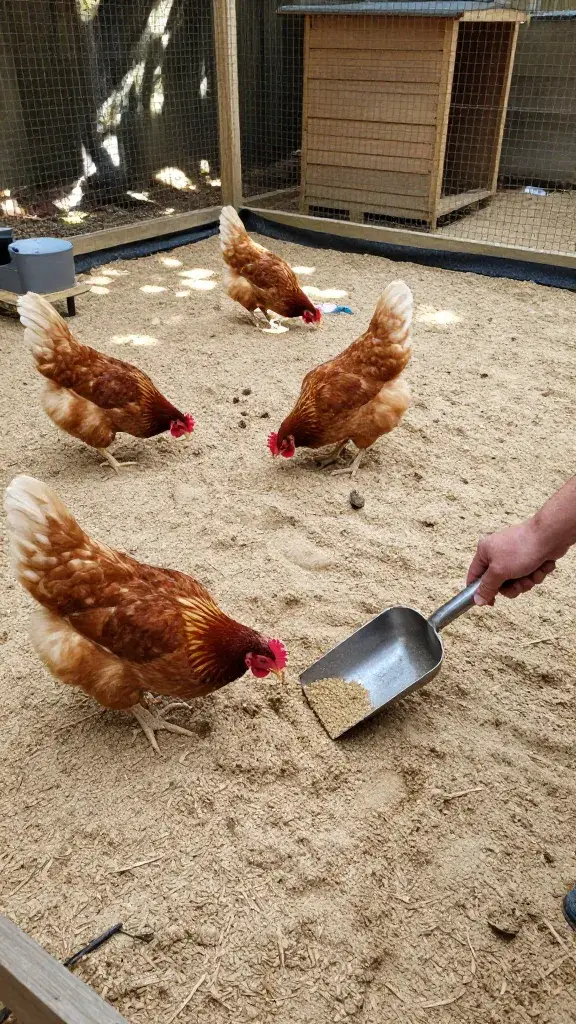
Coarse sand keeps feet clean, drains fast, and makes scooping poop as easy as cleaning a litter box. Your birds get dust-bath vibes, and you get a run that stays tidy in any season.
Tips For Success
- Choose construction-grade coarse sand, not play sand (too fine, gets damp and clumpy).
- Lay 3–4 inches over compacted soil or landscape fabric to stop it sinking.
- Spot-scoop droppings with a cat litter scoop every few days—seriously, it’s that easy.
Great for wet climates or if you want a super low-odor setup. Bonus: sand helps prevent bumblefoot by providing gentle abrasion and drains like a champ.
3. Wood Chips That Actually Work
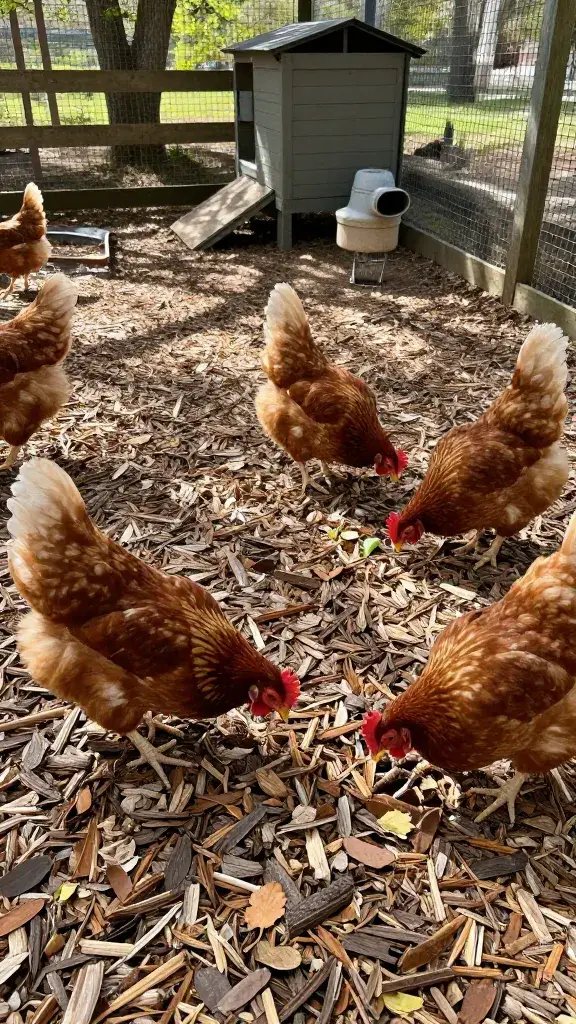
We’re talking tree-service wood chips, not bagged bark mulch. Big, chunky chips drain well, resist compaction, and give chickens a natural playground that reduces boredom pecking.
Best Practices
- Source fresh, mixed hardwood chips from arborists—often free if you ask nicely.
- Layer 4–6 inches to start; top up every few months as they break down.
- Avoid cedar (aromatic oils can irritate respiratory systems). Pine, maple, oak = thumbs up.
Choose this when you want a woodland floor vibe and a forgiving surface that handles rain. It’s awesome under trees and around runs that get daily traffic.
4. Gravel Base + Topper Combo
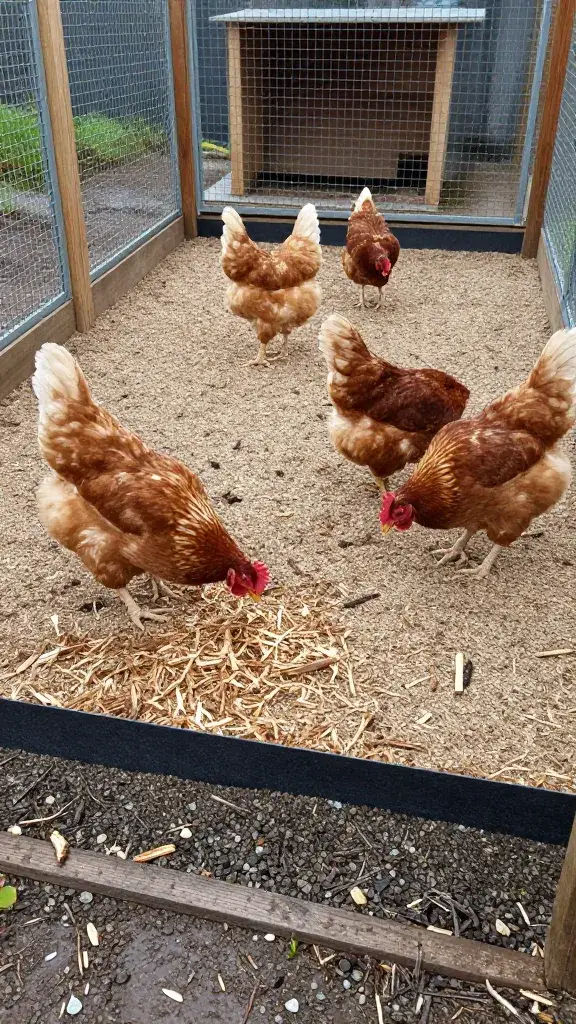
Want bulletproof drainage? Build the run like a tiny patio. A crushed gravel base stops mud forever, and a soft topper keeps feet comfy.
Layering Plan
- Bottom: 2–3 inches of crushed stone (3/4″ minus) for drainage.
- Middle: landscape fabric to keep dirt from migrating upward.
- Top: 2–4 inches of coarse sand or wood chips for comfort and scratchability.
This setup costs more upfront but saves your sanity if your yard turns to pudding every spring. Great for permanent runs and heavy flocks that churn the ground daily.
5. Living Green Rugs (Clover, Fescue, Or Rye)
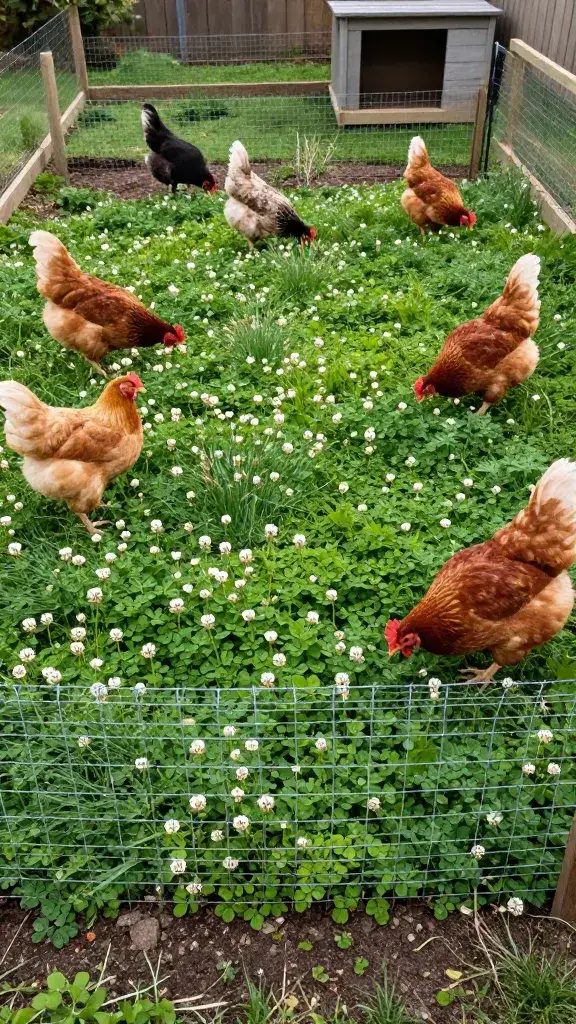
You can absolutely grow a carpet of green in a chicken run—if you rotate access. Chickens love greens, and a living floor controls dust, looks pretty, and offers free snacks.
How To Keep It Alive
- Seed with white clover mixed with hardy fescue or annual rye—fast to germinate and tough.
- Use grazing panels (hardware cloth framed a few inches above soil) so plants regrow while birds nibble.
- Rotate sections open and closed every 1–2 weeks, depending on growth.
Use this when you have space for rotation or a larger run. It turns peck time into salad time and lowers your feed bill, FYI.
6. Pea Gravel Paths + Activity Zones
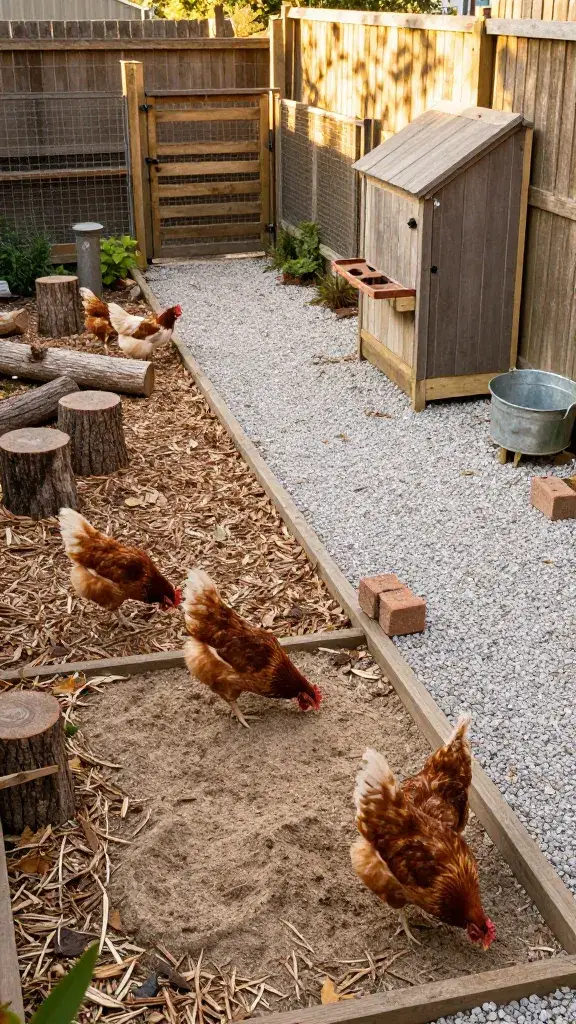
Mix surfaces for the win. Pea gravel where you walk means no muddy boots, while softer zones give hens a comfy scratching area. Your run becomes functional and cute—yes, both.
Smart Layout Ideas
- Create pea gravel walkways from the gate to the coop door and feeder.
- Designate a corner with sand for dust baths and another with wood chips for foraging.
- Add stumps, logs, and bricks for perches and toe-trimming traction.
Perfect if you hate slogging through muck on chore runs. The chickens get variety, and you get a tidy, Instagrammable setup that drains well.
7. Rubber Stall Mats With Carbon Cover
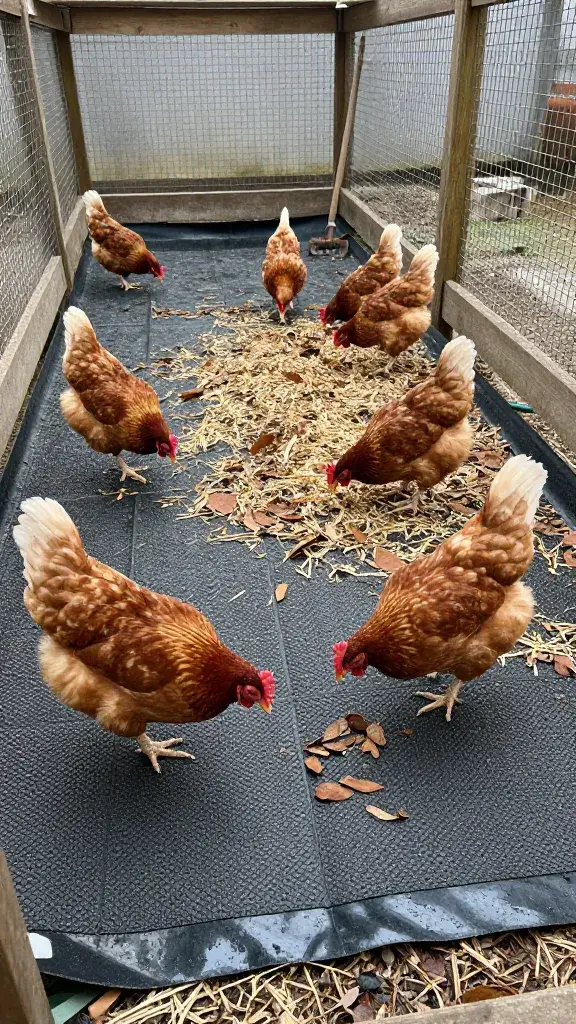
If your run sits under a roof or you want easiest-ever cleaning, rubber stall mats bring gym-floor durability. Top with carbon material for odor control and comfort, and you’ve got a clean, rinseable surface.
Setup Essentials
- Lay interlocking rubber stall mats over level ground or a gravel base.
- Top with 2–3 inches of pine shavings or dry leaves to absorb droppings.
- Rake weekly, remove saturated areas, and deep-clean mats seasonally with a hose.
Use this when you need maximum hygiene—like under a roofed run or in snowy climates. It keeps pests down, speeds cleaning, and protects feet from cold, wet ground.
Quick Comparison Cheat Sheet
- Deep Litter: Low maintenance, compost builder, best in dry/covered runs.
- Sand: Drains fast, easy to scoop, great in wet areas.
- Wood Chips: Natural look, playful texture, good drainage.
- Gravel + Topper: Ultimate drainage, higher upfront cost, long-term sanity.
- Living Greens: Gorgeous and nutritious, needs rotation/protection.
- Pea Gravel Paths: No-mud chores, mix with sand/chips for comfort.
- Rubber Mats + Carbon: Clean and quick, ideal under cover or in snow.
Extra Tips To Keep Any Run Fresh
- Add roof panels or a clear tarp on the wettest side to block prevailing rain.
- Use hardware cloth skirts outside the run to deter diggers and keep your flooring in place.
- Toss in garden-safe herbs (mint, oregano) or dried leaves for enrichment and aroma.
- Stir surfaces after storms to restore fluff and airflow—takes two minutes, saves your nose.
Ready to upgrade your chicken runway? Pick one idea, start small, and tweak as you go—your flock will tell you what they love. Keep it dry, give them variety, and you’ll have happy hens and a run that doesn’t smell like a swamp. IMO, that’s a cluckin’ win.
Share this content: