4 Best Companion Plants for Tomatoes in Raised Beds That Work
You want ridiculously juicy tomatoes without babysitting them all summer? Plant the right companions and let nature do the heavy lifting. These four sidekicks boost flavor, beat back pests, and keep your raised beds thriving. Ready to get more tomatoes with less drama? Let’s pair them up like a matchmaker who gardens.
1. Basil: The Flavor Wingman Your Tomatoes Deserve
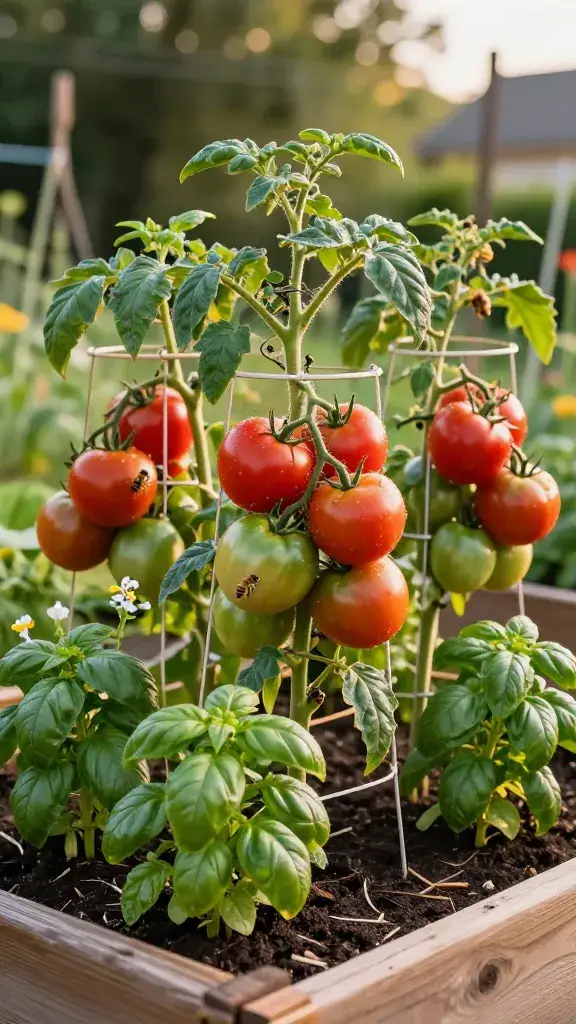
Basil and tomatoes go together like popcorn and movies—classic, dependable, and a little addictive. Planting basil around your tomatoes can improve tomato flavor, lure helpful pollinators, and confuse pests like thrips and whiteflies. Plus, you’ll never run out of pesto again, which is a public service IMO.
How to Plant It Right
- Spacing: Tuck 2–3 basil plants around each tomato, 8–12 inches from the stem.
- Timing: Transplant basil when nights stay above 50°F—basil hates cold feet.
- Height: Choose compact or Genovese types; pinch often to keep them bushy.
In raised beds, basil’s shallow roots fit perfectly around tomato roots without competing too hard. Just pinch the tips weekly to prevent bolting and to keep the leaves sweet.
Pro Tips
- Mulch lightly around basil with shredded leaves or straw to keep moisture steady.
- Harvest often. Frequent snips trigger more leafy growth and fewer flowers.
- Stagger sowings every 3–4 weeks so you always have fresh, tender leaves.
Use basil when you want better-tasting tomatoes and bonus bug control. It’s the easiest companion to love—and the most delicious.
2. Marigolds: The Tiny Bodyguards With Big Attitude
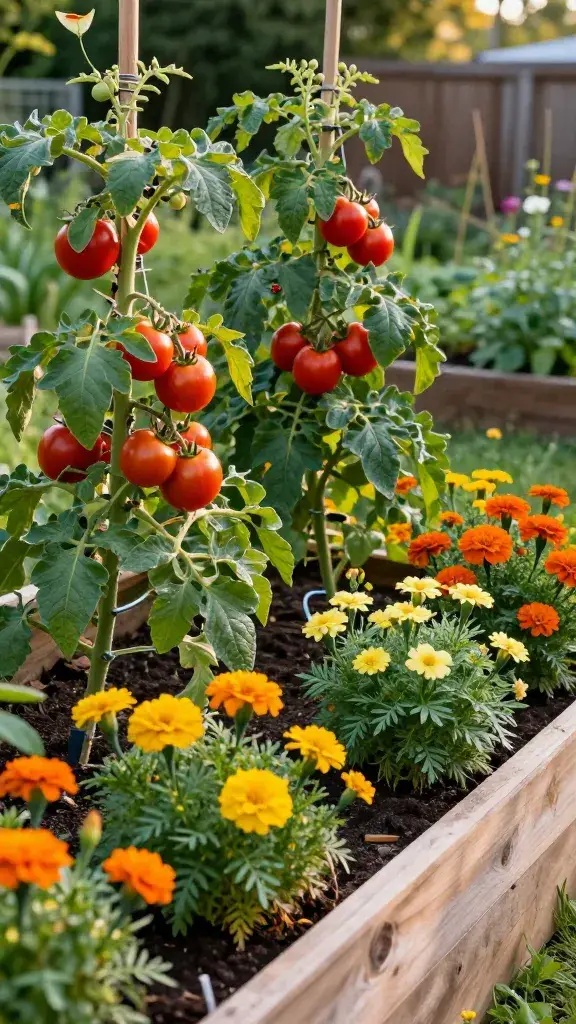
Marigolds look cute, but they act tough. Their bold scent can deter aphids and whiteflies, and French marigolds in particular help reduce harmful root-knot nematodes in the soil over time. In a raised bed, they’re compact, colorful, and seriously hardworking.
Best Varieties for Tomatoes
- French marigolds (Tagetes patula): Great around bed edges; short, bushy, and effective for soil health.
- Signet marigolds (Tagetes tenuifolia): Edible petals, lighter scent, and loads of tiny blooms.
- Avoid calendula as a direct swap—it’s lovely but not the same pest deterrent powerhouse.
Placement + Care
- Plant a ring of marigolds 6–10 inches from the tomato stems.
- Deadhead spent blooms to keep flowers coming all season.
- Water at soil level; soggy foliage invites powdery mildew.
Marigolds shine when you want low-maintenance color and natural pest management without sprays. Seriously, they’re the glitter of the garden—except useful and not messy.
3. Borage: The Pollinator Magnet With a Hidden Superpower
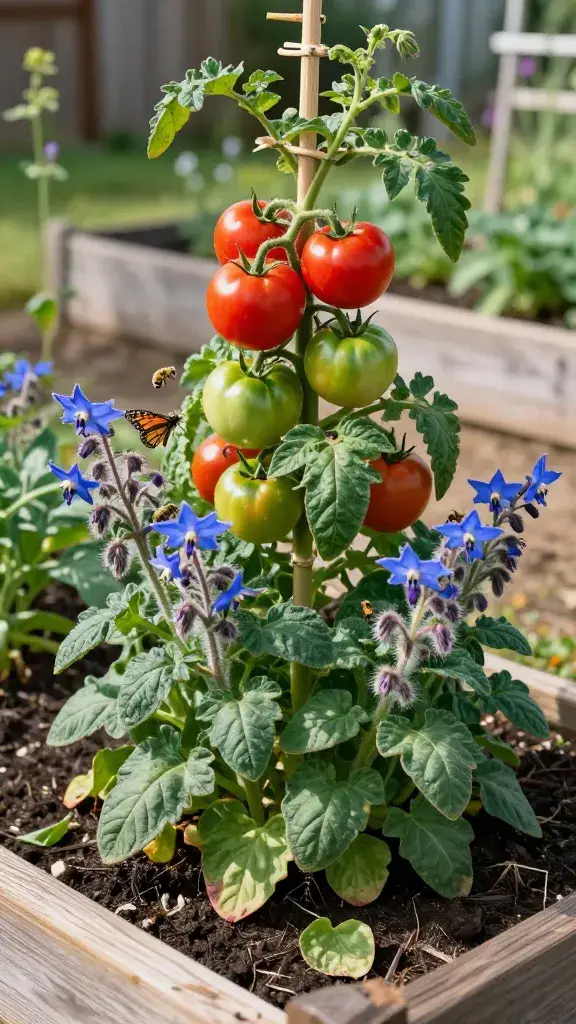
Borage brings the party—bees, butterflies, and beneficial insects show up for its starry blue flowers. Those visitors help pollinate tomatoes, which can translate to better fruit set. Bonus: borage leaves add trace minerals to the soil as they break down, and the plant may help deter tomato hornworms.
Why It Works in Raised Beds
- Airy growth doesn’t crowd tomatoes, yet provides light shade for soil moisture.
- Taproot mines nutrients deeper down and cycles them back when you chop-and-drop.
- Self-seeds just enough to be helpful but not annoying—pull extras if needed.
How to Use It
- Sow seeds directly once soil warms; they germinate fast.
- Give each plant 12–18 inches so it doesn’t wrestle your tomatoes for elbow room.
- Cut back midseason if it flops; use prunings as mulch around tomatoes.
Borage works best when you want to boost pollination and resilience without micromanaging. The edible cucumber-flavored flowers don’t hurt either—hello, fancy salad.
4. Nasturtiums: The Stylish Decoy That Traps the Bad Guys
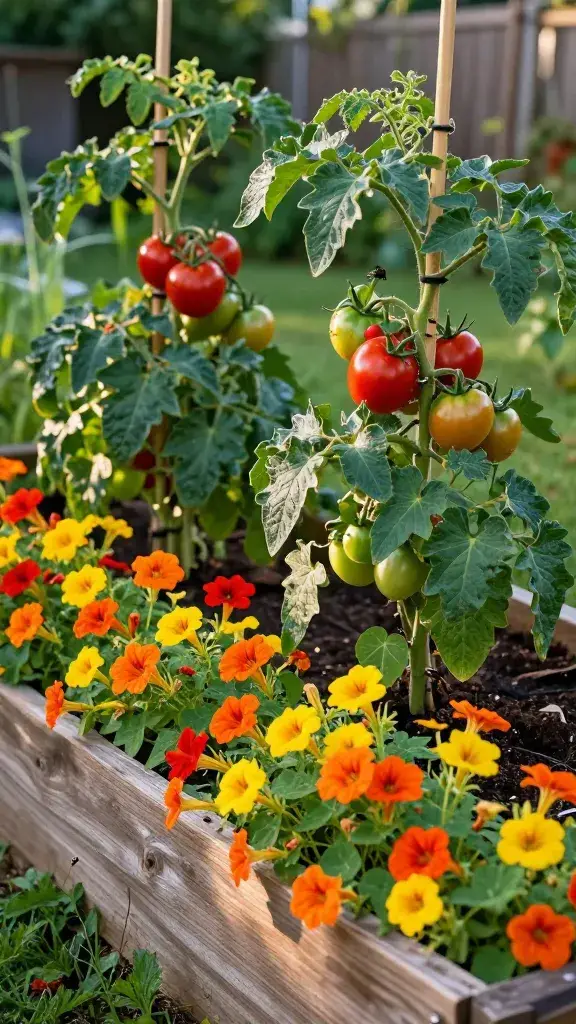
Nasturtiums look like cute groundcover, but they double as a decoy for aphids and flea beetles. They’ll often lure pests away from your tomatoes while providing living mulch that shades soil and reduces splash-back (which can spread disease). That trailing habit also spills beautifully over raised bed edges—form meets function.
Smart Planting Strategy
- Edge the bed with trailing varieties to create a pest “buffer zone.”
- Give them 10–12 inches and let vines drape; avoid smothering young tomato stems.
- Water deeply but infrequently; too much fertilizer means more leaves, fewer flowers.
Quick Care + Harvest
- Blooms and leaves are edible with a peppery kick—use in salads and sandwiches.
- Check undersides of leaves weekly; if aphids party too hard, blast with water or prune off infested bits.
- Choose lighter-colored flowers if you want more edible blooms through heat waves.
Plant nasturtiums when you want easy color, living mulch, and stealth pest control. FYI: they make your garden look like you actually planned things.
Ready to turn your raised bed into a tomato dream team? Pair a couple of these companions and watch your plants grow happier, healthier, and more productive. Mix and match, experiment a little, and trust me—your tomatoes will thank you with every juicy bite.
Share this content: