12 Plants to Grow in Raised Beds That Chickens Won’T Destroy (and 6 They Will Obliterate) Cheat Sheet
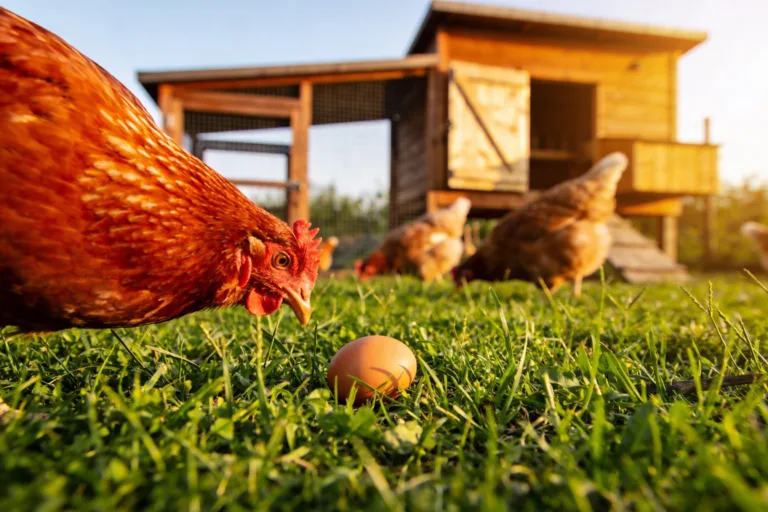
Your chickens see your garden as an all-you-can-scratch buffet. You see salad. Let’s end the chaos. These 12 plant picks hold up better in raised beds with feathered hooligans around—plus, FYI, six you should protect like state secrets. Ready to plant smarter and keep the peace? Let’s dig in.
1. Aromatic Allies: Lavender That Chickens Snub
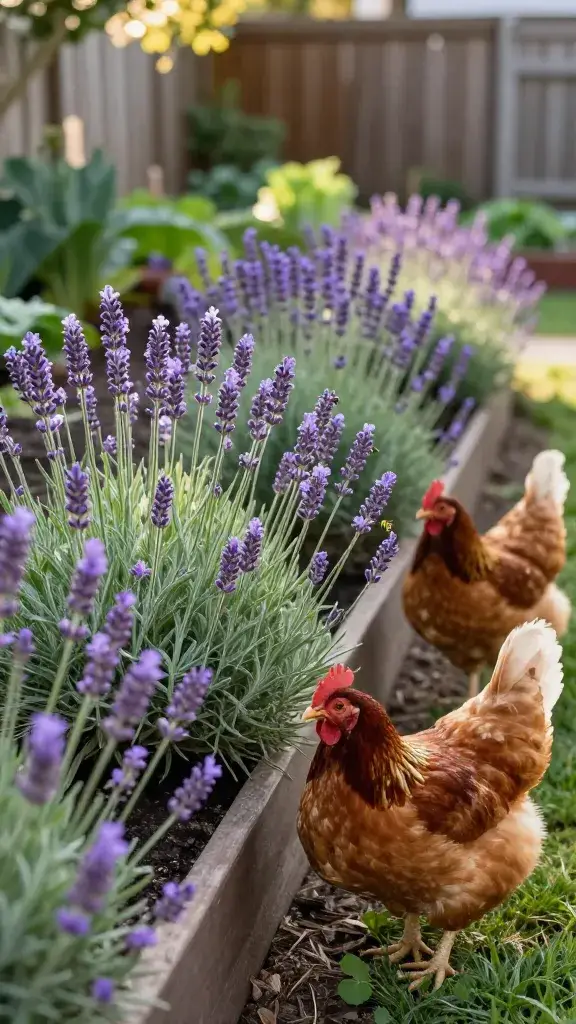
Lavender looks gorgeous, smells dreamy, and your chickens will give it the cold shoulder. The strong scent and woody stems make it a “meh” snack for curious beaks.
Why It Works
- Fragrance barrier: Intense scent deters pecking and loitering.
- Woody growth: Less tender, harder to shred.
- Pollinator magnet: Bees love it, hens don’t.
Use lavender along raised bed edges as a living speed bump. It doubles as a pretty border and vibe-setter.
2. Tough Customers: Woody Herbs Like Rosemary
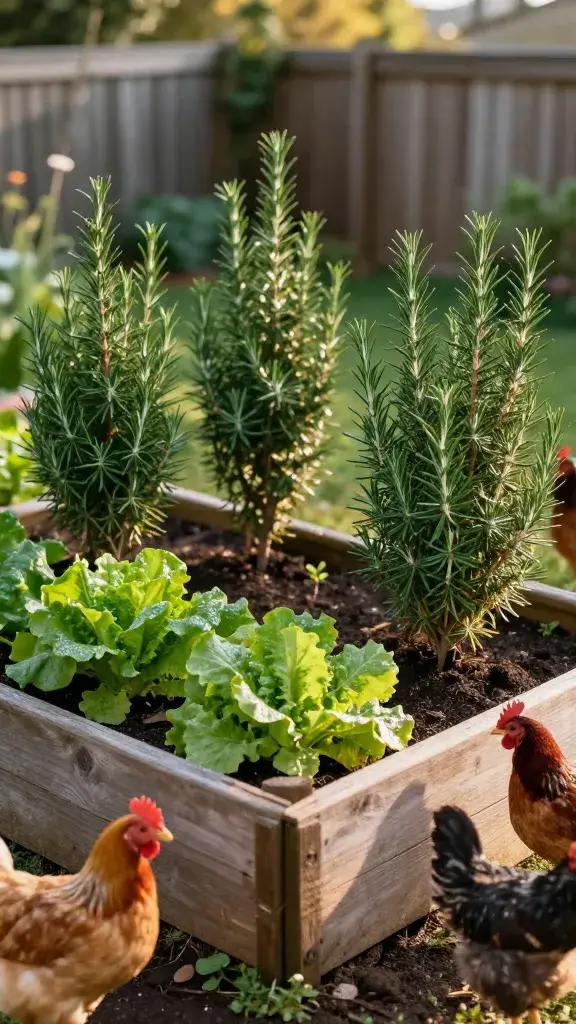
Rosemary brings flavor to the kitchen and structure to the bed. Chickens avoid it because it’s prickly, resinous, and frankly not that tasty to them.
Tips
- Choose upright varieties for hedging.
- Plant at corners to guard softer crops inside.
- Don’t overwater—rosemary hates wet feet.
Plant rosemary to protect tender greens in the center. It plays bodyguard and seasoning in one plant.
3. The Zesty Shield: Mature Onions And Garlic
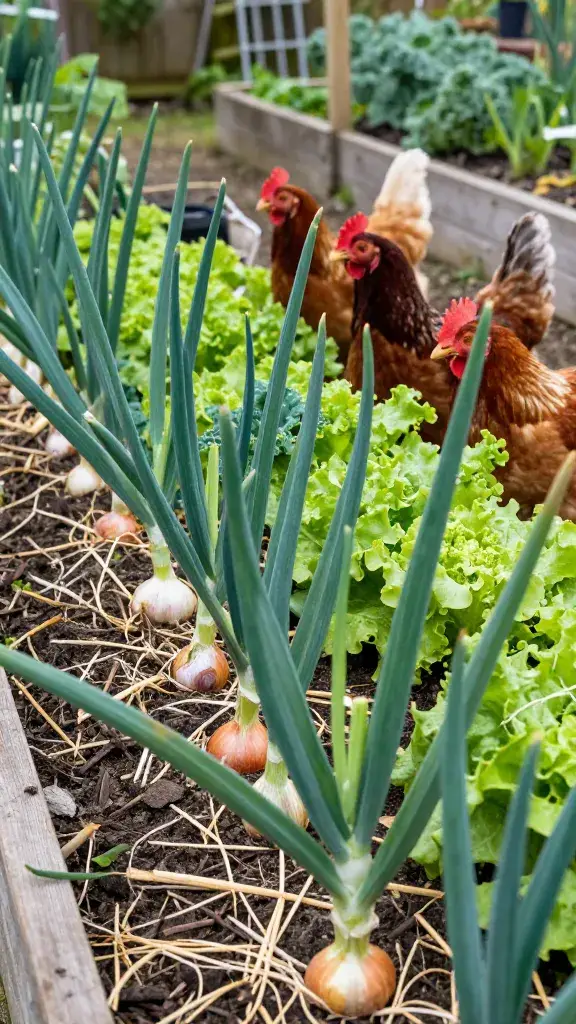
Alliums mean business. Their sulfurous scent and papery, fibrous leaves make chickens say “hard pass.”
Key Points
- Bulbs underground: Safer from scratching if well-mulched.
- Scentscape: Repels nibbling and sometimes deters pests, too.
- Low allure: Not the sweet leaf texture hens crave.
Use alliums in bands around greens. Harvest bulbs later; enjoy fewer claw marks now.
4. Showy And Safe: Nasturtiums As Decoy And Damage Control
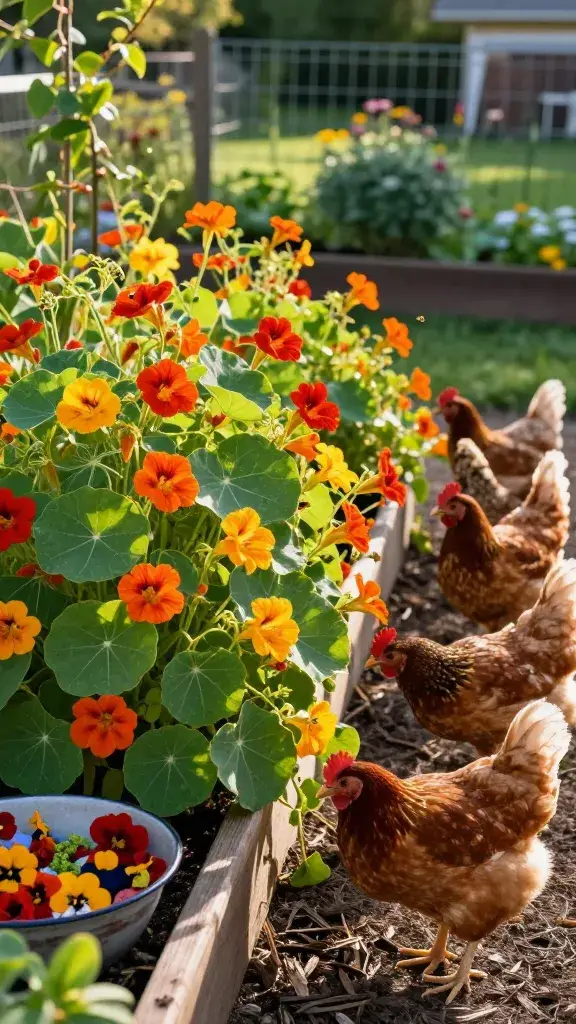
Curveball: nasturtiums can take a peck, but they often rebound fast and sprawl to cover soil. Many chickens ignore them once they taste the pepper bite—others snack lightly.
How To Use
- Plant at bed rims to shade soil and reduce scratching spots.
- Eat the flowers in salads—peppery goodness.
- Let them drape over edges to distract curious birds.
Great for color, pollinators, and erosion control. They’re the charming chaos you can live with.
5. Ornamental Armor: Spiky Or Textured Sage
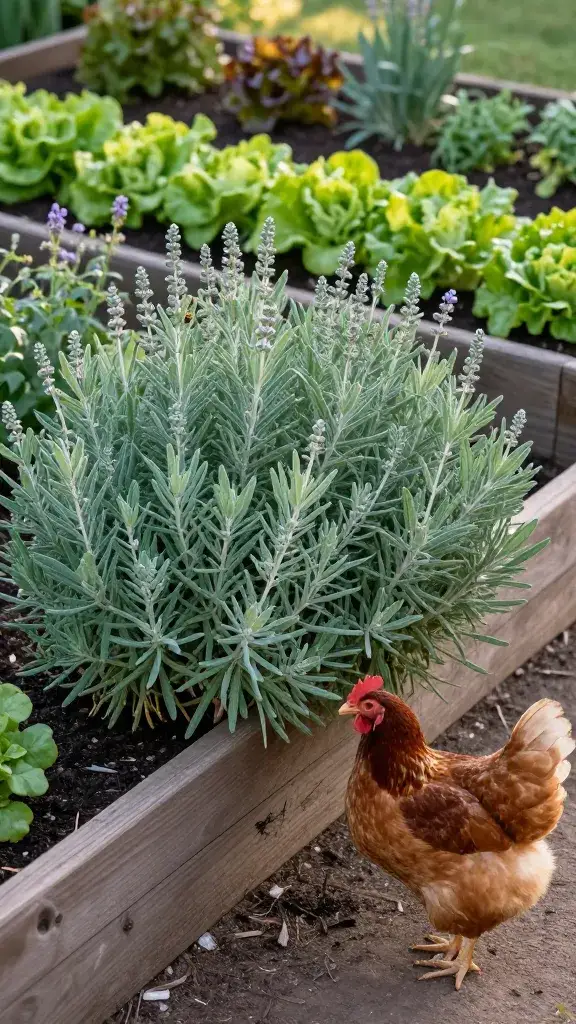
Garden sage brings silvery leaves and a faintly camphor scent that doesn’t scream “treat.” The rough texture and woody base make it resistant to chicken demolition.
Tips
- Prune lightly to keep a bushy, protective shape.
- Plant near salad greens as a scent buffer.
- Good drought tolerance—perfect for raised beds.
Sage supports pollinators in bloom and guards pathways from scratch-happy hens.
6. Bitter Beauty: Calendula That Bounces Back
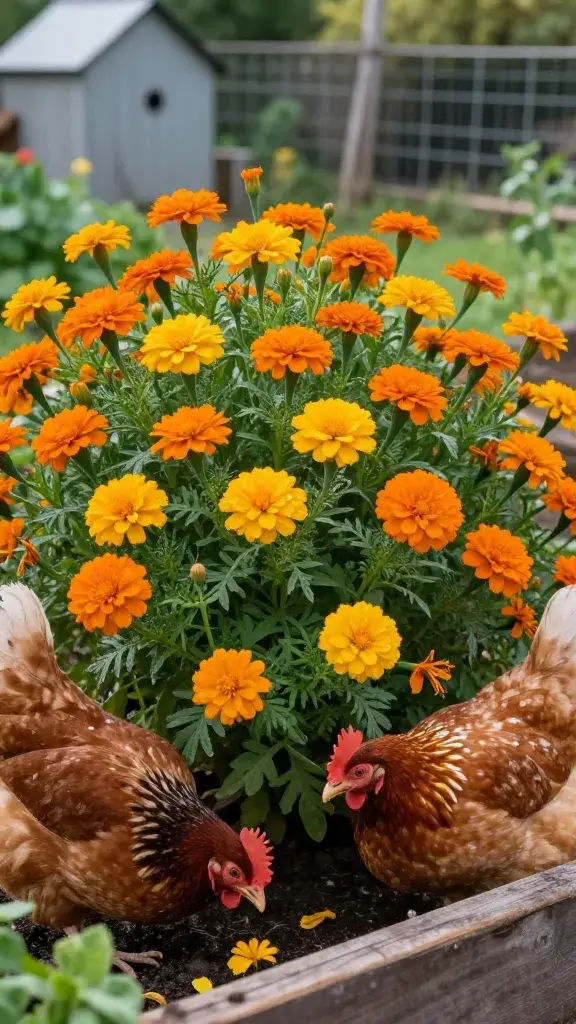
Calendula flowers like crazy and tolerates the occasional peck. The leaves taste bitter, so many hens move on fast, and the plants reseed like champs.
Why Gardeners Love It
- Medicinal petals: Add to salves and teas.
- Cold-tolerant: Extends shoulder seasons.
- Self-sowing: Fills gaps after minor damage.
Use calendula as a cheerful filler that survives light chicken drama. You get color without constant replanting.
7. Fence-Worthy: Thornless Blackberries On Trellises
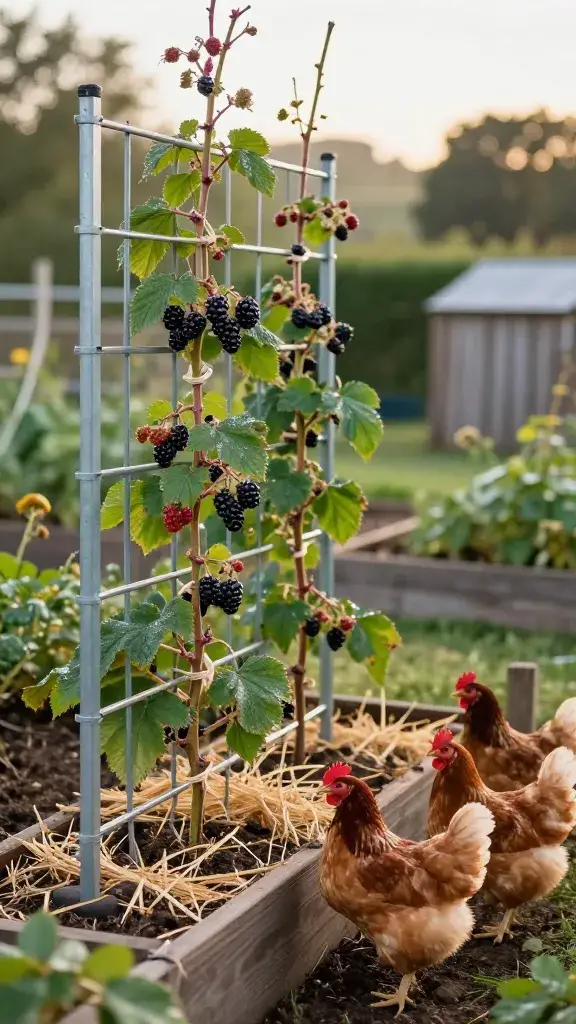
Chickens can’t destroy what they can’t reach. Train thornless blackberries up trellises in your raised beds and keep fruit off ground level.
Setup
- Strong trellis or cattle panel for vertical growth.
- Mulch thickly to reduce scratching at the crown.
- Prune canes to maintain airflow and height.
Vertical fruiting means safer harvests, fewer muddy berries, and a smug feeling when hens give up.
8. Citrus Vibes: Lemon Balm And Mint (In Moderation)
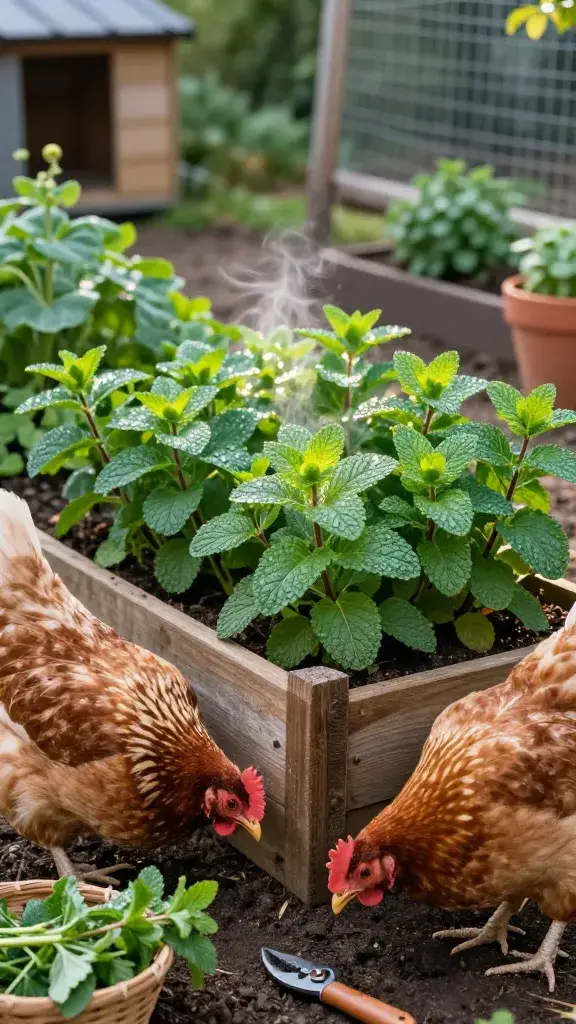
These fragrant mints usually repel pecking thanks to strong oils. They spread like gossip, so keep them contained in raised beds or bottomless pots sunk in the soil.
Pro Moves
- Plant in corners to create scent plumes.
- Harvest often to prevent takeover.
- Water regularly; they like moisture.
Use them as herbal air fresheners and tea heroes. Most hens sniff and walk away—win.
9. Velvet And Drama: Ornamental Grasses And Hardy Sedges
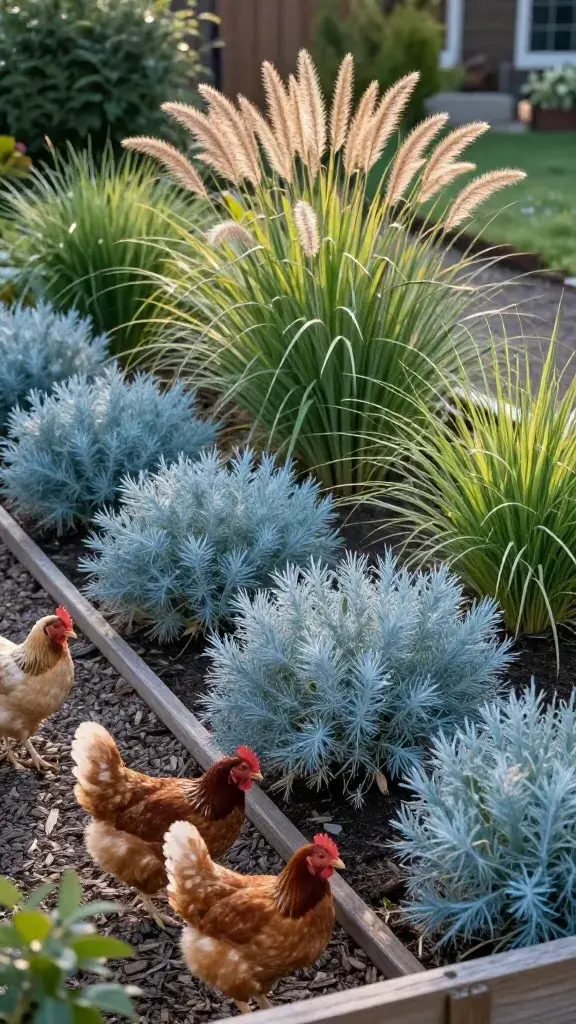
Chickens love to flatten delicate groundcovers, but clump-forming grasses hold their shape and rebuff scratching. Bonus: they look stunning in beds year-round.
Good Picks
- Blue fescue: Compact and tidy.
- Pennisetum ‘Hameln’: Soft foxtail plumes, resilient clumps.
- Carex varieties: Tough texture, evergreen in mild zones.
Use grasses to define edges and reduce open soil—a major scratch trigger.
10. Leafy But Safe-Adjacent: Swiss Chard With Sacrificial Strategy
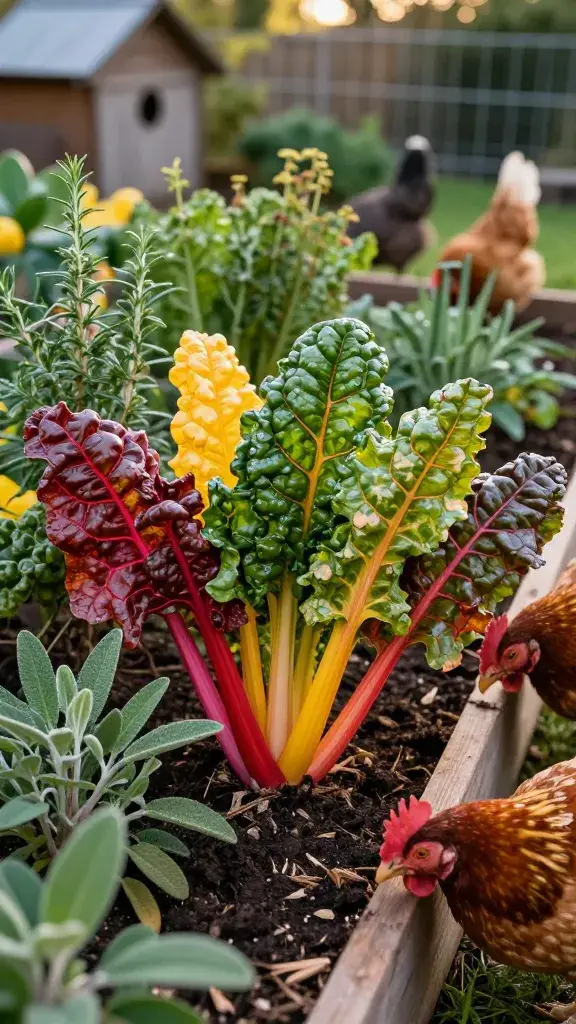
Chard can be tempting, but it’s tougher than lettuce and rebounds after mild pecking. If you plant a dense patch, hens usually graze the edges and leave the core intact.
Grow It Smart
- Start transplants big before birds get curious.
- Interplant with sage or rosemary for added deterrence.
- Harvest outer leaves often to keep fresh growth inside.
Great when you want greens but can’t police the coop 24/7. It’s the “resilient salad” move.
11. Sunshine Shields: Marigolds As Visual And Scent Barriers
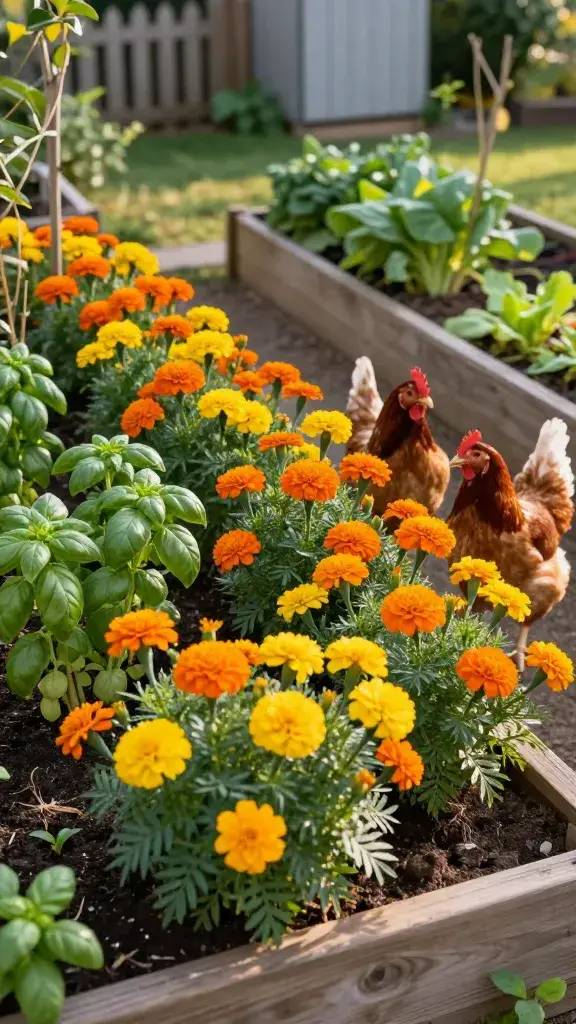
Marigolds bring color and a pungent aroma that many chickens ignore. Their sturdy stems and constant blooms make them surprisingly tough for annuals.
Placement
- Ring raised beds with a marigold border.
- Deadhead to keep flowers rolling.
- Mix with basil or peppers to frame tender crops.
Use marigolds to reduce peck curiosity and add happy color. Seriously, they earn their keep.
12. The Big-Leaf Trick: Zucchini And Summer Squash With Mulch Armor
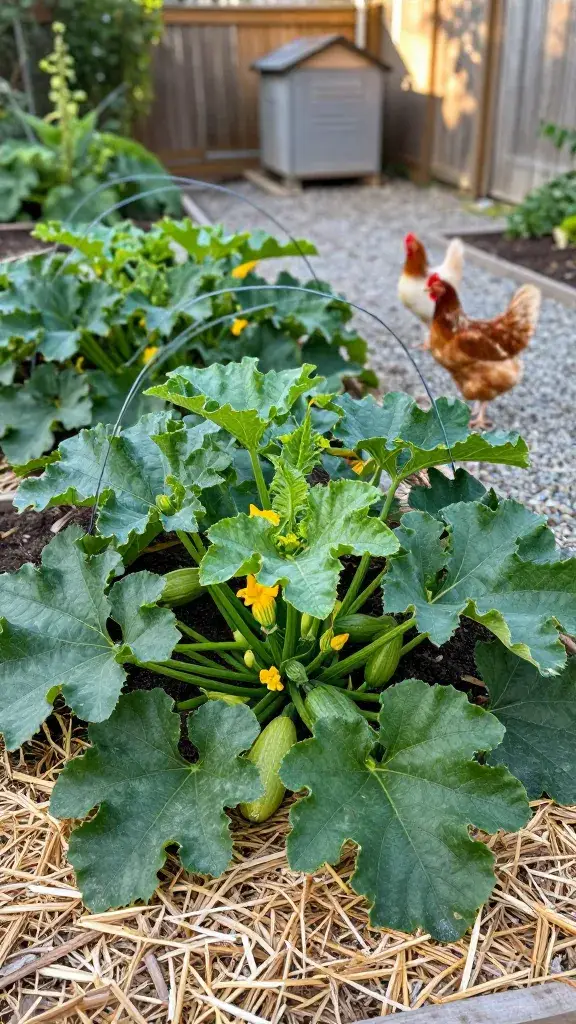
Chickens often avoid mature squash because the leaves get bristly and the plants sprawl like linebackers. Thick mulch at the base prevents enthusiastic excavation.
Grower Notes
- Start with transplants to leap past the tender seedling phase.
- Use a low wire hoop early on if hens seem too interested.
- Pick fruit frequently to keep plants vigorous.
Ideal for raised beds that need high yield and quick canopy. Big leaves = less exposed soil = less scratching.
Bonus Reality Check: 6 Plants Chickens Will Obliterate If You Blink
Let’s keep it honest. Some crops make your flock go feral. If you grow these, cage them, plant them in a chicken-free zone, or accept emotional damage.
Protect These At All Costs
- Lettuce and Baby Greens: Tender, juicy, gone in minutes.
- Strawberries: Red bullseyes for beaks—ripe or not.
- Young Brassicas (Kale, Broccoli, Cabbage): Seedlings get shredded; mature plants fare better but still risky.
- Spinach: Delicate leaves = snack-time.
- Beet Greens: Tops get mowed before roots size up.
- Peas and Pea Shoots: Sweet vines are irresistible climbing toys/snacks.
Use hoops with hardware cloth, floating row cover, or a simple scrap-wood frame to save these. IMO, it’s non-negotiable.
Extra Defense Moves That Actually Work
- Edge Mulch + Stones: Add a 6–8 inch rim of chunky wood chips or river rock around plant bases to kill digging motivation.
- Low Fencing: A 24-inch hardware cloth fence around raised beds stops most fly-ins and hop-ons.
- Decoy Dust Baths: Give hens a designated dust spot with sand/ash so they ignore your beds.
- Timing: Free-range after evening feeding when peck energy dips, not right after you seed beds.
- Start Big: Transplant sturdy starts instead of direct seeding the most vulnerable crops.
There you go—the unofficial truce between your garden and your chickens. Mix these tougher plants with smart barriers, and you’ll keep both eggs and veggies rolling in. Ready to plant a bed your flock won’t wreck? Your future salads say thanks.
Share this content: