10 Budget-Friendly Predator-Proofing Hacks for Your Chicken Coop That Work
Your flock deserves better than nightly drama with raccoons and foxes. These budget-friendly hacks lock down your coop without bleeding your wallet dry. We’ll focus on smart materials, easy installs, and tricks that outsmart persistent predators—because they never clock out. Ready to make your coop a fortress with finesse?
1. Bury Hardware Cloth Like You Mean It
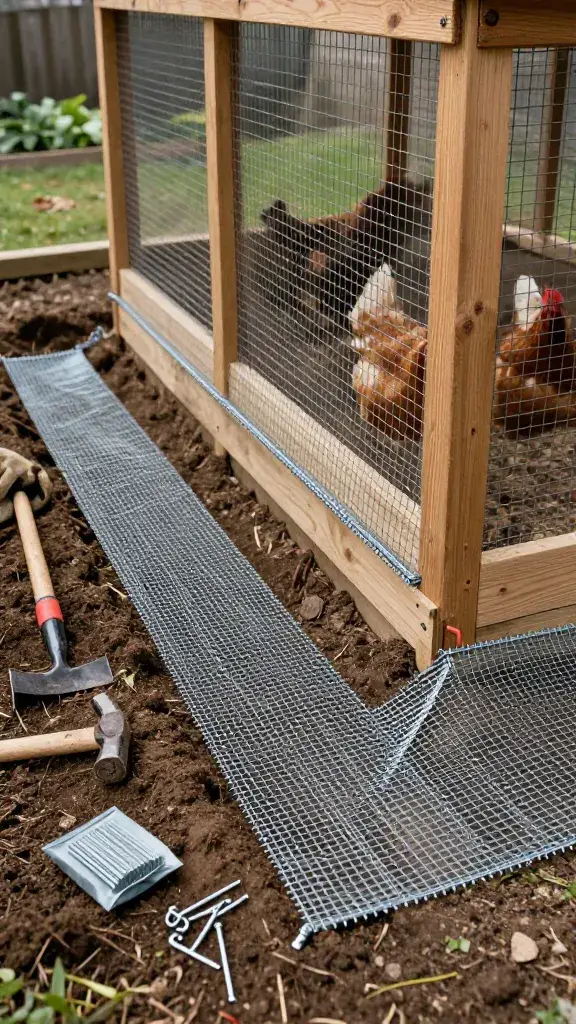
Predators don’t knock—they dig. Stop them cold by installing a buried barrier around your coop and run. Hardware cloth beats chicken wire every time because raccoons and foxes can’t tear or stretch it.
Materials
- 1/2-inch galvanized hardware cloth (19-gauge if you can swing it)
- Landscape staples or U-nails
- Shovel or trenching spade
- Galvanized staples and a hammer
Dig a trench 10–12 inches deep around the perimeter. Either bury the cloth vertically or lay a 24-inch wide “apron” outward at a 90-degree angle just under the soil. Pack the dirt back tightly. This makes digging a lost cause for coyotes, dogs, and ambitious skunks.
Benefit: You create a dig-proof perimeter that stands up for years with minimal maintenance.
2. Upgrade From Chicken Wire To Hardware Cloth Everywhere
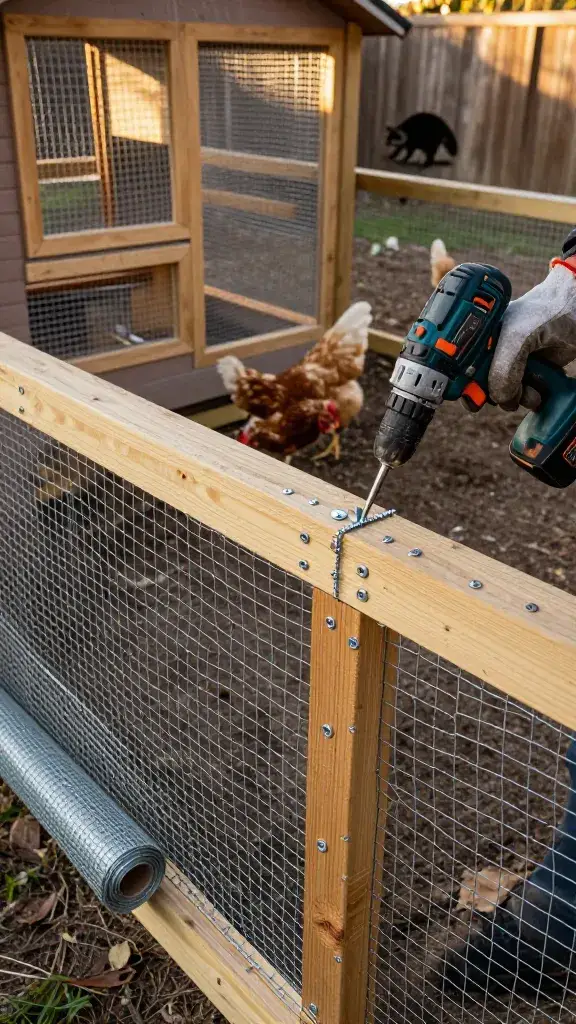
Chicken wire keeps chickens in, not predators out. Raccoons can reach through it, and weasels can slip right in. Swap it out for hardware cloth on vents, windows, and the run to slam the door on opportunists.
Key Points
- Use 1/2-inch mesh for general defense; 1/4-inch if weasels or snakes lurk nearby.
- Attach cloth with screws and fender washers for serious hold.
- Overlap seams by 2 inches and secure every 4–6 inches.
If budget feels tight, prioritize windows, vents, and the lower 3 feet of the run first. Then phase in the rest over time.
Benefit: This instantly reduces your biggest vulnerabilities—small gaps and flimsy wire.
3. Lock It Like a Raccoon Is Watching
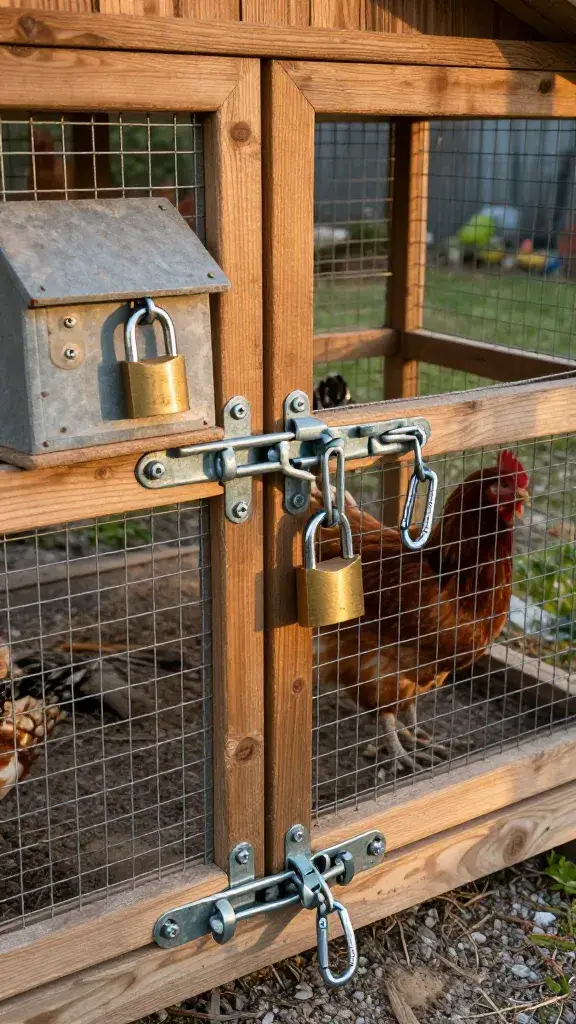
Raccoons have PhDs in opening latches. If a toddler can open it, a raccoon can too—faster. Use lockable hardware, not cutesy hooks.
Smart Lock Options
- Carabiner + Eye Bolt: Cheap, simple, raccoon-thwarting.
- Hasp + Padlock: For main coop doors and nesting box lids.
- Barrel Bolts With Carabiners: Top and bottom of doors to block prying.
Install two latch points on large doors so predators can’t torque them open. And yes, you’ll feel like you’re locking a mini bank vault—but it works.
Benefit: You defeat dexterous thieves without pricey specialty locks.
4. Build A Predator Apron—No Digging Required
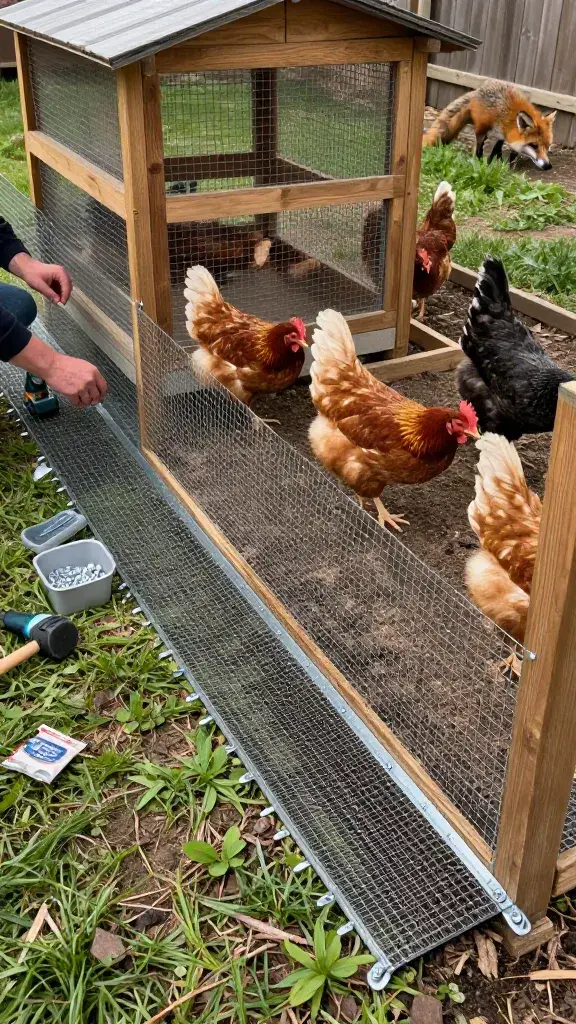
No trenching tools? No problem. Lay a hardware cloth apron flat on the ground around the run and coop and let the grass grow through it. Predators hit the mesh, give up, and move on to someone else’s buffet.
How-To
- Cut 24–36-inch strips of 1/2-inch hardware cloth.
- Attach to the base of the run with screws and washers.
- Lay it outward and pin with landscape staples every 12 inches.
- Cover with 1–2 inches of soil, mulch, or gravel.
This saves time and still blocks diggers effectively. FYI, mowing over it gets easier once the grass knits through.
Benefit: A fast, low-sweat alternative to trenching that still stops tunneling.
5. Tighten Every Gap, Crack, And Corner
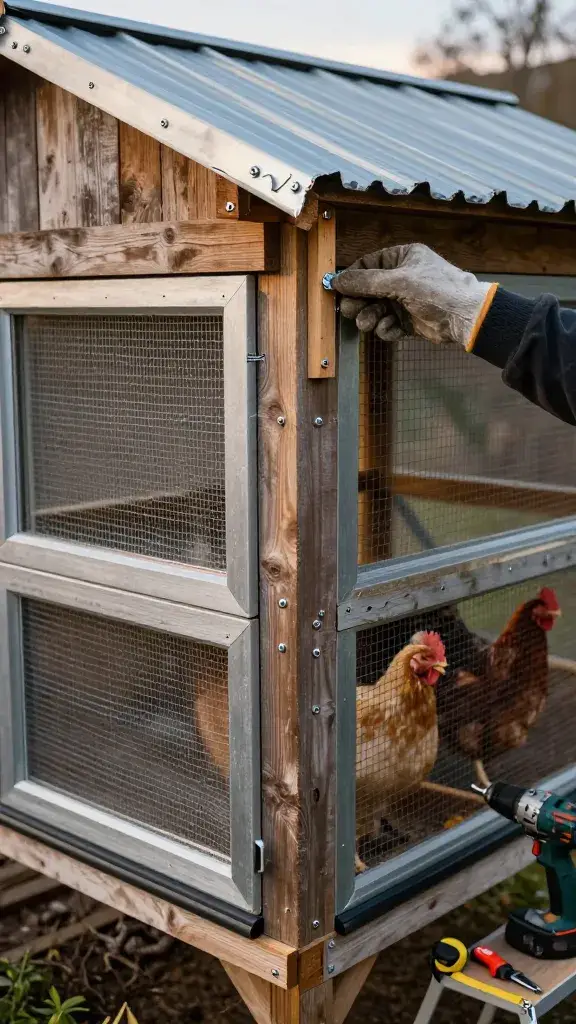
Weasels and snakes target openings you’d swear were too small. If your thumb fits, a weasel probably fits. Button up those entry points and you’ll sleep better.
High-Risk Spots
- Where roofs meet walls
- Under doors and thresholds
- Vent frames and window edges
- Between overlapping boards
Use metal flashing, wood trim, or more hardware cloth to close gaps under 1/2 inch. Add door sweeps to coop doors. Weatherstrip vent covers to block prying claws while keeping airflow steady.
Benefit: Small tweaks eliminate the sneaky entries that cause the worst surprises.
6. Add A Motion-Activated Light And Sound Combo
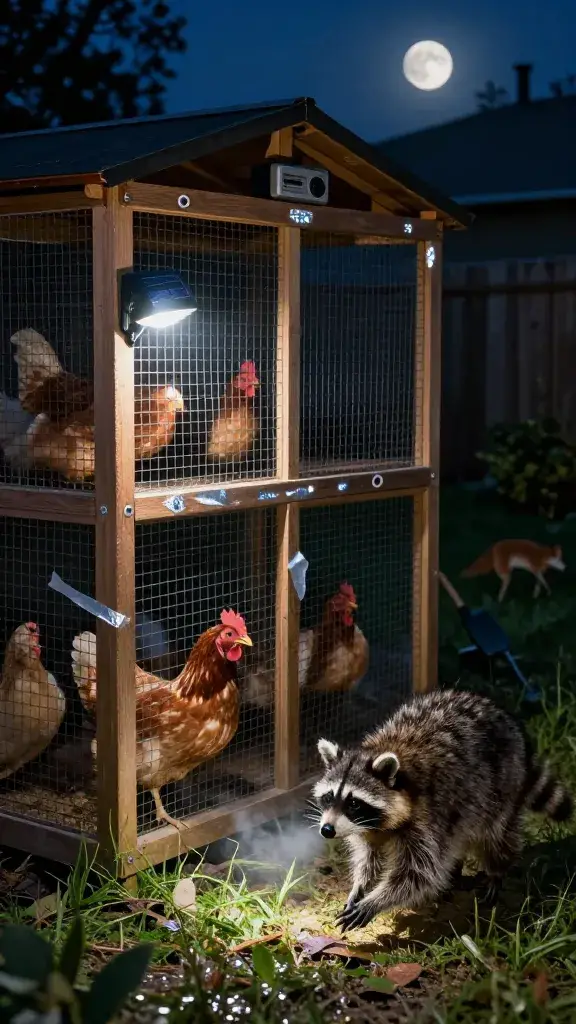
Nighttime predators hate surprises. Motion-activated lights and noise devices create instant “nope” moments for raccoons, foxes, and neighborhood cats. You don’t need fancy tech—just reliable deterrents.
Budget-Friendly Setup
- Solar motion light aimed at the run perimeter
- Battery-powered alarm or cheap radio on a timer
- Reflective tape or predator eyes near entry points
Place lights at knee height to catch ground movement. Rotate the sound source location weekly so critters don’t adapt. It’s not foolproof, but it shrinks nightly visits dramatically, IMO.
Benefit: Low-cost, low-effort deterrence layered onto solid physical security.
7. Reinforce The Roof And Overhead Access
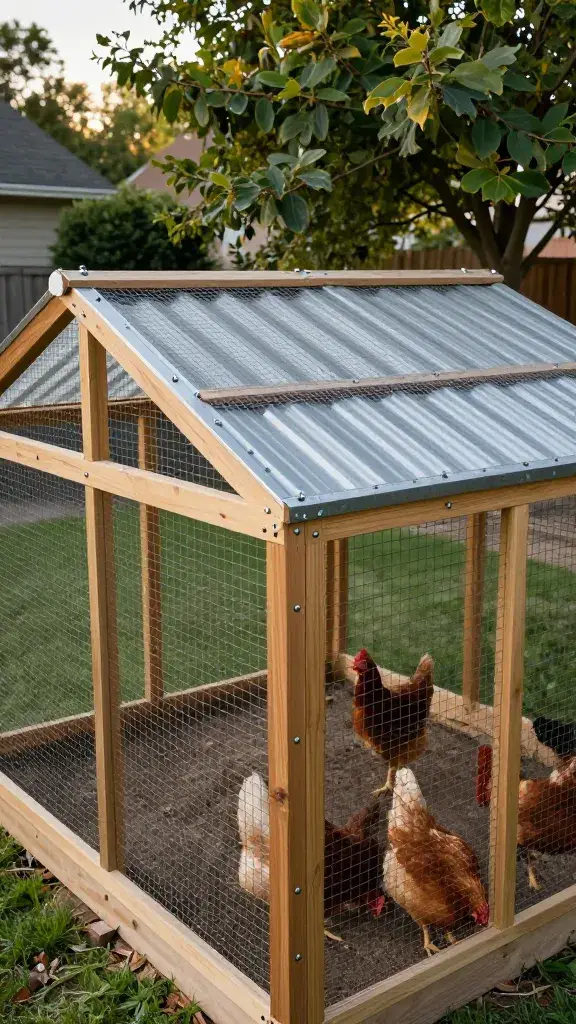
Predators climb, jump, and sometimes drop in from trees. If your run roof looks like an invitation, you need reinforcement. Think solid tops or tightly secured mesh—no sagging, no gaps.
Options That Don’t Break The Bank
- Hardware cloth roof with 2×2 supports every 2–3 feet
- Corrugated plastic panels for shade + rain protection
- Snow fencing or welded wire overlaid with hardware cloth at roost areas
Trim back branches that hang over your run. Squirrels don’t raid chickens, but raccoons definitely do. Keep the top tight and you shut down aerial acrobatics.
Benefit: Stops climbers and aerial drop-ins while adding weather protection.
8. Install A Predator-Proof Pop Door Routine
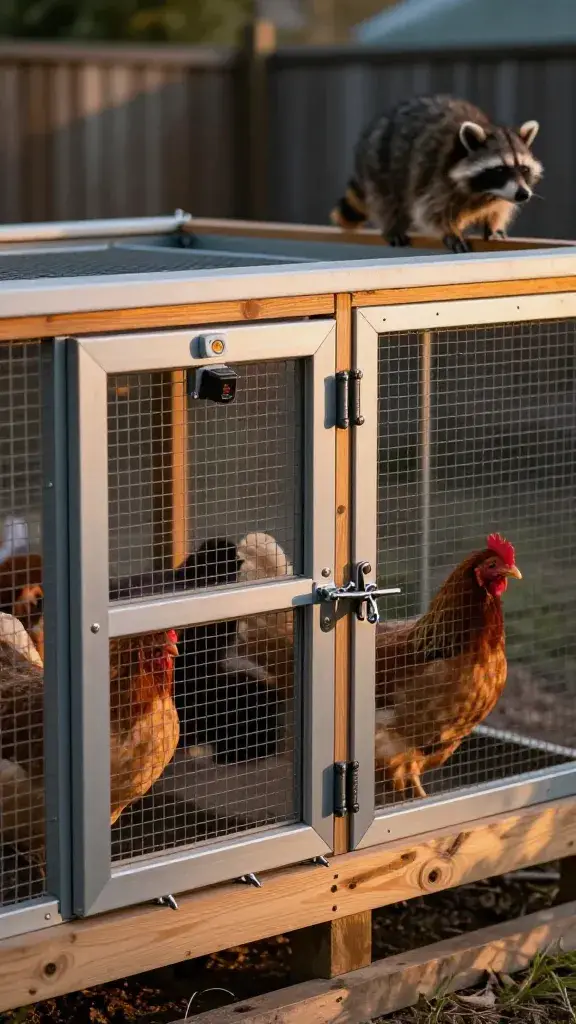
Your pop door matters more than you think. Night raids often happen because someone forgets to close it (we’ve all done it). Automate or make closing it a no-brainer with sturdy, reliable hardware.
Two Solid Approaches
- DIY Auto Door: Battery timer or light sensor + sliding door in U-channel.
- Manual But Foolproof: Vertical guillotine-style door with counterweight and a locking pin or carabiner.
Mount channels so claws can’t pry edges. Add a small threshold lip so nothing slides under. If budget allows, an automatic door pays for itself in peace of mind—seriously.
Benefit: You seal the coop reliably at dusk, even on your busiest days.
9. Use Gravel, Pavers, And Raised Edges To Block Tunnels
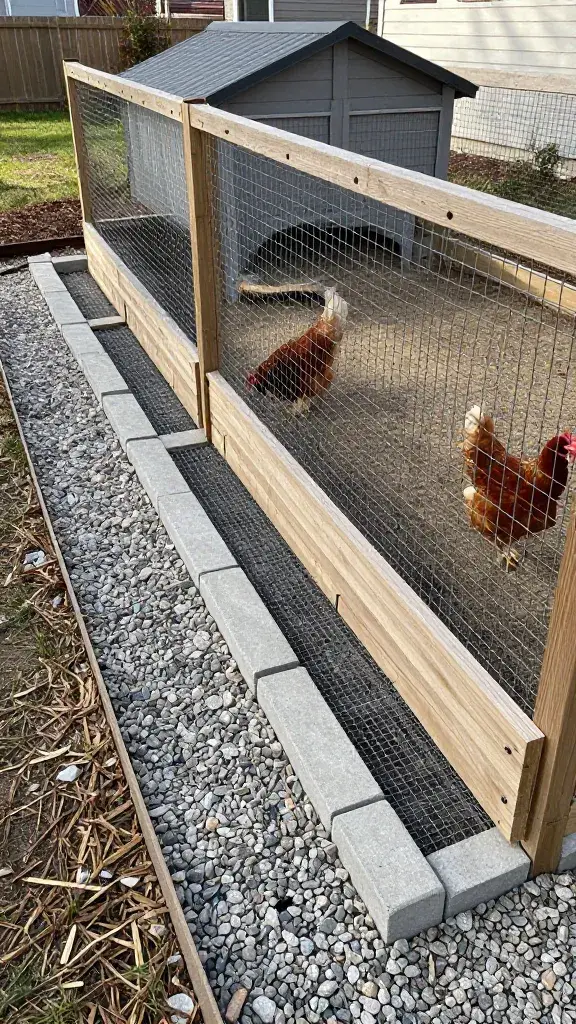
Predators love soft soil. Make it annoying to dig and they’ll move on. Hardscaping around your coop not only looks tidy but also stops undermining.
Quick Wins
- Concrete pavers around the perimeter—single or double row
- 3–4 inches of gravel along the run edge
- Pressure-treated 2×6 skirt anchored with rebar
Combine this with a hardware cloth apron for layered defense. Raised edges also help with drainage so your run stays drier and less smelly. Form and function for the win.
Benefit: A dig-resistant barrier that doubles as a mud-control upgrade.
10. Create A Nightly Lockdown And Scent Strategy
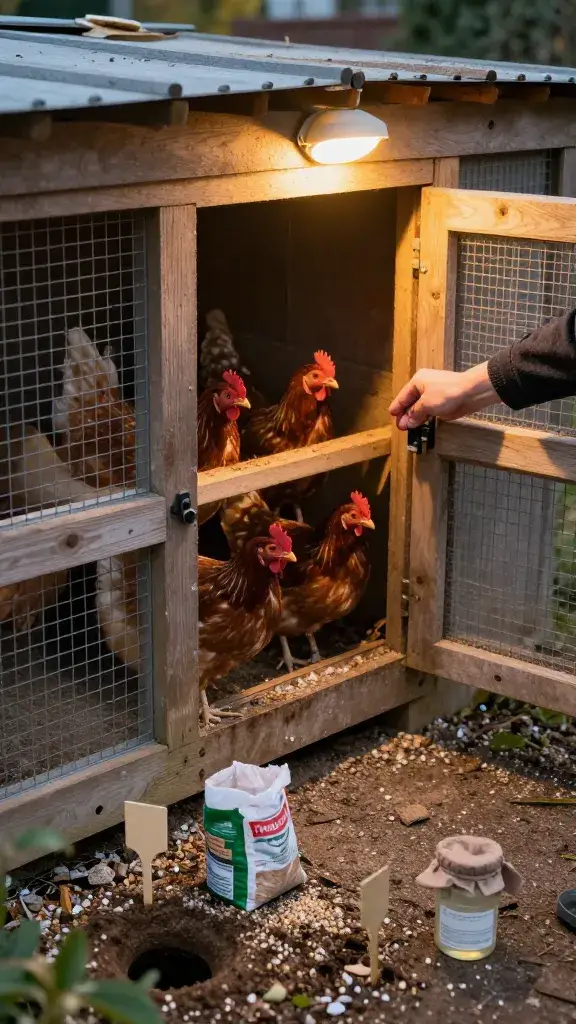
Good habits beat gadgets. A fast nightly routine plus scent deterrents discourages prowlers and keeps you consistent. It costs almost nothing and adds real protection.
Nightly Checklist
- Count birds on the roosts—everyone inside?
- Close and lock pop door, main door, and nest lids
- Quick scan for new holes, dug spots, or droppings
- Turn on motion lights or confirm auto settings
Low-Cost Deterrents
- Predator urine granules along fence lines (refresh after rain)
- Vinegar or ammonia rags near tunnels for short-term disruption
- Secure feed storage in metal cans to avoid attracting visitors
Predators pattern your routine. When you remove easy wins and keep the place locked tight, they stop wasting energy on your coop. Trust me, consistency is your secret weapon.
Benefit: Zero-fuss habits that stack with your hardware to keep birds safe.
You don’t need a fancy setup to win the nighttime battle—just smart layers and a few solid materials. Start with hardware cloth, strong latches, and a buried or apron-style barrier, then add lights and a tight routine. Your flock gets safer, your stress drops, and you finally get to be the chicken-tender hero you were meant to be.
Share this content: